12 Results for "

microarrays

" in MedChemExpress (MCE) Product Catalog:
Products (12)

12 Results for "microarrays" in MCE Product Catalog:

10
10 Publications Verification
Cat. No.: HY-Y0623
CAS No.: 6066-82-6
Synonyms: HOSu; 1-Hydroxy-2,5-pyrrolidinedione
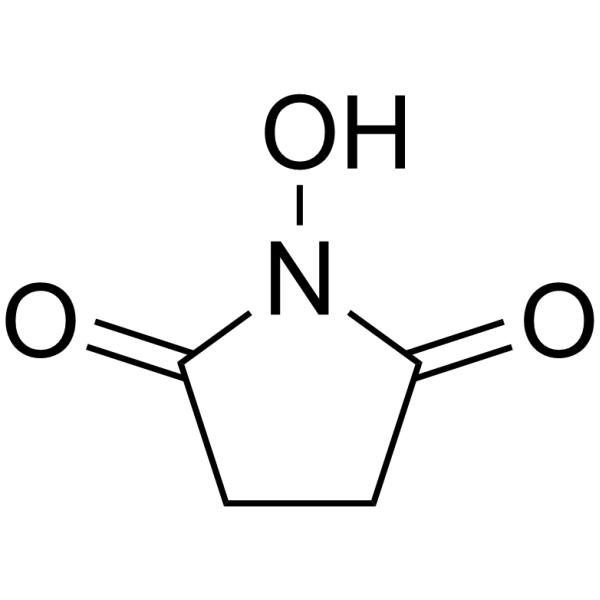
N-Hydroxysuccinimide (HOSu; 1-Hydroxy-2,5-pyrrolidinedione) is a covalent crosslinker commonly used in bioconjugation technology with a primary amine group. N-Hydroxysuccinimide reacts with amino groups (-NH2) to form a stable amide bond, which can modify amino-containing biomolecules. N-Hydroxysuccinimide can be used, for example, for protein labeling with fluorescent dyes and enzymes, surface activation of chromatography supports, microbeads, nanoparticles and microarray slides, and chemical synthesis of peptides. N-Hydroxysuccinimide has a wide range of applications in biomaterial synthesis (such as collagen, chitosan crosslinking), drug delivery systems (such as hydrogel preparation) and tissue engineering .
loading...
    loading...
2
2 Cited Publications
Cat. No.: HY-128890
CAS No.: 170908-81-3
Purity:  ≥95.0%
Research Areas:  

Cancer

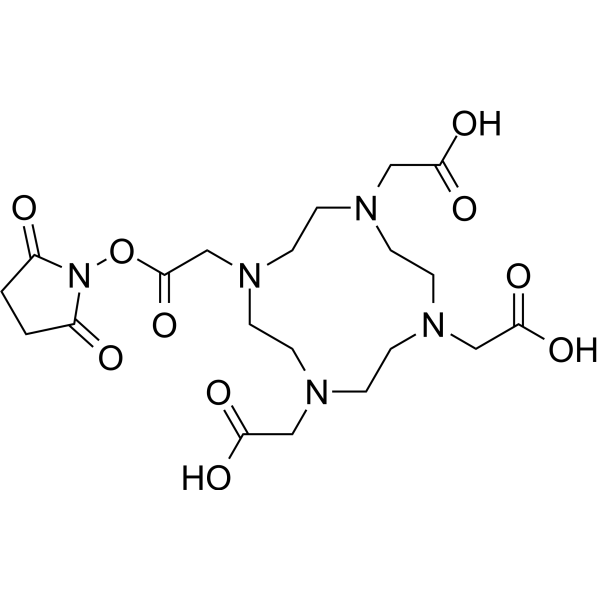
DOTA-NHS-ester is a bifunctional reagent containing a DOTA chelating group and an NHS ester. DOTA-NHS-ester can be conjugated to proteins/antibodies/HSA via primary amino groups for radiolabeling with radiometals, and when combined with 16-amino-1-hexadecanethiol hydrochloride, it enables the construction of self-assembled monolayers on gold surfaces for lectin microarrays. DOTA-NHS-ester can be used to prepare DOTA-HSA-Z (HER2:342) imaging probes, as well as to construct Trop2-targeted radiotherapeutic and diagnostic probes for pancreatic cancer .
loading...
    loading...
2
2 Cited Publications
Cat. No.: HY-128890B
Purity:  95.00%
Research Areas:  

Cancer

DOTA-NHS-ester TFA is a bifunctional reagent containing a DOTA chelating group and an NHS ester. DOTA-NHS-ester TFA can be conjugated to proteins/antibodies/HSA via primary amino groups for radiolabeling with radiometals, and when combined with 16-amino-1-hexadecanethiol hydrochloride, it enables the construction of self-assembled monolayers on gold surfaces for lectin microarrays. DOTA-NHS-ester TFA can be used to prepare DOTA-HSA-Z (HER2:342) imaging probes, as well as to construct Trop2-targeted radiotherapeutic and diagnostic probes for pancreatic cancer .
loading...
    loading...
Cat. No.: HY-160052
Target:  

Interleukin Related

Research Areas:  

Inflammation/Immunology Cancer

IL-6 aptamer sodium is an aptamer that specifically binds to IL-6, and can serve as a biological recognition receptor for high-sensitivity detection. IL-6 aptamer sodium enables label-free specific detection through changes in electrical signals of carbon nanotube microarrays or alterations in capacitive impedance on the surface of gold sensors. IL-6 aptamer sodium still maintains high selectivity even below the gray zone threshold for cancer diagnosis, and shows no significant non-specific binding to bovine serum albumin. IL-6 aptamer sodium can form an ordered self-assembled monolayer with 6-mercapto-1-hexanol on gold surfaces, making it suitable for reagent-free capacitive impedance biosensing platforms. IL-6 aptamer sodium is widely used in research related to fields such as cancer, inflammatory diseases, myeloma, liver cancer and glioma .
loading...
    loading...
Cat. No.: HY-128890A
CAS No.: 1823122-52-6
Research Areas:  

Cancer

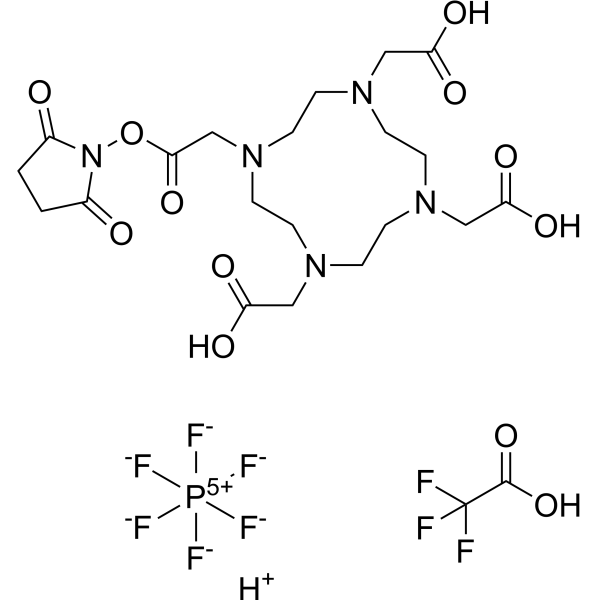
DOTA-NHS-ester hexafluorophosphate TFA is a bifunctional reagent containing a DOTA chelating group and an NHS ester. DOTA-NHS-ester hexafluorophosphate TFA can be conjugated to proteins/antibodies/HSA via primary amino groups for radiolabeling with radiometals, and when combined with 16-amino-1-hexadecanethiol hydrochloride, it enables the construction of self-assembled monolayers on gold surfaces for lectin microarrays. DOTA-NHS-ester hexafluorophosphate TFA can be used to prepare DOTA-HSA-Z (HER2:342) imaging probes, as well as to construct Trop2-targeted radiotherapeutic and diagnostic probes for pancreatic cancer .
loading...
    loading...
Cat. No.: HY-180366
CAS No.: 5536-30-1
Research Areas:  

Others

5-Amino-2'-deoxyuridine is a thymidine analogue and substrate for chemical reaction. 5-Amino-2'-deoxyuridine can be use in the preparation of labeled probes for DNA microarray analysis .
loading...
    loading...
Cat. No.: HY-178588
CAS No.: 201682-73-7
Research Areas:  

Cancer

Fluorescein-12-dUTP is a fluorescent labeling and detection reagent that can be used for nucleic acid synthesis. Fluorescein-12-dUTP can be used to synthesize labeled DNA probes for in situ hybridization, microarray or western blot analysis .
loading...
    loading...
Cat. No.: HY-W1061733
Target:  

Phosphoramidites

Research Areas:  

Others

TAO-F Phosphoramidite is a type of phosphoramidite monomer that can be used for solid-phase synthesis of oligonucleotides. TAO-F Phosphoramidite is used to prepare fluorescent-labeled probes and primers, and is widely applied in real-time quantitative PCR (qPCR), fluorescence in situ hybridization (FISH), and microarray molecular diagnostic techniques.
loading...
    loading...
Cat. No.: HY-178588A
Research Areas:  

Others

Fluorescein-12-dUTP (sodium) solution (1 mM) is a fluorescent labeling and detection reagent that can be used for nucleic acid synthesis. Fluorescein-12-dUTP (sodium) solution (1 mM) can be used to synthesize labeled DNA probes for in situ hybridization, microarray or western blot analysis .
loading...
    loading...
Cat. No.: HY-D3321
Streptavidin, R-Phycoerythrin conjugate (SAPE) is a streptavidin-labeled phycoerythrin. Streptavidin, R-Phycoerythrin conjugate (SAPE) can be used in conjunction with biotinylated reagents in anti-Biotin/biotin-labeled systems, suitable for flow cytometry detection, microarray analysis, and microplate detection (Ex/Em = 450-500 nm/575 nm).
loading...
    loading...
Cat. No.: HY-D3321A
Target:  

Fluorescent Dye

Research Areas:  

Others

High concentration Streptavidin, R-Phycoerythrin conjugate (SAPE) is a streptavidin-labeled phycoerythrin. High concentration Streptavidin, R-Phycoerythrin conjugate (SAPE) can be used in conjunction with biotinylated reagents in anti-Biotin/biotin-labeled systems, suitable for flow cytometry detection, microarray analysis, and microplate detection (Ex/Em = 450-500 nm/575 nm).
loading...
    loading...
Cat. No.: HY-D3417
CAS No.: 157199-57-0
Target:  

Fluorescent Dye

Research Areas:  

Others

BO-TAP-1 is a cell-impermeable cyan fluorescent carbocyanine monomeric nucleic acid dye that can be used for microarray nucleic acid staining, multicolor fluorescent labeling of cell nuclei and chromosomes, cell detection and counting, and flow cytometry. BO-TAP-1 is non-fluorescent in the absence of nucleic acids, but its fluorescence is significantly enhanced upon binding to double-stranded DNA. The maximum excitation and emission wavelengths of the BO-TAP-1–DNA complex are 454 nm and 487 nm, respectively. BO-TAP-1 can be used in research related to nucleic acid detection and cell analysis.
loading...
    loading...
  • 1

