6 Results for "

microvessel density

" in MedChemExpress (MCE) Product Catalog:
Products (6)

6 Results for "microvessel density" in MCE Product Catalog:

12
12 Cited Publications
Cat. No.: HY-13535
CAS No.: 262438-43-7
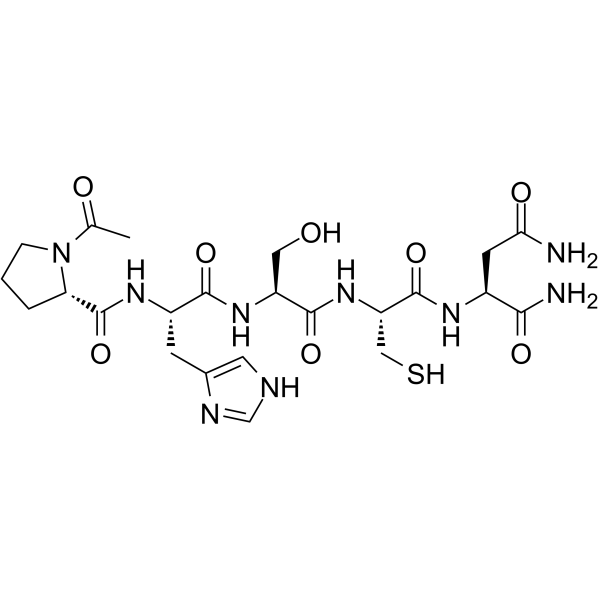
ATN-161 is an antagonist of α5β1 integrin and αvβ3 integrin, as well as an inhibitor of fibrosis, an inhibitor of oxidative stress, a tight junction stabilizer, a mitochondrial integrity protector, an angiogenesis inhibitor and an antiviral agent. ATN-161 inhibits NLRP3, MAPK, and ROS. ATN-161 protects mice from SARS-CoV-2 infection . ATN-161 reduces infarct volume, alleviates edema, decreases immune cell infiltration, reduces the area of choroidal neovascularization lesions, lowers tumor microvessel density and viral load. ATN-161 can be used in research related to ischemic stroke, choroidal neovascularization, breast cancer, coronavirus disease 2019 (COVID-19), and liver metastasis of colorectal cancer .
loading...
    loading...
Cat. No.: HY-13561
CAS No.: 476159-98-5
Purity:  99.89%
Synonyms: M475271
Target:  

Src Apoptosis

Research Areas:  

Cancer

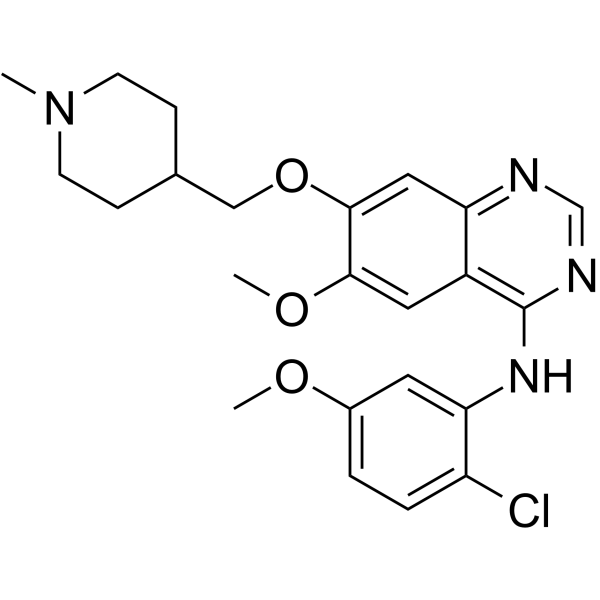
AZM475271 (M475271) is an orally active and selective Src kinase inhibitor. AZM475271 inhibits phosphorylation of c-Src kinase, Lck, c-yes (IC50s = 0.01, 0.03, 0.08 μM, respectively). AZM475271 induces apoptosis. AZM475271 reduces tumor cell proliferation and migration in vitro and in vivo, and reduces microvessel density (MVD). AZM475271 inhibits tumor growth and metastasis. AZM475271 sensitizes tumor cells to the cytotoxic effects of Gemcitabine (HY-17026) .
loading...
    loading...
Cat. No.: HY-130326
CAS No.: 372948-28-2
Purity:  99.30%
Synonyms: Ru(η6-p-cymene)Cl2(pta)
Target:  

Apoptosis

Research Areas:  

Inflammation/Immunology Cancer

RAPTA-C is a ruthenium-based antimetastatic agent. RAPTA-C binds chromatin histones and interacts with DNA, leading to pH-dependent DNA damage and hypoxia selectivity. RAPTA-C inhibits angiogenesis, microvessel density, tumor growth, invasion, and proliferation, and induces apoptosis through the mitochondrial pathway, G2/M phase arrest, quiescence, and vascular normalization. RAPTA-C can be used in research on ovarian cancer, colorectal adenocarcinoma, breast cancer metastasis, and Ehrlich ascites carcinoma .
loading...
    loading...
Cat. No.: HY-18180
CAS No.: 919279-04-2
Target:  

VEGFR PDGFR Tie

Research Areas:  

Cancer

VEGFR/PDGFR-IN-2 is a VEGFR1/2/3, PDGFRα/β, and Tie-2 tyrosine kinase inhibitor. VEGFR/PDGFR-IN-2 inhibits endothelial tube formation and endothelial migration by blocking VEGF-induced receptor phosphorylation and PDGF-BB signaling, reduces tumor microvessel density, pericyte recruitment, and tumor interstitial fluid pressure, and enhances the antitumor activity of CPT-11. VEGFR/PDGFR-IN-2 can be used for research on solid tumors .
loading...
    loading...
Cat. No.: HY-P991795

Target:  

CXCR

Research Areas:  

Cancer

Anti-Mouse/Human CXCL12 Antibody (K15C) is an antibody targeting SDF-1/CXCL12. Anti-Mouse/Human CXCL12 Antibody (K15C) blocks the biological activity of SDF-1 secreted by cancer-associated fibroblasts. Anti-Mouse/Human CXCL12 Antibody (K15C) inhibits tumor growth, reduces tumor microvessel density, and decreases the proportion of Sca1 +CD31 + endothelial progenitor cells in tumors. Anti-Mouse/Human CXCL12 Antibody (K15C) can be used for research on aggressive human breast cancer. The recommended isotype control is Mouse IgG2a kappa, Isotype Control (HY-P99978) .
loading...
    loading...
Cat. No.: HY-P992200
Anti-CD146 Antibody (AA98) is an antibody targeting CD146 and an angiogenesis inhibitor. Anti-CD146 Antibody (AA98) blocks the dimerization of CD146 as well as its downstream PI3K/AKT, p38 MAPK and NF-κB signaling pathways; it inhibits the expression of MMP9 and ICAM1, epithelial-mesenchymal transition (EMT), and the proliferation, migration and tube formation of endothelial cells. Anti-CD146 Antibody (AA98) enhances radiation-induced cancer cell apoptosis and survival inhibition, reduces tumor microvessel density, and suppresses tumor growth, invasion and vasculogenic mimicry. Anti-CD146 Antibody (AA98) can be used in research related to cervical cancer, liver cancer, malignant phyllodes tumor of the breast, uveal melanoma, leiomyosarcoma, pancreatic cancer, other tumors and angiogenesis .
loading...
    loading...

