12 Results for "

molluscicidal

" in MedChemExpress (MCE) Product Catalog:
Products (12)

12 Results for "molluscicidal" in MCE Product Catalog:

Cat. No.: HY-B0937A
CAS No.: 137-88-2
Research Areas:  

Infection

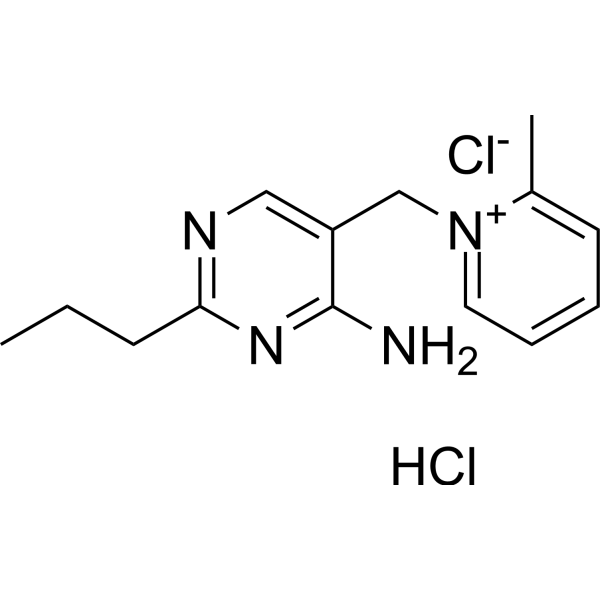
Amprolium hydrochloride is a thiamine transporter inhibitor and antiparasitic agent with oral activity and blood-brain barrier penetration. Amprolium hydrochloride blocks thiamine transport at the blood-brain barrier and intestine, and competitively inhibits thiamine pyrophosphokinase, inducing thiamine pyrophosphate deficiency and impairing carbohydrate synthesis. Amprolium hydrochloride induces oxidative stress, alters antioxidant enzyme activity, and inhibits acetylcholinesterase (AchE) activity. Amprolium hydrochloride disrupts reproductive organs and gametogenesis, and causes histopathological and ultrastructural damage to multiple organs. Amprolium hydrochloride induces thiamine deficiency, reduces body weight gain in mice, and causes psychomotor behavioral changes and nephropathy. Amprolium hydrochloride exhibits molluscicidal activity against the terrestrial snail Eobania vermiculata, and reduces the shedding of Eimeria meleagrimitis oocysts in feces and litter. Amprolium hydrochloride can be used for research on thiamine deficiency and coccidiosis .
loading...
    loading...
Cat. No.: HY-N12152
CAS No.: 111567-21-6
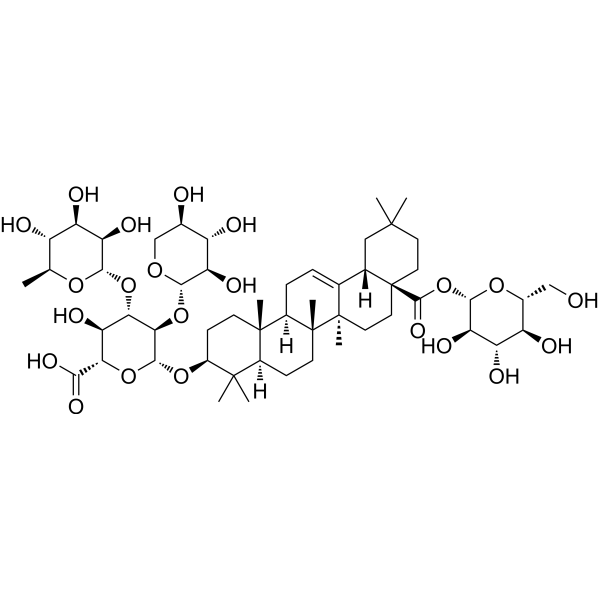
Molluscicidal agent-1 (Compound 3) is a saponin that can be isolated from S.vesicaria .
loading...
    loading...
Cat. No.: HY-B0937
CAS No.: 121-25-5
Research Areas:  

Infection

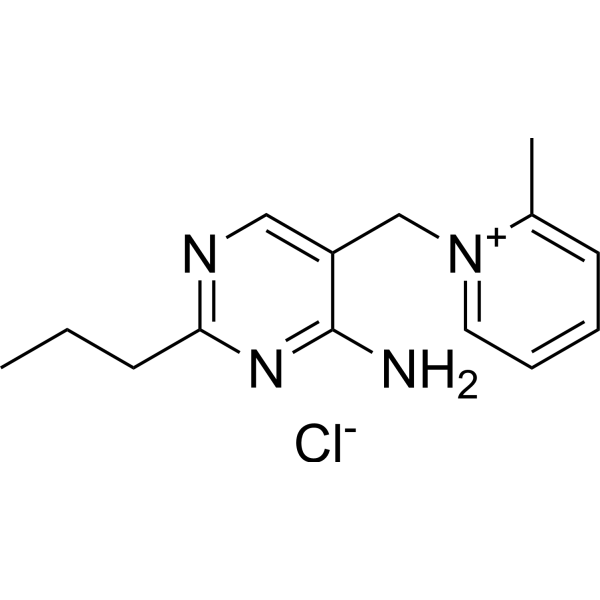
Amprolium is a thiamine transporter inhibitor and antiparasitic agent with oral activity and blood-brain barrier penetration. Amprolium blocks thiamine transport at the blood-brain barrier and intestine, and competitively inhibits thiamine pyrophosphokinase, inducing thiamine pyrophosphate deficiency and impairing carbohydrate synthesis. Amprolium induces oxidative stress, alters antioxidant enzyme activity, and inhibits acetylcholinesterase (AchE) activity. Amprolium disrupts reproductive organs and gametogenesis, and causes histopathological and ultrastructural damage to multiple organs. Amprolium induces thiamine deficiency, reduces body weight gain in mice, and causes psychomotor behavioral changes and nephropathy. Amprolium exhibits molluscicidal activity against the terrestrial snail Eobania vermiculata, and reduces the shedding of Eimeria meleagrimitis oocysts in feces and litter. Amprolium can be used for research on thiamine deficiency and coccidiosis .
loading...
    loading...
Cat. No.: HY-174441
Target:  

Chloride Channel

Research Areas:  

Others

Molluscicidal agent-2 (Compound 16) is a molluscicide with an LC50 of 0.58 mg/mL against Monacha cartusiana snails. Molluscicidal agent-2 exerts its effect through a dual mode of action: gastrointestinal toxicity and GABAA-GluCl channel antagonism. Molluscicidal agent-2 can be used in research on agricultural pest control .
loading...
    loading...
Cat. No.: HY-B0937AR
CAS No.: 137-88-2
Amprolium (hydrochloride) (Standard) is the analytical standard of Amprolium (hydrochloride) (HY-B0937A). This product is intended for research and analytical applications. Amprolium hydrochloride is a thiamine transporter inhibitor and antiparasitic agent with oral activity and blood-brain barrier penetration. Amprolium hydrochloride blocks thiamine transport at the blood-brain barrier and intestine, and competitively inhibits thiamine pyrophosphokinase, inducing thiamine pyrophosphate deficiency and impairing carbohydrate synthesis. Amprolium hydrochloride induces oxidative stress, alters antioxidant enzyme activity, and inhibits acetylcholinesterase (AchE) activity. Amprolium hydrochloride disrupts reproductive organs and gametogenesis, and causes histopathological and ultrastructural damage to multiple organs. Amprolium hydrochloride induces thiamine deficiency, reduces body weight gain in mice, and causes psychomotor behavioral changes and nephropathy. Amprolium hydrochloride exhibits molluscicidal activity against the terrestrial snail Eobania vermiculata, and reduces the shedding of Eimeria meleagrimitis oocysts in feces and litter. Amprolium hydrochloride can be used for research on thiamine deficiency and coccidiosis .
loading...
    loading...
Cat. No.: HY-N3212
CAS No.: 38302-15-7
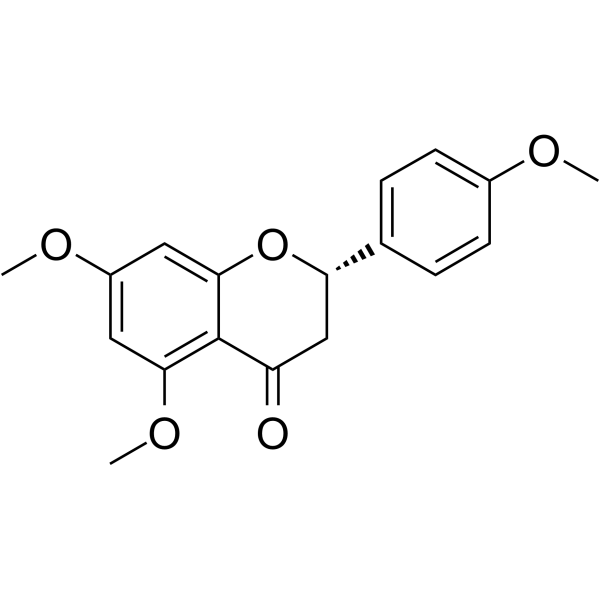
Naringenin trimethyl ether is a constituent of twigs and leaves of Aglaia duperreana. Naringenin trimethyl exhibits significant molluscicidal activity, with a LC50 of 3.9 μg/ mL for P. canaliculata .
loading...
    loading...
Cat. No.: HY-N0531
CAS No.: 38226-84-5
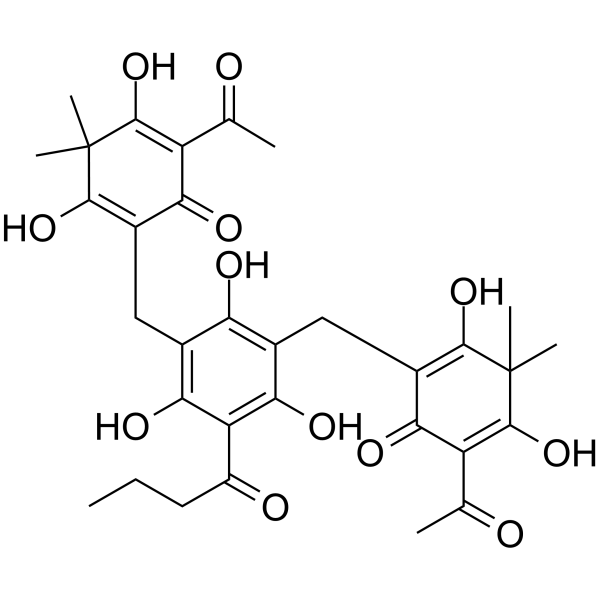
Filixic acid ABA is a molluscicidal agent against B. peregrina adult snails, with an LD50 of 8.40 ppm. Filixic acid ABA shows 100% mortality of B. peregrina at 15 ppm .
loading...
    loading...
Cat. No.: HY-B0937S
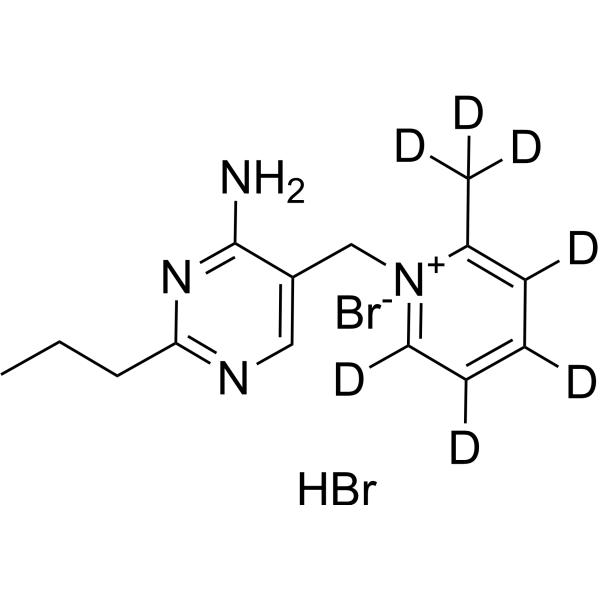
Amprolium-d7 (bromide hydrobromide) is the deuterated-labeled Amprolium (HY-B0937). Amprolium is a thiamine transporter inhibitor and antiparasitic agent with oral activity and blood-brain barrier penetration. Amprolium blocks thiamine transport at the blood-brain barrier and intestine, and competitively inhibits thiamine pyrophosphokinase, inducing thiamine pyrophosphate deficiency and impairing carbohydrate synthesis. Amprolium induces oxidative stress, alters antioxidant enzyme activity, and inhibits acetylcholinesterase (AchE) activity. Amprolium disrupts reproductive organs and gametogenesis, and causes histopathological and ultrastructural damage to multiple organs. Amprolium induces thiamine deficiency, reduces body weight gain in mice, and causes psychomotor behavioral changes and nephropathy. Amprolium exhibits molluscicidal activity against the terrestrial snail Eobania vermiculata, and reduces the shedding of Eimeria meleagrimitis oocysts in feces and litter. Amprolium can be used for research on thiamine deficiency and coccidiosis .
loading...
    loading...
Cat. No.: HY-N18455
CAS No.: 42546-55-4
Dihydroflavokawain C is a chalcone. Dihydroflavokawain C can be isolated from the leaves of P. gaudichaudianum. Dihydroflavokawain C exhibits no molluscicidal activity against Biomphalaria glabrata .
loading...
    loading...
Cat. No.: HY-N21574
CAS No.: 88524-59-8
Milliamine D is a diterpenoid toxin of the ingenol ester class containing an anthraniloyl tripeptide, existing in the free base form and exhibiting molluscicidal activity. Milliamine D can be used in the study of schistosomiasis .
loading...
    loading...
Cat. No.: HY-N20722
CAS No.: 57539-70-5
Synonyms: Cussonoside A
Pulsatiloside C (Cussonoside A) is an orally active triterpenoid saponin. Pulsatiloside C can be isolated from the roots of Pulsatilla campanella and the stem bark of Cussonia barteri. Pulsatiloside C exhibits sedative activity. Pulsatiloside C reduces locomotor activity in male Swiss albino mice. Pulsatiloside C shows no molluscicidal activity against Biomphalaria glabrata .
loading...
    loading...
Cat. No.: HY-N22050
CAS No.: 67411-22-7
Simmondsin 2'-ferulate is an orally active Antifungal agent and Insecticide. Simmondsin 2'-ferulate can be isolated from Simmondsia chinensis. Simmondsin 2'-ferulate reduces serum LDH and ALP enzyme activities. Simmondsin 2'-ferulate reduces serum T3, testosterone, and FSH concentrations. Simmondsin 2'-ferulate exhibits insecticidal and antifeedant activities against Spodoptera littoralis larvae. Simmondsin 2'-ferulate exhibits antifungal and molluscicidal activities against plant pathogenic fungi and Eobania vermiculata .
loading...
    loading...
  • 1

