9 Results for "

mouse splenic cells

" in MedChemExpress (MCE) Product Catalog:
Products (9)

9 Results for "mouse splenic cells" in MCE Product Catalog:

23
23 Publications Verification
Cat. No.: HY-16997
CAS No.: 1334298-90-6
Synonyms: INCB039110
Target:  

JAK STAT

Research Areas:  

Inflammation/Immunology Cancer

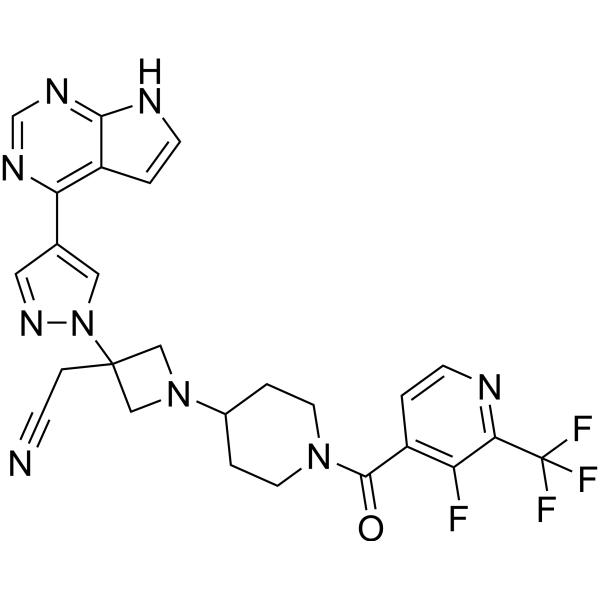
Itacitinib (INCB039110) is an orally active selective inhibitor of JAK1 with an IC50 value of 2 nM for human JAK1. Itacitinib inhibits IFN-γ-mediated phosphorylation of STAT1 and downstream pro-inflammatory signaling pathways. Itacitinib reduces the frequency and number of splenic neutrophils in mouse models, downregulates the levels of pro-inflammatory cytokines and chemokines, and inhibits pro-inflammatory gene expression pathways. Itacitinib improves survival rate and clinical scores in mouse models of hemophagocytic lymphohistiocytosis (HLH), and also suppresses metastasis in NSCLC models with high Rab1A expression. Itacitinib can be used for research on hemophagocytic lymphohistiocytosis and non-small cell lung cancer .
loading...
    loading...
23
23 Publications Verification
Cat. No.: HY-16997A
CAS No.: 1334302-63-4
Synonyms: INCB039110 adipate
Target:  

JAK STAT

Research Areas:  

Inflammation/Immunology Cancer

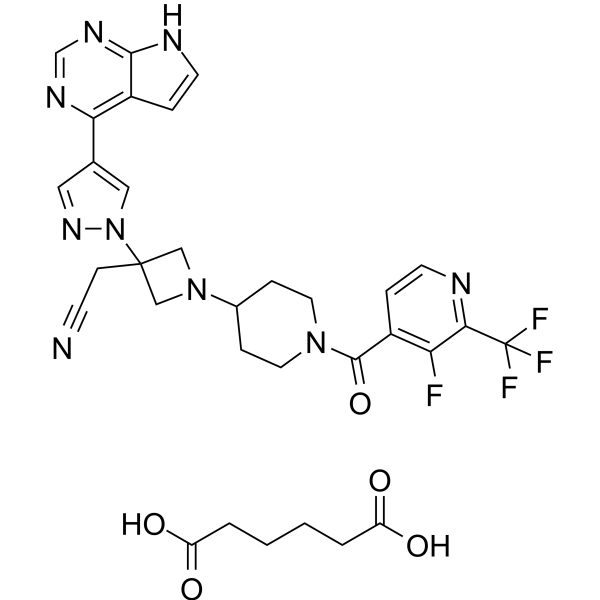
Itacitinib adipate (INCB039110 adipate) is an orally active JAK1-selective inhibitor. Itacitinib adipate inhibits IFN-γ-mediated phosphorylation of STAT1 and downstream pro-inflammatory signaling pathways. Itacitinib adipate reduces the frequency and number of splenic neutrophils in mouse models, downregulates the levels of pro-inflammatory cytokines and chemokines, and inhibits pro-inflammatory gene expression pathways. Itacitinib adipate improves survival rate and clinical scores in mouse models of hemophagocytic lymphohistiocytosis (HLH), and also suppresses metastasis in NSCLC models with high Rab1A expression. Itacitinib adipate can be used for research on hemophagocytic lymphohistiocytosis and non-small cell lung cancer .
loading...
    loading...
1
1 Cited Publications
Cat. No.: HY-P99124

Target:  

CD3

Research Areas:  

Inflammation/Immunology

Anti-Mouse CD3 Antibody (17A2) is an anti-mouse CD3 IgG2b antibody inhibitor derived from the host Rat. Anti-Mouse CD3 Antibody (17A2) enhances T-cell proliferation and activation and stimulate IFN-γ or IL-17 production in splenic T cells. Anti-Mouse CD3 Antibody (17A2) significantly suppresses mortality in Graft-versus-host disease (GVHD) mice models .
loading...
    loading...
Cat. No.: HY-130757
CAS No.: 571194-06-4
Remisporine B is a polyketide, that can be isolated from Penicillium sp. ZJ-SY2. Remisporine B exhibits immunosuppressive efficacy, that inhibits concanavalin A (HY-P2149)-induced T-cell proliferation and LPS (HY-D1056)- induced B-cell proliferations of mouse splenic lymphocytes with IC50 of 30.1 µg/mL and 32.4 µg/mL .
loading...
    loading...
Cat. No.: HY-145492
CAS No.: 482598-46-9
Synonyms: N-(3-Oxo-7Z-tetradecenoyl)-L-homoserine lactone
Target:  

Drug Derivative

Research Areas:  

Inflammation/Immunology

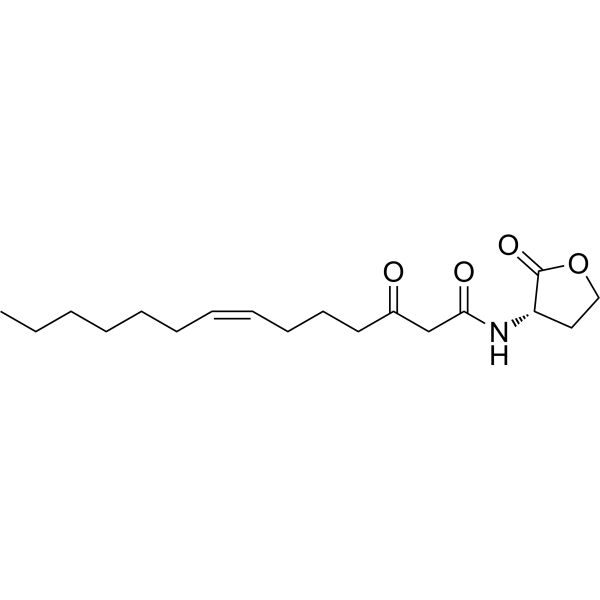
Δ7(Z)-C14-HSL (Compound 12) is an immunosuppressive agent that can inhibit the proliferation of mouse splenic cells with an IC50 of 17 μM. Δ7(Z)-C14-HSL can be used for further studying its potential as a molecular mechanism in TNF-R-driven immune diseases, especially autoimmune diseases such as psoriasis, rheumatoid arthritis, and type 1 diabetes .
loading...
    loading...
Cat. No.: HY-P991801

Target:  

IFNAR PD-1/PD-L1

Research Areas:  

Cancer

Anti-Mouse IFN Beta Antibody (MIB-5E9.1) is an antibody targeting mouse IFN-β. Anti-Mouse IFN Beta Antibody (MIB-5E9.1) blocks the IFN-β signaling pathway, abolishes LPS-induced upregulation of B7H1 and GITRL in dendritic cells, restores dendritic cell-dependent T cell proliferation impaired by LPS exposure, and reverses LPS-induced upregulation of PD-1 on splenic T cells. Anti-Mouse IFN Beta Antibody (MIB-5E9.1) reduces LPS-induced upregulation of GITR on splenic T cells and inhibits LPS-mediated Treg priming .
loading...
    loading...
Cat. No.: HY-185751
CAS No.: 2760467-77-2
Target:  

Liposome

Research Areas:  

Cancer

10A1P16 is an ionizable phospholipid composed of a tertiary amine, a phosphate group and three hydrophobic tails. As a spleen-selective RNA delivery vector, 10A1P16 successfully transfects approximately 30% of splenic macrophages and 6% of splenic B cells in vivo. 10A1P16 can be used to prepare spleen-selective 10A1P16-MDOA lipid nanoparticles, which effectively mediate mRNA delivery and gene editing in mouse models. This delivery system retains potent spleen-targeted mRNA delivery efficacy and can be applied to ovarian cancer research .
loading...
    loading...
Cat. No.: HY-K0360

MCE Mouse CD4+ CD25+ Regulatory T Cell Positive Selection Kit is designed for the isolation of CD4+ CD25+ regulatory T cells (Tregs) from mouse splenic single-cell suspensions. The kit utilizes a two-step isolation strategy. First, CD4 Enrichment Beads are used to deplete non-target cells and enrich CD4+ T cells. Subsequently, CD25 Capture Antibody specifically binds to CD25+ cells, which are then captured by Releasable Magnetic Beads. Following isolation, the magnetic beads are gently detached from the cell surface using Magnetic Beads Release Buffer, yielding label-free CD4+ CD25+ regulatory T cells with no residual magnetic beads.

loading...
    loading...
Cat. No.: HY-184931
Research Areas:  

Cancer

PTPN22-IN-3 is a potent, selective, and orally active inhibitor of PTPN22 with an IC50 of 0.49 μM and a Ki of 0.28 μM. PTPN22-IN-3 exhibits over 14-fold selectivity against a broad panel of PTPs and shows no significant inhibition against SRC/CSK kinases or IDO1/Arginase metalloenzymes. PTPN22-IN-3 enhances TCR signaling, increases IL-2 expression and secretion, and promotes mouse splenic T cell proliferation. In immune-competent C57BL/6J mice, PTPN22-IN-3 suppresses MC38 syngeneic tumor growth and synergizes with Pembrolizumab (anti-PD-1) (HY-P9902A) therapy. PTPN22-IN-3 can be used for the study of colorectal cancer and other solid tumors responsive to T cell-mediated anti-tumor immunity .
loading...
    loading...

