15 Results for "

noise

" in MedChemExpress (MCE) Product Catalog:
Products (15)

15 Results for "noise" in MCE Product Catalog:

27
27 Cited Publications
Cat. No.: HY-A0134
CAS No.: 26675-46-7
Isoflurane is a volatile anaesthetic. Isoflurane diminishs the effect of ROS activity. Isoflurane suppresses respiration. Isoflurane enables rapid anesthesia induction and emergence. Isoflurane protects against noise-induced hearing loss and tissue damage in mice. Isoflurane protects against renal ischemia and reperfusion injury and modulates leukocyte infiltration .
loading...
    loading...
1
1 Cited Publications
Cat. No.: HY-128064
CAS No.: 96760-69-9
Purity:  ≥98.0%
Synonyms: ADAC
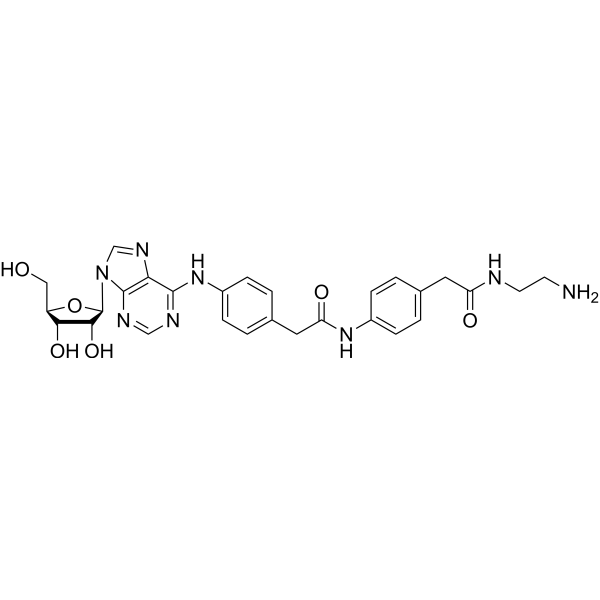
Adenosine amine congener (ADAC) is a selective A1 adenosine receptor agonist, can ameliorate noise- and Cisplatin-induced cochlear injury. Adenosine amine congener also has neuroprotective effects .
loading...
    loading...
Cat. No.: HY-D1590
CAS No.: 929679-22-1
Target:  

Fluorescent Dye

Research Areas:  

Others

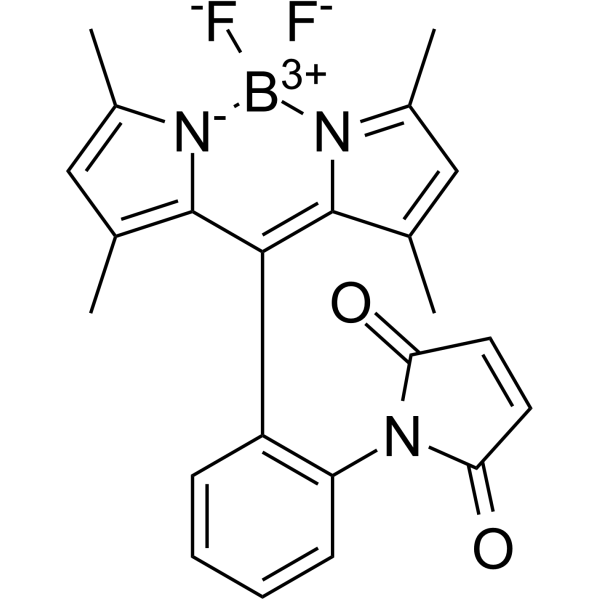
ODIPY Green 8-P2M is a novel thiol-reactive fluorescence probe based on the BODIPY fluorophore, the fluorescence is strongly quenched by d-PeT and then can be restored after reaction with thiol, resulting in an extremely high signal-to-noise ratio. ODIPY Green 8-P2M can be useful for detecting extremely low concentrations of protein in the gel after SDS-PAGE .
loading...
    loading...
Cat. No.: HY-149836
Purity:  98.07%
Target:  

Fluorescent Dye

Research Areas:  

Others

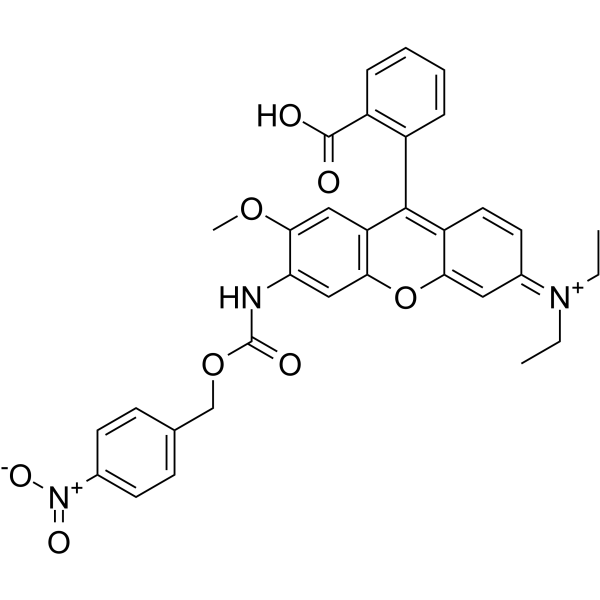
3-MeOARh-NTR is an activatable imaging probe with high selectivity, and good stability. 3-MeOARh-NTR possesses high selectivity and high signal-to-noise ratio for nitroreductase (NTR) detection, and serves as an efficient molecular tool for endogenous NTR detection .
loading...
    loading...
Cat. No.: HY-B0612B
CAS No.: 185197-71-1
Research Areas:  

Neurological Disease

(S)-Lercanidipine is a calcium channel blocker with antihypertensive and neuroprotective activities. (S)-Lercanidipine reduces oxidative stress and protects auditory sensory hair cells from noise-induced damage. (S)-Lercanidipine showed significant protective effects on cell viability in in vitro experiments, especially at low concentrations. (S)-Lercanidipine has been found to effectively reduce the hearing threshold of mice after noise stimulation and protect the survival of outer hair cells. The antioxidant properties of (S)-Lercanidipine are reflected in its increased expression of antioxidant enzyme genes and decreased expression of oxidative enzyme genes. (S)-Lercanidipine administration is effective in reducing noise-induced hearing loss both before and after noise exposure. (S)-Lercanidipine may alleviate noise-induced hearing loss and protect the survival of outer hair cells through its antioxidant mechanism .
loading...
    loading...
Cat. No.: HY-18237
CAS No.: 518058-84-9
Target:  

Src

Research Areas:  

Others

KX1-004 is a potent and non-ATP competitive Src-PTK inhibitor with an IC50 of 40 μM. KX1-004 protects the cochlea from hazardous noise and prevents noise-induced hearing loss (NIHL) .
loading...
    loading...
Cat. No.: HY-149836A
Target:  

Fluorescent Dye

Research Areas:  

Others

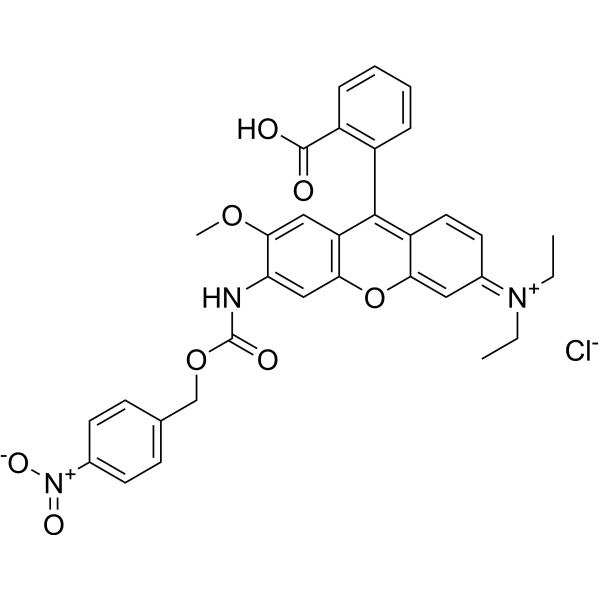
3-MeOARh-NTR chloride is an activatable imaging probe with high selectivity, and good stability. 3-MeOARh-NTR chloride possesses high selectivity and high signal-to-noise ratio for nitroreductase (NTR) detection, and serves as an efficient molecular tool for endogenous NTR detection .
loading...
    loading...
Cat. No.: HY-D2953
Synonyms: CLIP-CPY
BC-CPY is a CLIP-tagged probe based on the pyridine-benzoanthrone (CPY) fluorophore (Ex/Em: 580 nm/610 nm). BC-CPY has excellent cell membrane permeability, enabling deep imaging, low phototoxicity and high signal-to-noise ratio. BC-CPY can be used for super-resolution microscopy imaging of living cells .
loading...
    loading...
Cat. No.: HY-184527
CAS No.: 1372609-54-5
Synonyms: 2-Chloro-4-nitrophenyl ferulate
Research Areas:  

Others

CNPF (2-Chloro-4-nitrophenyl ferulate) is a chromogenic substrate of Feruloyl esterase A (derived from Aspergillus niger). CNPF can be hydrolyzed by this enzyme to release the chromophore. CNPF has a superior signal-to-noise ratio and is suitable for high-throughput screening of feruloyl esterase .
loading...
    loading...
Cat. No.: HY-D2973
YH-APN is a high-performance APN activated near-infrared fluorescent probe. YH-APN has high sensitivity, high selectivity, fast response, and can achieve extremely high tumor/normal tissue signal-to-noise ratio through in situ spraying. YH-APN can specifically distinguish cancer cells with high expression of APN from normal cells and monitor the migration of cancer cells .
loading...
    loading...
Cat. No.: HY-D3209
CAS No.: 2646628-35-3
NIR-ASM is a near-infrared fluorescent probe that can cross cell membranes and be activated by NQO1. NIR-ASM can distinguish NQO1-expressing cancer cells from normal cells via fluorescence microscopy and flow cytometry. NIR-ASM generates near-infrared fluorescence with a high signal-to-noise ratio in tumor models with NQO1 activity, enabling the detection of endogenous NQO1 activity in vivo. NIR-ASM is applicable to the research of lung cancer and breast cancer .
loading...
    loading...
Cat. No.: HY-P992580
Research Areas:  

Others

Mouse IgG2a lambda, Isotype Control is a mouse IgG2a isotype control monoclonal antibody. Mouse IgG2a lambda, Isotype Control precisely mimics nonspecific binding and Fc receptor background by maintaining the same heavy and light chain isotypes as the specific primary antibody, thereby effectively distinguishing specific signal from background noise in experiments. Mouse IgG2a lambda, Isotype Control can be used as a negative control in experiments such as flow cytometry and immunohistochemistry .
loading...
    loading...
Cat. No.: HY-D3480
BeRST voltage sensitive dye is a silicon-rhodamine-based voltage-sensitive dye that serves as a membrane potential indicator, featuring fast response kinetics, high sensitivity, photostability, and excellent signal-to-noise ratio. BeRST voltage sensitive dye relies on the photoinduced electron transfer (PeT) mechanism to report changes in neuronal membrane potential via fluorescent signals. BeRST voltage sensitive dye localizes to the extracellular surface of neuronal plasma membranes, including cell bodies and neurites. BeRST voltage sensitive dye can be used in studies related to Alzheimer's disease (Ex/Em = 658/683 nm) .
loading...
    loading...
Cat. No.: HY-D3069
CAS No.: 2892545-08-1
Research Areas:  

Neurological Disease

DNTPH is a near-infrared (NIR) aggregation-induced emission (AIE) fluorescent probe used for imaging β-amyloid (Aβ) aggregates. Designed by balancing hydrophobic and hydrophilic groups, DNTPH achieves selective binding to Aβ42 fibrils and generates a near-infrared fluorescent signal with high signal-to-noise ratio. Upon binding to Aβ42 fibrils, DNTPH exhibits enhanced fluorescence, while also inhibiting Aβ42 fibril formation, promoting fibril depolymerization, attenuating Aβ-induced neurotoxicity, and improving cognitive function in Alzheimer's disease (AD) mice. DNTPH can be used in Alzheimer's disease research .
loading...
    loading...
Cat. No.: HY-D3438
Target:  

Fluorescent Dye

Research Areas:  

Others

Photoswitchable PM8 is a fluorescent probe used for super-resolution imaging of the plasma membrane. Photoswitchable PM8 functions through a light-induced Z/E isomerization mechanism: in the hydrophobic cell membrane environment, the Z isomer forms a planar intramolecular charge transfer state stabilized by an intramolecular hydrogen bond, which restricts conformational freedom, reduces nonradiative decay, and produces bright fluorescence; in contrast, the E isomer lacks this hydrogen bond, has increased conformational freedom, and exhibits a fluorescence-quenched state. The fluorescence of Photoswitchable PM8 can be switched "on/off" by visible light: activation with 405 nm light forms the fluorescent Z isomer, and switching with 561 nm light converts it to the nonfluorescent E isomer. In the membrane environment, Photoswitchable PM8 enables single-molecule localization for super-resolution imaging. Due to solvent-induced quenching and aggregation, Photoswitchable PM8 has negligible fluorescence in aqueous solution, but upon binding to the hydrophobic membrane environment it produces bright fluorescence, enabling high signal-to-noise ratio imaging without washing .
loading...
    loading...
  • 1

