19 Results for "

parasympathetic

" in MedChemExpress (MCE) Product Catalog:
Products (19)

19 Results for "parasympathetic" in MCE Product Catalog:

4
4 Cited Publications
Cat. No.: HY-B0406A
CAS No.: 590-63-6
Synonyms: Carbamyl-β-methylcholine chloride
Target:  

mAChR

Research Areas:  

Neurological Disease Cancer

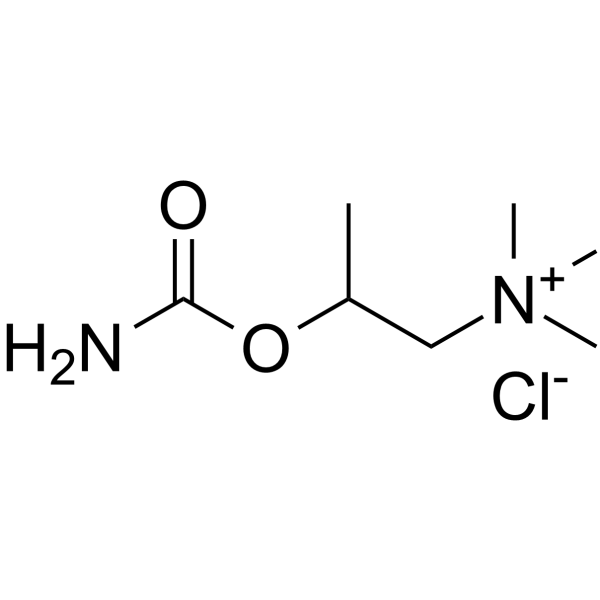
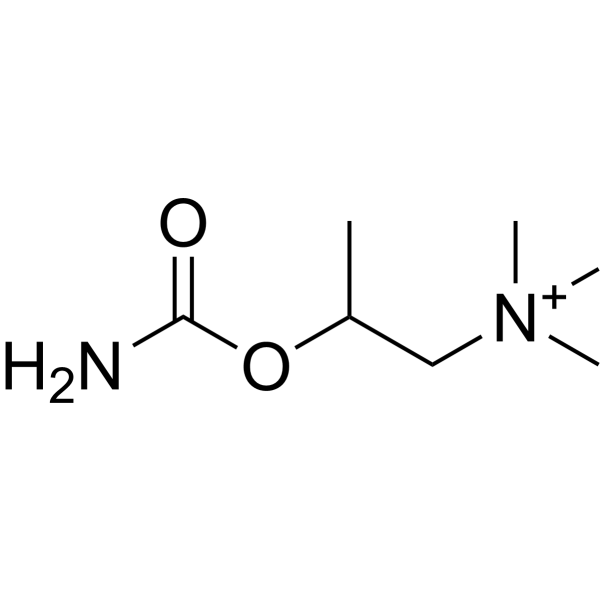
Bethanechol chloride (Carbamyl-β-methylcholine chloride), a parasympathomimetic agent, is a mAChR agonist that exerts its effects via directly stimulating the mAChR (M1, M2, M3, M4, and M5) of the parasympathetic nervous system .
loading...
    loading...
1
1 Cited Publications
Cat. No.: HY-107654
CAS No.: 24570-49-8
Purity:  ≥97.0%
Synonyms: (+)-Muscarine iodide
Target:  

mAChR

Research Areas:  

Neurological Disease

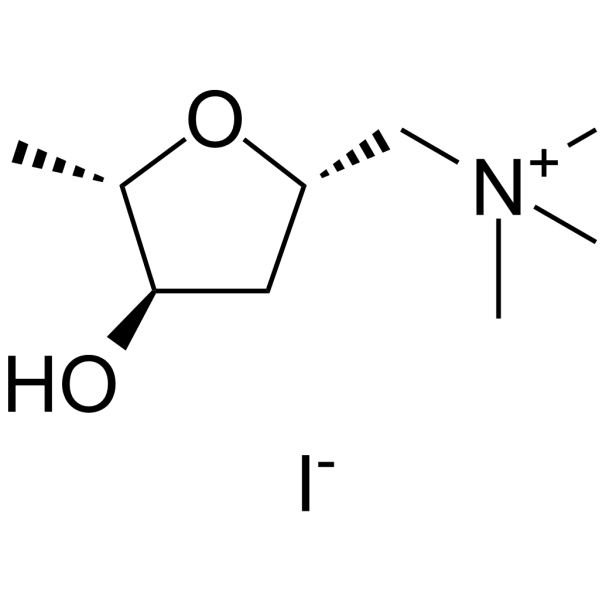
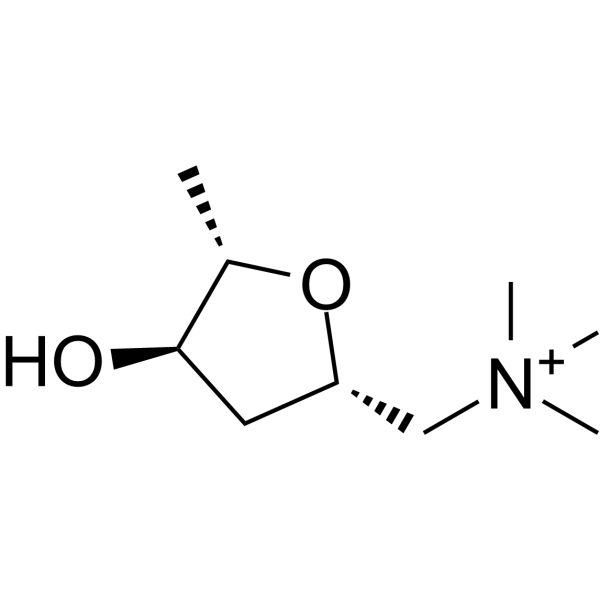
Muscarine ((+)-Muscarine) iodide is a toxin that can stimulate the parasympathetic nervous system. Muscarine iodide is a prototype muscarinic acetylcholine receptor agonist .
loading...
    loading...
Cat. No.: HY-P0084
CAS No.: 38916-34-6
Synonyms: SRIF-14; Somatostatin-14
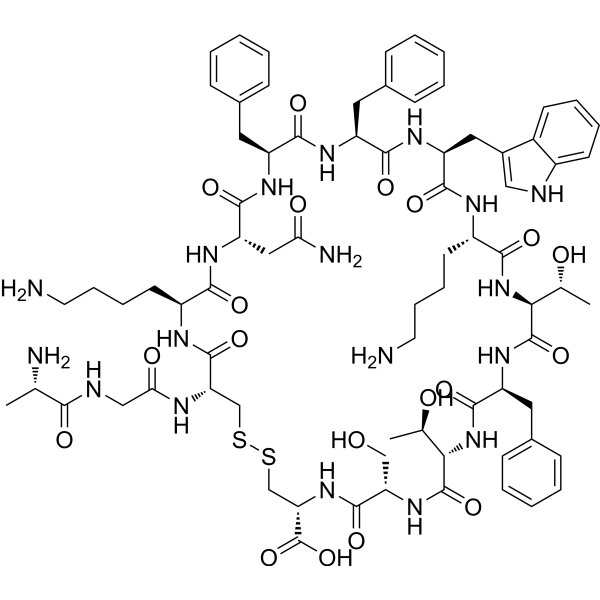
Cyclic somatostatin (SRIF-14) is a growth hormone-release inhibiting factor used in the research of severe, acute hemorrhages of gastroduodenal ulcers. Cyclic somatostatin is a neuropeptide co-stored with acetylcholine in the cardiac parasympathetic innervation, exerts influences directly on contraction of ventricular cardiomyocytes. Cyclic somatostatin inhibits the contractile response of isoprenaline with an IC50 value of 13 nM. Cyclic somatostatin can be used for the research of cardiovascular disease .
loading...
    loading...
Cat. No.: HY-121404A
CAS No.: 2303-35-7
Purity:  ≥99.0%
Synonyms: (+)-Muscarine chloride
Target:  

mAChR

Research Areas:  

Neurological Disease

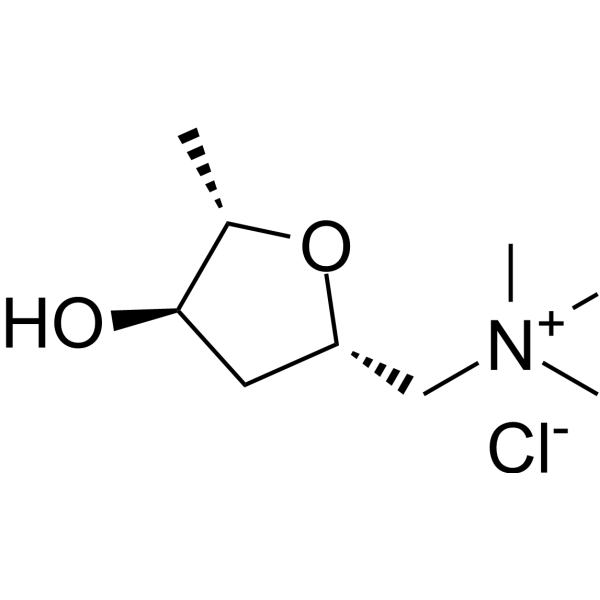
Muscarine ((+)-Muscarine) chloride is an agonist of prototype mAChR. Muscarine chloride is a toxin that can stimulate the parasympathetic nervous system .
loading...
    loading...
Cat. No.: HY-B1719A
CAS No.: 50-10-2
Target:  

mAChR

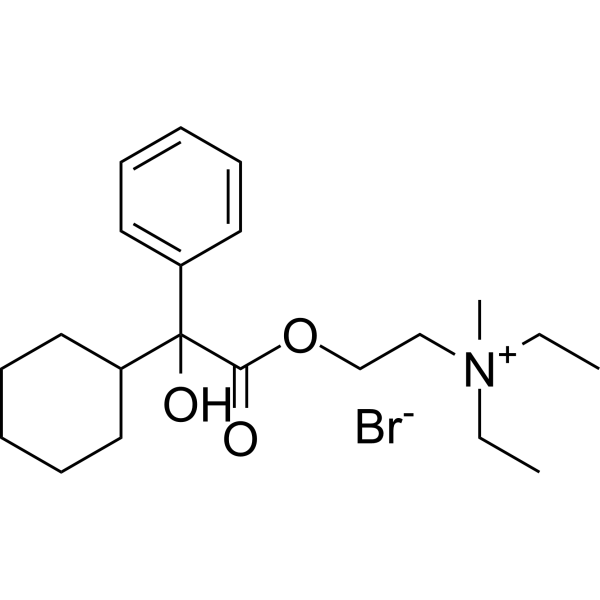
Oxyphenonium bromide is an orally effective competitive muscarinic acetylcholine receptor (mAChR) antagonist. Oxyphenonium bromide competitively binds to and blocks mAChR, thereby inhibiting the parasympathetic pathway. By inhibiting CHRM4, Oxyphenonium bromide increases cAMP levels and activates the CREB transcriptional program, thereby promoting erythroid progenitor cell expansion. Oxyphenonium bromide can be used in research on asthma, anemia, and gastric ulcers .
loading...
    loading...
Cat. No.: HY-B0406
CAS No.: 674-38-4
Synonyms: Carbamyl-β-methylcholine
Target:  

mAChR

Research Areas:  

Neurological Disease Cancer

Bethanechol (Carbamyl-β-methylcholine), a parasympathomimetic agent, is a mAChR agonist that exerts its effects via directly stimulating the mAChR (M1, M2, M3, M4, and M5) of the parasympathetic nervous system .
loading...
    loading...
Cat. No.: HY-B0954
CAS No.: 125-52-0
Target:  

mAChR

Research Areas:  

Neurological Disease

A new tertiary amine, Oxyphencyclimine hydrochloride,has been investigated for its effects on the peripheral parasympathetic system.
loading...
    loading...
Cat. No.: HY-121404
CAS No.: 300-54-9
Synonyms: (+)-Muscarine
Target:  

mAChR

Research Areas:  

Neurological Disease

Muscarine ((+)-Muscarine) is an agonist of prototype mAChR. Muscarine is a toxin that can stimulate the parasympathetic nervous system .
loading...
    loading...
Cat. No.: HY-B0406AS
Synonyms: Carbamyl-β-methylcholine-d6 chloride
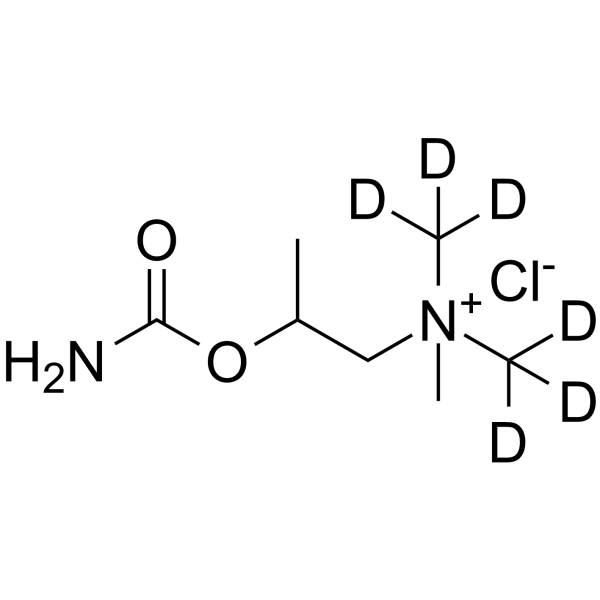
Bethanechol-d6 (chloride) is the deuterium labeled Bethanechol chloride. Bethanechol chloride (Carbamyl-β-methylcholine chloride), a parasympathomimetic agent, is a mAChR agonist that exerts its effects via directly stimulating the mAChR (M1, M2, M3, M4, and M5) of the parasympathetic nervous system .
loading...
    loading...
Cat. No.: HY-P0084A
CAS No.: 54472-66-1
Synonyms: SRIF-14 acetate; Somatostatin-14 acetate
Cyclic somatostatin (SRIF-14) acetate is a growth hormone-release inhibiting factor used in the research of severe, acute hemorrhages of gastroduodenal ulcers. Cyclic somatostatin acetate is a neuropeptide co-stored with acetylcholine in the cardiac parasympathetic innervation, exerts influences directly on contraction of ventricular cardiomyocytes. Cyclic somatostatin acetate inhibits the contractile response of isoprenaline with an IC50 value of 13 nM. Cyclic somatostatin acetate can be used for the research of cardiovascular disease .
loading...
    loading...
Cat. No.: HY-121404B
CAS No.: 82083-43-0
Synonyms: (+)-Muscarine tosylate
Target:  

mAChR

Research Areas:  

Neurological Disease

Muscarine ((+)-Muscarine) tosylate is an agonist of prototype mAChR. Muscarine tosylate is a toxin that can stimulate the parasympathetic nervous system .
loading...
    loading...
Cat. No.: HY-B0954R
CAS No.: 125-52-0
Research Areas:  

Neurological Disease

Oxyphencyclimine (hydrochloride) (Standard) is the analytical standard of Oxyphencyclimine (hydrochloride). This product is intended for research and analytical applications. A new tertiary amine, Oxyphencyclimine hydrochloride,has been investigated for its effects on the peripheral parasympathetic system.
loading...
    loading...
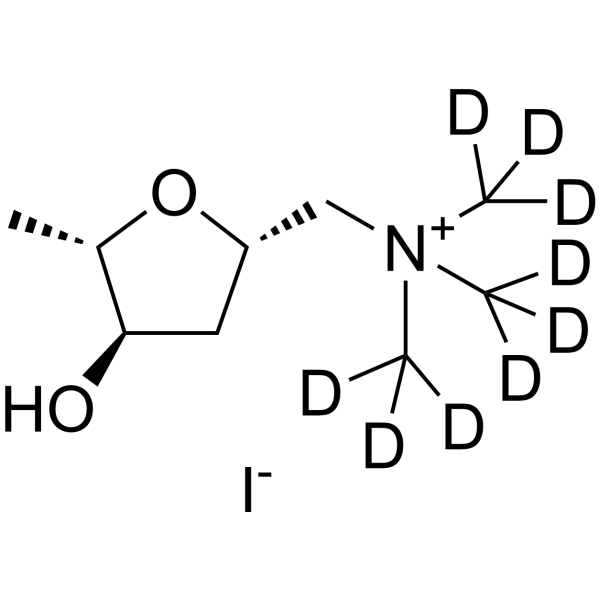
Cat. No.: HY-107654S
Synonyms: (+)-Muscarine-d9 iodide
Muscarine-d9 (iodide) is the deuterium labeled Muscarine iodide. Muscarine ((+)-Muscarine) iodide is a toxin that can stimulate the parasympathetic nervous system. Muscarine iodide is a prototype muscarinic acetylcholine receptor agonist .
loading...
    loading...
Cat. No.: HY-B0406AR
CAS No.: 590-63-6
Synonyms: Carbamyl-β-methylcholine chloride (Standard)
Research Areas:  

Neurological Disease Cancer

Bethanechol (chloride) (Standard) is the analytical standard of Bethanechol (chloride). This product is intended for research and analytical applications. Bethanechol chloride (Carbamyl-β-methylcholine chloride), a parasympathomimetic agent, is a mAChR agonist that exerts its effects via directly stimulating the mAChR (M1, M2, M3, M4, and M5) of the parasympathetic nervous system .
loading...
    loading...
Cat. No.: HY-12980A
CAS No.: 945905-37-3
Synonyms: GSK961081 Succinate; TD-5959 Succinate
Research Areas:  

Neurological Disease

Batefenterol Succinate (GSK961081 Succinate) is a first-of-its-kind inhaled bifunctional bronchodilator with smooth muscle relaxant properties. The activities of Batefenterol Succinate include acting as a smooth muscle parasympathetic antagonist and a beta2-adrenoceptor agonist. Batefenterol Succinate is used to improve respiratory function, especially in patients with chronic obstructive pulmonary disease (COPD) .
loading...
    loading...
Cat. No.: HY-B1719AR
CAS No.: 50-10-2
Oxyphenonium bromide Standard is the analytical standard of Oxyphenonium bromide (HY-B1719A). This product is intended for research and analytical applications. Oxyphenonium bromide is an orally effective competitive muscarinic acetylcholine receptor (mAChR) antagonist. Oxyphenonium bromide competitively binds to and blocks mAChR, thereby inhibiting the parasympathetic pathway. By inhibiting CHRM4, Oxyphenonium bromide increases cAMP levels and activates the CREB transcriptional program, thereby promoting erythroid progenitor cell expansion. Oxyphenonium bromide can be used in research on asthma, anemia, and gastric ulcers .
loading...
    loading...
Cat. No.: HY-187664
CAS No.: 470-94-0
Target:  

Cholinesterase (ChE)

Research Areas:  

Neurological Disease

N-Demethyl amiton oxalic is an irreversible cholinesterase (ChE) inhibitor. N-Demethyl amiton oxalic elicits low-level postganglionic neuronal firing in cat vesical parasympathetic ganglia by preventing the breakdown of endogenously released ChE. N-Demethyl amiton oxalic inhibits ChE activity in squid optic ganglia and induces hyperactivity, ink ejection, pigment changes, and death, with a rate of enzymatic detoxification much lower than that of DFP. N-Demethyl amiton oxalic can be used in studies related to the mechanisms of cholinergic transmission in parasympathetic ganglia and neurotoxicology .
loading...
    loading...
Cat. No.: HY-12502C
CAS No.: 128194-13-8
Synonyms: (R)-NZ-105; (-)-Efonidipine
(R)-Efonidipine ((R)-NZ-105) is an orally active, selective T-type Ca 2+ channel blocker. (R)-Efonidipine does not inhibit high-voltage-activated Ca 2+ channels, voltage-dependent Na + channels, or Ca 2+-activated K + channels. (R)-Efonidipine modulates cardiac autonomic function by increasing parasympathetic activity and decreasing sympathetic activity. (R)-Efonidipine significantly improves survival in a mouse model of dilated cardiomyopathy. (R)-Efonidipine can be used in research on ischemic encephalopathy, heart failure, and hypertension .
loading...
    loading...
Cat. No.: HY-106698
CAS No.: 57475-17-9
Brovincamine is an orally active slow Ca 2+ channel blocker and vasodilator. Brovincamine reduces Ca 2+ influx across the plasma membrane by blocking Ca 2+ channels. Brovincamine inhibits catecholamine secretion, cholinergic function, autonomic parasympathetic nervous system activity, cerebrovascular resistance, and nerve stimulation-induced convulsive responses. Brovincamine induces cerebrovascular, coronary, and intracranial vasodilation, improves cerebral cortical microcirculation, enhances cerebral metabolic activity, and increases capillary clearance efficiency. Brovincamine can be used in research related to cerebral ischemic diseases, cardiac ischemic diseases, and normal-tension glaucoma .
loading...
    loading...
  • 1

