10 Results for "

perovskite

" in MedChemExpress (MCE) Product Catalog:
Products (10)

10 Results for "perovskite" in MCE Product Catalog:

1
1 Cited Publications
Cat. No.: HY-Y0395
CAS No.: 25487-66-5
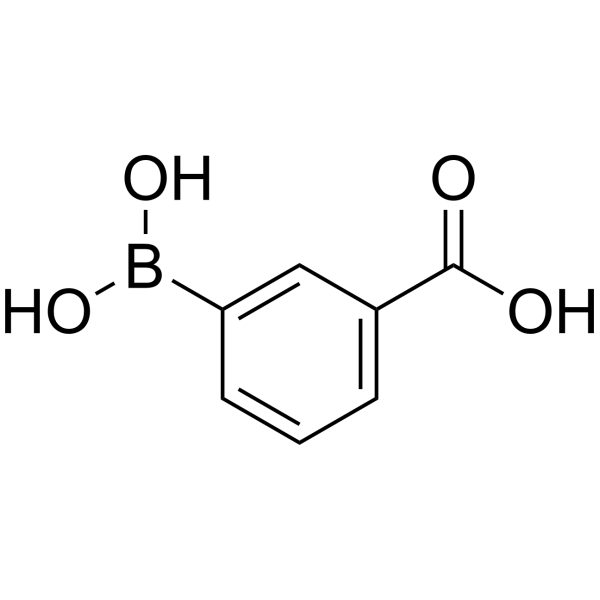
3-Carboxyphenylboronic acid is a biochemical reagent with multiple functions including nanoparticle enhancement, perovskite passivation, fluorescence quenching, and adhesion. 3-Carboxyphenylboronic acid improves tumor penetration and pulmonary retention of nanoparticles, and serves as a tumor-targeting ligand for carboxymethyl chitosan nanoparticles. 3-Carboxyphenylboronic acid optimizes film crystallization via coordinate chelation of free lead/iodide ions in perovskites. 3-Carboxyphenylboronic acid acts as an additive for n-i-p perovskite solar cells. Conjugation of 3-Carboxyphenylboronic acid with PPEG8 quenches the near-infrared fluorescence of single-walled carbon nanotubes, enabling aqueous dispersion of carbon nanotubes through binding to the diol structure of saccharides .
loading...
    loading...
Cat. No.: HY-130086
CAS No.: 1314378-11-4
Purity:  99.29%
Target:  

ADC Linkers

Research Areas:  

Cancer

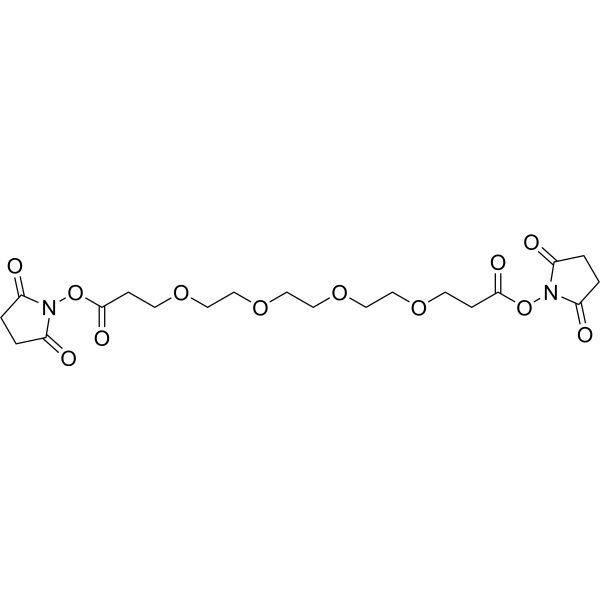
Bis-PEG4-NHS ester is a crosslinking reagent and amine-reactive modulator .Bis-PEG4-NHS ester reacts with primary amine groups on liposome surfaces via amide bond formation to covalently attach dibenzylcyclooctyne groups, with a hydrophilic PEG4 spacer reducing steric hindrance for subsequent click chemistry .Bis-PEG4-NHS ester enables site-specific antibody coupling to liposome surfaces via copper-free strain-promoted alkyne-azide cycloaddition click chemistry without disrupting liposome structure in minimal organic solvent volumes .Bis-PEG4-NHS ester undergoes hydrolysis during annealing to form -COOH groups that interact with PbI and FAI to enhance perovskite structural integrity, passivate defects, and modulate nucleation kinetics to regulate crystal growth .Bis-PEG4-NHS ester enhances device efficiency and long-term stability when used as an antisolvent additive for p-i-n perovskite solar cells .
loading...
    loading...
Cat. No.: HY-W021005
CAS No.: 189114-61-2
Synonyms: Silver triflimide
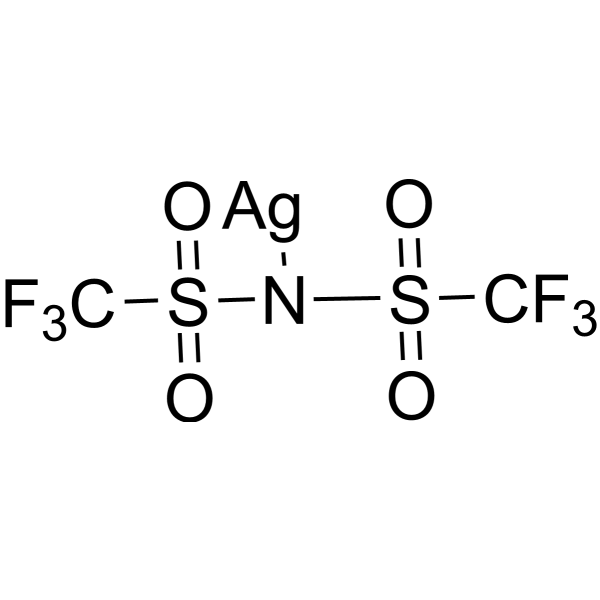
Silver bis(trifluoromethanesulfonyl)imide is a kind of silver salt and is widely used as an organic synthesis catalyst. Silver bis(trifluoromethanesulfonyl)imide is used for the C-3 regioselective alkylation of indole derivatives with α,β -enones through conjugated addition reactions. Silver bis(trifluoromethanesulfonyl)imide can also be used as a highly efficient and stable solid-state dye sensitization and P-type dopant for perovskite solar cells .
loading...
    loading...
Cat. No.: HY-W015815
CAS No.: 6960-22-1
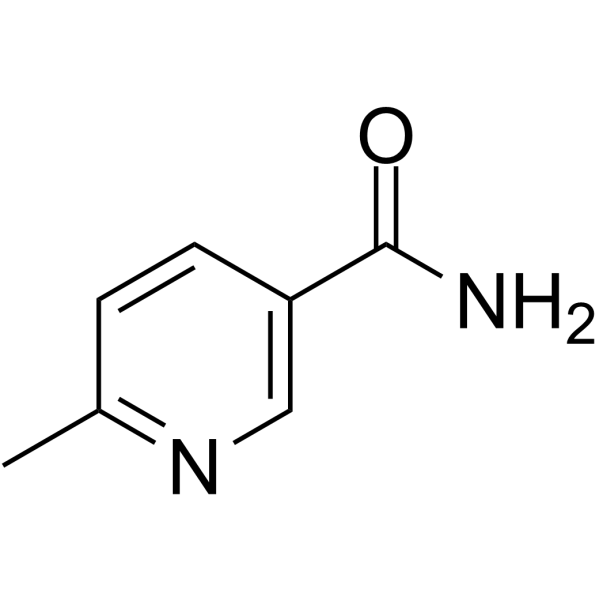
6-Methylnicotinamide is a derivative of Nicotinamide (HY-B0150). 6-Methylnicotinamide coordinates with undercoordinated Pb 2+ ions through its carbonyl group, passivating Pb-related defects. 6-Methylnicotinamide reduces trap density and non-radiative recombination in the perovskite absorber layer while inducing interfacial dipole formation. 6-Methylnicotinamide enhances the hydrophobicity, grain size, and environmental, thermal, and photostability of perovskite films. 6-Methylnicotinamide induces complementation of VP16-deficient HSV-1 replication and stimulates immediate-early gene expression. 6-Methylnicotinamide is upregulated in the acute phase of intracerebral hemorrhage and may exacerbate neurological injury. 6-Methylnicotinamide can be used for research on intracerebral hemorrhage and herpes simplex virus type 1 infection .
loading...
    loading...
Cat. No.: HY-W025445
CAS No.: 207739-72-8
Research Areas:  

Others

Spiro-MeOTAD is a high performance hole transport layer material. Spiro-MeOTAD can be used in highly efficient perovskite solar cells .
loading...
    loading...
Cat. No.: HY-W015349
CAS No.: 319-03-9
4-Fluorophthalic anhydride is a highly efficient defect passivation additive for perovskite solar cells, which can improve the efficiency and stability of the cells .
loading...
    loading...
Cat. No.: HY-W015815R
CAS No.: 6960-22-1
6-Methylnicotinamide (Standard) is the analytical standard of 6-Methylnicotinamide (HY-W015815). This product is intended for research and analytical applications. 6-Methylnicotinamide is a derivative of Nicotinamide (HY-B0150). 6-Methylnicotinamide coordinates with undercoordinated Pb 2+ ions through its carbonyl group, passivating Pb-related defects. 6-Methylnicotinamide reduces trap density and non-radiative recombination in the perovskite absorber layer while inducing interfacial dipole formation. 6-Methylnicotinamide enhances the hydrophobicity, grain size, and environmental, thermal, and photostability of perovskite films. 6-Methylnicotinamide induces complementation of VP16-deficient HSV-1 replication and stimulates immediate-early gene expression. 6-Methylnicotinamide is upregulated in the acute phase of intracerebral hemorrhage and may exacerbate neurological injury. 6-Methylnicotinamide can be used for research on intracerebral hemorrhage and herpes simplex virus type 1 infection .
loading...
    loading...
Cat. No.: HY-Y0449C
CAS No.: 1762-95-4
Synonyms: Ammonium rhodanide, 99.99% trace metals basis
Research Areas:  

Others

Ammonium thiocyanate, 99.99% trace metals basis (Ammonium rhodanide, 99.99% trace metals basis) is a biochemical reagent that can be used in titrimetric methods to determine the concentration of various metal ions (especially iron and silver) through the formation of distinctly different complexes. Ammonium thiocyanate, 99.99% trace metals basis also serves as a pseudohalide additive for the preparation of tin halide perovskites, regulating the crystallization of tin halide perovskites .
loading...
    loading...
Cat. No.: HY-139886
CAS No.: 2738342-65-7
Research Areas:  

Others

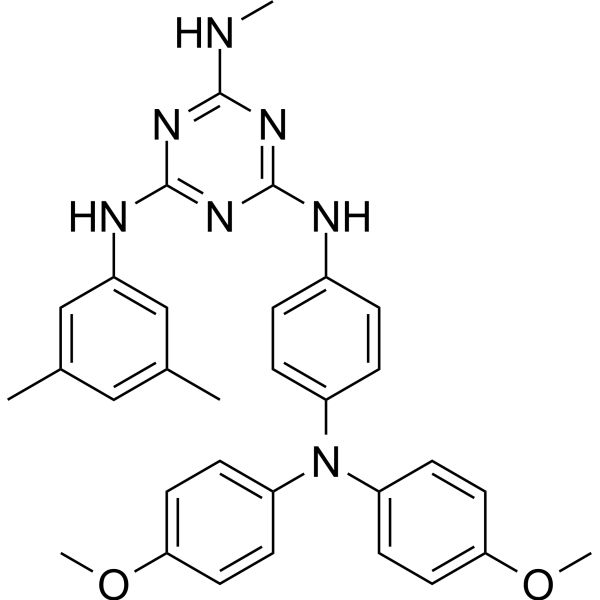
gTPA2-OMe is a potential hole transport layer candidate for perovskite solar cells (PSCs).
loading...
    loading...
Cat. No.: HY-187821
CAS No.: 2231121-62-1
Research Areas:  

Others

4-F-br-4C is a fluorine-substituted BDPSO hole-transporting material that serves as a dopant-free HTM for inverted MAPbI3 perovskite solar cells. The MAPbI3 solar cells constructed with 4-F-br-4C exhibit an average power conversion efficiency (PCE) of 14.4%. 4-F-br-4C can be used in the research of perovskite solar cells and organic electronic materials .
loading...
    loading...

