9 Results for "

persister cell

" in MedChemExpress (MCE) Product Catalog:
Products (9)

9 Results for "persister cell" in MCE Product Catalog:

17
17 Publications Verification
Cat. No.: HY-100421
CAS No.: 1628208-23-0
Purity:  98.31%
Target:  

Histone Demethylase

Research Areas:  

Cancer

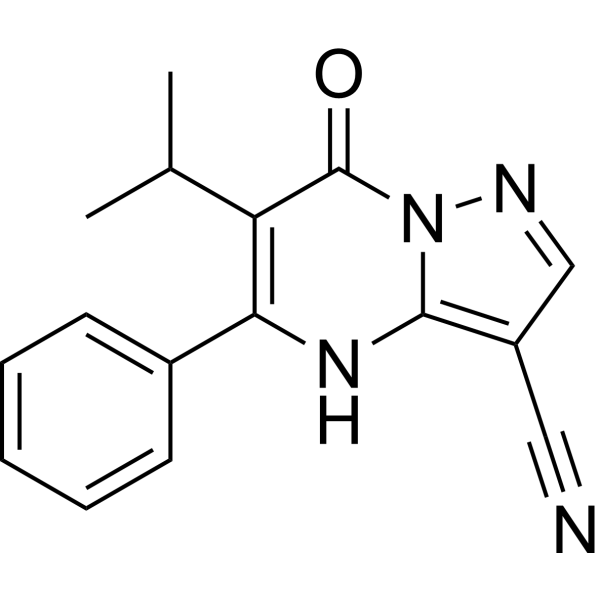
CPI-455 is a specific, pan-KDM5 inhibitor with an IC50 of 10 nM for KDM5A. CPI-455 mediates KDM5 inhibition, elevates global levels of H3K4me3, and decreases the number of drug-tolerant persister cancer cells in multiple cancer cell line models treated with standard chemotherapy or targeted agents .
loading...
    loading...
17
17 Publications Verification
Cat. No.: HY-100421A
CAS No.: 2095432-28-1
Target:  

Histone Demethylase

Research Areas:  

Cancer

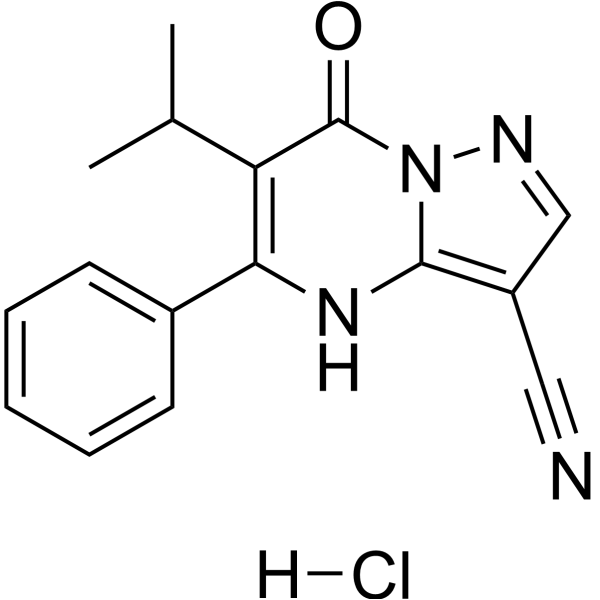
CPI-455 hydrochloride is a specific, pan-KDM5 inhibitor with an IC50 of 10 nM for KDM5A. CPI-455 hydrochloride mediates KDM5 inhibition, elevates global levels of H3K4me3, and decreases the number of drug-tolerant persister cancer cells in multiple cancer cell line models treated with standard chemotherapy or targeted agents .
loading...
    loading...
1
1 Cited Publications
Cat. No.: HY-Y1718
CAS No.: 638-53-9
Synonyms: N-Tridecanoic acid
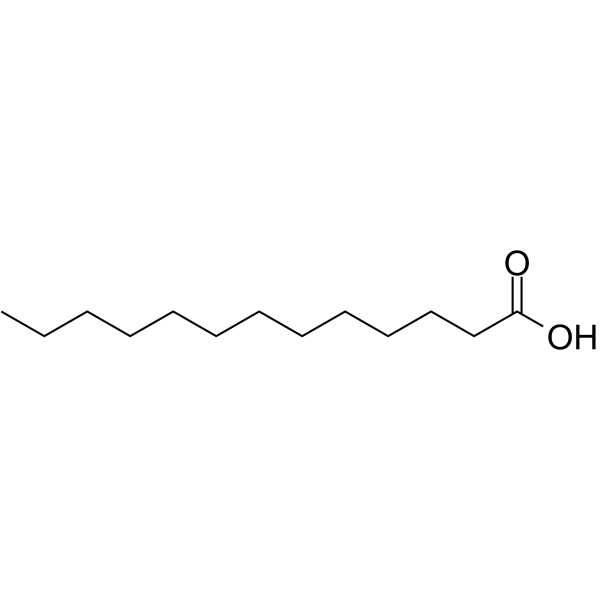
Tridecanoic acid (N-Tridecanoic acid) is a medium-chain saturated fatty acid and inhibitor with no antibacterial activity against enterohemorrhagic E. coli (EHEC). When used in combination with Ciprofloxacin (HY-B0356) or Ampicillin (HY-B0522), Tridecanoic acid suppresses persister formation in exponentially growing E. coli and EHEC, but exerts no inhibitory effect on persister formation induced by Kanamycin (HY-16566) or in stationary-phase cells. Tridecanoic acid inhibits biofilm formation in EHEC. It can be used in the research of bacterial infections .
loading...
    loading...
Cat. No.: HY-P10233A
Target:  

Bacterial

Research Areas:  

Infection

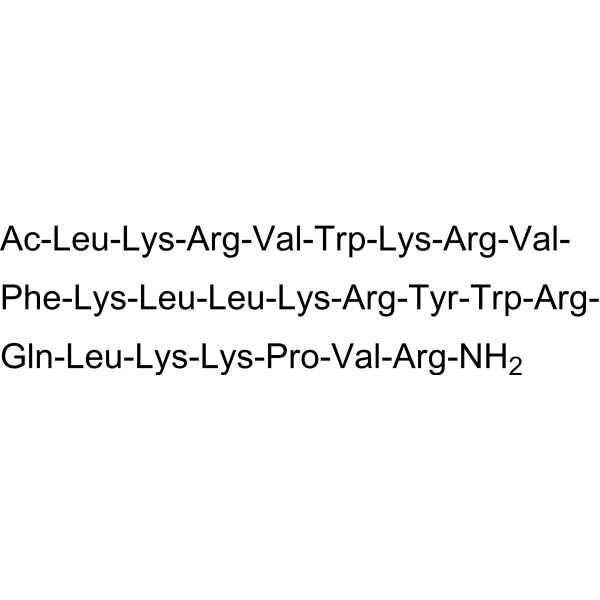
SAAP 148 TFA is a synthetic antimicrobial peptide (bacteria) that interacts with and disrupts the lipid bilayer of bacterial cytoplasmic membranes, thereby inducing changes in membrane permeability and bacterial death. SAAP 148 TFA kills drug-resistant, multidrug-resistant and persister bacterial strains, inhibits biofilm formation, eliminates established biofilms, and blocks bacterial colonization on implant surfaces. SAAP 148 TFA retains its activity after modification or immobilization, exhibits variable cytotoxicity in different human cell models, and shows reduced efficacy in protein-rich environments. SAAP 148 TFA can be used in infection-related research .
loading...
    loading...
Cat. No.: HY-P10233
Target:  

Bacterial

Research Areas:  

Infection

SAAP 148 is a synthetic antimicrobial peptide (bacteria) that interacts with and disrupts the lipid bilayer of bacterial cytoplasmic membranes, thereby inducing changes in membrane permeability and bacterial death. SAAP 148 kills drug-resistant, multidrug-resistant and persister bacterial strains, inhibits biofilm formation, eliminates established biofilms, and blocks bacterial colonization on implant surfaces. SAAP 148 retains its activity after modification or immobilization, exhibits variable cytotoxicity in different human cell models, and shows reduced efficacy in protein-rich environments. SAAP 148 can be used in infection-related research .
loading...
    loading...
Cat. No.: HY-P11106
CAS No.: 116355-81-8
Target:  

Bacterial

Research Areas:  

Infection

cCF10 is a peptide sex pheromone. cCF10 induces transfer of the conjugative plasmid pCF10 from plasmid-containing donor cells to plasmid-free recipient cells. cCF10 induces Opp system and enters bacterial cells to inhibit (p)ppGpp accumulation. cCF10 reduces persister cell generation via maintaining the metabolically active state of bacteria .
loading...
    loading...
Cat. No.: HY-100421R
CAS No.: 1628208-23-0
Research Areas:  

Cancer

CPI-455 (Standard) is the analytical standard of CPI-455 (HY-100421). This product is intended for research and analytical applications. CPI-455 is a specific, pan-KDM5 inhibitor with an IC50 of 10 nM for KDM5A. CPI-455 mediates KDM5 inhibition, elevates global levels of H3K4me3, and decreases the number of drug-tolerant persister cancer cells in multiple cancer cell line models treated with standard chemotherapy or targeted agents .
loading...
    loading...
Cat. No.: HY-L003
3,690 compounds

Apoptosis is an ordered and orchestrated cellular process that occurs in physiological and pathological conditions, which is also called programmed cell death (PCD). Apoptosis plays a crucial role in developing and maintaining the health of the body by eliminating old cells, unhealthy cells and unnecessary cells. Too little or too much apoptosis contribute to many diseases. When apoptosis does not work correctly, cells that should be eliminated may persist and become immortal, for example, in cancer and leukemia. When apoptosis works overly well, it kills too many cells and inflicts grave tissue damage. This is the case in strokes and neurodegenerative disorders such as Alzheimer's, Huntington's, and Parkinson's disease.

MCE designs a unique collection of 3,690 apoptosis-related compounds mainly focusing on the key targets in the apoptosis signaling pathway and can be used in the research of apoptosis signal pathway and related diseases.

Cat. No.: HY-121407A
CAS No.: 2180287-51-6
(Rac)-Lateritin is an acyl-CoA:cholesterol acyltransferase (ACAT/SOAT) inhibitor, with IC50 values of 5.7 μM and 5.6 μM in rat liver, respectively. (Rac)-Lateritin exerts time-dependent irreversible enzyme inhibition that persists even after microsomal washing. (Rac)-Lateritin inhibits cholesterol ester formation in macrophages without altering triglyceride synthesis or other steps in oxidized low-density lipoprotein metabolism. (Rac)-Lateritin inhibits the growth of cancer cells, Gram-positive bacteria, and Candida albicans. (Rac)-Lateritin can be used in studies related to atherosclerosis, human solid tumors, mouse lymphocytic leukemia, as well as fungal and bacterial infections .
loading...
    loading...

