
28 Results for "

phenotypic

" in MedChemExpress (MCE) Product Catalog:
Products (28)

28 Results for "phenotypic" in MCE Product Catalog:

5
5 Cited Publications
Cat. No.: HY-101026
CAS No.: 1693731-40-6
Purity:  98.82%
Target:  

HSP

Research Areas:  

Cancer

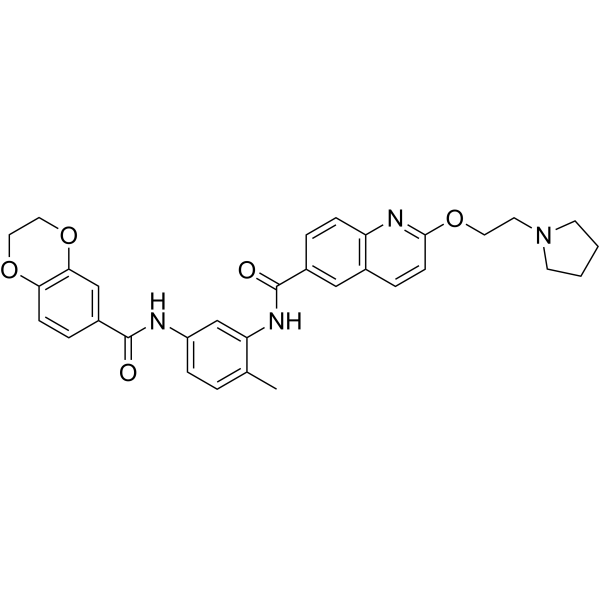
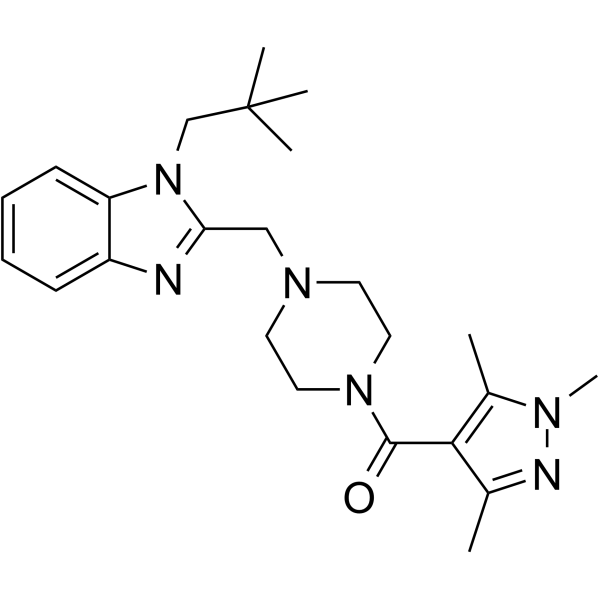
CCT251236 is an orally available pirin ligand from a heat shock transcription factor 1 (hsf1) phenotypic screen with an IC50 of 19 nM for inhibition of HSF1-mediated HSP72 induction.
loading...
    loading...
1
1 Cited Publications
Cat. No.: HY-P99236
CAS No.: 2259301-27-2
Synonyms: FP-1305
Bexmarilimab (FP-1305) is a potent humanized anti-CLEVER-1 IgG4 antibody with an IC50 value of 4.51 nM. Bexmarilimab is capable of inducing a phenotypic M2 to M1 immune switch of tumor-associated macrophages. Bexmarilimab can promote antigen presentation and pro-inflammatory cytokine secretion. Bexmarilimab can induce B-cell and T-cell activation. Bexmarilimab can be used in researches of immunology and cancer, such as colorectal carcinoma .
loading...
    loading...
1
1 Cited Publications
Cat. No.: HY-W105750
CAS No.: 1191-25-9
Synonyms: 6-HHA
6-Hydroxyhexanoic acid (6-HHA) is a bacterial effector molecule with metabolic and immunomodulatory activities. 6-Hydroxyhexanoic acid activates the JAK1-STAT1 signaling pathway, promotes phenotypic conversion of M2 macrophages to M1 macrophages, and exerts anti-tumor effects by regulating macrophage polarization. 6-Hydroxyhexanoic acid inhibits lipolysis in adipocytes mediated by Gαi family GPCR, and reduces high-fat diet-induced weight gain and obesity. 6-Hydroxyhexanoic acid can be used in studies related to pancreatic ductal adenocarcinoma, obesity, and insulin resistance .
loading...
    loading...
Cat. No.: HY-11095
CAS No.: 226878-01-9
Purity:  98.83%
NPS 2390 is an allosteric antagonist of calcium-sensing receptor (CaSR) and mGluR1/5. NPS 2390 inhibits the PI3K/Akt/mTOR signaling pathway, reduces hypoxia-induced intracellular calcium elevation, decreases the expression of autophagy (autophagy) proteins, regulates the expression of phenotypic marker proteins, and inhibits the proliferation of pulmonary artery smooth muscle cells. NPS 2390 attenuates the endogenous apoptosis (apoptosis) pathway, increases the expression level of Bcl-2, downregulates the expression levels of Bax, cytochrome c and caspase-3, alleviates cerebral edema and improves neurological function in rat models. NPS 2390 can be used in studies related to hypoxic pulmonary hypertension, traumatic brain injury, stroke and pain .
loading...
    loading...
Cat. No.: HY-142006
CAS No.: 120330-93-0
Synonyms: (-)-JA-L-Ile
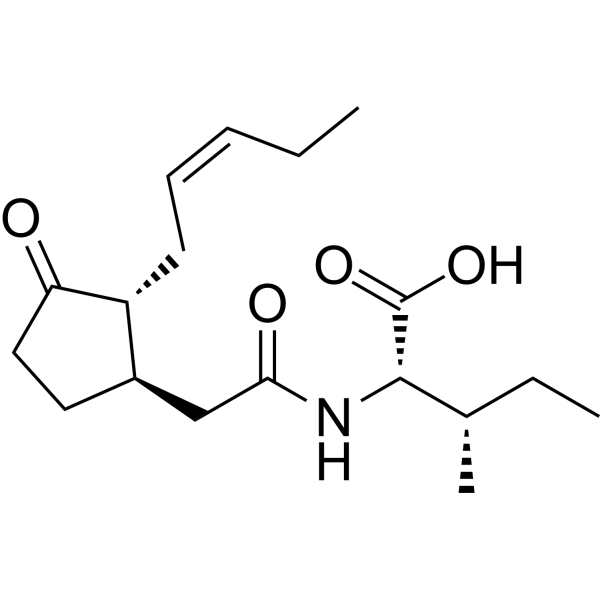
(-)-Jasmonoyl-L-isoleucine ((-)-JA-L-Ile) is an inactive hormone and jasmonic acid-amino acid conjugate, as well as a stereoisomer of (+)-7-iso-JA-L-Ile. (-)-Jasmonoyl-L-isoleucine fails to promote the formation of the COI1-JAZ protein complex. (-)-Jasmonoyl-L-isoleucine does not induce jasmonic acid-dependent phenotypic responses in Arabidopsis seedlings, including root growth inhibition and anthocyanin accumulation .
loading...
    loading...
Cat. No.: HY-P991444
Target:  

NTPDase ATP Synthase

Research Areas:  

Inflammation/Immunology Cancer

IPH5201 is a selective CD39 inhibitor and a humanized IgG1 monoclonal antibody. IPH5201 selectively binds to and inhibits the enzymatic activity of both membrane-bound and soluble CD39, blocking ATP hydrolysis. IPH5201 enhances the phenotypic maturation and activation of dendritic cells and macrophages. IPH5201 potentiates the anti-tumor effect of Oxaliplatin (HY-17371). IPH5201 shows preliminary evidence of disease stabilization in advanced solid tumor models when used as a single agent or in combination with Durvalumab (HY-P9919). IPH5201 can be used for the research of advanced solid tumors .
loading...
    loading...
Cat. No.: HY-136688
CAS No.: 2222635-92-7
Purity:  99.34%
MI-389 is a potent menin-MLL interaction inhibitor (IC50=25 nM) and a CRBN-recruiting, GSPT1-targeted PROTAC degrader. MI-389 upregulates myeloid differentiation-related genes that are lowly expressed in primitive hematopoietic progenitor cells, thereby inducing myeloid differentiation phenotypic changes in MLL-rearranged leukemia cells. MI-389 competitively blocks the MG-H1-RAGE interaction to interfere with the AGEs-RAGE pathway, thus alleviating AGEs-induced HUVEC injury . MI-389 can be used in studies related to MLL-rearranged acute leukemia .
loading...
    loading...
Cat. No.: HY-N2439
CAS No.: 93-16-3
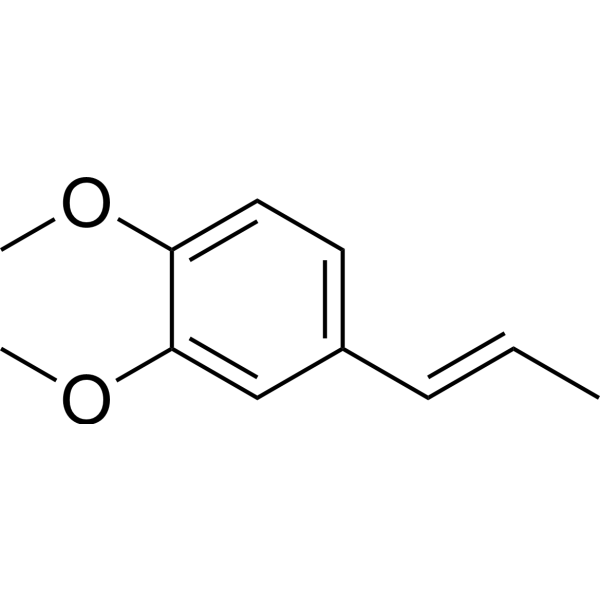
Methyl isoeugenol is an orally active, blood-brain barrier-permeable isoeugenol-type eugenol analog. Methyl isoeugenol promotes the nuclear translocation of Nrf2, upregulates the expressions of HO-1, NQO1 and SOD, and reduces the expression level of MDA. Methyl isoeugenol decreases the nuclear translocation of NF-κB. Methyl isoeugenol inhibits NLRP3 inflammasome-mediated pyroptosis. Methyl isoeugenol reduces cerebral infarction volume and regulates the M1/M2 phenotypic balance of microglia. Methyl isoeugenol can be used for the research of cerebral ischemia-reperfusion injury .
loading...
    loading...
Cat. No.: HY-178012
CAS No.: 2499855-36-4
Target:  

IRAK TNF Receptor

Research Areas:  

Inflammation/Immunology

GLPG4471 is a selective and orally active IRAK4 inhibitor with an IC50 of 1.7 nM. GLPG4471 exhibits potent inhibition of cytokine (TNFα and IFNα) secretion in cellular and whole blood phenotypic assays. GLPG4471 displays significant activity in a mouse model of collagen-induced arthritis. GLPG4471 can be used for the study of arthritis .
loading...
    loading...
Cat. No.: HY-142655
CAS No.: 2710375-18-9
Target:  

Farnesyl Transferase

Research Areas:  

Infection

Ftase inhibitor III is an anion-dependent Farnesyltransferase inhibitor from a phenotypic screen.
loading...
    loading...
Cat. No.: HY-122989
CAS No.: 53948-10-0
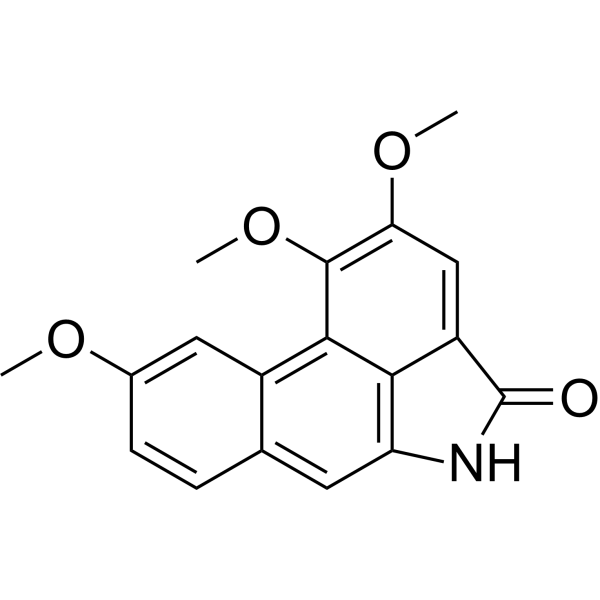
Aristolactam BIII is a potent DYRK1A inhibitor and inhibits the kinase activity of DYRK1A in vitro (IC50= 9.67 nM. Aristolactam BIII rescues the proliferative defects of DYRK1A transgenic (TG) mouse-derived fibroblasts and neurological and phenotypic defects of DS-like Drosophila models .
loading...
    loading...
Cat. No.: HY-125153
CAS No.: 60267-34-7
Purity:  99.35%
Target:  

Influenza Virus

Research Areas:  

Others

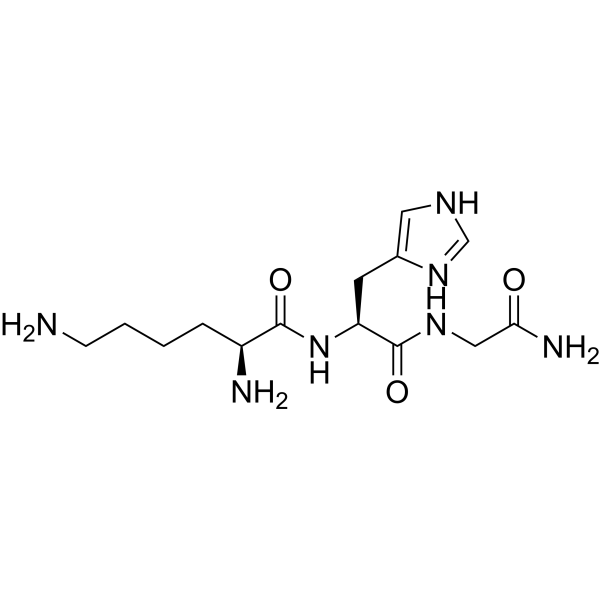
Bursin is a peptide that can be isolated from the bursa of Fabricius of chicken. Bursin induces the phenotypic differentiation of mammalian and avian B precursor cells. Bursin also increases cyclic guanosine monophosphate in cells of the human B-cell line Daudi, its derivatives are able to protect against infection by amplifying the immune response induced by H9N2 .
loading...
    loading...
Cat. No.: HY-176451
Target:  

HyT CDK Apoptosis

Research Areas:  

Cancer

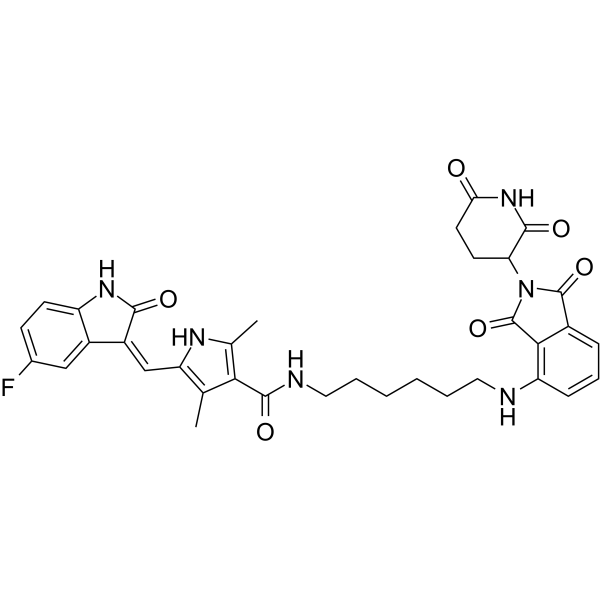
CDK9 degrader-1 is a HyT-type CDK9 degrader that selectively induces protein degradation by recruiting ATG101 (with a DC50 of 0.4073 μM in HCT116 cells). CDK9 degrader-1 recruits ATG101 to initiate the autophagy-lysosome pathway, forming LC3-containing autophagosomes that fuse with lysosomes to degrade CDK9. CDK9 degrader-1 mediates the degradation of Cyclin T1 via the same autophagy-lysosome pathway. CDK9 degrader-1 induces downstream phenotypic effects associated with CDK9 degradation. CDK9 degrader-1 can be used in the research of colorectal cancer (Blue: hydrophobic group; Pnk: CDK9 ligand (HY-50940); Black: linker (HY-N0420)) .
loading...
    loading...
Cat. No.: HY-139863
CAS No.: 3031364-03-8
Target:  

Bacterial

Research Areas:  

Infection

Antibacterial agent 62 is a novel redox cycling antituberculosis chemotype with potent bactericidal activity against growing and nutrient-starved phenotypically drug-resistant nongrowing bacteria.
loading...
    loading...
Cat. No.: HY-125153A
CAS No.: 136994-55-3
Target:  

Others

Research Areas:  

Endocrinology

Bursin triacetate is a peptide that can be isolated from the bursa of Fabricius in chickens. It promotes the phenotypic differentiation of B precursor cells in both mammals and birds. Bursin triacetate increases cyclic guanosine monophosphate levels in the human B-cell line Daudi .
loading...
    loading...
Cat. No.: HY-116557
CAS No.: 140652-99-9
Research Areas:  

Others

JCP-265 is a compound used for in vivo phenotypic screening of small molecule libraries, which has the activity of screening molecules that regulate cell function. JCP-265 uses molecular cell barcoding technology to directly screen small molecule libraries in vivo for studying complex physiological processes, such as screening compounds related to targets in pancreatic cancer metastasis seeding studies.
loading...
    loading...
Cat. No.: HY-101026R
CAS No.: 1693731-40-6
Target:  

HSP Reference Standards

Research Areas:  

Cancer

CCT251236 (Standard) is the analytical standard of CCT251236 (HY-101026). This product is intended for research and analytical applications. CCT251236 is an orally available pirin ligand from a heat shock transcription factor 1 (hsf1) phenotypic screen with an IC50 of 19 nM for inhibition of HSF1-mediated HSP72 induction.
loading...
    loading...
Cat. No.: HY-180796
CAS No.: 3075162-42-1
Target:  

Pyruvate Kinase

Research Areas:  

Cardiovascular Disease

PKM2 agonist-1 (Compound D16) is a highly effective, allosteric PKM2 agonist with an AC50 value of 77 nM. PKM2 agonist-1 inhibits Ang II-induced smooth muscle cell phenotypic switching. PKM2 agonist-1 effectively prevents aortic dissection and results in reduced mortality .
loading...
    loading...
Cat. No.: HY-184153
CAS No.: 3129691-65-9
Target:  

Drug Isomer

Research Areas:  

Others

IMP-2958 is an inactive enantiomeric negative control probe with significantly reduced binding to RAB27A/B-Cys123.IMP-2958 serves as a negative control probe for off-target binding in phenotypic assays related to RAB27A/B studies.IMP-2958 functions as a control for stereoselective targeted covalent inhibitors of the RAB27-effector protein-protein interaction .
loading...
    loading...
Cat. No.: HY-L099
2,293 compounds

MCE Targeted Diversity Library contains 2,293 compounds, covering more than 1000 targets and isoforms, such as GPCRs, Ion channel, variety of kinases, etc. 1-3 compounds with high potency and selectivity were carefully selected for each target and isoform. The bioactivity information of each compound has been clearly reported in the literatures. This library is a concise collection of small molecule compounds with comprehensive target coverage, which can be used for phenotypic screening at low cost.

