
98 Results for "

photostability

" in MedChemExpress (MCE) Product Catalog:
Products (98)

98 Results for "photostability" in MCE Product Catalog:

86
86 Publications Verification
Cat. No.: HY-116215
CAS No.: 186689-07-6
Purity:  99.74%
Target:  

Fluorescent Dye

Research Areas:  

Others

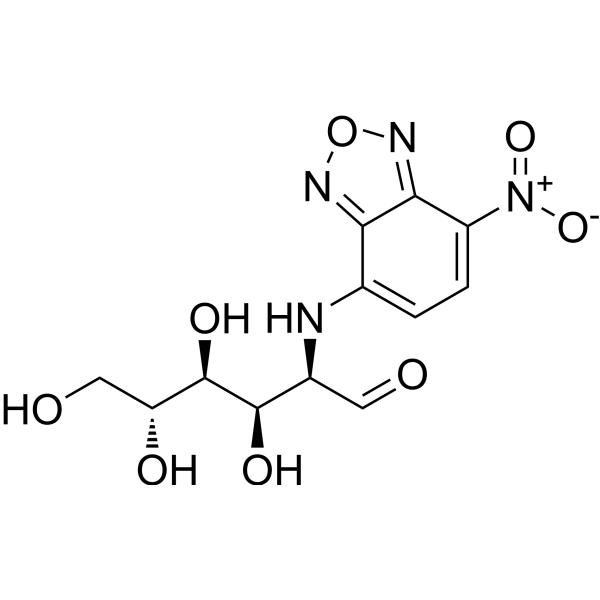
2-NBDG is a fluorescently-labeled deoxyglucose analog that is used primarily to directly monitor glucose uptake by living cells and tissues. It is also used as a topical contrast reagent for the detection of neoplasia. 2-NBDG can be used in real-time confocal, high-resolution, or wide-field fluorescence microscopy as well as in flow cytometry. The probe can be excited by the Argon laser at 488 nm to give the environment-sensitive fluorescence. It has lower photostability than the rhodamine-based fluorescent probes.
loading...
    loading...
3
3 Cited Publications
Cat. No.: HY-15942
CAS No.: 91809-66-4
Target:  

Fluorescent Dye

Research Areas:  

Others

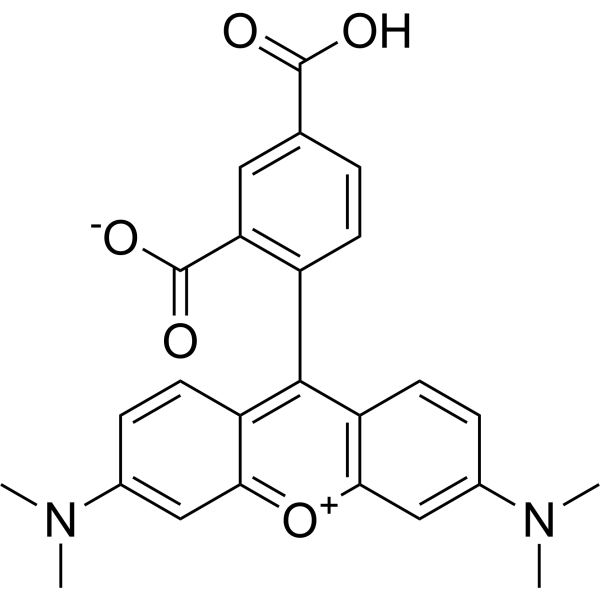
5-TAMRA can produce bright, pH-insensitive orange-red fluorescence (excitation and emission extremes of 546/579) and has good photostability. 5-TAMRA is mainly used as a fluorescent marker for the synthesis and study of specific oligonucleotide probes .
loading...
    loading...
3
3 Cited Publications
Cat. No.: HY-D2346
HBmito Crimson is a deep red fluorescent probe (λex: 658 nm, λem: 678 nm) for the inner mitochondrial membrane. HBmito Crimson is a cell membrane-permeable probe with high selectivity for the mitochondrial inner membrane, suitable for specific fluorescence staining of the inner mitochondrial membrane in living cells. HBmito Crimson has high photostability and brightness, suitable for long-term dynamic fluorescence imaging.
loading...
    loading...
2
2 Cited Publications
Cat. No.: HY-D0048
CAS No.: 150810-68-7
Synonyms: 5-TAMRA-NHS ester; 5-Carboxytetramethylrhodamine succinimidyl ester
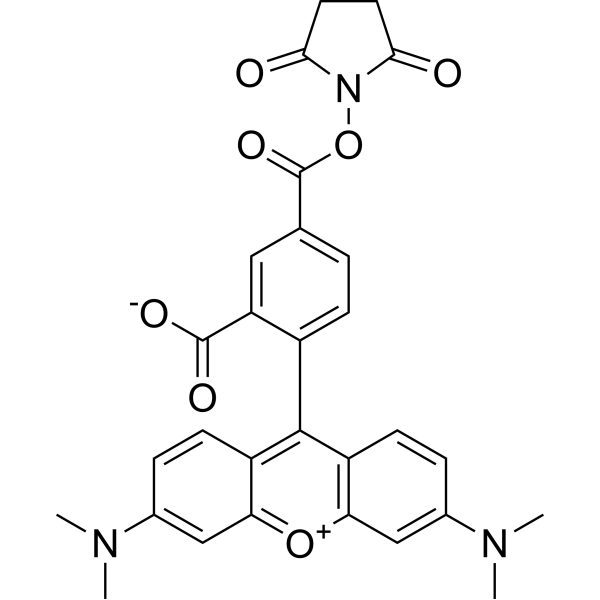
5-TAMRA-SE is an amine-reactive fluorescent agent, and its conjugate produces bright, pH-insensitive orange-red fluorescence with good photostability (Ex/Em = 565/580 nm).
loading...
    loading...
1
1 Cited Publications
Cat. No.: HY-D1375
CAS No.: 2183440-44-8
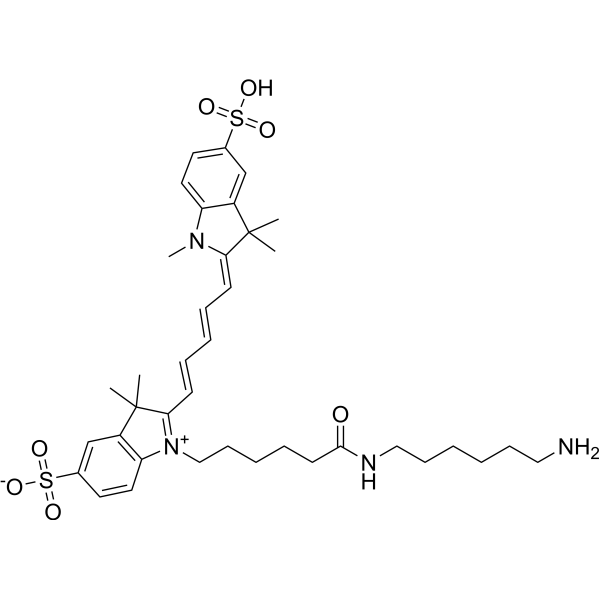
Sulfo-Cy5 amine is a Cyanine 5 (Cy5) (HY-D0821) dye derivative with an amine group. Sulfo-Cy5 amine can endow silica nanoparticles with fluorescent properties, be internalized by cancer cells, and exhibit enhanced photostability after being incorporated into silica nanoparticles. Its maximum excitation wavelength is approximately 646 nm, and maximum emission wavelength is approximately 662 nm .
loading...
    loading...
1
1 Cited Publications
Cat. No.: HY-D1719A
Target:  

Fluorescent Dye

Research Areas:  

Cancer

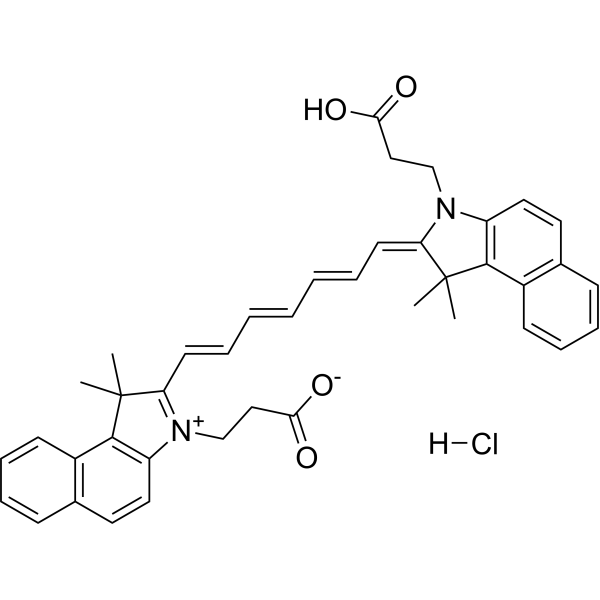
Cypate is a near-infrared fluorescent dye that belongs to the family of photosensitizers. Cypate has high photostability and optical properties, and is often used in near-infrared optical imaging, as well as optical imaging, tumor marking, and drug delivery. In addition, Cypate is also used as a molecular probe and combined with targeting molecules (such as CBT or small interfering RNA) to achieve efficient detection and imaging of specific cells or tissues .
loading...
    loading...
1
1 Cited Publications
Cat. No.: HY-W127832
CAS No.: 123148-15-2
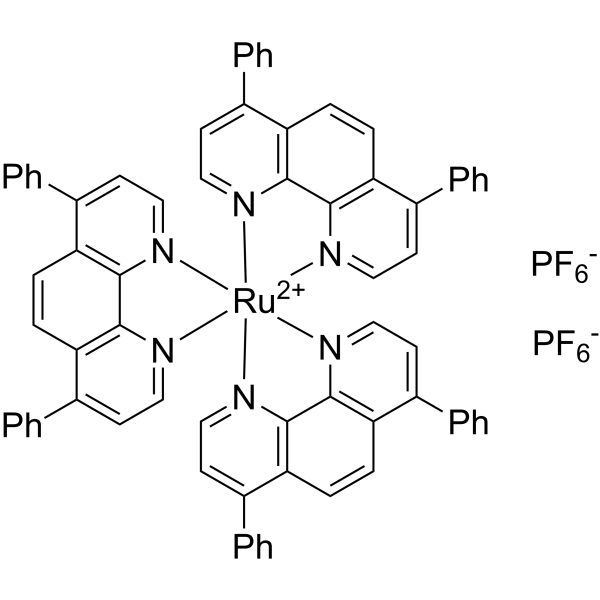
Ru(dpp)3(PF6)2 is a ruthenium (II) polypyridine complex and oxygen-sensing luminophore with excellent photostability and bright orange emission properties based on metal-to-ligand charge transfer (MLCT). Ru(dpp)3(PF6)2 undergoes oxygen-induced collisional luminescence quenching following the Stern-Volmer relationship, and can also engage in Förster-type resonance energy transfer with closed-form BTF6. Featuring excellent photophysical and electrochemical properties, Ru(dpp)3(PF6)2 is applied in studies on quenching-type oxygen sensors based on fluorinated ORMOSIL/xerogels and solid-state light-emitting devices .
loading...
    loading...
Cat. No.: HY-111474
CAS No.: 2097734-03-5
Purity:  99.90%
Target:  

Myosin

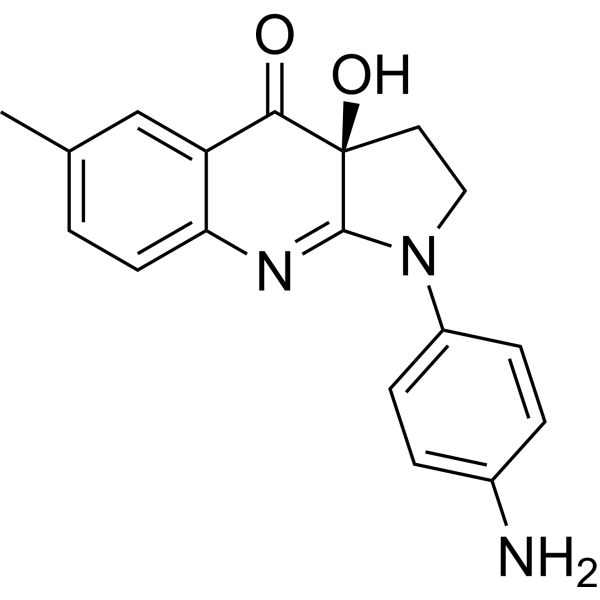
Para-aminoblebbistatin is the inhibitor for myosin II. Para-aminoblebbistatin inhibits the ATPase activity of myosin II, thereby blocking the formation and contraction of the actin-myosin network. Para-aminoblebbistatin is a non-fluorescent and photostable Blebbistatin (HY-13813) derivative .
loading...
    loading...
Cat. No.: HY-D2348A
ACE TFA is a low-background, photostable fluorophore with nanomolar binding affinity for the Okra RNA aptamer. ACE TFA enables clear visualization of mRNA in live bacteria and mammalian cells, including tracking the trafficking of mRNA to stress granules and dual-color super-resolution imaging of RNA in live cells. (Ex=488 nm, Em=555 nm) .
loading...
    loading...
Cat. No.: HY-D2189
CAS No.: 916821-46-0
Synonyms: IR 700DX NHS ester
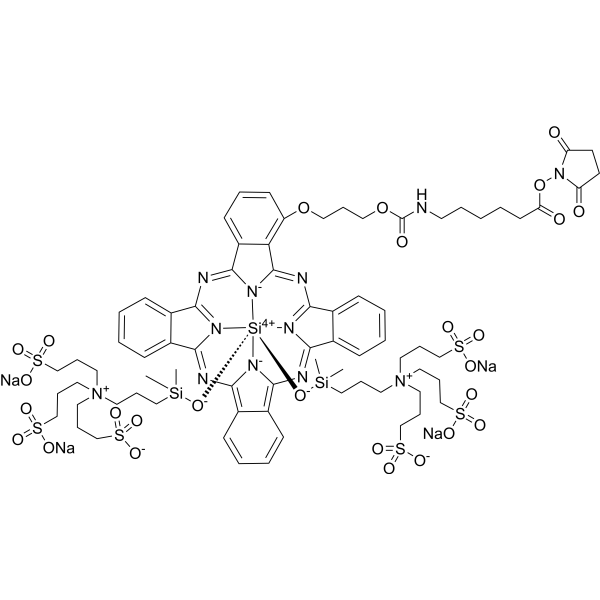
IR 700DX (IR 700DX NHS ester) is a near-infrared (NIR) phthalocyanine dye with extremely high photostability and fluorescence intensity. IR 700DX binds to biomolecules. IR 700DX has excellent water solubility, large extinction coefficient, high fluorescence quantum yield, and does not aggregate in high ionic strength buffers. IR 700DX can be used as a highly flexible photosensitizer .
loading...
    loading...
Cat. No.: HY-109656
CAS No.: 302776-68-7
Purity:  99.92%
Synonyms: DHHB
Research Areas:  

Others

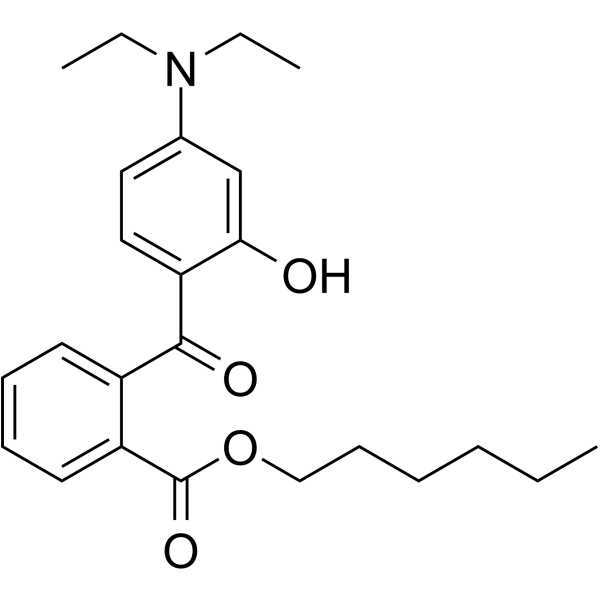
Diethylamino hydroxybenzoyl hexyl benzoate is a photostable UV-A absorber.
loading...
    loading...
Cat. No.: HY-120870
CAS No.: 1621326-32-6
Purity:  ≥99.0%
Synonyms: (-)-para-Nitroblebbistatin
Target:  

Myosin

Research Areas:  

Others

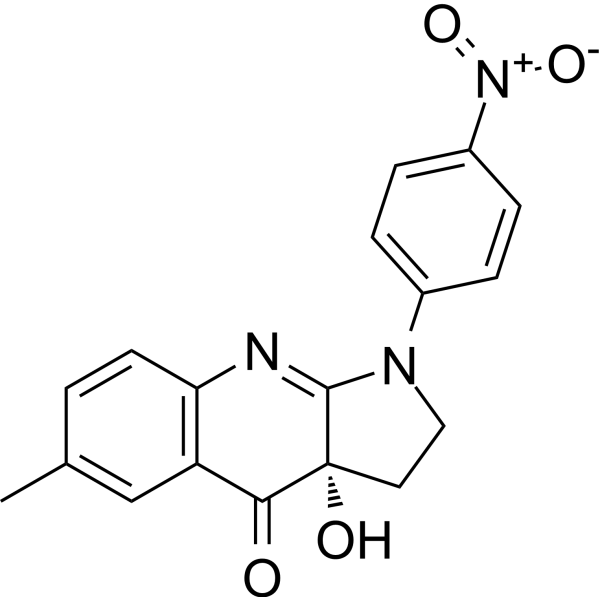
para-Nitroblebbistatin is a derivative of Blebbistatin (HY-13813) and an inhibitor of myosin II. para-Nitroblebbistatin is photostable, non-cytotoxic, and non-phototoxic. para-Nitroblebbistatin can serve as an ideal substitute for Blebbistatin (HY-13813) to study the role of myosin II in physiology, development, and cell biology .
loading...
    loading...
Cat. No.: HY-W800703
CAS No.: 1872449-19-8
Target:  

Fluorescent Dye

Research Areas:  

Others

Alexa Fluor 594 azide is an azide-modified fluorescent dye and also a FRET acceptor reactant. Owing to its negligible direct absorption under 488 nm excitation light, excellent photostability, and the ability of its azide group to participate in the CuAAC reaction, Alexa Fluor 594 azide can be paired with a donor dye for single-molecule imaging via TIRFM, thereby enabling the visual monitoring of CuNP-catalyzed click reactions .
loading...
    loading...
Cat. No.: HY-DY1019
CAS No.: 186689-07-6
2-NBDG (solution) is a fluorescently-labeled deoxyglucose analog that is used primarily to directly monitor glucose uptake by living cells and tissues. It is also used as a topical contrast reagent for the detection of neoplasia. 2-NBDG can be used in real-time confocal, high-resolution, or wide-field fluorescence microscopy as well as in flow cytometry. The probe can be excited by the Argon laser at 488 nm to give the environment-sensitive fluorescence. It has lower photostability than the rhodamine-based fluorescent probes.
Solvent and Concentration: Sterile PBS: 5 mM
loading...
    loading...
Cat. No.: HY-D2348
CAS No.: 3058751-62-2
ACE is a low-background, photostable fluorophore with nanomolar binding affinity for the Okra RNA aptamer. ACE enables clear visualization of mRNA in live bacteria and mammalian cells, including tracking the trafficking of mRNA to stress granules and dual-color super-resolution imaging of RNA in live cells. (Ex=488 nm, Em=555 nm) .
loading...
    loading...
Cat. No.: HY-D1320
CAS No.: 1267539-32-1
Target:  

Fluorescent Dye

Research Areas:  

Others

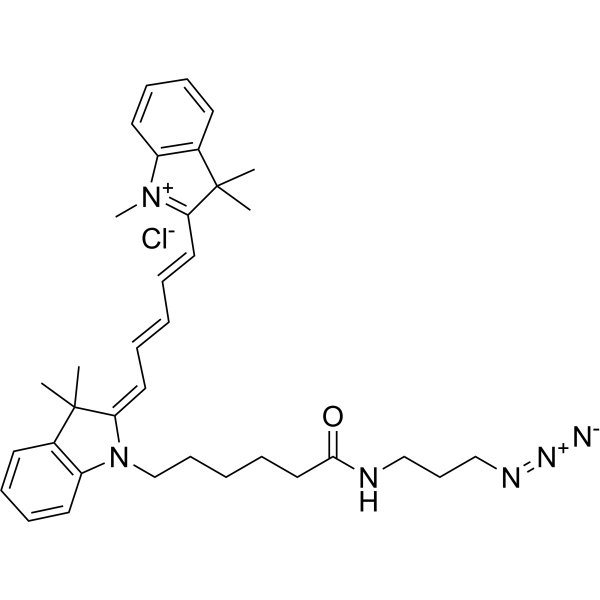
Cyanine5 azide chloride is a Fluorescent probe for cell-selective bacterial protein labeling, as well as a fluorescent dye for single-molecule imaging and dynamic tracking of intracellular organelles. Cyanine5 azide chloride can conjugate with the alkynyl side chain of propargylglycine incorporated into bacterial proteins by the engineered methionyl-tRNA synthetase variant PraRS via copper (I)-catalyzed azide-alkyne [3+2] cycloaddition reaction, thereby enabling in-gel fluorescent visualization of labeled proteins. Cyanine5 azide chloride can diffuse across cell membranes and undergo copper-free click reaction with DBCO-functionalized scAVD pre-bound to DBCO-functionalized biotin, forming fluorescent nanoprobes with enhanced brightness, photostability and localization accuracy, and exhibiting discrete photobleaching steps. The excitation wavelength of Cyanine5 azide chloride is Ex = 633 nm .
loading...
    loading...
Cat. No.: HY-D2166
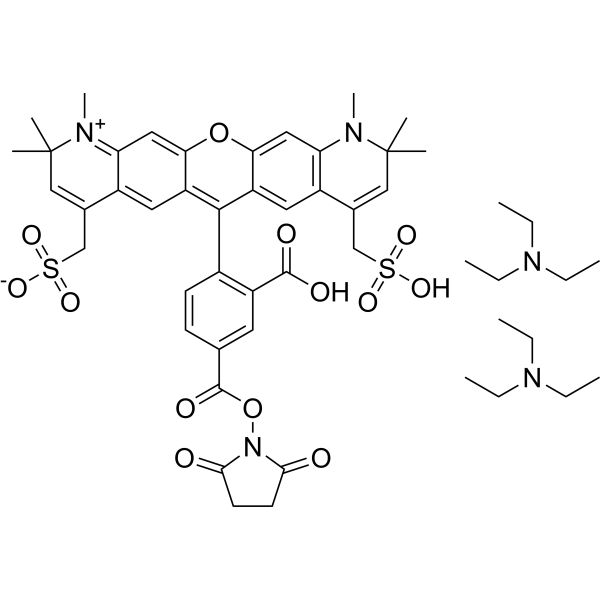
AF 594 NHS ester is a derivative of the red fluorescent dye AF 594 with high fluorescence quantum yield and high photostability (Ex=594 nm, Em=615 nm). AF 594 NHS ester can form an ester bond by reacting the NHS group with ammonia, with maximum excitation wavelength of 594 nm .
loading...
    loading...
Cat. No.: HY-W110898
CAS No.: 2381-85-3
Target:  

Fluorescent Dye

Research Areas:  

Others

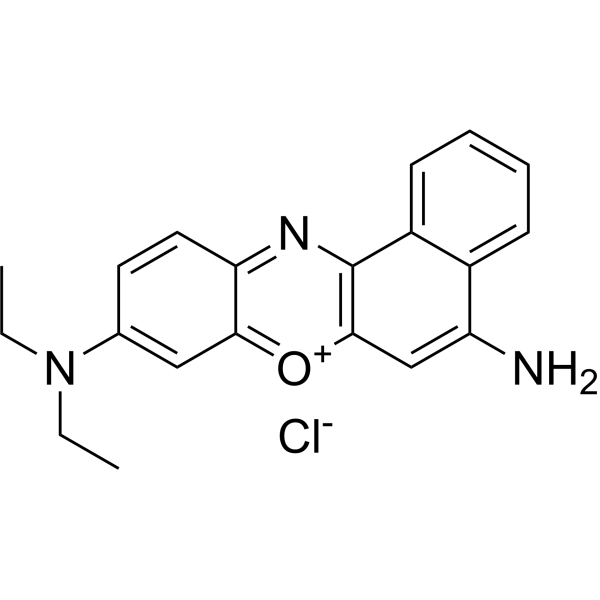
Nile blue chloride is a highly fluorescent and photostable organic dye. Nile blue chloride and fluorescein isothiocyanate (FITC) can be used to construct a ratiometric pH sensitive probe for tracking the pH of the extracellular fluid between cancer cells in realtime. Nile Blue chloride has the potential for the research of nonlinear optics .
loading...
    loading...
Cat. No.: HY-D0820
CAS No.: 1345823-20-2
Synonyms: Sulfo-Cyanine5-alkyne
Research Areas:  

Others

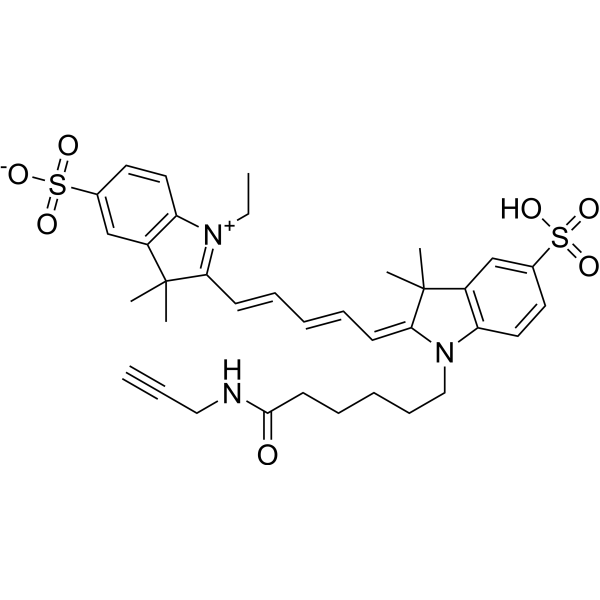
CY5-YNE (Sulfo-Cyanine5-alkyne) is a class of near-infrared fluorescent dye derivatives used in research related to the labeling of proteins, peptides, nucleic acids, and nanomaterials. CY5-YNE is a click chemistry reagent. It contains an Alkyne group and can undergo copper-catalyzed azide-alkyne cycloaddition (CuAAc) with molecules containing Azide groups. CY5-YNE exhibits photostable emission properties in imaging applications, enabling covalent labeling of azide-modified substrates .
loading...
    loading...
Cat. No.: HY-153843
Research Areas:  

Others

RNA Aptamer Corn (sodium) is a 28-nt-long aptamer that is substantially shorter than Spinach and Spinach2 and exhibits bright red fluorescence upon binding DFHO (a soluble analog of the intrinsic fluorophore of red fluorescent protein), RNA Aptamer Corn (sodium) can be used to visualize RNA expression or localization in live cells which have been soaked with chromophores. The Corn-DFHO does not become appreciably cytotoxic when illuminated. And most importantly, Corn-DFHO exhibits markedly increased photostability compared to other aptamer-chromophore complexes both in vitro and in vivo. (36 nt Corn construct: 5'-GGCGCGAGGAAGGAGGUCUGAGGAGGUCACUGCGCC-3'; A 36-nt RNA construct, comprised of the 28-nt minimal Corn sequence extended proximally with a 4 base-pair stem.)
loading...
    loading...

