7 Results for "

polyglutamine

" in MedChemExpress (MCE) Product Catalog:
Products (7)

7 Results for "polyglutamine" in MCE Product Catalog:

7
7 Cited Publications
Cat. No.: HY-P2260
CAS No.: 1423821-88-8
Target:  

CHIKV Autophagy HIV

Research Areas:  

Infection

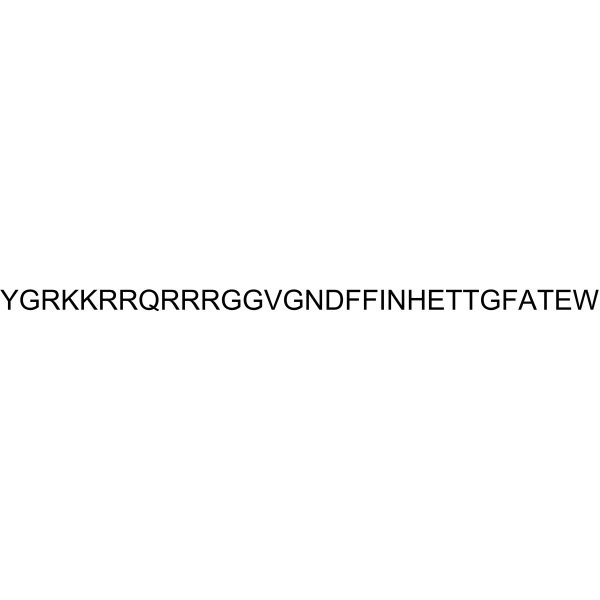
Tat-beclin 1, a peptide derived from a region of the autophagy protein (beclin 1), is a potent inducer of autophagy and interacts with negative regulator of autophagy, GAPR-1 (GLIPR2). Tat-beclin 1 decreases the accumulation of polyglutamine expansion protein aggregates and the replication of several pathogens (including HIV-1) in vitro, and reduces mortality in mice infected with chikungunya (CHIKV) or West Nile virus (WNV) .
loading...
    loading...
Cat. No.: HY-P2260B
Target:  

HIV

Research Areas:  

Infection

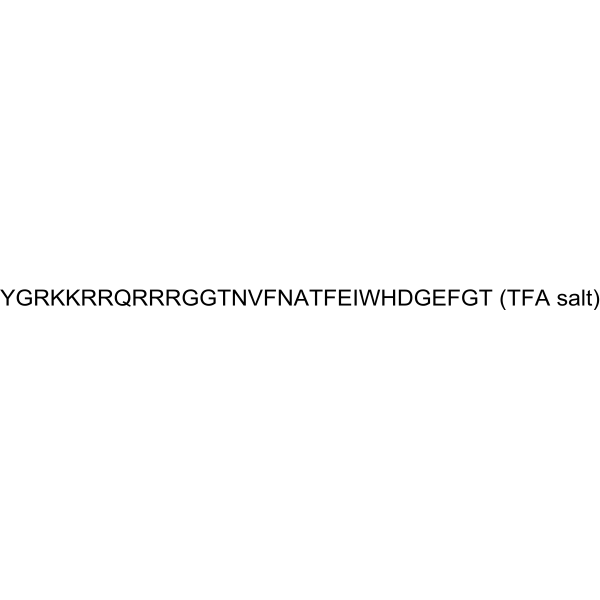
Tat-beclin 1 scrambled is the scrambled part and a scrambled control of Tat-beclin 1 (HY-P2260), which is derived from a region of the autophagy protein, beclin 1. beclin 1 induces autophagy via binding human immunodeficiency virus, HIV-1 Nef and interacting with negative regulator GAPR-1 (GLIPR2). Tat-beclin 1 decreases the accumulation of polyglutamine expansion protein aggregates and the replication of several pathogens, such as HIV-1. Tat-beclin 1 also reduces mortality in mice infected with chikungunya or West Nile virus .
loading...
    loading...
Cat. No.: HY-125172
CAS No.: 300670-16-0
Synonyms: polyglutamine Aggregation inhibitor III
Target:  

Huntingtin

Research Areas:  

Others

C2-8 is an inhibitor of polyglutamine (polyQ) aggregation (IC50s=25 and 0.05 μM for recombinant HDQ51 and in PC12 cells, respectively). It also inhibits polyQ aggregation in organotypic hippocampal slice cultures isolated from R6/2 transgenic mice and reduces neurodegeneration in a dose-dependent manner in a Drosophila model of Huntington's disease. C2-8 (100 and 200 mg/kg) reduces huntingtin aggregate size, reduces neuronal atrophy, and improves motor performance in a rotarod test in the R6/2 transgenic mouse model of Huntington's disease.
loading...
    loading...
Cat. No.: HY-P10818
CAS No.: 274914-75-9
Target:  

Huntingtin

Research Areas:  

Neurological Disease

Polyglutamine binding peptide 1 (QBP1) is a peptide inhibitor of polyglutamine (polyQ). Polyglutamine binding peptide 1 inhibits polyQ protein aggregation in vitro and suppresses polyQ-induced cell death in cell culture .
loading...
    loading...
Cat. No.: HY-P2260C
Target:  

HIV

Research Areas:  

Infection

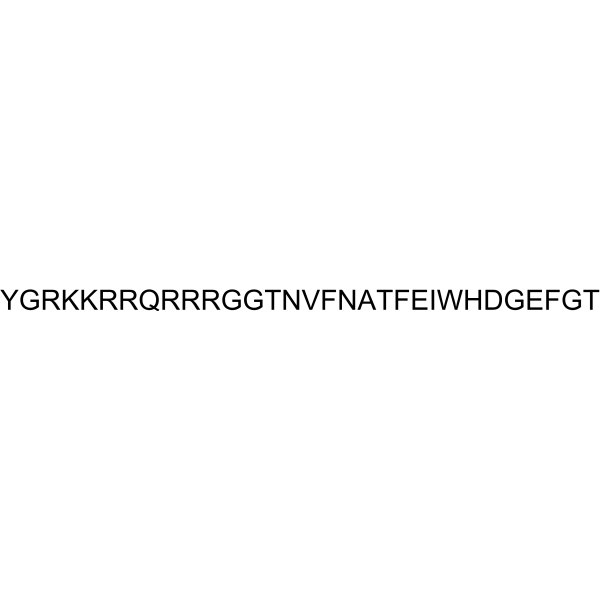
Tat-beclin 1 scrambled TFA is the scrambled part and a scrambled control of Tat-beclin 1 (HY-P2260), which is derived from a region of the autophagy protein, beclin 1. beclin 1 induces autophagy via binding human immunodeficiency virus, HIV-1 Nef and interacting with negative regulator GAPR-1 (GLIPR2). Tat-beclin 1 decreases the accumulation of polyglutamine expansion protein aggregates and the replication of several pathogens, such as HIV-1. Tat-beclin 1 also reduces mortality in mice infected with chikungunya or West Nile virus .
loading...
    loading...
Cat. No.: HY-P2260A
Target:  

Autophagy HIV

Research Areas:  

Infection

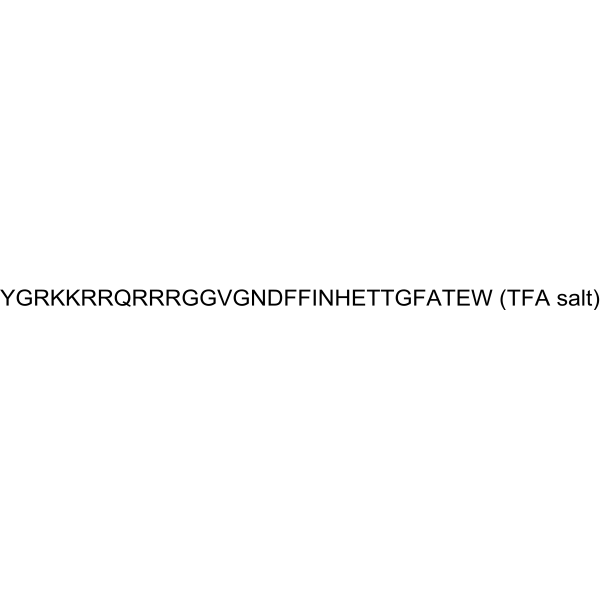
Tat-beclin 1 TFA, a peptide derived from a region of the autophagy protein (beclin 1), is a potent inducer of autophagy and interacts with negative regulator of autophagy, GAPR-1 (GLIPR2). Tat-beclin 1 TFA decreases the accumulation of polyglutamine expansion protein aggregates and the replication of several pathogens (including HIV-1) in vitro, and reduces mortality in mice infected with chikungunya (CHIKV) or West Nile virus (WNV) .
loading...
    loading...
Cat. No.: HY-188256
CAS No.: 3259-43-6
Target:  

DNA/RNA Synthesis

Research Areas:  

Neurological Disease

NSC66098 is an RNA-binding agent. NSC66098 binds to expanded CAG repeat RNA containing AA mismatches and inhibits its pathogenic function. NSC66098 protects cells from proteotoxicity induced by polyglutamine aggregates. NSC66098 can be used in research on Huntington's disease and spinocerebellar ataxia .
loading...
    loading...

