56 Results for "

polyubiquitination

" in MedChemExpress (MCE) Product Catalog:
Products (56)

56 Results for "polyubiquitination" in MCE Product Catalog:

19
19 Publications Verification
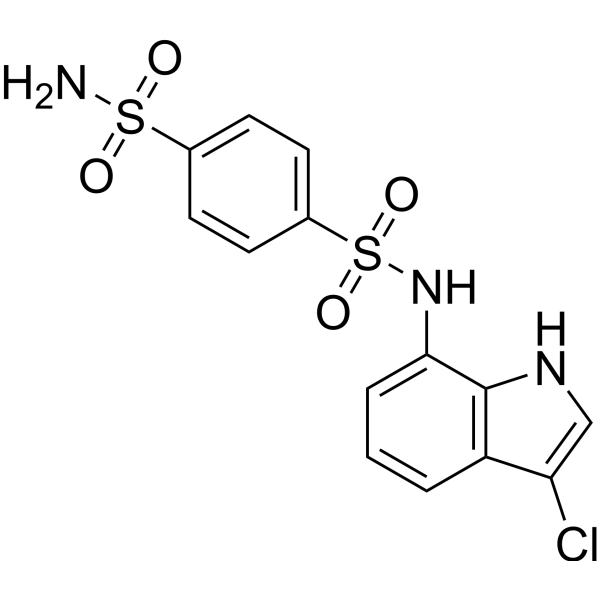
Cat. No.: HY-13650
CAS No.: 165668-41-7
Purity:  99.80%
Synonyms: E 7070
Research Areas:  

Cancer

Indisulam (E 7070) is a carbonic anhydrase inhibitor and RBM39 molecular glue degrader, with Ki values of 31, 15, and 24 nM against human carbonic anhydrase I, II, and IX, respectively, and a Ki value of 65 nM against bovine carbonic anhydrase IV. Indisulam promotes the recruitment of RBM39 to the CUL4-DCAF15 E3 ubiquitin ligase complex, triggering polyubiquitination and proteasomal degradation of RBM39. Indisulam induces aberrant pre-mRNA splicing, G1 cell cycle arrest, and cell death in cancer cells. As an anticancer agent, Indisulam drives tumor regression and growth inhibition in xenograft models. Indisulam can be used in research related to solid tumors, hematologic and lymphoid malignancies, colorectal cancer, and non-small cell lung cancer .
loading...
    loading...
8
8 Cited Publications
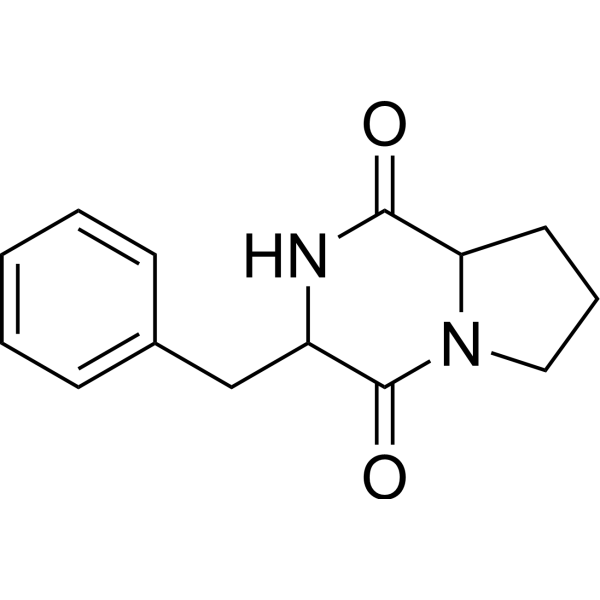
Cat. No.: HY-P1934
CAS No.: 14705-60-3
Synonyms: Cyclo(phenylalanylprolyl); A-64863
Cyclo(Phe-Pro) (Cyclo(phenylalanylprolyl)) is a quorum-sensing molecule of Vibrio vulnificus that specifically interacts with RIG-I, inhibiting RIG-I polyubiquitination, suppressing IRF-3 activation, and reducing type I interferon production. Cyclo(Phe-Pro) enhances susceptibility to HCV and influenza virus and also alleviates plant aluminum toxicity stress. The mechanism of Cyclo(Phe-Pro) involves the regulation of host immune signaling pathways, bacterial virulence gene expression, and plant antioxidant systems, making it a promising candidate for research in viral infections, bacterial virulence regulation, and agricultural stress resistance .
loading...
    loading...
3
3 Cited Publications
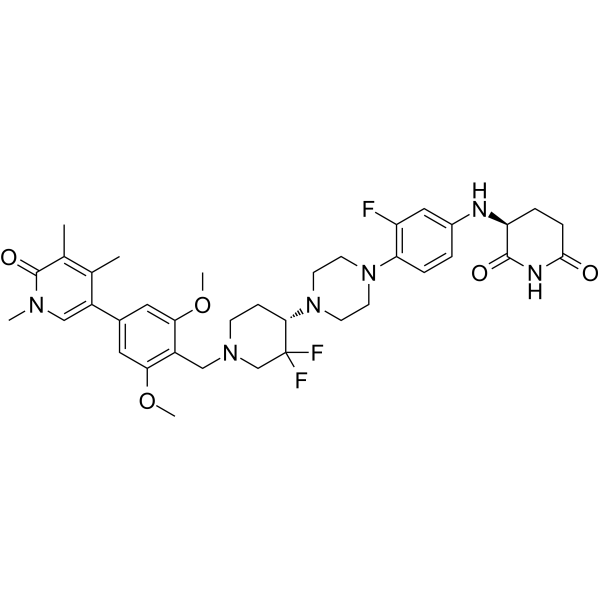
Cat. No.: HY-145925B
CAS No.: 2704617-96-7
Purity:  98.10%
Research Areas:  

Cancer

CFT8634 is an orally active BRD9 PROTAC degrader with a DC50 of 0.003 μM (HEK293T.166). CFT8634 recruits the CRBN E3 ubiquitin ligase to form a ternary complex, triggering CRBN-catalyzed BRD9 polyubiquitination and 26S proteasome-mediated degradation. CFT8634 induces sustained tumor regression and inhibits tumor growth in mouse models. CFT8634 can be used in research related to synovial sarcoma, SMARCB-1-deficient cancers, acute myeloid leukemia, malignant rhabdoid tumors, and multiple myeloma .
loading...
    loading...
1
1 Cited Publications
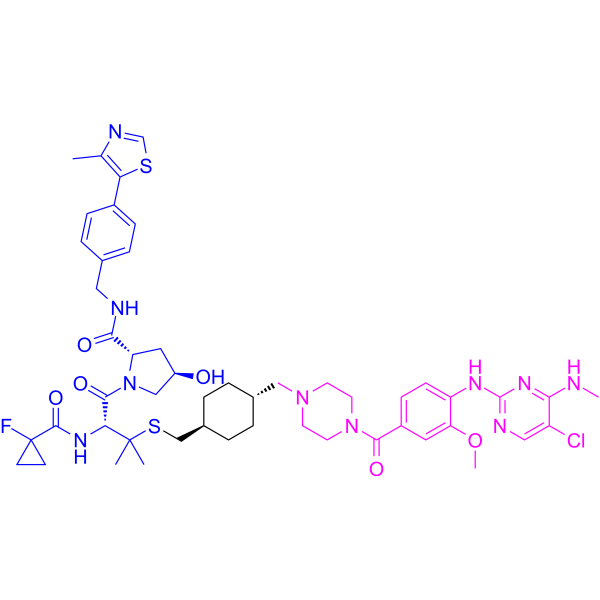
Cat. No.: HY-148030
CAS No.: 3011029-58-3
Purity:  98.90%
Target:  

LRRK2 PROTACs Mitophagy

Research Areas:  

Neurological Disease

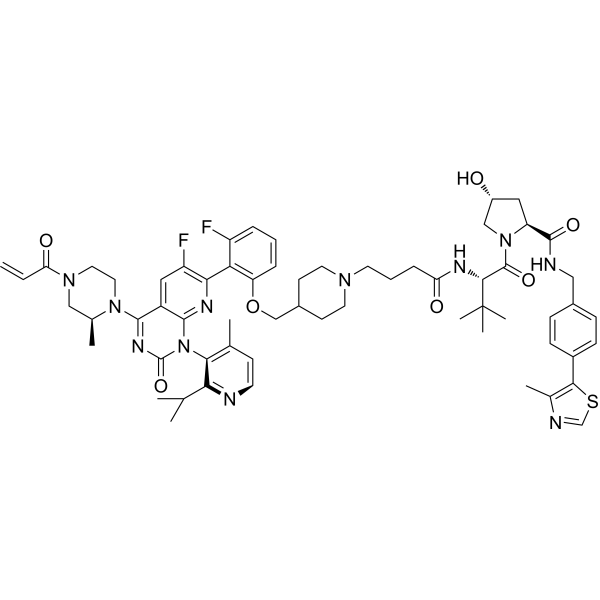
XL01126 is a blood-brain barrier-permeable, selective LRRK2 PROTAC degrader (DC50: 14 nM (G2019S LRRK2) and 32 nM (WT LRRK2)). XL01126 forms a positively cooperative ternary complex with VHL E3 ubiquitin ligase and LRRK2, mediating the polyubiquitination and proteasomal degradation of LRRK2. XL01126 induces Mitophagy. XL01126 is applicable to research related to Parkinson's disease .
loading...
    loading...
1
1 Cited Publications
Cat. No.: HY-115865
CAS No.: 2803617-91-4
Purity:  99.31%
Target:  

PROTACs IAP

Research Areas:  

Cancer

XIAP degrader-1 is a PROTAC-like degrader with a Kd value of 1 μM for XIAP. XIAP degrader-1 is metabolized into an active aldehyde species that covalently binds to Cys326 of FBXO22, thereby forming a ternary complex with the BIR2 domain of XIAP. XIAP degrader-1 induces polyubiquitination and proteasomal degradation of XIAP via the ubiquitin-proteasome system, a process dependent on NEDD8 conjugation, the SCF FBXO22 ligase complex, as well as the functional activities of XIAP ligase, E1 and the proteasome .
loading...
    loading...
Cat. No.: HY-160141
CAS No.: 2736508-60-2
Synonyms: BGB-16673; BTK-IN-29
Target:  

PROTACs Btk NF-κB

Research Areas:  

Inflammation/Immunology Cancer

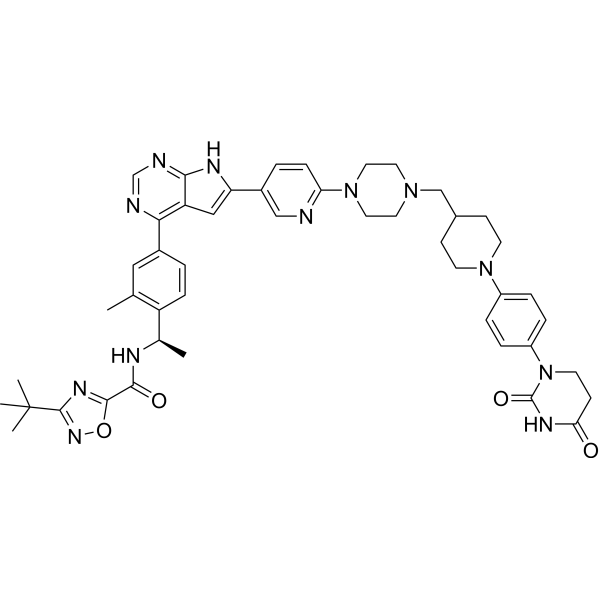
BGB-16673 (BGB-16673) is an orally active, selective BTK PROTAC degrader (IC50=0.69 nM). BGB-16673 ligates BTK to E3 ubiquitin ligase, causing BTK to undergo polyubiquitination, which is then recognized and degraded by the proteasome, thereby exerting efficient BTK degradation activity. BGB-16673 can be used in the research of B-cell malignancies such as chronic lymphocytic leukemia, small lymphocytic lymphoma, and mantle cell lymphoma .
loading...
    loading...
Cat. No.: HY-170430
CAS No.: 3055558-98-7
Research Areas:  

Cancer

HGC652 is a molecular glue degrader targeting TRIM21 with a TRIM21-dependent nuclear membrane disruption effect. HGC652 binds to the PRY-SPRY domain of TRIM21 with high affinity (Ka=0.061 μM), mediates the interaction between TRIM21 and NUP98, and redirects E3 ligase activity. By triggering the polyubiquitination and proteasomal degradation of nucleoporins (such as NUP155 and GLE1), HGC652 disrupts nuclear membrane integrity, alters nuclear morphology, induces genomic instability, and thereby induces cancer cell death .
loading...
    loading...
Cat. No.: HY-159607
CAS No.: 2755761-78-3
Target:  

PROTACs SWI/SNF Complex

Research Areas:  

Cancer

PRT3789 is a selective SMARCA2 PROTAC degrader (DC50 in HeLa cell: 0.72 nM for SMARCA2, 14 nM for SMARCA4). PRT3789 forms a stable ternary complex with Von Hippel-Lindau (VHL) E3 ligase, induces polyubiquitination at SMARCA2-specific lysine residues, and drives proteasome-dependent SMARCA2 degradation. PRT3789 disrupts SWI/SNF chromatin remodeling complex integrity, induces dissociation of specific subunits, suppresses oncogenic gene expression, reduces chromatin accessibility, and upregulates antigen processing/presentation-related gene expression. PRT3789 induces synthetic lethality, inhibits proliferation and colony formation, and drives tumor growth inhibition and regression in SMARCA4-deficient contexts. PRT3789 can be used for the research of SMARCA4-mutated solid tumors, non-small cell lung cancer, endometrial cancer, colorectal cancer, bladder cancer, esophageal cancer, ovarian cancer, and gastric cancer .
loading...
    loading...
Cat. No.: HY-131911
CAS No.: 2488851-89-2
Purity:  99.00%
PROTAC IDO1 Degrader-1 is a potent IDO1 (Indoleamine 2,3-dioxygenase 1) PROTAC degrader with a DC50 of 2.84 μM. PROTAC IDO1 Degrader-1 forms a ternary complex with IDO1 and the CRBN E3 ligase, and induces polyubiquitination of IDO1 followed by proteasomal degradation via the ubiquitin-proteasome system. PROTAC IDO1 Degrader-1 is applicable for related research on cancer immunity .
loading...
    loading...
Cat. No.: HY-161779
CAS No.: 2851986-76-8
Research Areas:  

Cancer

PLX-3618 is a molecular glue, that degrades BRD4 with DC50 of 12.2 nM. PLX-3618 promotes polyubiquitination and subsequent proteasomal degradation of BRD4 by recruiting of the E3 ligase substrate receptor, DCAF11. PLX-3618 inhibits the proliferation of various cancer cells, induces apoptosis in AML cells. PLX-3618 exhibits antitumor activity against AML in mouse models .
loading...
    loading...
Cat. No.: HY-129610
CAS No.: 2384184-40-9
Purity:  99.25%
Target:  

PROTACs FKBP

Research Areas:  

Cancer

KB02-SLF is a nuclear FKBP12 covalent PROTAC degrader. KB02-SLF covalently modifies cysteine residues in DCAF16, forms a ternary complex with nuclear FKBP12, and mediates degradation via the CUL4-DDB1 E3 ubiquitin ligase pathway. KB02-SLF promotes polyubiquitination and proteasomal degradation of nucleus-localized FKBP12. KB02-SLF can be used in breast cancer research .
loading...
    loading...
Cat. No.: HY-152134
CAS No.: 2785404-83-1
Purity:  98.60%
Research Areas:  

Cancer

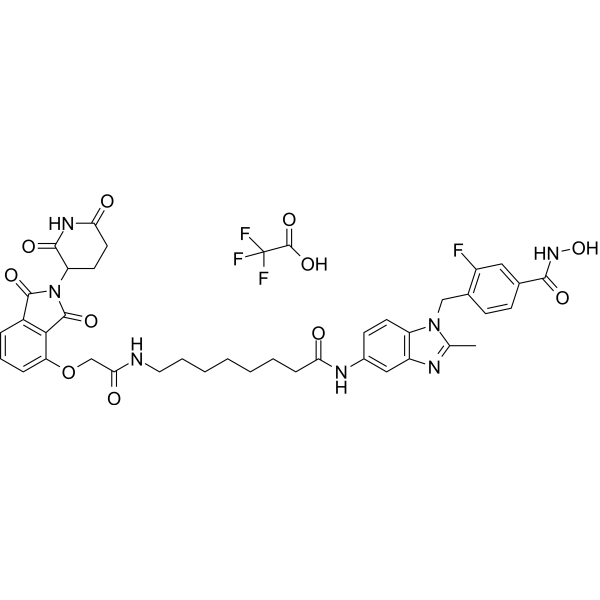
PROTAC HDAC6 degrader 11 is a PROTAC degrader targeting HDAC6, with a DC50 of 19.39 nM in HL-60 leukemia cells. PROTAC HDAC6 degrader 11 can form a ternary complex with HDAC6 and the cereblon E3 ligase, inducing polyubiquitination and proteasomal degradation of HDAC6. PROTAC HDAC6 degrader 11 inhibits the enzymatic activity of HDAC1 and does not trigger HDAC1 degradation. PROTAC HDAC6 degrader 11 induces hyperacetylation of α-tubulin. PROTAC HDAC6 degrader 11 can be used in related research on leukemia .
loading...
    loading...
Cat. No.: HY-152147
CAS No.: 2770263-77-7
Purity:  99.38%
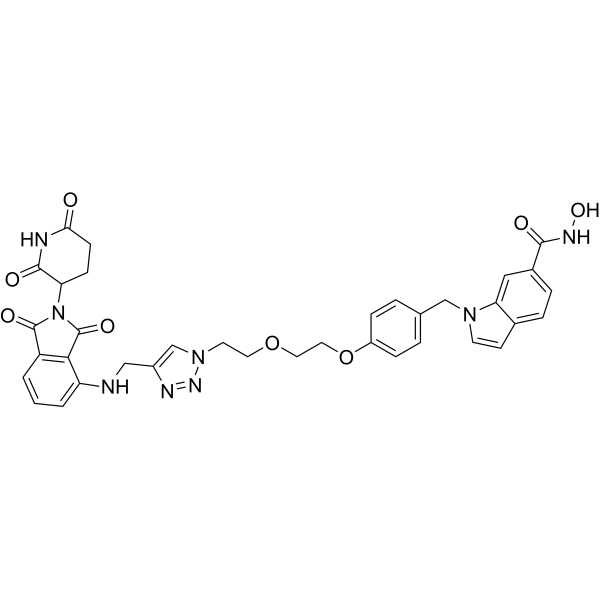
SZUH280 is a selective HDAC8 PROTAC degrader with a DC50 of 0.58 μM. SZUH280 recruits the CRBN E3 ubiquitin ligase to mediate polyubiquitination and proteasomal degradation of HDAC8, and exhibits higher selectivity for HDAC8 over other HDAC family members. SZUH280 induces apoptosis and G2/M cell cycle arrest in cancer cells. SZUH280 impairs DNA damage repair and promotes radiosensitization in cancer cells. SZUH280 inhibits the proliferation of cancer cells. SZUH280 is used in research related to lung cancer and breast cancer .
loading...
    loading...
Cat. No.: HY-175247
Research Areas:  

Cancer

DDO-4033 is a SPOP inhibitor (IC50 = 16.9 μM, Kd = 15.1 μM). DDO-4033 impairs the malignant migration, invasion, and proliferation of clear cell renal cell carcinoma (ccRCC) cell lines. DDO-4033 disrupts SPOP recruitment to its substrate LATS1, inhibits its polyubiquitination and subsequent degradation, and upregulates LATS1 expression. DDO-4033 has promising antitumor activity and is promising for renal cell carcinoma research .
loading...
    loading...
Cat. No.: HY-150408
CAS No.: 2241669-84-9
Purity:  98.85%
Target:  

AUTACs

Research Areas:  

Cancer

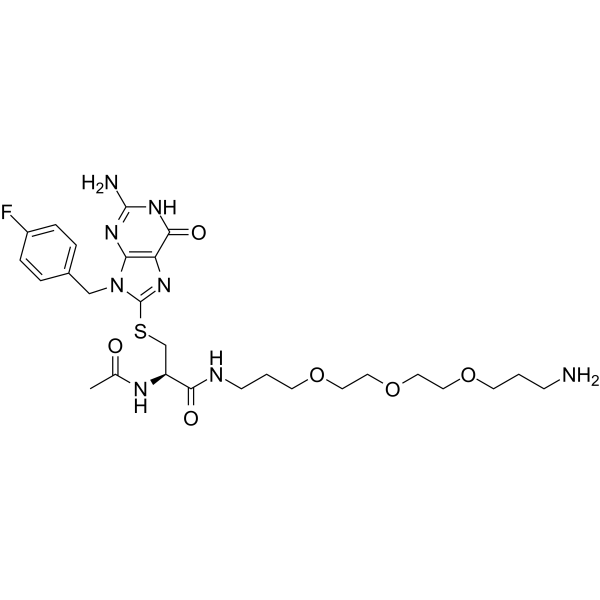
FBnG-(Cys-acetamide)-CH2-PEG3-CH2-CH2-CH2-NH2 is a tag-linker conjugate of AUTAC4 (HY-134640) that incorporates a degradation tag FBnG (HY-W073762) and a glycol linker. AUTAC4 contains an p-fluorobenzylguanine (FBnG) and a phenylindole moiety, which can induce K63-linked polyubiquitination and degradation of mitochondria in HeLa cells .
loading...
    loading...
Cat. No.: HY-174996
CAS No.: 3031840-36-2
Research Areas:  

Cancer

NEP162 is a BRD4 PROTAC degrader based on the E3 ubiquitin ligase GID4, with DC50 values of 1.2 μM and 1.6 μM in SW480 and U2OS cells, respectively, and a Kd value of 0.13 µM for GID4. NEP162 bridges the E3 ligase GID4 and BRD4 to form a ternary complex, promotes polyubiquitination and subsequent degradation of BRD4 via the ubiquitin-proteasome system, reduces the proliferation capacity of tumor cells and induces apoptosis. NEP162 can be used for research on cancers such as osteosarcoma, colorectal cancer and non-small cell lung cancer .
loading...
    loading...
Cat. No.: HY-135312
CAS No.: 2361115-35-5
Purity:  98.13%
Research Areas:  

Cancer

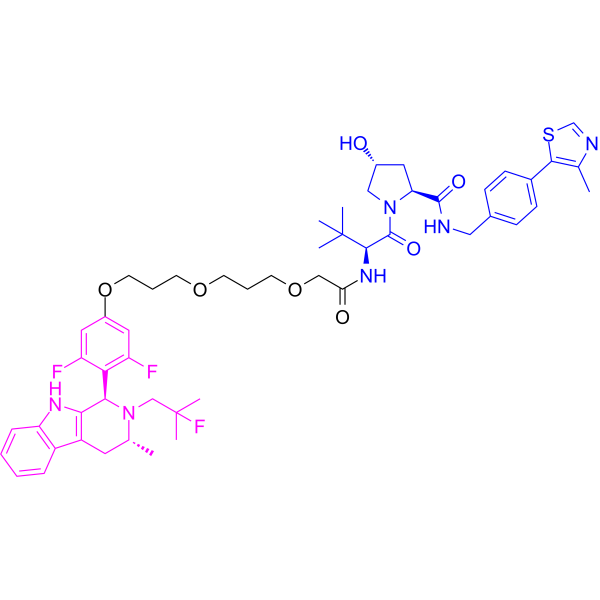
AZ'6421 is an orally active ERα PROTAC degrader with a DC50 of 0.4 nM. AZ'6421 recruits the VHL E3 ligase to form a ternary complex, inducing proteasome-mediated polyubiquitination and degradation of ERα. AZ'6421 inhibits the growth of ER + cancer cells. AZ'6421 can be used in studies related to ER + breast cancer .
loading...
    loading...
Cat. No.: HY-155356
Target:  

PROTACs Ras PERK Akt Caspase

Research Areas:  

Cancer

YN14 is a KRAS G12C PROTAC degrader that recruits E3 ubiquitin ligase to induce the polyubiquitination and proteasomal degradation of KRAS G12C. YN14 induces tumor cell apoptosis, cell cycle arrest, and cell migration inhibition. YN14 exhibits in vivo antitumor proliferative activity in tumor cell xenograft nude mice. YN14 can be used in cancer-related research .
loading...
    loading...
Cat. No.: HY-161794A
Research Areas:  

Cancer

SP3N hydrochloride is a specific degrader of the prolyl isomerase FKBP12. As a prodrug, SP3N hydrochloride is metabolized by Diamine oxidase into the active aldehyde metabolite SP3CHO (HY-161795). SP3N hydrochloride induces the proximity of FKBP12 to the SCF FBXO22 E3 ligase complex, thereby triggering the polyubiquitination and proteasomal degradation of FKBP12. SP3N hydrochloride can be used in cancer research .
loading...
    loading...
Cat. No.: HY-101939A
CAS No.: 1781880-34-9
Purity:  98.8%
Target:  

LPL Receptor

Research Areas:  

Neurological Disease

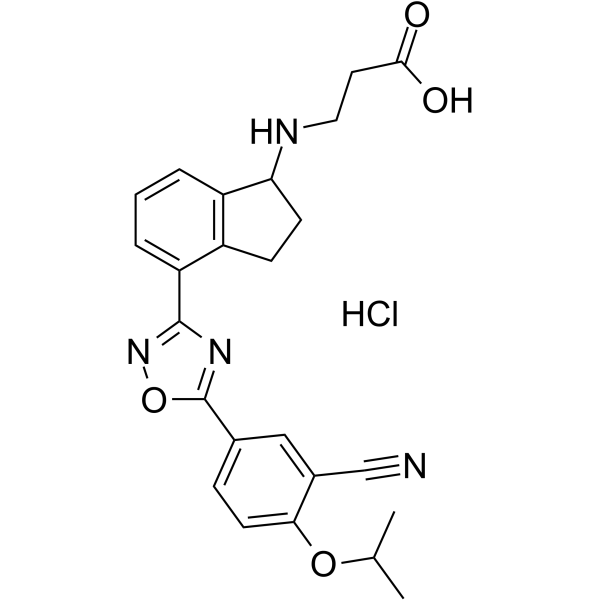
RP-001 hydrochloride is a picomolar short-acting S1P1 (EDG1) selective agonist, with an EC50 of 9 pM. RP-00 hydrochloride induces internalization and polyubiquitination of S1P1. RP-001 hydrochloride has little activity on S1P2-S1P4 and only moderate affinity for S1P5 .
loading...
    loading...

