3 Results for "

quiescence

" in MedChemExpress (MCE) Product Catalog:
Products (3)

3 Results for "quiescence" in MCE Product Catalog:

1
1 Cited Publications
Cat. No.: HY-124899
CAS No.: 612542-14-0
Purity:  99.90%
Synonyms: SAg1.5
Target:  

Hedgehog

Research Areas:  

Metabolic Disease

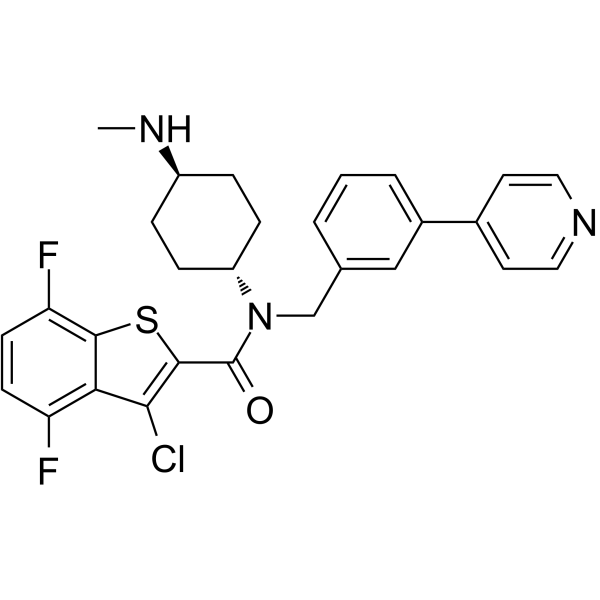
Hh-Ag1.5 (SAg1.5) is a potent Hedgehog (Hh) agonist with an EC50 of 1 nM . Hh-Ag1.5 mediated reprogramming breaks the quiescence of noninjured liver stem cells for rescuing liver failure .
loading...
    loading...
Cat. No.: HY-130326
CAS No.: 372948-28-2
Purity:  99.30%
Synonyms: Ru(η6-p-cymene)Cl2(pta)
Target:  

Apoptosis

Research Areas:  

Inflammation/Immunology Cancer

RAPTA-C is a ruthenium-based antimetastatic agent. RAPTA-C binds chromatin histones and interacts with DNA, leading to pH-dependent DNA damage and hypoxia selectivity. RAPTA-C inhibits angiogenesis, microvessel density, tumor growth, invasion, and proliferation, and induces apoptosis through the mitochondrial pathway, G2/M phase arrest, quiescence, and vascular normalization. RAPTA-C can be used in research on ovarian cancer, colorectal adenocarcinoma, breast cancer metastasis, and Ehrlich ascites carcinoma .
loading...
    loading...
Cat. No.: HY-P992056

Target:  

Autophagy

Research Areas:  

Cancer

Anti-Human/Mouse LY6E Antibody (9B12) is a high-affinity, multi-target antibody that binds specifically to LY6E. Anti-Human/Mouse LY6E Antibody (9B12) binds specifically to cell-surface LY6E and enters lysosomes via lipid raft-dependent endocytosis, thereby effectively inhibiting the growth of various LY6E-expressing solid tumors (such as breast cancer and lung cancer) in both in vitro and in vivo models. Anti-Human/Mouse LY6E Antibody (9B12) exerts a dual mechanism of action: on one hand, it blocks the interaction between PILRα and CD8α, specifically reduces the survival rate of peripheral CD8 + T cells and induces their activation, breaking the state of cellular quiescence; on the other hand, it recognizes and immunoprecipitates IDE under both non-denaturing and denaturing conditions, which is applicable to studies on the subcellular localization and protein interactions of IDE. The regulatory effect of Anti-Human/Mouse LY6E Antibody (9B12) on CD8 + T cells strictly depends on the presence of PILRα, and it does not affect CD4 + T cells or T cell development in the thymus, exhibiting high specificity .
loading...
    loading...

