15 Results for "

reductases

" in MedChemExpress (MCE) Product Catalog:
Products (15)

15 Results for "reductases" in MCE Product Catalog:

1
1 Cited Publications
Cat. No.: HY-N0352
CAS No.: 6879-01-2
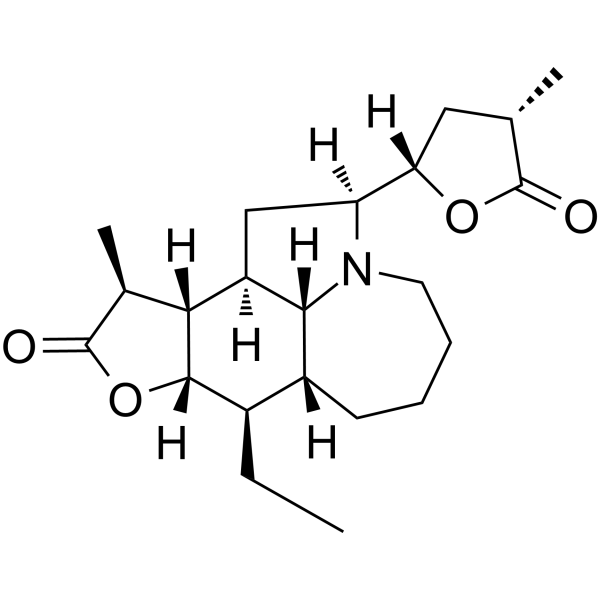
Tuberostemonine is a stenine alkaloid that can be isolated from Stemona tuberosa and Stemona sessifolia. Tuberostemonine is an antimalarial agent that has inhibitory activity against Ferredoxin-NADP + reductases (FNRs) from Plasmodium falciparum (PfFNR). Tuberostemonine can reduce the number of citric acid-induced coughs in guinea pigs. Tuberostemonine decreases bronchoalveolar lavage fluid (BALF), neutrophil and macrophage infiltration and reduces peribronchial and perivascular inflammatory cell infiltration in mouse model of acute lung inflammation. Tuberostemonine has a level of activity as a feeding deterrent .
loading...
    loading...
Cat. No.: HY-121362
CAS No.: 537-09-7
Purity:  99.71%
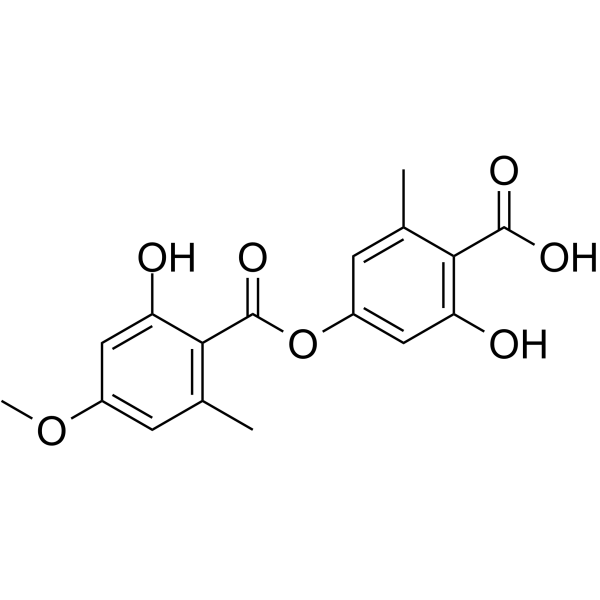
Evernic Acid is an orally active thioredoxin reductase 1 (TrxR1) inhibitor and antiproliferative agent. Evernic Acid inhibits the proliferation and migration of human breast cancer cells. Evernic Acid blocks the NF-κB pathway by inhibiting p65 nuclear translocation and IκBα phosphorylation, thereby suppressing downstream inflammatory mediators. Evernic Acid acts as an antioxidant, anti-inflammatory agent and neuroprotective agent, protects neurons from cell death, mitochondrial dysfunction and oxidative stress damage, reduces astrocyte activation, and ameliorates dopaminergic neuron loss and neuroinflammation. Evernic Acid inhibits enoyl reductases FabI and FabZ of Plasmodium falciparum. Evernic Acid downregulates the expression of lasB and rhlA genes in Pseudomonas aeruginosa, inhibits quorum sensing and biofilm formation, and exerts antibacterial activity against Gram-positive bacteria, Gram-negative bacteria and fungi. Evernic Acid is applicable to research related to breast cancer, Parkinson's disease, bacterial infections and fungal infections .
loading...
    loading...
Cat. No.: HY-134421
CAS No.: 102680-35-3
Research Areas:  

Metabolic Disease

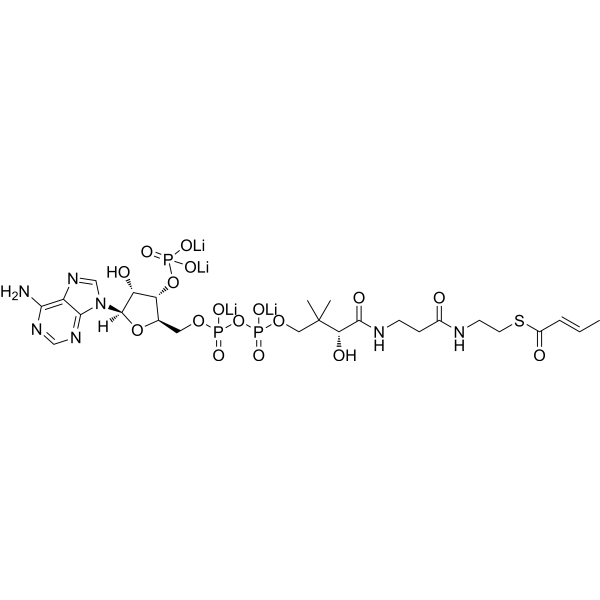
2-Butenoyl coenzyme A lithium is an inactivator and a substrate of Plasmodium falciparum enoyl-β-hydroxyacyl-acyl carrier protein (ACP) reductase and other enoyl-CoA reductases, and it is also the lithium salt of trans-2-methyl-2-butenoyl coenzyme A. 2-Butenoyl coenzyme A lithium acts on short-chain and medium-chain coenzyme A dehydrogenases as well as glutaryl-CoA dehydrogenase, and shows no activity against wild-type isovaleryl-CoA dehydrogenase. 2-Butenoyl coenzyme A lithium functions as a metabolite in the L-isoleucine catabolic pathway, and can serve as a substrate in the activity assay of 3-ketothiolase. 2-Butenoyl coenzyme A lithium is applicable to research related to 3-ketothiolase deficiency .
loading...
    loading...
Cat. No.: HY-155107
CAS No.: 2446880-46-0
Purity:  98.26%
Research Areas:  

Infection

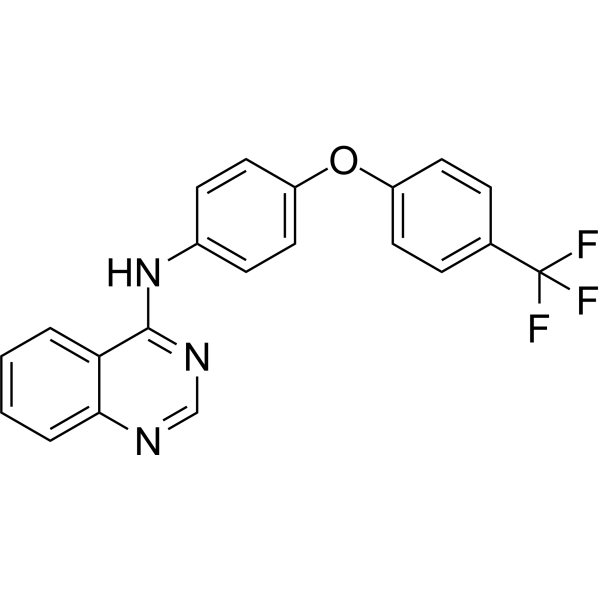
ND-011992 is a reversible, selective quinazoline-type inhibitor targeting quinone reductases and quinol oxidases. ND-011992 inhibits respiratory complex I and bo3 oxidase in addition to bd-I and bd-II oxidases in E. coli strain BL21*Δcyo with the IC50 of 0.12, 2.47, 0.63 and 1.3 μM, respectively. ND-011992 can be used for tuberculosis study .
loading...
    loading...
Cat. No.: HY-N1322
CAS No.: 174423-30-4
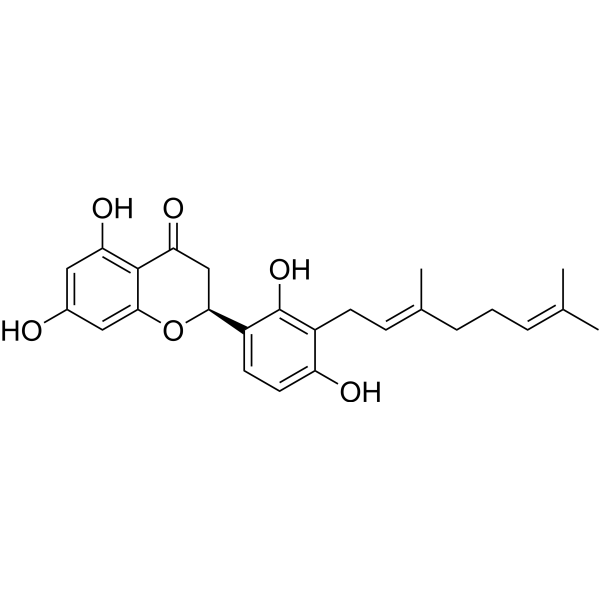
Sanggenol A acts as a dual inhibitor of nitrofuranone reduction mediated by the intestinal microbial nitrification reductases EcNfsA and EcNfsB. In addition, Sanggenol A is also an effective inhibitor of intestinal bacterial β-glucuronidase .
loading...
    loading...
Cat. No.: HY-B1189S
CAS No.: 59060-36-5
Synonyms: Dicrotalic acid-d3; 3-Hydroxy-3-methylglutaric acid-d3
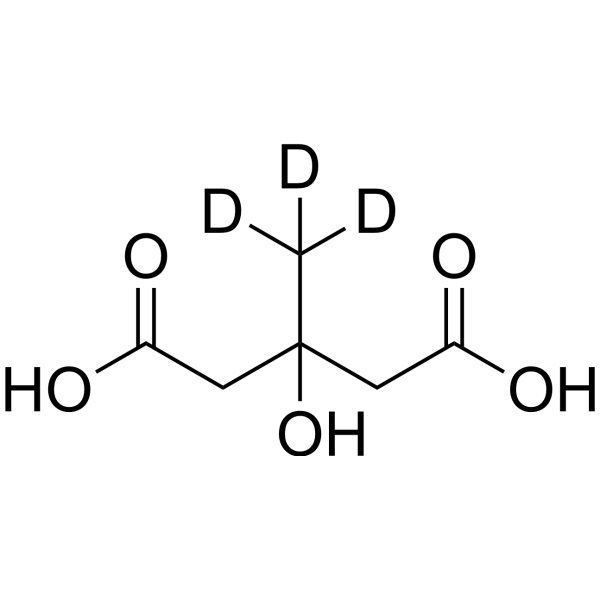
Meglutol-d3 is the deuterium labeled Meglutol . Meglutol is an antilipemic agent which lowers cholesterol, triglycerides, serum beta-lipoproteins and phospholipids, and inhibits the activity of hydroxymethylglutarryl CoA reductases, which is the rate limiting enzyme in the biosynthesis of cholesterol.
loading...
    loading...
Cat. No.: HY-105217
CAS No.: 137099-09-3
Synonyms: FCE 26073
Target:  

5 alpha Reductase

Research Areas:  

Metabolic Disease

Turosteride is a selective 5 alpha-reductase inhibitor, with IC50 values of 55 and 53 nM for human and rat prostatic 5 alpha-reductases, respectively. Turosteride can reduce the prostate and seminal vesicle weights .
loading...
    loading...
Cat. No.: HY-N0352R
CAS No.: 6879-01-2
Tuberostemonine (Standard) is the analytical standard of Tuberostemonine. This product is intended for research and analytical applications. Tuberostemonine is a stenine alkaloid that can be isolated from Stemona tuberosa and Stemona sessifolia. Tuberostemonine is an antimalarial agent that has inhibitory activity Ferredoxin-NADP + reductases (FNRs) from Plasmodium falciparum (PfFNR). Tuberostemonine has a level of activity as a feeding deterrent .
loading...
    loading...
Cat. No.: HY-Y1826
CAS No.: 92-55-7
Target:  

Bacterial Antibiotic

Research Areas:  

Infection

IITR01324 is an antimicrobial agent. IITR01324 has antimicrobial activity against Escherichia coli (MIC = 3.58 mg/L) and other Gram-negative bacteria (Shigella flexneri: MIC = 3.58 mg/L; Cronobacter sakazakii: MIC = 28.63 mg/L). IITR01324 exerts its antimicrobial activity by destroying bacterial DNA after activation of intracellular reductases. IITR01324 can be used to study the development of new antimicrobial drugs, especially against multidrug-resistant (MDR) pathogens .
loading...
    loading...
Cat. No.: HY-163292
CAS No.: 3029324-01-1
Target:  

Bacterial Parasite

Research Areas:  

Infection

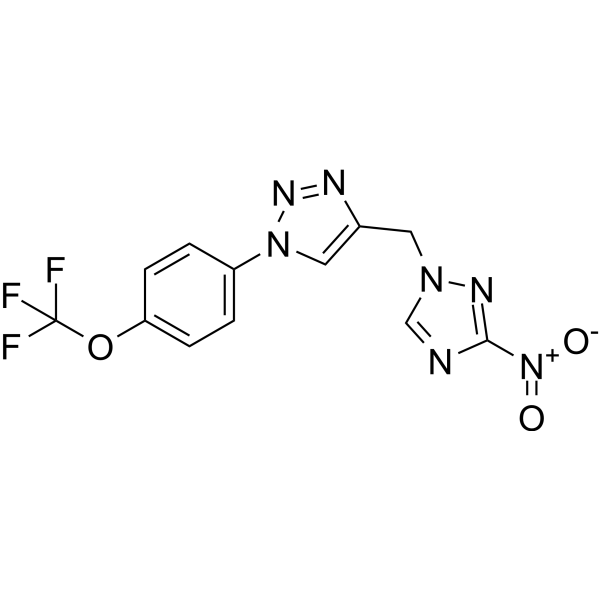
Antibacterial agent 180 (15g), an appropriate substrate for the type I nitro reductases (TcNTR I), is a promising antitrypanosomatid agent. Antibacterial agent 180 (15g) shows nonmutagenic potential against Salmonella typhimurium strains (TA98, TA100, and TA102) .
loading...
    loading...
Cat. No.: HY-19284
CAS No.: 146939-64-2
Synonyms: FK 687; TF 505
Target:  

5 alpha Reductase

Research Areas:  

Endocrinology

FR-146687 (FK 687) is a selective and orally active 5α-reductase inhibitor with IC50s of 1.7 nM and 4.6 nM for rat and human 5α-reductases, respectively. FR-146687 shows no inhibitory effects on other steroid oxidoreductases .
loading...
    loading...
Cat. No.: HY-Y1826R
CAS No.: 92-55-7
Research Areas:  

Infection

IITR01324 (Standard) is the analytical standard of IITR01324. This product is intended for research and analytical applications. IITR01324 is an antimicrobial agent. IITR01324 has antimicrobial activity against Escherichia coli (MIC=3.58 mg/L) and other Gram-negative bacteria (Shigella flexneri: MIC=3.58 mg/L; Cronobacter sakazakii: MIC=28.63 mg/L). IITR01324 exerts its antimicrobial activity by destroying bacterial DNA after activation of intracellular reductases. IITR01324 can be used to study the development of new antimicrobial drugs, especially against multidrug-resistant (MDR) pathogens .
loading...
    loading...
Cat. No.: HY-121362R
CAS No.: 537-09-7
Evernic Acid (Standard) is the analytical standard of Evernic Acid (HY-121362). This product is intended for research and analytical applications. Evernic Acid is an orally active thioredoxin reductase 1 (TrxR1) inhibitor and antiproliferative agent. Evernic Acid inhibits the proliferation and migration of human breast cancer cells. Evernic Acid blocks the NF-κB pathway by inhibiting p65 nuclear translocation and IκBα phosphorylation, thereby suppressing downstream inflammatory mediators. Evernic Acid acts as an antioxidant, anti-inflammatory agent and neuroprotective agent, protects neurons from cell death, mitochondrial dysfunction and oxidative stress damage, reduces astrocyte activation, and ameliorates dopaminergic neuron loss and neuroinflammation. Evernic Acid inhibits enoyl reductases FabI and FabZ of Plasmodium falciparum. Evernic Acid downregulates the expression of lasB and rhlA genes in Pseudomonas aeruginosa, inhibits quorum sensing and biofilm formation, and exerts antibacterial activity against Gram-positive bacteria, Gram-negative bacteria and fungi. Evernic Acid is applicable to research related to breast cancer, Parkinson's disease, bacterial infections and fungal infections .
loading...
    loading...
Cat. No.: HY-E71540
Research Areas:  

Others

2-Hydroxy-1,4-benzoquinone reductase (EC 1.6.5.7) is a flavoprotein (FMN) that differs in substrate specificity from other quinone reductases.
loading...
    loading...
Cat. No.: HY-D3075
CAS No.: 2490504-23-7
Target:  

Fluorescent Dye

Research Areas:  

Others

TPE-2E N-oxide is a fluorescent probe used for hypoxia detection and tumor hypoxia imaging. Due to its active intramolecular motion, TPE-2E N-oxide shows no fluorescence in aqueous solution. In hypoxic environments, its N-oxide group undergoes two-electron reduction by CYP450 reductase and other heme protein reductases expressed under hypoxia, forming hydrophobic aggregates that trigger aggregation-induced emission through the restriction of intramolecular motion. TPE-2E N-oxide exhibits selective lipid droplet localization in cells. The absorption wavelength of TPE-2E N-oxide in dichloromethane is 313 nm; in a 99% hexane/dichloromethane mixed system, its excitation wavelength is 330 nm and emission wavelength is 460 nm. For in vitro cell imaging, excitation is performed at 405 nm, with an emission wavelength range of 430-560 nm .
loading...
    loading...
  • 1

