

101 Results for "

repeats

" in MedChemExpress (MCE) Product Catalog:
Products (101)

101 Results for "repeats" in MCE Product Catalog:

36
36 Publications Verification
Cat. No.: HY-P0319
CAS No.: 402750-12-3
Research Areas:  

Others

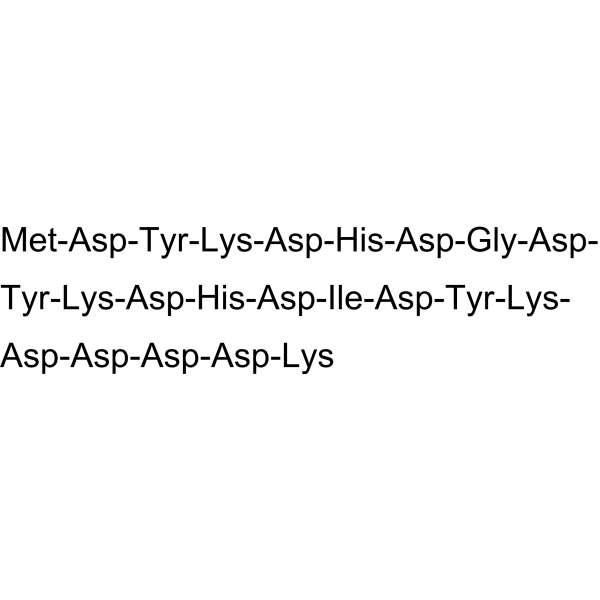
3X FLAG peptides are FLAG-tagged peptides containing three repeats of the Asp-Tyr-Lys-Xaa-Xaa-Asp motif. 3X FLAG peptide can be used for protein separation and purification, and competitive elution with target proteins.
loading...
    loading...
36
36 Publications Verification
Cat. No.: HY-P0319A
Target:  

Inhibitory Antibodies

Research Areas:  

Others

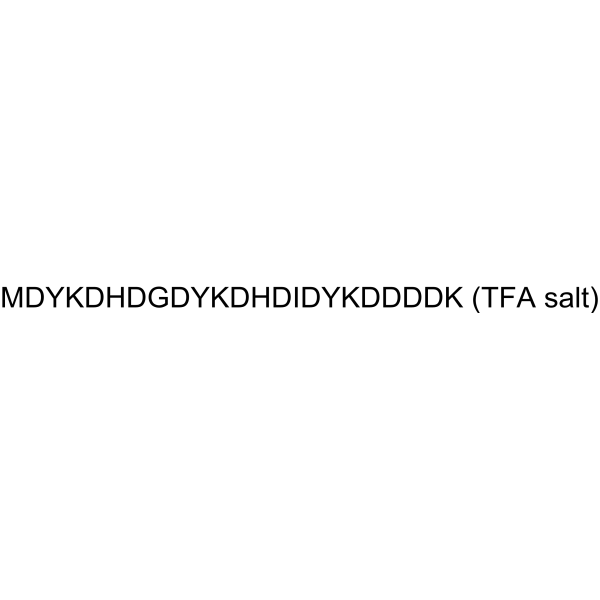
3X FLAG peptide TFA is a FLAG-tagged peptide containing three repeats of the Asp-Tyr-Lys-Xaa-Xaa-Asp motif. 3X FLAG peptide TFA can be used for protein separation and purification, and competitive elution with target proteins.
loading...
    loading...
16
16 Cited Publications
Cat. No.: HY-16993
CAS No.: 1801787-56-3
Target:  

Apoptosis WDR5

Research Areas:  

Cancer

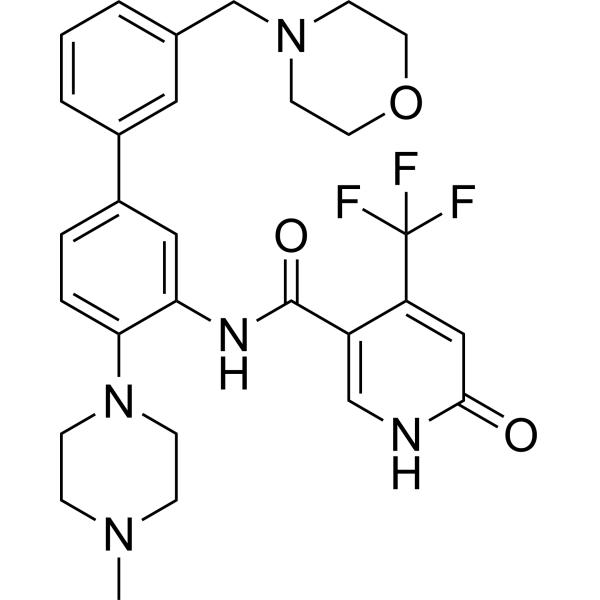
OICR-9429, a chemical probe, is high affinity WD repeat domain 5 (WDR5) inhibitor, competitively blocks WDR5 interaction with MLL protein via binding the central peptide-binding pocket of WDR5. OICR-9429 can suppress histone H3K4 trimethylation and can be used for the research of various cancers including non-MLL-rearranged leukaemia, colon, pancreatic, prostate cancer and bladder cancer (BCa) .
loading...
    loading...
6
6 Cited Publications
Cat. No.: HY-111753
CAS No.: 2407457-36-5
Purity:  98.13%
Target:  

WDR5 Apoptosis

Research Areas:  

Cancer

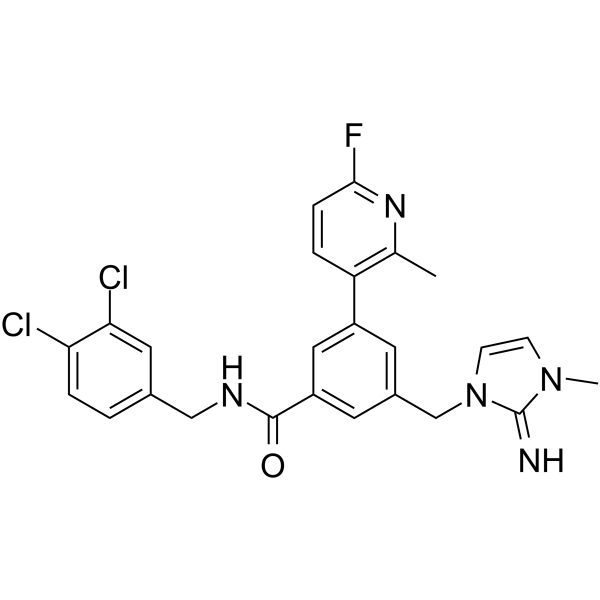
WDR5-IN-4 (Compound C6) is a WIN site inhibitor of chromatin-associated WD repeat domain 5 protein (WDR5), Kd The value is 0.1 nM. WDR5-IN-4 is able to displace WDR5 from chromatin and reduce the expression of related genes, causing translation inhibition and nucleolar stress. Has anti-cancer effects .
loading...
    loading...
6
6 Cited Publications
Cat. No.: HY-111753A
CAS No.: 2749300-35-2
Purity:  99.87%
Target:  

WDR5 Apoptosis

Research Areas:  

Cancer

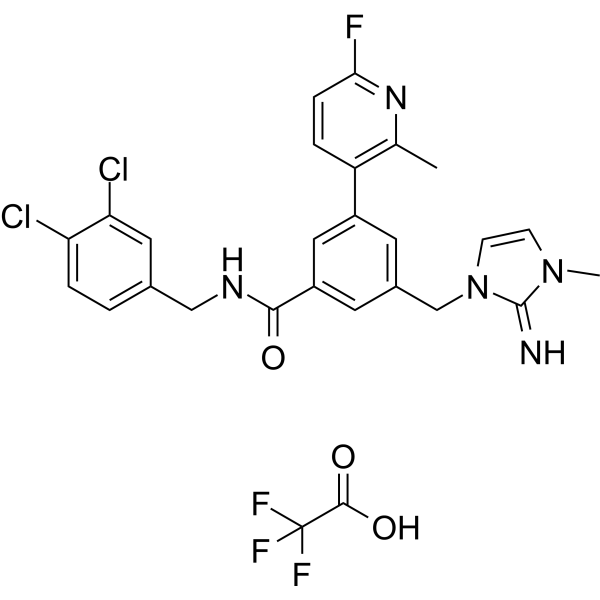
WDR5-IN-4 TFA (Compound C6) is an inhibitor of the WIN site of chromatin-associated WD repeat-containing protein 5 (WDR5), with a Kd of 0.1 nM. WDR5-IN-4 TFA displaces WDR5 from chromatin and decreases the expression of associated genes, causing translational inhibition, nucleolar stress. Anti-cancer activity .
loading...
    loading...
3
3 Cited Publications
Cat. No.: HY-19347
CAS No.: 890190-22-4
Synonyms: WD-Repeat Protein 5-0103
Target:  

WDR5

Research Areas:  

Neurological Disease Cancer

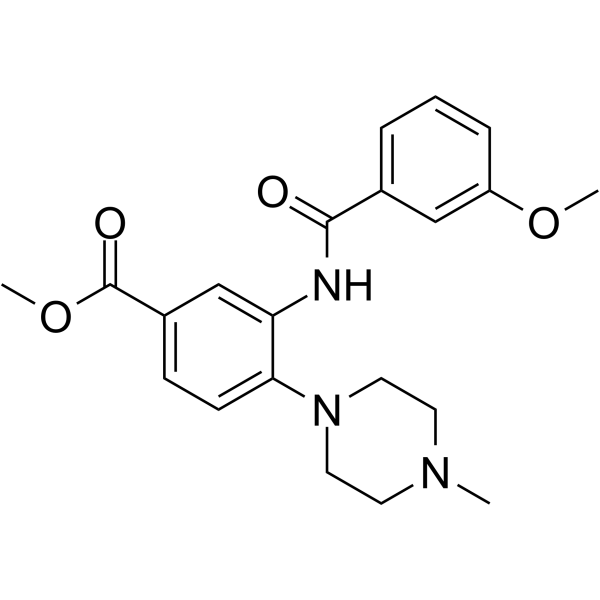
WDR5-0103 (WD-Repeat Protein 5-0103) is a potent and selective WD repeat-containing protein 5 (WDR5) antagonist with a Kd of 450 nM. WDR5-0103 competitively binds to the peptide-binding pocket of WDR5, blocking the interaction between WDR5 and mixed-lineage leukemia (MLL) protein and inhibiting the methyltransferase activity of MLL. WDR5-0103 is mainly used in the research of cancer and neurodegenerative diseases .
loading...
    loading...
3
3 Cited Publications
Cat. No.: HY-120085
CAS No.: 1527475-61-1
Purity:  99.48%
Synonyms: PF-06685360
Target:  

LRRK2

Research Areas:  

Neurological Disease

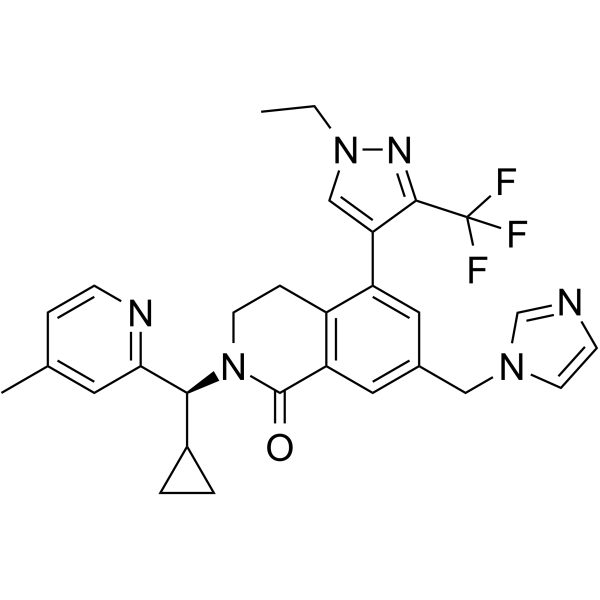
PFE-360 (PF-06685360) is a potent, selective, brain penetrated and orally active leucine-rich repeat kinase 2 (LRRK2) inhibitor with a mean IC50 of 2.3 nM in vivo .
loading...
    loading...
1
1 Cited Publications
Cat. No.: HY-150654
CAS No.: 2417012-26-9
Purity:  99.56%
Target:  

WDR5

Research Areas:  

Cancer

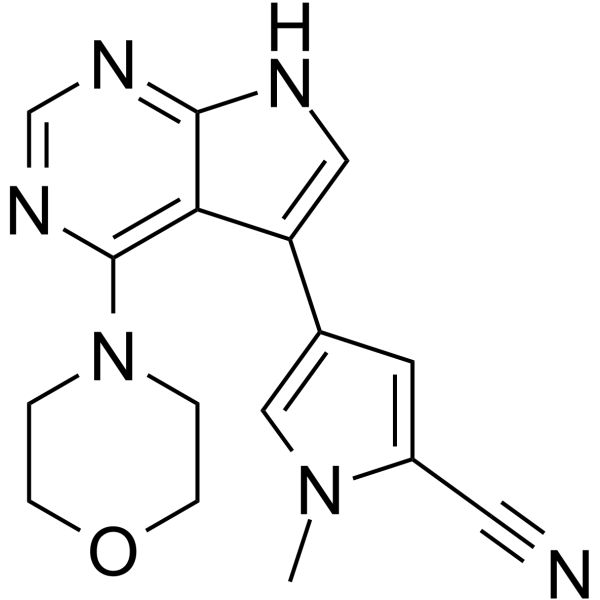
WDR5-IN-5 is an orally active and selective inhibitor of WIN site of WD repeat domain 5 (WDR5). WDR5-IN-5 exhibits anti-proliferative activity towards cancer cells and good pharmacokinetics profile in mice. WDR5-IN-5 shows high affinity to WDR5 and the binding affinity Ki value <0.02 nM .
loading...
    loading...
1
1 Cited Publications
Cat. No.: HY-129087
CAS No.: 1507370-40-2
Purity:  99.26%
Target:  

Apoptosis

Research Areas:  

Cancer

BC-1258,an F-box/LRR-repeat protein 2 (FBXL2) activator,can stabilize and upregulate FBXL2 levels. BC-1258 induces apoptosis of tumorigenic cells,and profoundly inhibits tumor formation in mice .
loading...
    loading...
Cat. No.: HY-141796
CAS No.: 2407452-77-9
Purity:  98.64%
Target:  

PROTACs WDR5

Research Areas:  

Cancer

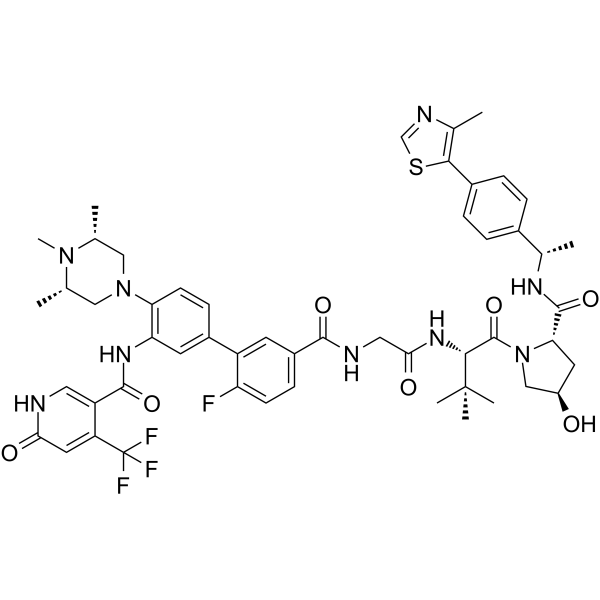
MS67 is a potent and selective WD40 repeat domain protein 5 (WDR5) degrader with a Kd of 63 nM. MS67 is inactive against other protein methyltransferases, kinases, GPCRs, ion channels, and transporters. MS67 shows potent acticancer effects .
loading...
    loading...
Cat. No.: HY-P4808
CAS No.: 329897-62-3
Target:  

Amyloid-β Autophagy

Research Areas:  

Neurological Disease

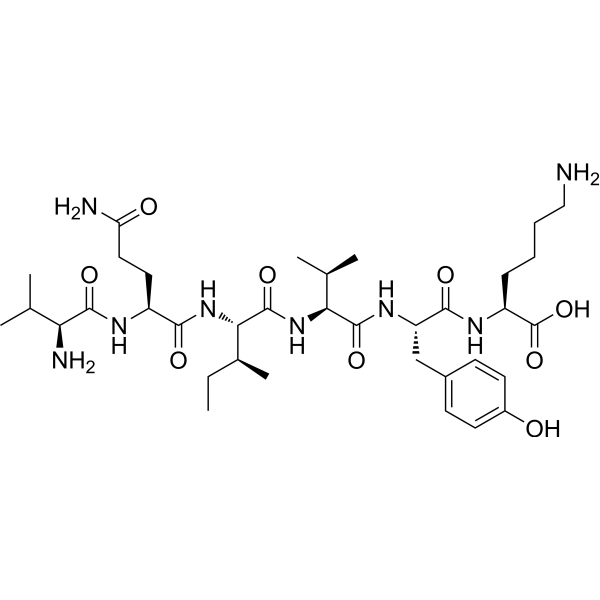
PHF6 (VQIVYK) is a self-assembly sequence capable of initiating the full-length tau protein aggregation and is mapped to the third microtubule-binding repeat region of the tau protein .
loading...
    loading...
Cat. No.: HY-141799
CAS No.: 2407458-49-3
Purity:  98.05%
Research Areas:  

Cancer

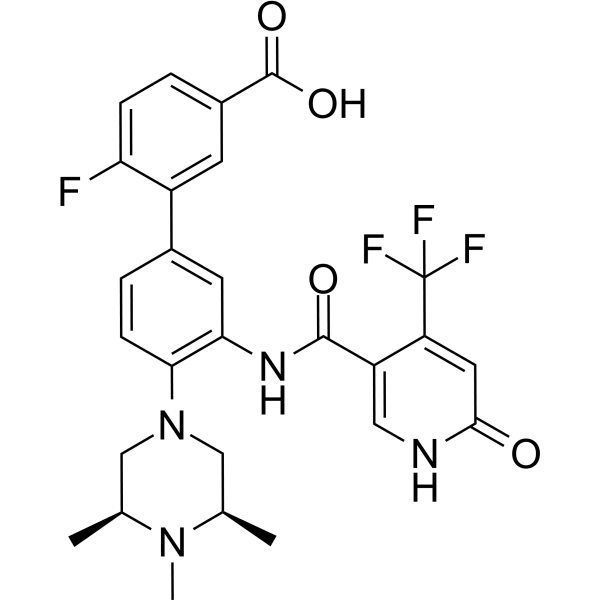
Dimethyl-F-OICR-9429-COOH a ligand for WD40 repeat domain protein 5 (WDR5) extracted from patent WO2019246570A1 intermediate 19. Dimethyl-F-OICR-9429-COOH can be used in the synthesis of PROTACs .
loading...
    loading...
Cat. No.: HY-12282
CAS No.: 1536200-31-3
Purity:  99.72%
Target:  

LRRK2

Research Areas:  

Neurological Disease

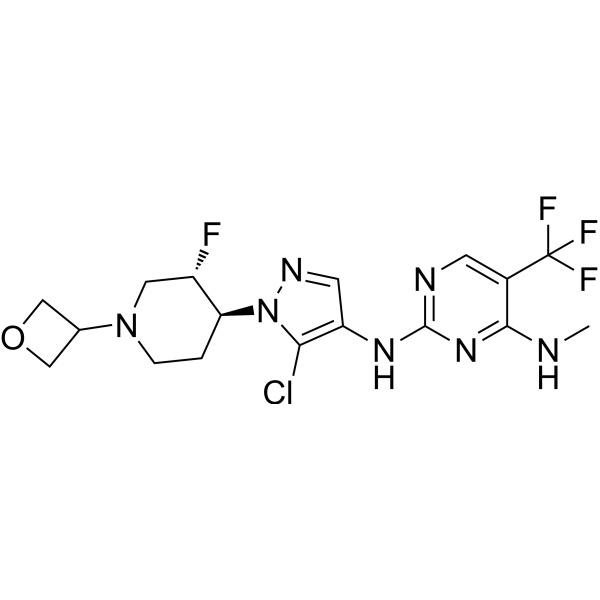
GNE-9605 is a potent, orally active, selective Leucine-rich repeat kinase 2 (LRRK2) inhibitor with an IC50 value of 18.7 nM. GNE-9605 inhibits LRRK2 Ser1292 autophosphorylation. GNE-9605 can be used in research of Parkinson's disease (PD) .
loading...
    loading...
Cat. No.: HY-P99237
CAS No.: 1615692-28-8
Synonyms: MMUC 1206A

Target:  

Mucin

Research Areas:  

Others Cancer

Sofituzumab (MMUC 1206A) is an anti-MUC16 antibody with a Kd of 0.3-0.9 nM. Sofituzumab can bind multiple adjacent antibody molecules to the repeat sequences of the same MUC16 molecule. Sofituzumab exhibits no anti-tumor activity in the HPAC pancreatic adenocarcinoma xenograft model .
loading...
    loading...
Cat. No.: HY-P99899
CAS No.: 2052591-32-7
Synonyms: PR-1498487
Target:  

ADC Antibodies

Research Areas:  

Cancer

Samrotamab (PR-1498487) is a humanized IgG1-κ chimeric monoclonal antibody targeting LRRC15, with a Kd of 5.42 nM for human LRRC15. Samrotamab can be used to synthesize antibody-drug conjugates (ADC). Samrotamab disrupts the LRRC15-SCG5 signaling module, binds to a membrane-proximal conformational epitope within the C-terminal leucine-rich repeat region of LRRC15, and binds to the lateral edge of the LRR solenoid while leaving the canonical concave β-sheet surface fully exposed. Samrotamab reduces the viability of bladder cancer cells, inhibits clonogenic growth, impairs cell migration, and compromises cell invasion. Samrotamab induces compensatory upregulation of LRRC15 transcripts while suppressing the expression of SCG5 mRNA. Samrotamab is applicable to research related to urothelial carcinoma, sarcoma, osteosarcoma, and undifferentiated pleomorphic sarcoma .
loading...
    loading...
Cat. No.: HY-153804
CAS No.: 864627-58-7
Purity:  99.68%
Synonyms: NCD
Target:  

Molecular Glues

Research Areas:  

Neurological Disease Cancer

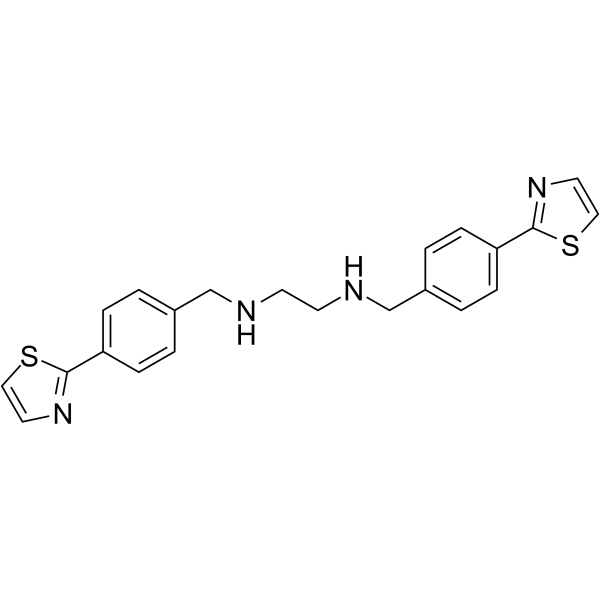
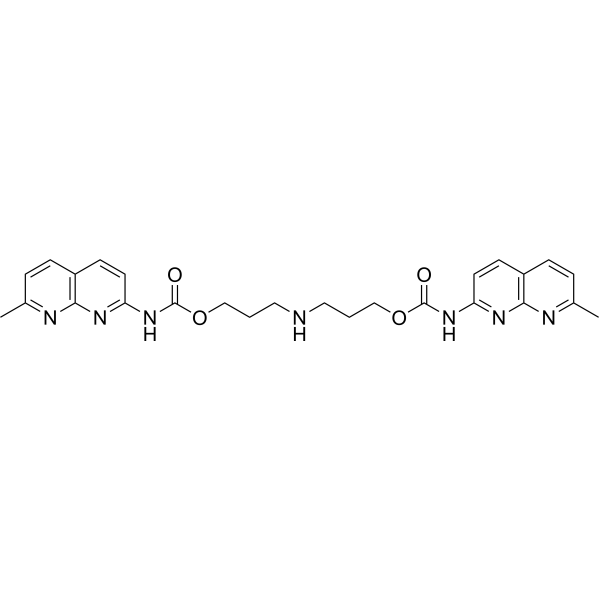
Naphthyridine carbamate dimer (NCD) is a molecular glue. Naphthyridine carbamate dimer induces designed structural changes in target functional DNA, thereby regulating its function. As a molecular glue, naphthyridine carbamate dimer stabilizes non-spontaneously formed GG homologous mismatched double-stranded DNA. Naphthyridine carbamate dimer reduces the formation of toxic RNA foci and regulates CGG repeat instability associated with fragile X syndrome and spinocerebellar ataxia type 31. Naphthyridine carbamate dimer can be used in research related to fragile X syndrome and spinocerebellar ataxia type 31 .
loading...
    loading...
Cat. No.: HY-153898
CAS No.: 1332175-56-0
Purity:  99.10%
Target:  

Amyloid-β

Research Areas:  

Neurological Disease

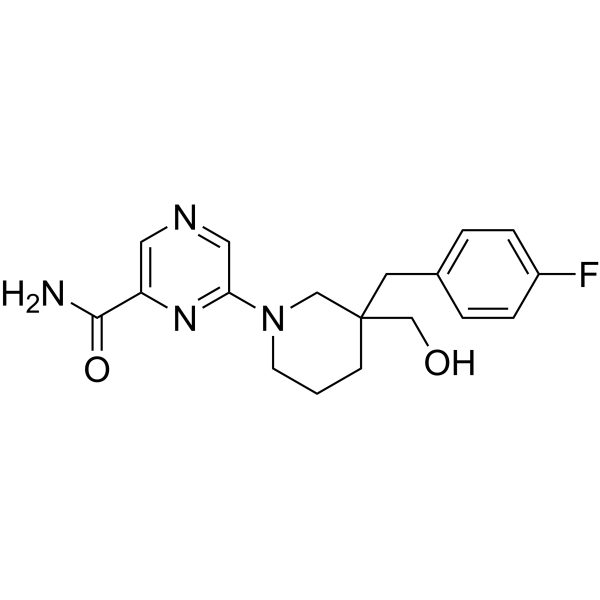
rTRD01 is an orally active, specific TDP-43 binder that targets the RRM1 and RRM2 domains of TDP-43. rTRD01 partially disrupts the interaction between TDP-43 and c9orf72 repeat RNA, but does not affect the binding of TDP-43 to canonical binding sequences. rTRD01 exhibits significant neuroprotective effects in zebrafish models, improves motor function and protects against paraquat (a widely used herbicide)-induced neurodegeneration, with no teratogenicity at high concentrations. rTRD01 is not a general antioxidant and cannot counteract Rotenone (HY-B1756)-induced neuronal death. rTRD01 can be used to study amyotrophic lateral sclerosis and other TDP-43 proteinopathies .
loading...
    loading...
Cat. No.: HY-P1985
CAS No.: 2408730-51-6
Target:  

Notch

Research Areas:  

Cardiovascular Disease Cancer

Notch 1 (Notch homolog 1, translocation-associated) can encode a member of the NOTCH family of proteins. Members of this Type I transmembrane protein family share structural characteristics including an extracellular domain consisting of multiple epidermal growth factor-like (EGF) repeats, and an intracellular domain consisting of multiple different domain types .
loading...
    loading...
Cat. No.: HY-163942
CAS No.: 2923008-66-4
Target:  

DNA/RNA Synthesis

Research Areas:  

Cancer

GSK_WRN4 is an orally active WRN helicase inhibitor (pIC50=7.6). GSK_WRN4 induces DNA damage markers (p21, p-γH2AX, p-KAP1). GSK_WRN4 selectively inhibits microsatellite-unstable tumor growth in vitro and in vivo by inducing DNA double-strand breaks, particularly at expanded TA repeats and regions of DNA damage .
loading...
    loading...
Cat. No.: HY-141878
CAS No.: 2767983-76-4
Research Areas:  

Neurological Disease

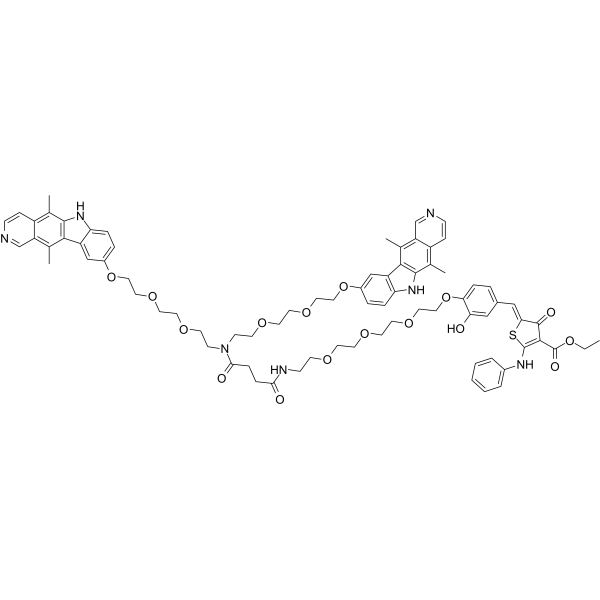
di-Ellipticine-RIBOTAC is a RNase recruiting chimera (RIBOTAC) degrader, capable of specifically binding and degrading expanded G4C2 RNA repeat (r(G4C2) exp). di-Ellipticine-RIBOTAC selectively binds the three-dimensional (3D) structure formed by r(G4C2) exp and that recruits an endogenous ribonuclease (RNase) to cleave r(G4C2) exp. di-Ellipticine-RIBOTAC selectively degrades the mutant chromosome 9 open reading frame 72 (C9orf72) allele and reduces quantities of toxic dipeptide repeat proteins (DPRs) translated from r(G4C2) exp. di-Ellipticine-RIBOTAC significantly improves the pathological phenotype of amyotrophic lateral sclerosis/ frontotemporal dementia (c9ALS/FTD) in cells and mouse models. di-Ellipticine-RIBOTAC can be used for the study of amyotrophic lateral sclerosis (ALS) and frontotemporal dementia (FTD) .
loading...
    loading...

