
13 Results for "

rhesus monkey models

" in MedChemExpress (MCE) Product Catalog:
Products (13)

13 Results for "rhesus monkey models" in MCE Product Catalog:

6
6 Cited Publications
Cat. No.: HY-B0742
CAS No.: 630-56-8
Synonyms: 17α-Hydroxyprogesterone hexanoate; 17α-Hydroxyprogesterone caproate
Target:  

Progesterone Receptor

Research Areas:  

Endocrinology

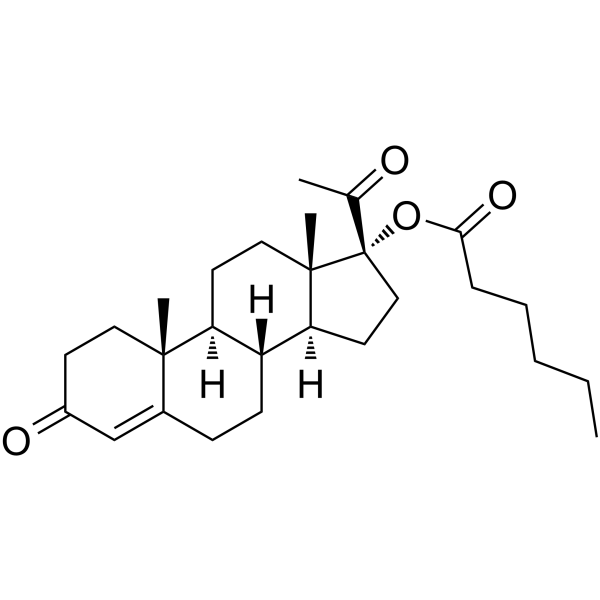
Hydroxyprogesterone caproate (17α-Hydroxyprogesterone hexanoate; 17α-Hydroxyprogesterone caproate) is a progesterone receptor (progesterone receptor) ligand and steroid hormone transcription inhibitor. Hydroxyprogesterone caproate downregulates estrogen receptors in target tissues and activates their metabolic pathways, and exhibits equivalent affinity for progesterone receptor A and progesterone receptor B. Hydroxyprogesterone caproate shows no consistent teratogenicity or developmental toxicity in rat, mouse and monkey models, but induces resorption or abortion in rhesus monkeys at human-equivalent doses. Hydroxyprogesterone caproate promotes the production of TNF-α in lipopolysaccharide-stimulated whole blood from non-pregnant women. Hydroxyprogesterone caproate can be used in scientific research related to preterm birth .
loading...
    loading...
Cat. No.: HY-W391596
CAS No.: 491-92-9
Target:  

Parasite

Research Areas:  

Infection Neurological Disease

Pamaquine is an 8-aminoquinoline antimalarial agent. Pamaquine has neurotoxicity and can damage specific neuro-anatomical structures, leading to deficits of neurologic function in Rhesus monkeys models .
loading...
    loading...
Cat. No.: HY-B0742R
CAS No.: 630-56-8
Synonyms: 17α-Hydroxyprogesterone hexanoate(Standard); 17α-Hydroxyprogesterone caproate (Standard)
Research Areas:  

Others

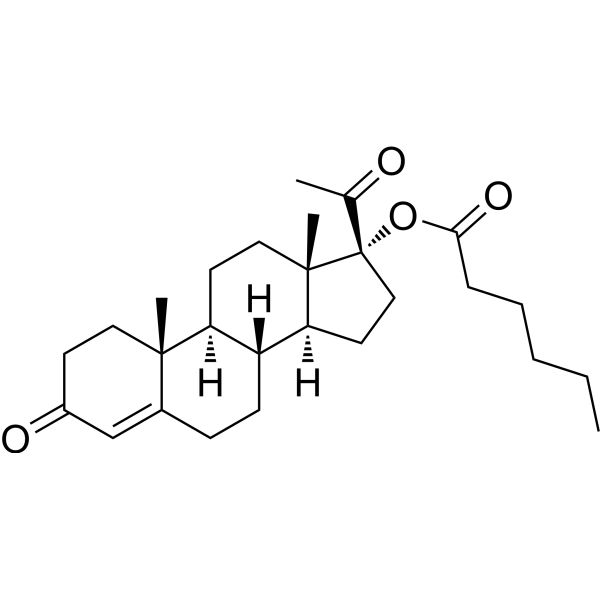
Hydroxyprogesterone caproate (Standard) is the analytical standard of Hydroxyprogesterone caproate. This product is intended for research and analytical applications. Hydroxyprogesterone caproate (17α-Hydroxyprogesterone hexanoate; 17α-Hydroxyprogesterone caproate) is a progesterone receptor (progesterone receptor) ligand and steroid hormone transcription inhibitor. Hydroxyprogesterone caproate downregulates estrogen receptors in target tissues and activates their metabolic pathways, and exhibits equivalent affinity for progesterone receptor A and progesterone receptor B. Hydroxyprogesterone caproate shows no consistent teratogenicity or developmental toxicity in rat, mouse and monkey models, but induces resorption or abortion in rhesus monkeys at human-equivalent doses. Hydroxyprogesterone caproate promotes the production of TNF-α in lipopolysaccharide-stimulated whole blood from non-pregnant women. Hydroxyprogesterone caproate can be used in scientific research related to preterm birth .
loading...
    loading...
Cat. No.: HY-107176A
CAS No.: 1266548-74-6
Synonyms: HS-25
Target:  

Others

Research Areas:  

Metabolic Disease

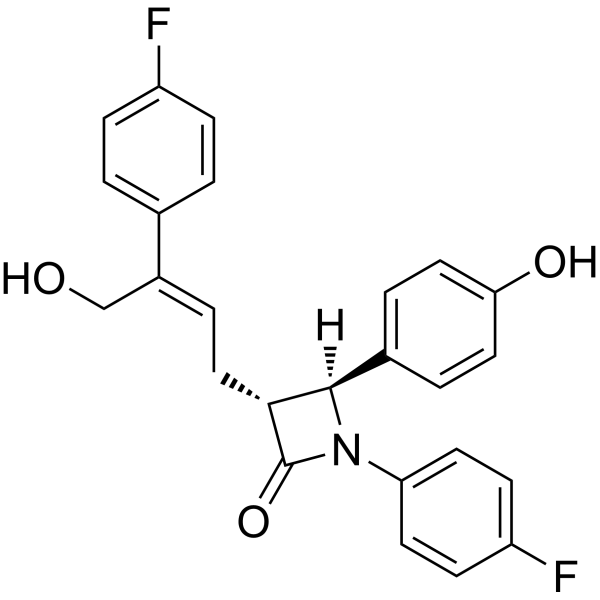
Hyzetimibe is a cholesterol absorption inhibitor. Hyzetimibe blocks the intestinal absorption of cholesterol and phytol. Hyzetimibe is well tolerated in animal models, with an LDmax 2000 mg/kg in rats and an LDmax 500 mg/kg in rhesus monkeys .
loading...
    loading...
Cat. No.: HY-14360
CAS No.: 919109-76-5
Target:  

Cathepsin

Research Areas:  

Metabolic Disease

MK 1256 is a highly selective and orally active inhibitor of tissue protease K (Cat K) with an IC50 of 0.62 nM. MK 1256 shows extremely high selectivity towards other tissue proteases (all > 1100 times), with only a slightly lower selectivity for tissue protease F (Cat F) (110 times). MK 1256 exhibits strong anti-bone resorption activity in the osteoporosis model of rhesus monkeys with ovariectomy. MK 1256 can be used for research on osteoporosis .
loading...
    loading...
Cat. No.: HY-122517
CAS No.: 8063-91-0
Synonyms: U-24729 A
Target:  

Parasite

Research Areas:  

Others

Mirincamycin (hydrochloride) (U-24729 A), a compound used to inhibit malaria, has a protective effect against the early liver stages of Plasmodium but fails to kill dormant liver stages of Plasmodium in a rhesus monkey model.
loading...
    loading...
Cat. No.: HY-171457
CAS No.: 6042-36-0
Synonyms: RC-12
Research Areas:  

Infection

WR-27653 (RC-12) is a derivative of Catechol with good activity against hypnozoites in the gold-standard Plasmodium cynomolgi-rhesus monkey (Macaca mulatta) model. WR-27653 has antimalarial activity .
loading...
    loading...
Cat. No.: HY-P991270

Target:  

Interleukin Related

Research Areas:  

Inflammation/Immunology

MT204 is a humanized IgG1 antibody inhibitor targeting IL-2 of human and rhesus monkey origin. MT204 prevents soluble IL-2 from binding to intermediate-affinity IL-2 receptors and blocks CD25-bound IL-2 on high-affinity IL-2 receptors. MT204 has potently anti-proliferative activity with NKL cells and primary NK cells. MT204 has good tolerability and potent immunosuppressive activity in allogeneic skin graft model of rhesus monkey, promising for immunosuppressive and anti-proliferative therapy .
loading...
    loading...
Cat. No.: HY-145644
CAS No.: 2599039-60-6
Synonyms: C-135-LS; BMS-986414

Target:  

SARS-CoV

Research Areas:  

Infection Cancer

Ogalvibart (C-135-LS) is a human anti-SARS-CoV-2 monoclonal antibody (IgG1 type). Ogalvibart binds to the spike (S) glycoprotein receptor-binding domain (RBD) of SARS-CoV-2. Ogalvibart in combination with C144LS (1:1 ratio) shows good preventive activity and can effectively block the development of COVID19 in a rhesus monkey disease model .
loading...
    loading...
Cat. No.: HY-171472
CAS No.: 171961-95-8
Target:  

Dopamine Receptor

Research Areas:  

Neurological Disease

A-86929 is a highly potent and selective dopamine D1 receptor agonist with a pKi value of 7.3. In the 6-OHDA (HY-B1081)-induced unilateral nigrostriatal lesion rat model, A-86929 significantly induces rotational behavior. It also improves motor function in the MPTP (HY-15608)-induced Parkinson's disease marmoset model. Additionally, A-86929 demonstrates potential therapeutic value in reducing cocaine-seeking behavior in rats and reversing Haloperidol (HY-14538)-induced cognitive deficits in rhesus monkeys. A-86929 can be used for research in neurological disorders .
loading...
    loading...
Cat. No.: HY-201403
CAS No.: 1628160-15-5
LY2775240 is an orally active phosphodiesterase 4 (PDE4) inhibitor with potent inhibitory activity against PDE4A (IC50 = 0.09 nM), PDE4B (IC50 = 0.09 nM) and PDE4D (IC50 = 0.14 nM), and exhibits an IC50 of 2.4 nM against PDE4C. LY2775240 is a highly selective agent that reduces TNFα production upon immune activation. LY2775240 decreases TNFα production in rodent and rhesus monkey models. LY2775240 can be used in the research of psoriasis .
loading...
    loading...
Cat. No.: HY-187122
CAS No.: 1420-88-8
Research Areas:  

Others

N,S-Diacetylcysteamine is an N-acetylcysteamine thioester (SNAc) derivative that serves as an acetyl donor, substrate, substrate inhibitor, condensing agent, and acyl donor. N,S-Diacetylcysteamine acts as an acetyl donor in the INH (Isoniazid) (HY-B0329) acetylation reaction in rhesus monkey liver homogenate, functions as a substrate for pigeon liver arylamine acetylase, and exhibits substrate inhibition against both systems at excessively high concentrations. N,S-Diacetylcysteamine acts as a substrate for peptidoglycan O-acetyltransferase B (PatB) to mediate the acetylation modification of peptidoglycan, and serves as a thioester model for the thioester groups of acetyl-CoA and acyl carrier protein .
loading...
    loading...
Cat. No.: HY-B0742S1
Synonyms: 17α-Hydroxyprogesterone hexanoate-d8; 17α-Hydroxyprogesterone caproate-d8
Hydroxyprogesterone caproate-d8 (17α-Hydroxyprogesterone hexanoate-d8) is the deuterium labeled Hydroxyprogesterone caproate (HY-B0742). Hydroxyprogesterone caproate (17α-Hydroxyprogesterone hexanoate; 17α-Hydroxyprogesterone caproate) is a progesterone receptor (progesterone receptor) ligand and steroid hormone transcription inhibitor. Hydroxyprogesterone caproate downregulates estrogen receptors in target tissues and activates their metabolic pathways, and exhibits equivalent affinity for progesterone receptor A and progesterone receptor B. Hydroxyprogesterone caproate shows no consistent teratogenicity or developmental toxicity in rat, mouse and monkey models, but induces resorption or abortion in rhesus monkeys at human-equivalent doses. Hydroxyprogesterone caproate promotes the production of TNF-α in lipopolysaccharide-stimulated whole blood from non-pregnant women. Hydroxyprogesterone caproate can be used in scientific research related to preterm birth .
loading...
    loading...
  • 1

