10 Results for "

shikimate pathway

" in MedChemExpress (MCE) Product Catalog:
Products (10)

10 Results for "shikimate pathway" in MCE Product Catalog:

Cat. No.: HY-B0863R
CAS No.: 1071-83-6
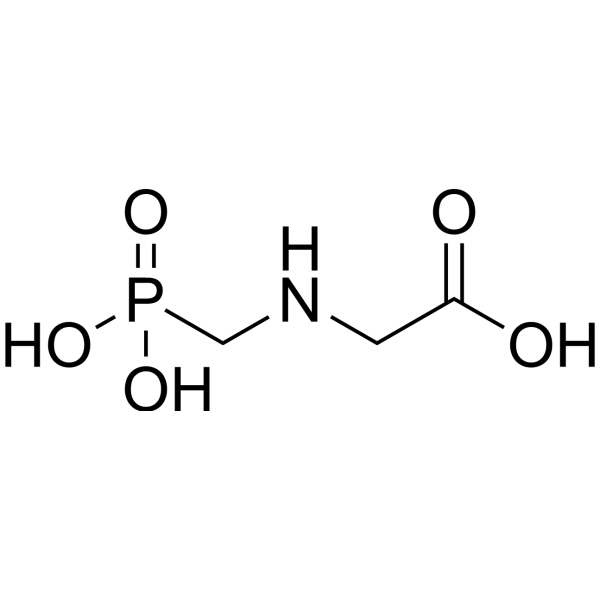
Glyphosate (Standard) is the analytical standard of Glyphosate. This product is intended for research and analytical applications. Glyphosate is an herbicidal derivative of the amino acid glycine. Glyphosate targets and blocks a plant metabolic pathway not found in animals, the shikimate pathway, required for the synthesis of aromatic amino acids in plants .
loading...
    loading...
Cat. No.: HY-B0863S3
CAS No.: 1185107-63-4
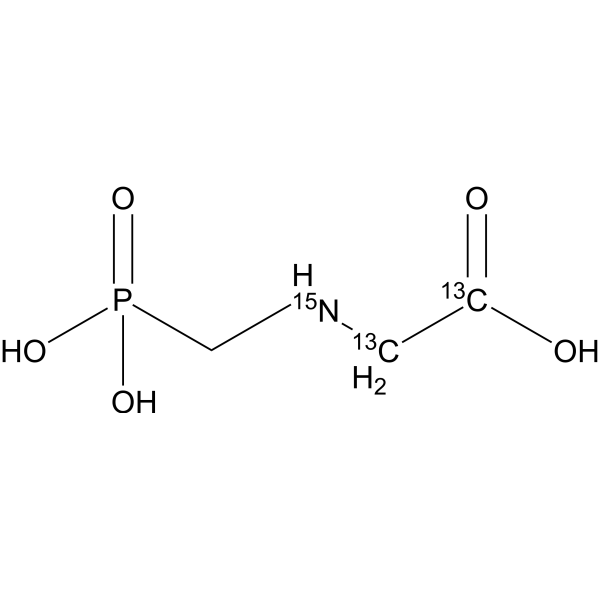
Glyphosate- 13C2, 15N is the 13C and 15N labled Glyphosate (HY-B0863). Glyphosate is an herbicidal derivative of the amino acid glycine. Glyphosate targets and blocks a plant metabolic pathway not found in animals, the shikimate pathway, required for the synthesis of aromatic amino acids in plants .
loading...
    loading...
Cat. No.: HY-W016480
CAS No.: 943-80-6
Synonyms: H-Phe(4-NH2)-OH
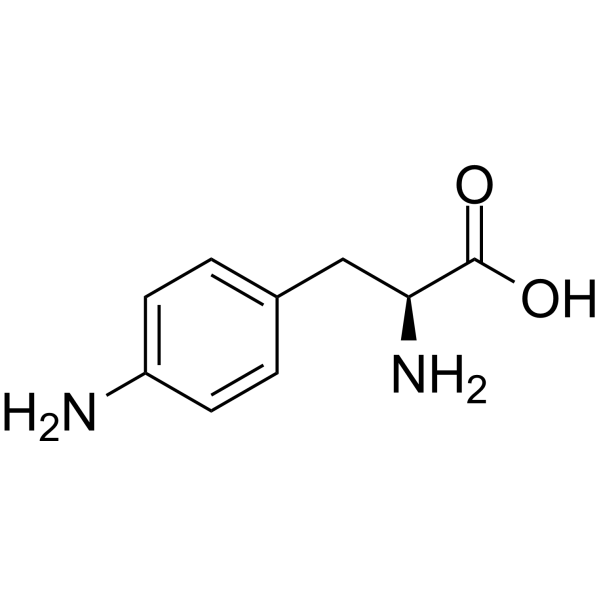
4-Amino-L-phenylalanine (H-Phe(4-NH2)-OH) is a metabolic intermediate and an α-carbonic anhydrase (TcCA) activator with a Ka value of 0.75 μM. 4-Amino-L-phenylalanine acts through active site cavity entrance binding and a proton shuttle mechanism to enhance the catalytic rate of CO2 hydration. 4-Amino-L-phenylalanine serves as a diamine monomer for bio-based polymer synthesis and is produced in Escherichia coli via the shikimate pathway. 4-Amino-L-phenylalanine constitutes a structural component of haptens used in immunoassay development. 4-Amino-L-phenylalanine is used for the production of Chloramphenicol (HY-B0239) and Pristinamycin I in Streptomyces venezuelae and S. pristinaespiralis, respectively. 4-Amino-L-phenylalanine is used in research related to Trypanosoma cruzi infection .
loading...
    loading...
Cat. No.: HY-N9934
CAS No.: 2922-42-1
Synonyms: 3-DHS; 5-Dehydroshikimic acid
(-)-3-Dehydroshikimic acid (3-DHS) is an intermediate of the Shikimate pathway. (-)-3-Dehydroshikimic acid is found in vegetables and fruits. (-)-3-Dehydroshikimic acid accumulates in bacterial mutants, serves as a precursor of aromatic metabolites, and competitively interferes with the growth response of mutant bacteria to Shikimic acid (HY-N0130). (-)-3-Dehydroshikimic acid exhibits weak antioxidant activity in liposomes and corn oil oil-in-water emulsions .
loading...
    loading...
Cat. No.: HY-B0863S
CAS No.: 2733532-11-9
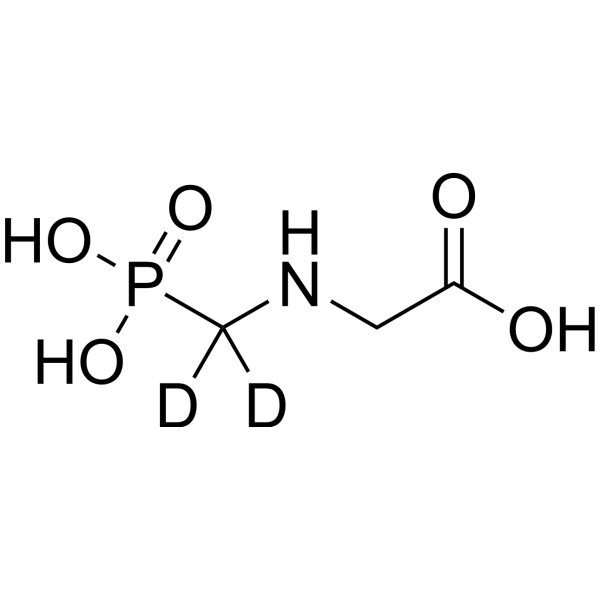
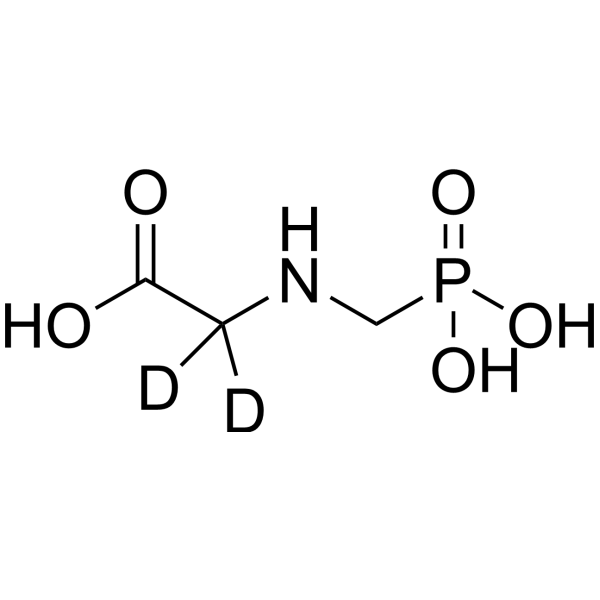
Glyphosate-d2 is the deuterium labeled Glyphosate. Glyphosate is an herbicidal derivative of the amino acid glycine. Glyphosate targets and blocks a plant metabolic pathway not found in animals, the shikimate pathway, required for the synthesis of aromatic amino acids in plants .
loading...
    loading...
Cat. No.: HY-B0863S2
CAS No.: 2734001-36-4
Glyphosate-d2-1 is the deuterium labeled Glyphosate . Glyphosate is an herbicidal derivative of the amino acid glycine. Glyphosate targets and blocks a plant metabolic pathway not found in animals, the shikimate pathway, required for the synthesis of aromatic amino acids in plants .
loading...
    loading...
Cat. No.: HY-N9934R
CAS No.: 2922-42-1
Synonyms: 3-DHS (Standard); 5-Dehydroshikimic acid (Standard)
(-)-3-Dehydroshikimic acid (Standard) (3-DHS (Standard)) is the analytical standard of (-)-3-Dehydroshikimic acid (HY-N9934). This product is intended for research and analytical applications. (-)-3-Dehydroshikimic acid (3-DHS) is an intermediate of the Shikimate pathway. (-)-3-Dehydroshikimic acid is found in vegetables and fruits. (-)-3-Dehydroshikimic acid accumulates in bacterial mutants, serves as a precursor of aromatic metabolites, and competitively interferes with the growth response of mutant bacteria to Shikimic acid (HY-N0130). (-)-3-Dehydroshikimic acid exhibits weak antioxidant activity in liposomes and corn oil oil-in-water emulsions .
loading...
    loading...
Cat. No.: HY-W141810
CAS No.: 62040-55-5
Synonyms: H-Phe(4-NH2)-OH hydrochloride
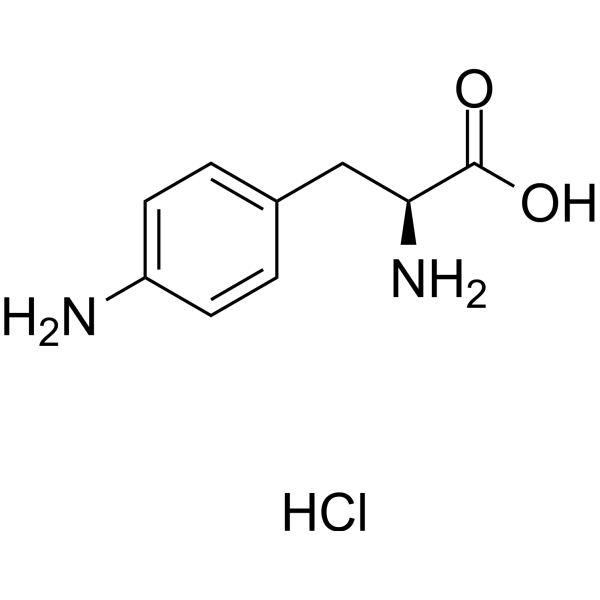
4-Amino-L-phenylalanine hydrochloride (H-Phe(4-NH2)-OH) is a metabolic intermediate and an α-carbonic anhydrase (TcCA) activator with a Ka value of 0.75 μM. 4-Amino-L-phenylalanine hydrochloride acts through active site cavity entrance binding and a proton shuttle mechanism to enhance the catalytic rate of CO2 hydration. 4-Amino-L-phenylalanine hydrochloride serves as a diamine monomer for bio-based polymer synthesis and is produced in Escherichia coli via the shikimate pathway. 4-Amino-L-phenylalanine hydrochloride constitutes a structural component of haptens used in immunoassay development. 4-Amino-L-phenylalanine hydrochloride is used for the production of Chloramphenicol (HY-B0239) and Pristinamycin I in Streptomyces venezuelae and S. pristinaespiralis, respectively. 4-Amino-L-phenylalanine hydrochloride is used in research related to Trypanosoma cruzi infection .
loading...
    loading...
Cat. No.: HY-W016480R
CAS No.: 943-80-6
Synonyms: H-Phe(4-NH2)-OH (Standard)
4-Amino-L-phenylalanine (Standard) (H-Phe(4-NH2)-OH (Standard)) is the analytical standard of 4-Amino-L-phenylalanine (HY-W016480). This product is intended for research and analytical applications. 4-Amino-L-phenylalanine (H-Phe(4-NH2)-OH) is a metabolic intermediate and an α-carbonic anhydrase (TcCA) activator with a Ka value of 0.75 μM. 4-Amino-L-phenylalanine acts through active site cavity entrance binding and a proton shuttle mechanism to enhance the catalytic rate of CO2 hydration. 4-Amino-L-phenylalanine serves as a diamine monomer for bio-based polymer synthesis and is produced in Escherichia coli via the shikimate pathway. 4-Amino-L-phenylalanine constitutes a structural component of haptens used in immunoassay development. 4-Amino-L-phenylalanine is used for the production of Chloramphenicol (HY-B0239) and Pristinamycin I in Streptomyces venezuelae and S. pristinaespiralis, respectively. 4-Amino-L-phenylalanine is used in research related to Trypanosoma cruzi infection .
loading...
    loading...
Cat. No.: HY-E71678
Research Areas:  

Others

3-Deoxy-7-phosphoheptulonate synthase (EC 2.5.1.54) is the first enzyme in a series of metabolic reactions known as the shikimate pathway, which is responsible for the biosynthesis of the amino acids phenylalanine, tyrosine, and tryptophan.
loading...
    loading...

