251 Results for "

soft spring wheat

" in MedChemExpress (MCE) Product Catalog:
Products (251)

251 Results for "soft spring wheat" in MCE Product Catalog:

21
21 Publications Verification
Cat. No.: HY-107910
CAS No.: 37326-33-3
Synonyms: Hyaluronate 4-glycanohydrolase, Bovine testes; Hyaluronoglucosaminidase, Bovine testes
Target:  

NF-κB

Research Areas:  

Inflammation/Immunology Cancer

Hyaluronidase, Bovine testes (Hyaluronate 4-glycanohydrolase; Hyaluronoglucosaminidase) is an endoglycosidase that depolymerizes Hyaluronic acid (HA) (HY-B0633A) by cleavage of glycosidic bonds. Hyaluronidase degrades HA and activates membrane receptors that trigger pathways converging in NF-κB activation. Hyaluronidase is employed in the research of granulomatous foreign body reactions, soft-tissue necrosis caused by vascular compromise and uncomplicated nodules, overcorrection, inflamed nodules or tissue ischemia associated with HA filler injection .
loading...
    loading...
7
7 Cited Publications
Cat. No.: HY-N1127
CAS No.: 520-32-1
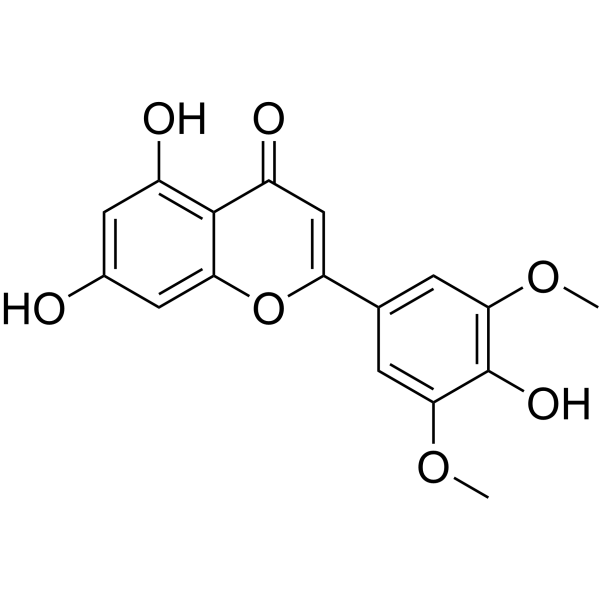
Tricin is a natural flavonoid found in large amounts in wheat. Tricin inhibits HCMV replication by inhibiting CDK9. Tricin inhibits the proliferation and invasion of C6 glioma cells by upregulating the expression of FAK-targeting microRNA-7 .
loading...
    loading...
7
7 Cited Publications
Cat. No.: HY-B0710
CAS No.: 107-43-7
Synonyms: Trimethylglycine; carboxy-N,N,N-trimethylmethanaminium
Betaine (Trimethylglycine) is a natural compound found in many foods and also an active methyl-donor which can maintain normal DNA methylation patterns [1,2]. Betaine is found ubiquitously in plants, animals, microorganisms, and rich dietary sources including seafood, spinach, and wheat bran. Betaine also acts as an osmolyte, to maintain the avian’s cellular water and ion balance to improve the avian’s capacity against heat stress via preventing dehydration and osmotic inactivation. It helps in maintaining the protective osmolytic activity, especially in heat-stressed birds. Betaine may promote various intestinal microbes against osmotic variations and thus improve microbial fermentation activity .
loading...
    loading...
7
7 Cited Publications
Cat. No.: HY-B0561
CAS No.: 52-01-7
Synonyms: SC9420
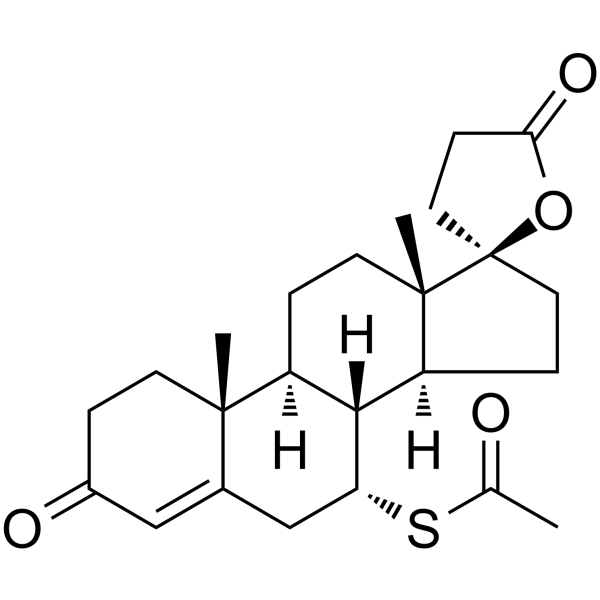
Spironolactone is an aldosterone antagonist that acts on the aldosterone mineralocorticoid receptor (IC50=24 nM) and androgen receptor (IC50=77 nM), promotes podocyte autophagy and regulates pain. Spironolactone improves hypertension-related vascular hypertrophy and remodeling by reducing angiotensin II (Ang II)-induced inflammation, reduces aldosterone-induced vascular and soft tissue calcification through PIT1-dependent signaling, and alleviates vascular dysfunction in type II diabetic mice by reducing oxidative stress and restoring NO/GC signaling; at low concentrations, it and its metabolites can interfere with aldosterone biosynthesis in the adrenal cortex and inhibit voltage-dependent Ca 2+ channels to exert antihypertensive effects .
loading...
    loading...
5
5 Cited Publications
Cat. No.: HY-B1156
CAS No.: 38821-53-3
Synonyms: Cefradine; SQ-11436
Target:  

Bacterial Antibiotic TOPK

Research Areas:  

Infection Inflammation/Immunology

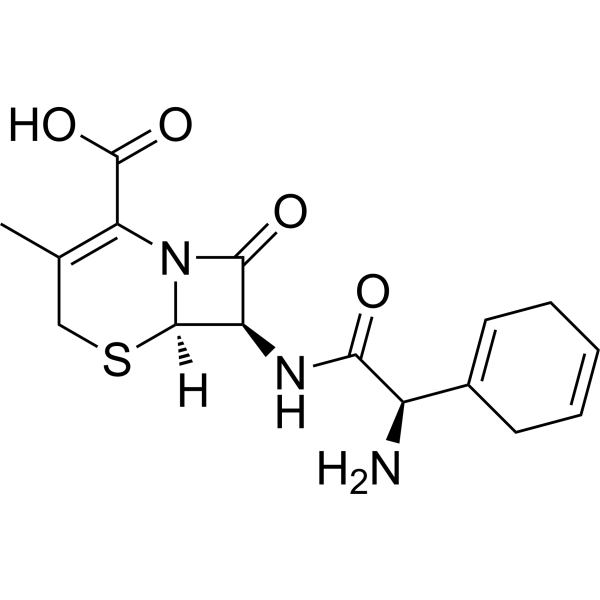
Cephradine (Cefradine) is a broad-spectrum and orally active cephalosporin. Cephradine is active against both gram-positive and gram-negative pathogens. Cephradine is effective in eradicating most penicillinase-producing organisms. Cephradine has been used in the research of genitourinary, gastrointestinal and respiratory tract infections, and in infections of the skin and soft tissues. Cephradine blocks solar-ultraviolet induced skin inflammation through direct inhibition of TOPK .
loading...
    loading...
5
5 Cited Publications
Cat. No.: HY-128449
CAS No.: 75975-70-1
Purity:  91.53%
Synonyms: Cefradine monohydrate
Target:  

Bacterial Antibiotic TOPK

Research Areas:  

Infection Inflammation/Immunology

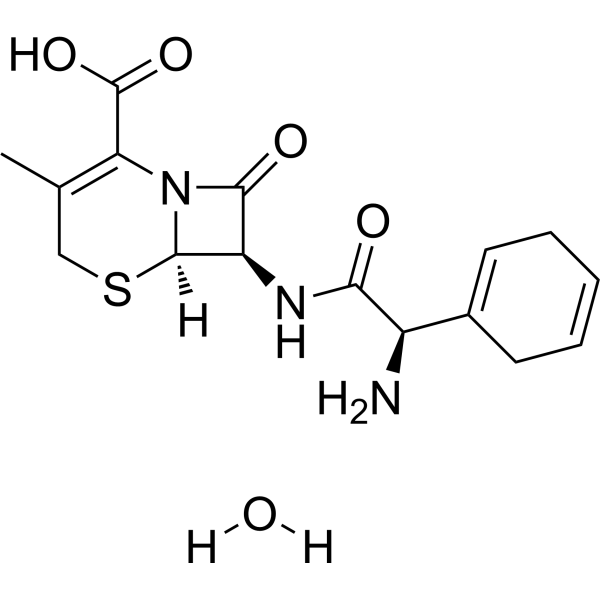
Cephradine (Cefradine) monohydrate is a broad-spectrum and orally active cephalosporin. Cephradine monohydrate is active against both grampositive and gram-negative pathogens and effective in eradicating most penicillinase-producing organisms known to be resistant to penicillin G, penicillin V, and ampicillin. Cephradine monohydrate has been used in the research of genitourinary, gastrointestinal and respiratory tract infections, and in infections of the skin and soft tissues. Cephradine monohydrate blocks solar-ultraviolet induced skin inflammation through direct inhibition of TOPK .
loading...
    loading...
4
4 Cited Publications
Cat. No.: HY-19915
CAS No.: 1112968-42-9
Synonyms: MRX-I
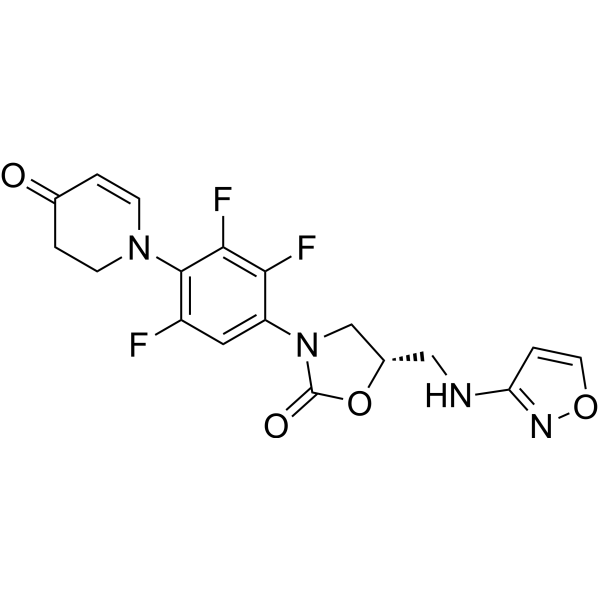
Contezolid (MRX-I), a new and orally active oxazolidinone, is an antibiotic in study for complicated skin and soft tissue infections (cSSTI) caused by resistant Gram-positive bacteria. Contezolid (MRX-I) markedly reduces potential for myelosuppression and monoamine oxidase inhibition (MAOI) .
loading...
    loading...
2
2 Cited Publications
Cat. No.: HY-N10455
CAS No.: 72050-71-6
Synonyms: 24-epi-Castasterone
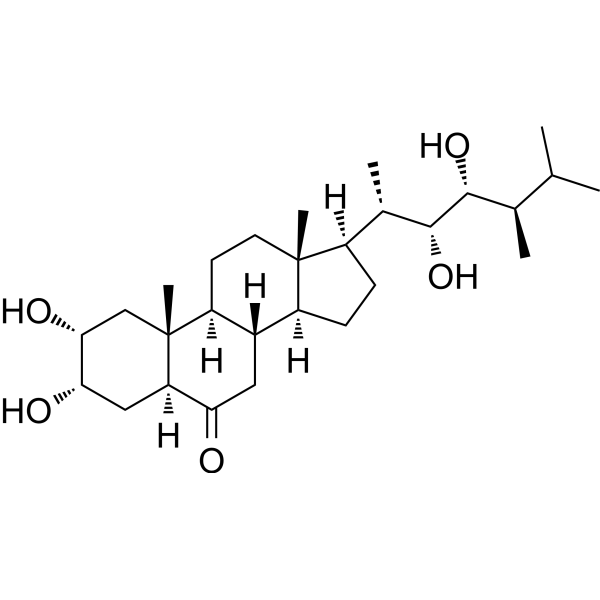
24-Epicastasterone (24-epi-Castasterone) is a bioactive brassinosteroid and a ligand of ABCB1 and ABCB19 in Arabidopsis thaliana. 24-Epicastasterone stimulates the ATPase activity of ABCB19 and the ATP hydrolysis activity of ABCB1, which drive the efflux of substances from plant cells. 24-Epicastasterone increases the activities of catalase and guaiacol peroxidase in the roots of wheat seedlings. 24-Epicastasterone alleviates heat-induced lipid peroxidation through a ROS-dependent mechanism and enhances the heat tolerance of common wheat seedlings .
loading...
    loading...
2
2 Cited Publications
Cat. No.: HY-N5056
CAS No.: 13190-34-6
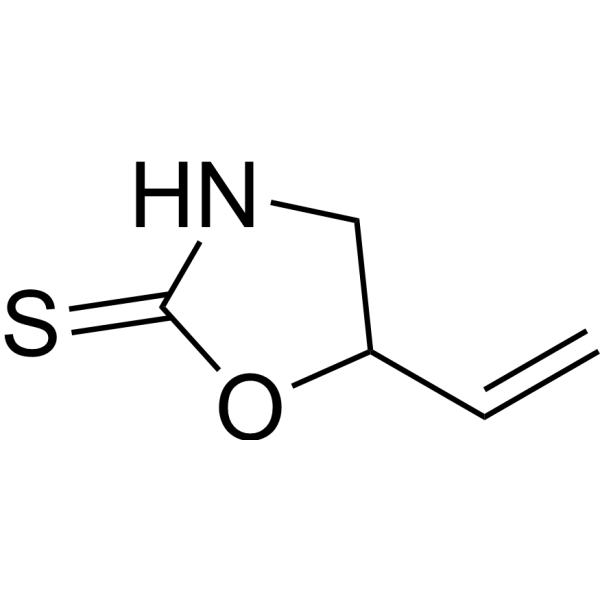
DL-Goitrin, also called (R, S)- report by the spring, consists of the epigoitrin (reported by the R- Spring) and the spring (-S- reported by spring), and the two mutually isomers, and the mixture is the ingredient of cruciferous vegetables .
loading...
    loading...
2
2 Cited Publications
Cat. No.: HY-B1869
CAS No.: 74223-64-6
Research Areas:  

Others

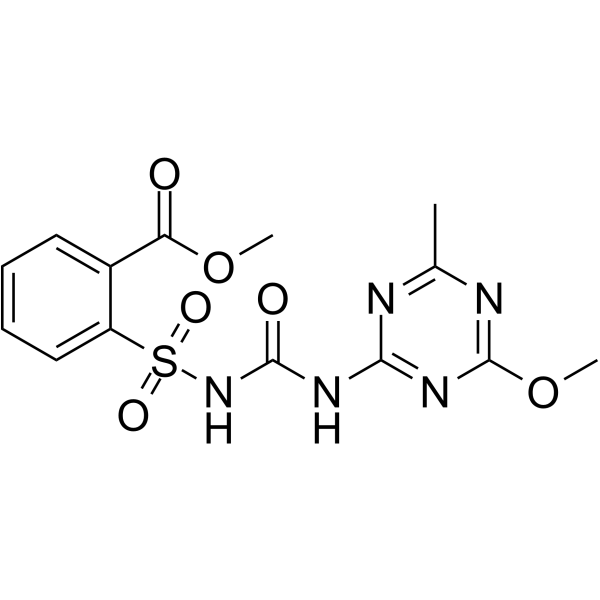
Metsulfuron-methyl is a systemic sulfonylurea herbicide that has been widely used to control broadleaf weeds and annual grasses in rice, corn, wheat, and barley. Metsulfuron-methyl exhibits high herbicidal activity and low mammalian toxicity, with an LD50 for rats exceeding 5000 mg/kg .
loading...
    loading...
1
1 Cited Publications
Cat. No.: HY-NP091
Synonyms: WGA
Wheat Germ Agglutinin (WGA) is a plant lectin that can be used as a probe to specifically bind biomolecules (such as polysaccharides, peptides, etc.).Wheat Germ Agglutinin (WGA) is a biological material or organic compound that can be used in life science research .
loading...
    loading...
1
1 Cited Publications
Cat. No.: HY-124757
CAS No.: 932359-76-7
Purity:  99.87%
Target:  

Proteasome Mitosis

Research Areas:  

Cancer

FiVe1 is a vimentin (VIM) inhibitor. FiVe1 binds to the rod domain of VIM, causing metaphase VIM disassembly and hyperphosphorylation at Ser56, ultimately leading to mitotic catastrophe, multinucleation, and loss of stemness. FiVe1 has anticancer activity against soft tissue sarcomas. FiVe1 increases the sensitivity of ovarian cancer to Cisplatin (HY-17394). FiVe1 can be used for researches of mesenchymal cancers (including breast cancer and soft tissue sarcoma) and ovarian cancers .
loading...
    loading...
1
1 Cited Publications
Cat. No.: HY-NP0147
Synonyms: WGA (Fluorescein)
Wheat Germ Agglutinin (WGA) Fluorescein is a classic fluorescent label that specifically binds to sugar residues such as N-acetylglucosamine, N-acetylneuraminic acid and sialic acid. Wheat Germ Agglutinin Fluorescein performs regionally differential fluorescent staining of the ocular surface epithelial glycocalyx to assess its integrity, and causes no damage to the eye at safe concentrations. Wheat Germ Agglutinin Fluorescein is also used for staining structures including red blood cells, cultured cells, bacteria and pine wood nematodes, and facilitates the isolation of wheat-associated plant-growth-promoting rhizobacterial strains. Wheat Germ Agglutinin Fluorescein can be applied to the detection of ocular glycocalyx integrity and the research of related diseases such as pine wilt disease .
loading...
    loading...
1
1 Cited Publications
Cat. No.: HY-NP163C
Synonyms: WGA-AF555
Wheat germ agglutinin-AF555 (WGA-AF555) is a membrane-staining lectin conjugate that combines wheat germ agglutinin with the Alexa Fluor 555 fluorescent dye. Wheat germ agglutinin-AF555 is used for precise staining and contour delineation of cell membranes. Wheat germ agglutinin-AF555 also effectively distinguishes between surface vimentin and intracellular vimentin in cells .
loading...
    loading...
1
1 Cited Publications
Cat. No.: HY-NP163A
Synonyms: WGA-AF488
Wheat germ agglutinin-AF488 (WGA-AF488) is a cell membrane-specific staining agent prepared by conjugating wheat germ agglutinin with the Alexa Fluor 488 (HY-D1304) fluorescent dye, and it binds to cell surface glycoproteins with high affinity. Wheat germ agglutinin-AF488 is applied in fluorescence microscopy and confocal imaging techniques, and it can clearly label the membrane structures of various cells including breast cancer cells, enabling high-resolution visual observation. Wheat germ agglutinin-AF488 is used in studies of breast cancer and triple-negative breast cancer to observe cell morphology and membrane dynamic changes .
loading...
    loading...
1
1 Cited Publications
Cat. No.: HY-B1257
CAS No.: 56796-39-5
Synonyms: Sodium cefmetazole
Target:  

Bacterial Antibiotic

Research Areas:  

Infection Cancer

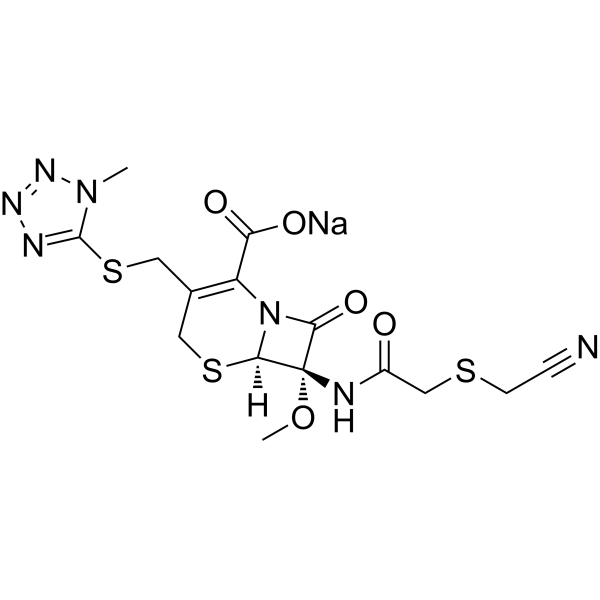
Cefmetazole sodium (Sodium cefmetazole) is a semisynthetic cephamycin antibiotic with broad-spectrum antibacterial activity, covering gram-positive, gram-negative, and anaerobic bacteria. Cefmetazole sodium binds to penicillin binding proteins (PBPs), resulting in interfering bacterial cell wall biosynthesis. Cefmetazole sodium is used for the research of gynecologic, intraabdominal, urinary tract, respiratory tract and skin and soft tissue infections .
loading...
    loading...
1
1 Cited Publications
Cat. No.: HY-B1595
CAS No.: 56796-20-4
Synonyms: CS 1170
Target:  

Antibiotic Bacterial

Research Areas:  

Infection Cancer

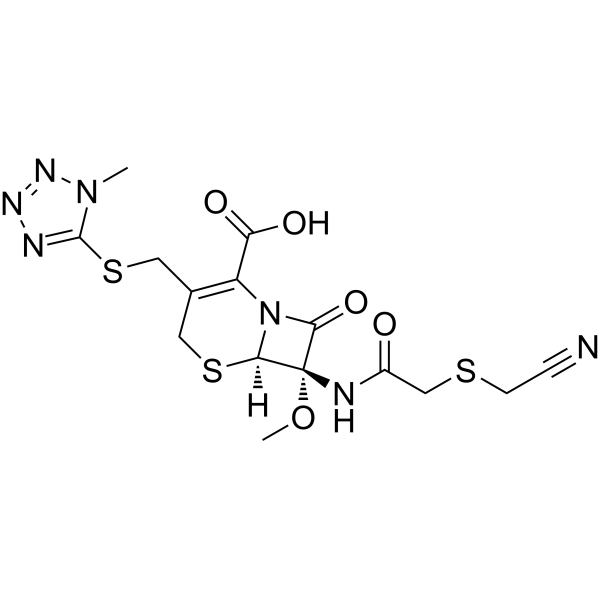
Cefmetazole (CS 1170) is a semisynthetic cephamycin antibiotic with broad-spectrum antibacterial activity, covering gram-positive, gram-negative and anaerobic bacteria. Cefmetazole binds to penicillin binding proteins (PBPs), resulting in interfering bacterial cell wall biosynthesis. Cefmetazole is used for the research of gynecologic, intraabdominal, urinary tract, respiratory tract and skin and soft tissue infections .
loading...
    loading...
1
1 Cited Publications
Cat. No.: HY-P1116
CAS No.: 794466-43-6
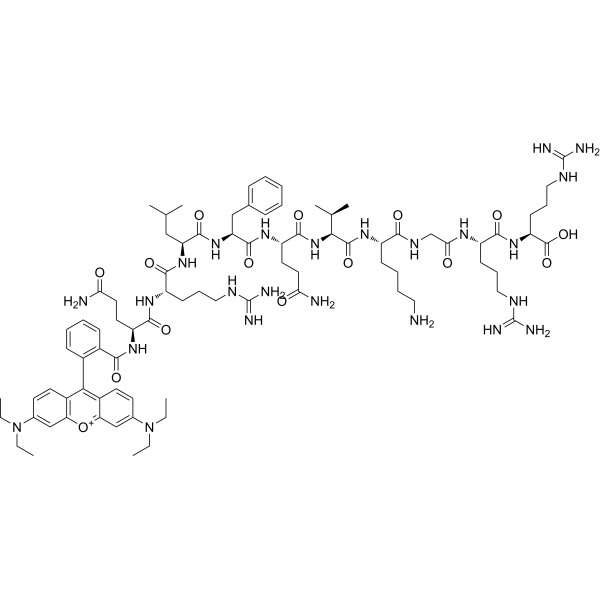
PBP10 is a decapeptide. PBP10 selectively binds to lipoteichoic acid (LTA), lipopolysaccharide (LPS) and phosphatidylinositol-4,5-bisphosphate (PIP2). PBP10 penetrates cell membranes and possesses bactericidal, anti-inflammatory, cell motility-inhibiting and actin assembly-regulating activities. PBP10 is applicable to relevant research on bacterial infections, microbe-induced inflammation, skin and soft tissue infections, as well as sepsis .
loading...
    loading...
1
1 Cited Publications
Cat. No.: HY-P1116A
Target:  

Bacterial

Research Areas:  

Infection Inflammation/Immunology

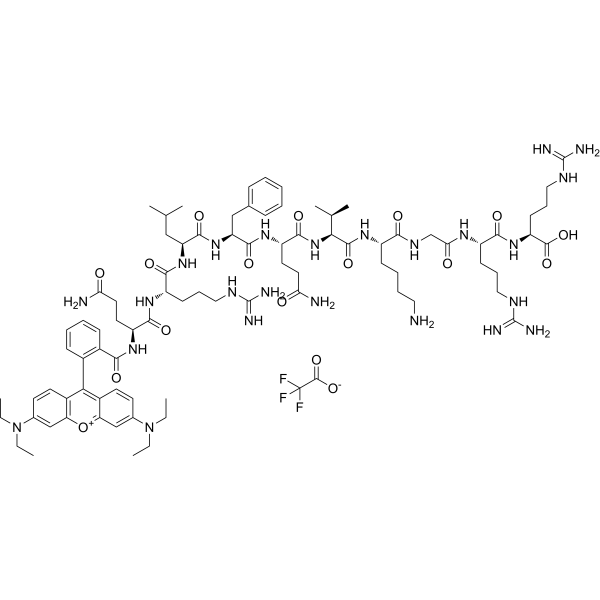
PBP10 TFA is a decapeptide. PBP10 TFA selectively binds to lipoteichoic acid (LTA), lipopolysaccharide (LPS) and phosphatidylinositol-4,5-bisphosphate (PIP2). PBP10 TFA penetrates cell membranes and possesses bactericidal, anti-inflammatory, cell motility-inhibiting and actin assembly-regulating activities. PBP10 TFA is applicable to relevant research on bacterial infections, microbe-induced inflammation, skin and soft tissue infections, as well as sepsis .
loading...
    loading...
1
1 Cited Publications
Cat. No.: HY-105049A
Ceftaroline hydrochloride is a cephalosporin compound and the active form of Ceftaroline fosamil (HY-14737). Ceftaroline hydrochloride exhibits activity against Gram-positive bacteria, Gram-negative bacteria, and some anaerobic bacteria. Ceftaroline hydrochloride binds to penicillin-binding proteins 2 and 2A, thereby inhibiting the synthesis of bacterial peptidoglycan and cell wall, and acts as a bactericide, synergist, and resistance inhibitor. Ceftaroline hydrochloride can be used in research related to complicated skin and soft tissue infections, community-acquired pneumonia, Enterococcus faecalis infective endocarditis, and bacterial infections .
loading...
    loading...

