40 Results for "

stimuli

" in MedChemExpress (MCE) Product Catalog:
Products (40)

40 Results for "stimuli" in MCE Product Catalog:

5
5 Cited Publications
Cat. No.: HY-149143
CAS No.: 2765255-93-2
Purity:  98.82%
Target:  

TRP Channel

Research Areas:  

Inflammation/Immunology

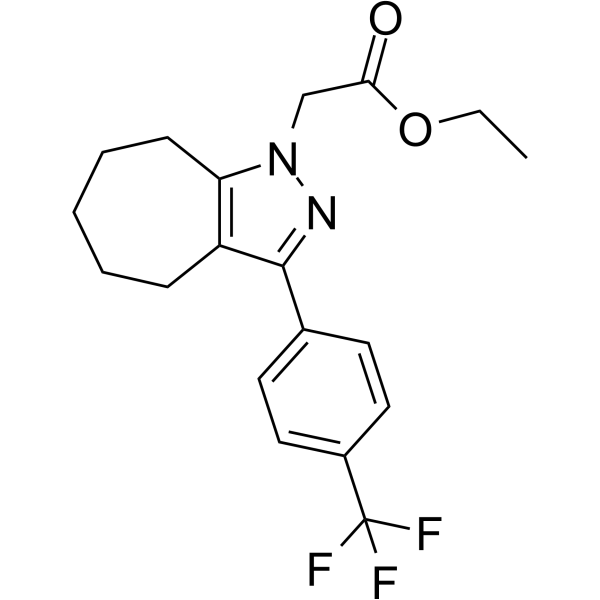
JNJ-28583113 is an TRPM2 antagonist with brain permeability. JNJ-28583113 inhibits TRPM2 blocked phosphorylation of GSK3α and β subunits. JNJ-28583113 protects cells from oxidative stress induced cell death. JNJ-28583113 also suppresses cytokine release in response to pro-inflammatory stimuli in microglia .
loading...
    loading...
4
4 Cited Publications
Cat. No.: HY-101849
CAS No.: 392721-37-8
Purity:  ≥98.0%
Research Areas:  

Cardiovascular Disease Cancer

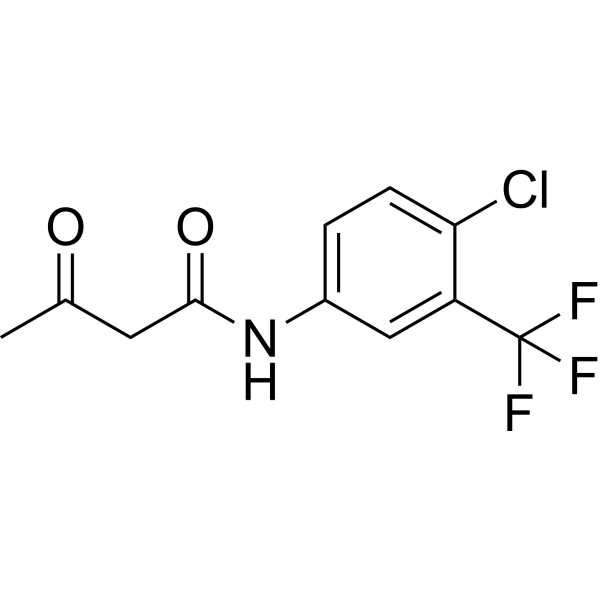
Fasentin, a potent glucose uptake inhibitor, inhibits GLUT-1/GLUT-4 transporters. Fasentin preferentially inhibits GLUT4 (IC50=68 μM) over GLUT1. Fasentin is a death receptor stimuli (FAS) sensitizer and sensitizes cells to FAS-induced cell death. Fasentin is also a tumor necrosis factor (TNF) apoptosis-inducing ligand sensitizer. Fasentin blocks glucose uptake in cancer cell lines and has anti-angiogenic activity .
loading...
    loading...
2
2 Cited Publications
Cat. No.: HY-128578
CAS No.: 906669-07-6
Purity:  99.86%
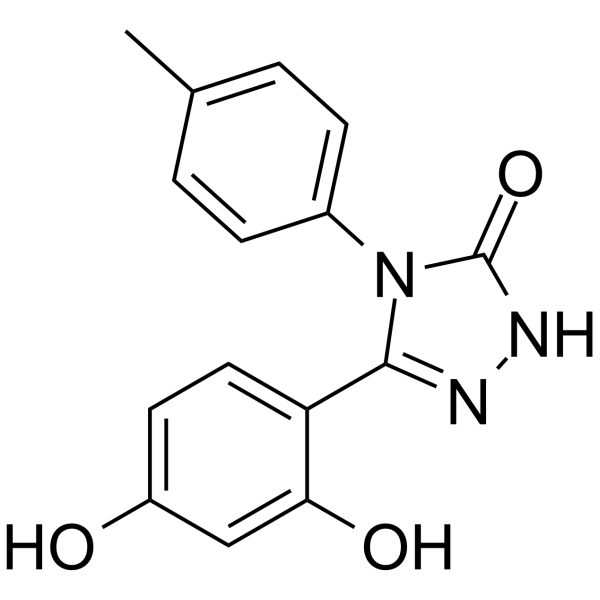
KPLH1130 is a pyruvate dehydrogenase kinase (PDK) inhibitor. KPLH1130 potently inhibits M1 macrophage polarization by reducing the expression of pro-inflammatory cytokines, decreasing the levels of M1 phenotype markers (HIF-1α, iNOS) and nitric oxide (NO) production. KPLH1130 prevents the reduction of mitochondrial oxygen consumption rate (OCR) induced by inflammatory stimuli (LPS ((HY-D1056) + IFN-γ) in various macrophage types. KPLH1130 improves glucose tolerance in HFD-fed mice. KPLH1130 can be used for the study of obesity-associated metabolic disorders and other inflammatory conditions .
loading...
    loading...
1
1 Cited Publications
Cat. No.: HY-P11050
CAS No.: 1309883-67-7
Target:  

Inhibitory Antibodies

Research Areas:  

Cancer

SP94 peptide, Cys conjugated is a hepatocellular carcinoma (HCC)-targeting peptide conjugated with Cys. SP94 peptide, Cys conjugated can be used for synthesis of stimuli-responsive peptide nanomaterials (SRPNs) like platinum nanocluster assemblies (PT-NA) and it promotes the entry of PT-NA into HCC cells by mediating endocytosis. SP94 peptide, Cys conjugated can be used for cancers research .
loading...
    loading...
Cat. No.: HY-W115727B
CAS No.: 9003-05-8
Synonyms: PAM,Anion,Mw 18 million
Polyacrylamide,Anion,Mw 18 million (PAM,Anion,Mw 18 million) is a multifunctional high molecular weight anionic polyacrylamide copolymer. The anionic properties of Polyacrylamide,Anion,Mw 18 million enable it to be used as a flocculant to achieve charge neutralization and aggregation, while its high molecular weight properties provide viscoelastic properties for fluid applications. Polyacrylamide series materials can maintain enzyme activity in enzyme immobilization, act as drug carriers to achieve controlled release, serve as smart materials responding to temperature/pH stimuli, and be used for in vitro toxin adsorption and soft tissue filling through mechanisms such as physical entrapment, covalent binding or chemical crosslinking. Polyacrylamide finds applications in biomedical engineering, environmental management and industrial applications .
loading...
    loading...
Cat. No.: HY-W115727E
CAS No.: 9003-05-8
Synonyms: PAM,average Mn 150000
Polyacrylamide, average Mn 150000 (PAM, average Mn 150000) is a versatile, high-molecular-weight polyacrylamide copolymer. Polyacrylamide series materials can maintain enzyme activity in enzyme immobilization, act as drug carriers to achieve controlled release, serve as smart materials responding to temperature/pH stimuli, and be used for in vitro toxin adsorption and soft tissue filling through mechanisms such as physical entrapment, covalent binding or chemical crosslinking. Polyacrylamide finds applications in biomedical engineering, environmental management and industrial applications .
loading...
    loading...
Cat. No.: HY-168773
CAS No.: 2506367-95-7
Target:  

EAAT

Research Areas:  

Neurological Disease

(R)-AS-1 is a selective positive allosteric modulator of the excitatory amino acid transporter 2 (EAAT2), with an EC50 of 11 nM. (R)-AS-1 (at doses of 60 and 90 mg/kg) increases spontaneous locomotor activity in mice. Additionally, it demonstrates anticonvulsant activity in mouse models of seizures induced by maximal electroshock (MES), pentylenetetrazole (PTZ), or electrical stimuli (32 or 44 mA), with ED50s of 66.3, 36.3, 15.6, and 41.6 mg/kg, respectively. (R)-AS-1 can be used in neurological disease research .
loading...
    loading...
Cat. No.: HY-W115727D
CAS No.: 9003-05-8
Synonyms: PAM,average Mn 40000
Polyacrylamide (PAM), average Mn 40000 is a versatile, high-molecular-weight polyacrylamide copolymer. Polyacrylamide series materials can maintain enzyme activity in enzyme immobilization, act as drug carriers to achieve controlled release, serve as smart materials responding to temperature/pH stimuli, and be used for in vitro toxin adsorption and soft tissue filling through mechanisms such as physical entrapment, covalent binding or chemical crosslinking. Polyacrylamide finds applications in biomedical engineering, environmental management and industrial applications .
loading...
    loading...
Cat. No.: HY-W115727C
CAS No.: 9003-05-8
Synonyms: Acrylamide polymer,Nonionic,Mw 5-6 million
Polyacrylamide (Acrylamide polymer),Nonionic,Mw 5-6 million is a multifunctional, high-molecular-weight nonionic polyacrylamide copolymer. Polyacrylamide-based materials can maintain enzyme activity in enzyme immobilization, act as drug carriers for controlled release, function as smart materials responsive to temperature/pH stimuli, and be applied in in vitro toxin adsorption and soft tissue filling, through action mechanisms such as physical entrapment, covalent binding or chemical crosslinking. Polyacrylamide finds applications in biomedical engineering, environmental management and industrial applications .
loading...
    loading...
Cat. No.: HY-108460
CAS No.: 824982-41-4
Purity:  ≥99.0%
Target:  

TRP Channel

Research Areas:  

Neurological Disease

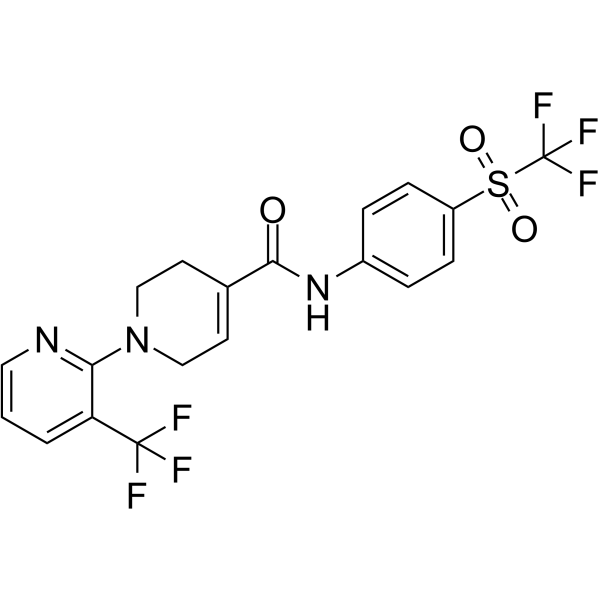
A-784168 is a potent and orally active inhibitor of vanilloid receptor type 1 (TRPV1). Vanilloid receptor type 1 (TRPV1) is a ligand-gated nonselective cation channel that is considered to be an important integrator of various pain stimuli such as endogenous lipids, capsaicin, heat, and low pH. A-784168 has good CNS penetration .
loading...
    loading...
Cat. No.: HY-34611
CAS No.: 25691-37-6
Synonyms: N-Boc-L-2,4-diaminobutyric acid; Boc-Dab-OH
Target:  

Drug Intermediate ASCT

Research Areas:  

Neurological Disease Cancer

Boc-L-2,4-Diaminobutyric acid (N-Boc-L-2,4-diaminobutyric acid; Boc-Dab-OH) is a versatile synthetic starting material with a cleavable protecting group. Boc-L-2,4-Diaminobutyric acid not only reduces the backbone cleavage rate by protecting the side-chain γ-amino group, but also triggers intramolecular cyclization of self-immolative linkers under acidic cleavage conditions, thus constructing stimuli-responsive materials. Boc-L-2,4-Diaminobutyric acid is also an important building block for bioactive molecules. It can be used in the synthesis of ASCT2 (SLC1A5) inhibitors and carboxynorspermine, and can also serve as an internal standard to support the quantitative detection of specific intracellular amino acids by UPLC-QQQ-MS .
loading...
    loading...
Cat. No.: HY-B0562
CAS No.: 135-07-9
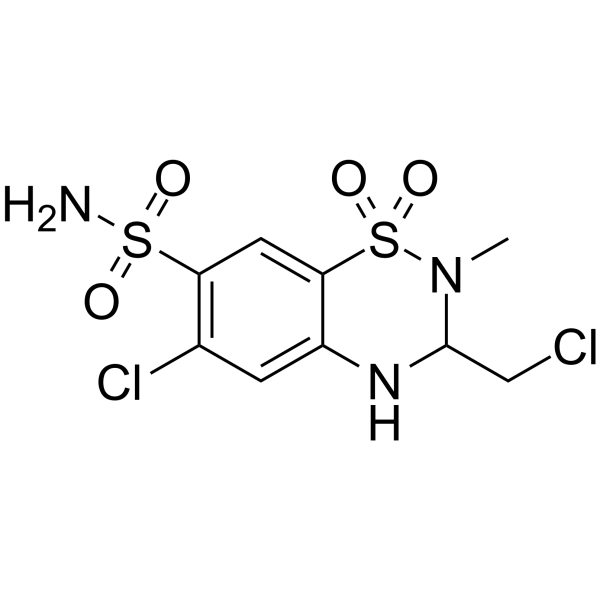
Methyclothiazide is an orally active antihypertensive agent and a diuretic agent. Methyclothiazide leads to a reduction of the vascular response to the action of endogenous vasoconstricting stimuli, such as Norepinephrine (HY-13715). Methyclothiazide is against voltage-dependent Ca-channel (VDCC) activity in vitro .
loading...
    loading...
Cat. No.: HY-P5507
CAS No.: 947688-38-2
Synonyms: Erktide
Target:  

Inhibitory Antibodies

Research Areas:  

Others

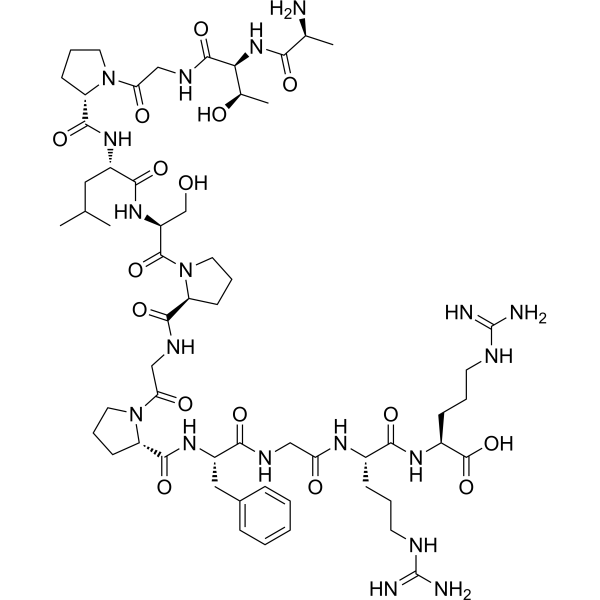
ERK2 Substrate (Erktide) is a biological active peptide. (Erktide is a peptide substrate for ERK2 (extracellular regulated protein kinase 2) whose activity is regulated by mitogenic stimuli.)
loading...
    loading...
Cat. No.: HY-P5440
CAS No.: 287721-17-9
Target:  

ERK

Research Areas:  

Others

ERKtide is a biological active peptide. (ERKtide is a peptide substrate for ERK2. Extracellular regulated protein kinase 2 (ERK2) is a eukaryotic protein kinase whose activity is regulated by mitogenic stimuli.)
loading...
    loading...
Cat. No.: HY-163607
CAS No.: 3033533-25-1
Target:  

Apoptosis NF-κB

Research Areas:  

Cancer

SpiD3, a spirocyclic dimer, is an anticancer agent. SpiD3 markedly inhibits malignant B-cell proliferation and suppressed NF-κB activation independent of TME-associated stimuli. SpiD3 induces apoptosis and inhibits protein synthesis in chronic lymphocytic leukemia cells. SpiD3 can be used for study of chronic lymphocytic leukemia (CLL) .
loading...
    loading...
Cat. No.: HY-174569
Target:  

mRNA

Research Areas:  

Inflammation/Immunology

Human NFKB1 mRNA encodes the human nuclear factor kappa B subunit 1 (NFKB1) protein, a transcription regulator that is activated by various intra- and extra-cellular stimuli such as cytokines, oxidant-free radicals, ultraviolet irradiation, and bacterial or viral products. Inappropriate activation of NFKB has been associated with a number of inflammatory diseases while persistent inhibition of NFKB leads to inappropriate immune cell development or delayed cell growth. NFKB is a critical regulator of the immediate-early response to viral infection.
loading...
    loading...
Cat. No.: HY-106981
CAS No.: 137109-78-5
Synonyms: OR 1384
Orazipone (OR 1384) is a small molecule immunomodulator with strong anti-inflammatory properties. Orazipone exerts its immunomodulatory effect by forming reversible thiol complexes, which bind to intracellular signaling proteins and the thiol groups of glutathione. Orazipone exhibits potent anti-eosinophilic activity by inducing apoptosis. Orazipone inhibits activation of inflammatory transcription factors NF-kB and STAT 1 and decreases inducible iNOS expression and NO production in response to inflammatory stimuli. Orazipone reduces NADPH oxidase activity and thereby decreases ROS production. Orazipone has a protective effect in intestinal radiation injury .
loading...
    loading...
Cat. No.: HY-169072
CAS No.: 3103327-20-1
PROTAC MLKL Degrader-2 is an orally active and highly selective mixed lineage kinase domain-like pseudokinase (MLKL) PROTAC degrader with a DC50 of 0.012 μM. PROTAC MLKL Degrader-2 recruits the CRBN E3 ubiquitin ligase to form a ternary complex, leading to ubiquitination of MLKL and its degradation via a proteasome-dependent pathway. PROTAC MLKL Degrader-2 inhibits necroptosis, reduces ROS production, restores mitochondrial function, and ameliorates lysosomal dysfunction induced by necroptotic stimuli. PROTAC MLKL Degrader-2 degrades MLKL in xenograft mouse models. PROTAC MLKL Degrader-2 can be used in cancer-related research .
loading...
    loading...
Cat. No.: HY-A0139
CAS No.: 5591-45-7
Synonyms: NSC 108165; Navan; Navane
Thiothixene is a typical antipsychotic. It selectively binds to dopamine D2 over D1, D3, and D4 receptors (Kis=0.417, 338, 186.2, and 363.1 nM, respectively). Thiothixene also binds to various serotonin (5-HT), histamine H1, α1- and α2-adrenergic, muscarinic acetylcholine, and sigma receptors (Kis=15-5,754 nM) as well as the dopamine, norepinephrine, and serotonin transporters (Kis=3.16-30 μM). In vivo, thiothixene reduces spontaneous and amphetamine-induced locomotor activity in rats. It enhances latent inhibition, as measured by a decreased lick latency in response to light and foot shock stimuli, which is a measure of selective attention in rats.3 Thiothixene also increases competitive behavior in submissive mice, indicating antidepressant-like behavior.
loading...
    loading...
Cat. No.: HY-123388
CAS No.: 89109-20-6
Target:  

Others

Research Areas:  

Inflammation/Immunology

SCH 12223 free base is an orally active gastroprotective agent. SCH 12223 free base exhibits gastrointestinal protective action against various noxious stimuli. SCH 12223 free base can be used for research on gastrointestinal diseases .
loading...
    loading...

