14 Results for "

subdomain II

" in MedChemExpress (MCE) Product Catalog:
Products (14)

14 Results for "subdomain II" in MCE Product Catalog:

3
3 Cited Publications
Cat. No.: HY-114712
CAS No.: 19970-45-7
Purity:  98.92%
Synonyms: SJ403
Target:  

CDK

Research Areas:  

Others

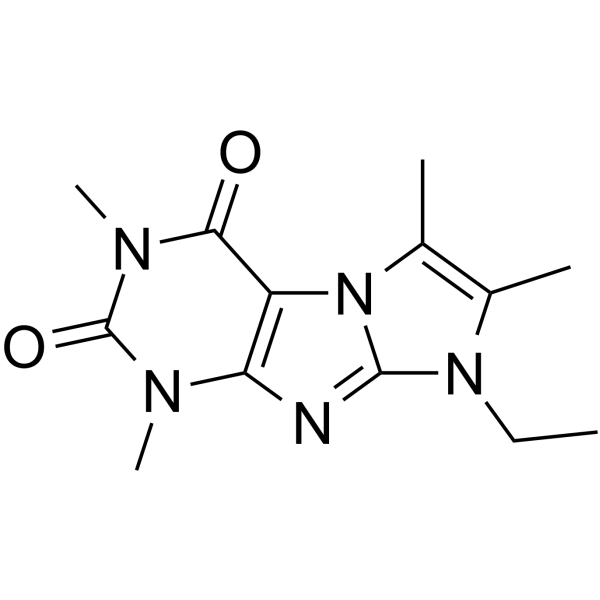
SJ572403 (SJ403) is a p27 Kip1 inhibitor. SJ572403 has high specificity for specific regions within the D2 subdomain of p27-KID with a Kd value of 2.2 mM. SJ572403 can be used for the research of diseases associated with intrinsically disordered proteins (IDPs) .
loading...
    loading...
Cat. No.: HY-169996
CAS No.: 2557349-50-3
NP3-253 is an orally active and brain-penetranted NLRP3 inflammasome inhibitor. NP3-253 functions as a molecular glue that prevents NACHT-subdomain rearrangements, locking NLRP3 in an inactive conformation. NP3-253 inhibits production of pro-inflammatory cytokines IL-1β and IL-18. NP3-253 can be used for the research of inflammation and neurological disease, suah as peritonitis .
loading...
    loading...
Cat. No.: HY-145785A
CAS No.: 2990065-87-5
Purity:  99.67%
Target:  

MDM-2/p53 Apoptosis

Research Areas:  

Cancer

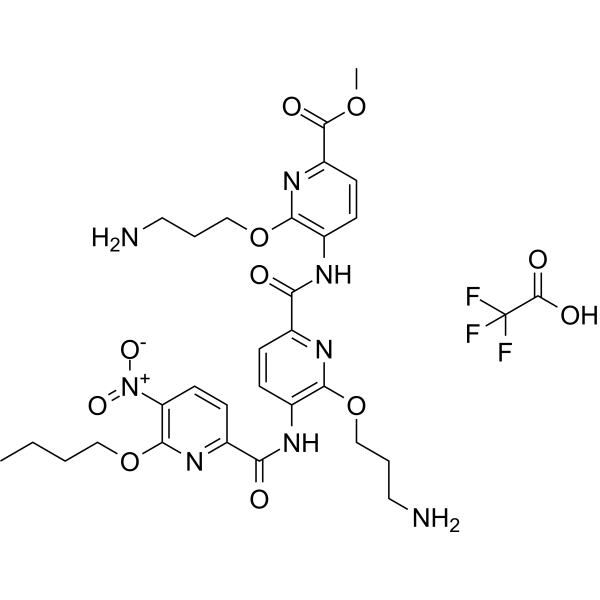
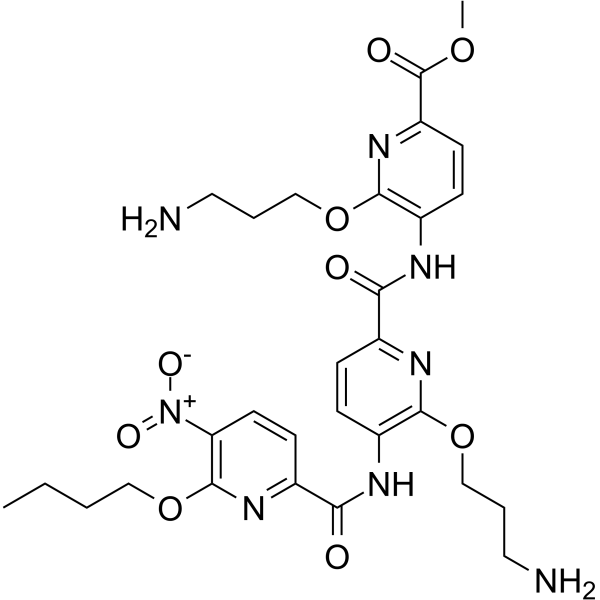
ADH-6 TFA is a tripyridylamide compound. ADH-6 abrogates self-assembly of the aggregation-nucleating subdomain of mutant p53 DBD. ADH-6 TFA targets and dissociates mutant p53 aggregates in human cancer cells, which restores p53's transcriptional activity, leading to cell cycle arrest and apoptosis. ADH-6 TFA has the potential for the research of cancer diseases .
loading...
    loading...
Cat. No.: HY-168992
Research Areas:  

Neurological Disease Cancer

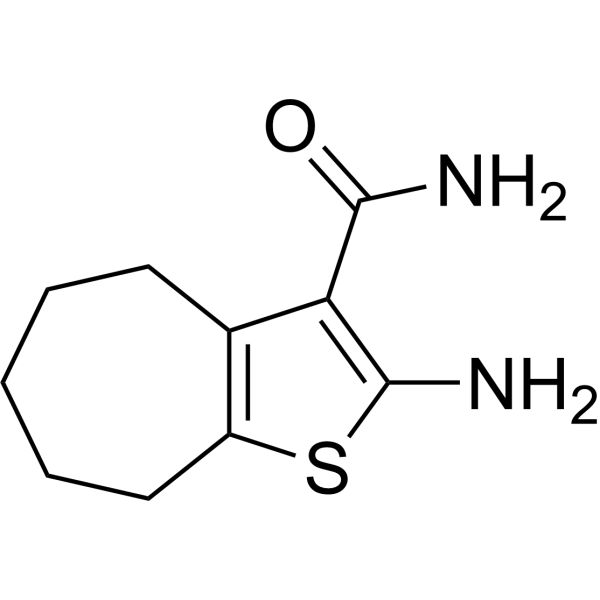
UNC6535 is a covalent ligand targeting the SETDB1 triple Tudor domain (3TD) with negative allosteric modulator properties, with an IC50 of 3.4 μM and a Kd of 4.2 μM. UNC6535 inhibits the methyltransferase activity of recombinant SETDB1 protein lacking the 3TD domain. UNC6535 reversibly binds to the aromatic cages of both TD2 and TD3 subdomains of SETDB1 3TD simultaneously, displacing the endogenous H3K9Me2K14Ac histone tail ligand. UNC6535 can be used in research on cancer and neurodegenerative diseases .
loading...
    loading...
Cat. No.: HY-175278
BAL-1516 is an orally active NLRP3 inhibitor with human NLRP3 Kd of 14.2 nM, mouse NLRP3 Kd of 200 nM, and blood-brain barrier penetration.BAL-1516 binds to a surface groove of the NLRP3 nucleotide-binding domain, contacts FISNA and WHD subdomains, forms three hydrogen bonds to the peripheral β-strand of the triple-ATPase, and does not alter NLRP3 ATP-hydrolysis activity.BAL-1516 shows specificity for NLRP3 over other NOD-like receptors, directly binds mouse NLRP3, and inhibits inflammasome formation in monocytes and microglia .
loading...
    loading...
Cat. No.: HY-W028350
CAS No.: 40106-12-5
Research Areas:  

Infection

NSC727447 is a vinyl urea-based allosteric inhibitor of HIV reverse transcriptase-associated RNase H with IC50 values of 2.0 μM and 2.5 μM against HIV-1 and HIV-2 RNase H, respectively, and IC50 values of 100 μM and 10.6 μM against Escherichia coli and human RNase H, respectively. NSC727447 exerts allosteric inhibitory effects mainly by interacting with the region adjacent to α-helix I in the thumb subdomain of the p51 subunit of HIV-1 reverse transcriptase. Cys280, Lys281 and the RNase H primer grip region are involved in its action, and it may inhibit the catalytic activity of RNase H by altering the positioning of nucleic acid substrates or the geometry of the RNase H active site. NSC727447 can be used in studies related to HIV infection, the function of HIV reverse transcriptase RNase H, and allosteric inhibition mechanisms .
loading...
    loading...
Cat. No.: HY-125864A
CAS No.: 9001-32-5
Canine Fibrinogen is a natural fibrinogen derived from canine plasma. Canine Fibrinogen specifically binds to the host SpsL, but shows weak binding affinity to fibrinogen from other mammals including humans. Canine Fibrinogen binds to the N2N3 subdomain of SpsL via the "anchor-lock-latch" model, and interacts with multiple sites in its α-chain C domain. The binding of Canine Fibrinogen to SpsL promotes bacterial aggregation, biofilm formation, and enhances bacterial resistance to neutrophil phagocytosis. Canine Fibrinogen can be used in studies related to canine skin infections .
loading...
    loading...
Cat. No.: HY-P5379
CAS No.: 128578-18-7
Target:  

Proteasome

Research Areas:  

Others

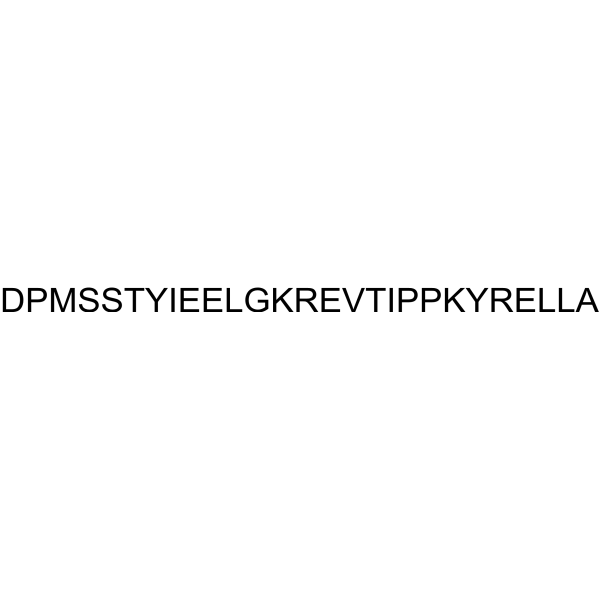
Calpastatin subdomain B is a biological active peptide. (inhibit calpain activity)
loading...
    loading...
Cat. No.: HY-145785
CAS No.: 2227429-65-2
Target:  

MDM-2/p53 Apoptosis

Research Areas:  

Cancer

ADH-6 is a tripyridylamide compound. ADH-6 abrogates self-assembly of the aggregation-nucleating subdomain of mutant p53 DBD. ADH-6 targets and dissociates mutant p53 aggregates in human cancer cells, which restores p53's transcriptional activity, leading to cell cycle arrest and apoptosis. ADH-6 has the potential for the research of cancer diseases[1].
loading...
    loading...
Cat. No.: HY-177710
Research Areas:  

Cancer

MEDI4276 is a biparatopic tetravalent antibody targeting two nonoverlapping epitopes in subdomains 2 and 4 of the HER2 ecto-domain. MEDI4276 is composed of MEDI4276 Antibody (HY-P991238) and a cytotoxic payload AZ1508 (HY-128962) linked through site-specific coupling. MEDI4276 exhibits antitumor activity .
loading...
    loading...
Cat. No.: HY-100730
CAS No.: 1884574-15-5
Target:  

Dengue Virus

Research Areas:  

Infection

RdRP-IN-11 is a non-nucleoside dengue virus RNA-dependent RNA polymerase (RdRp) inhibitor that binds to the palm subdomain of DENV NS5 RdRp, with an IC50 of 23 nM and a Kd of 7 nM. RdRP-IN-11 exhibits antiviral activity against all four dengue serotypes. RdRP-IN-11 can be used for dengue-related research .
loading...
    loading...
Cat. No.: HY-184849
CAS No.: 7219-59-2
Research Areas:  

Others

Glu-Arg is a dipeptide linked by L-glutamic acid and L-arginine. Glu-Arg contributes to the construction of the hydrophobic network and maintenance of stability of mouse cAMP-dependent protein kinase; it acts as a core hub connecting the activation segment and the GHI subdomain in eukaryotic protein kinases, and promotes signal transmission between elements and within enzymes. As a salt bridge, Glu-Arg regulates the formation and unfolding rates of α-helices, and its optimized spatial conformation is conducive to the stability and folding rate of α-helices. Glu-Arg induces concentration-dependent intracellular calcium changes in cultured human fungiform taste bud cells .
loading...
    loading...
Cat. No.: HY-189941
Research Areas:  

Infection

SP-835G is a potent Dengue Virus inhibitor with an EC50 of 0.1 μM against DENV2. SP-835G, as a prodrug, is reduced by mitochondrial MARC enzymes to the active metabolite SP-835A, which binds to the allosteric site of NS2B-NS3 protease and blocks both cis and trans cleavage of the protease by restricting the dynamic changes of the helicase subdomain. SP-835G inhibits Dengue virus replication in infected cells with very low cytotoxicity. SP-835G can be used for research on dengue fever .
loading...
    loading...
Cat. No.: HY-NP229
DNP-BSA is a multivalent antigen and protein-binding reagent. DNP-BSA binds to subdomain IIA (Site I) of bovine serum albumin via predominantly hydrophobic forces, with spontaneous complex formation via combined dynamic and static quenching. DNP-BSA induces cross-linking of IgE-bound FceRI, triggering tyrosine phosphorylation of FceRI β and γ subunits. DNP-BSA binds to anti-DNP IgE via its DNP groups, forming cross-links between IgE-FceRI complexes, with most DNP groups initially unavailable but transiently exposed for binding. DNP-BSA induces FITC fluorescence quenching in FITC-labeled anti-DNP IgE, proportional to occupied IgE Fab binding sites. DNP-BSA can be used for the research of allergy, inflammation, and contact sensitivity (allergic contact dermatitis) .
loading...
    loading...
  • 1

