13 Results for "

tongue

" in MedChemExpress (MCE) Product Catalog:
Products (13)

13 Results for "tongue" in MCE Product Catalog:

1
1 Cited Publications
Cat. No.: HY-132259
CAS No.: 1585973-65-4
Purity:  99.73%
Synonyms: ABT-414
Research Areas:  

Cancer

Depatuxizumab mafodotin (ABT-414) is an antibody-drug conjugate (ADC). Depatuxizumab mafodotin specifically targets the epidermal growth factor receptor (EGFR). Depatuxizumab mafodotin can be used in the study of glioma, head and neck squamous cell carcinoma, non-small cell lung cancer, epidermoid carcinoma of the skin, and squamous cell carcinoma of the tongue .
loading...
    loading...
Cat. No.: HY-P1823
CAS No.: 147516-85-6
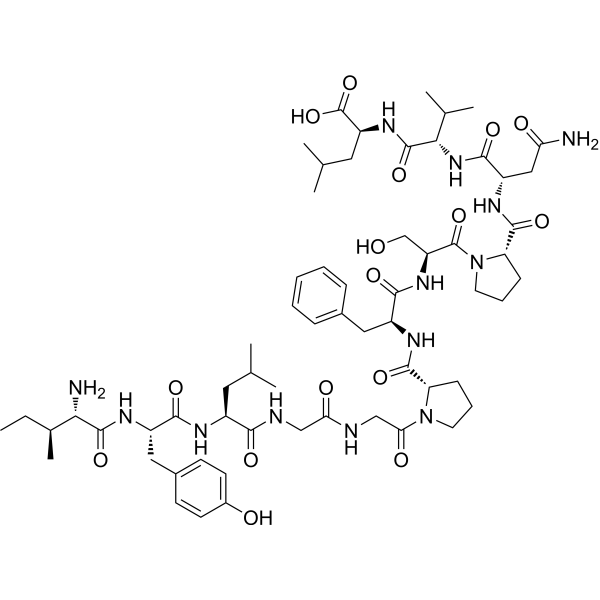
C-Reactive Protein (CRP) is an anti-pneumococcal plasma protein that can serve as an inflammatory marker. C-Reactive protein can protect mice from pneumococcal infection by activating complement. C-Reactive protein can inhibit the activation of caspase-3/9 through the CD64/AKT/mTOR pathway, thereby promoting chemotherapy resistance in mice with tongue squamous cell carcinoma .
loading...
    loading...
Cat. No.: HY-W107409
CAS No.: 213473-00-8
Meridianin C is a marine natural product with anticancer activity. Meridianin C has significant inhibitory effects on four different human tongue cancer cells (YD-8, YD-10B, YD-38 and HSC-3). Meridianin C most strongly reduced the growth of YD-10B cells, the most aggressive and tumorigenic of the cell lines tested. Meridianin C also induced significant accumulation of large vesicles in YD-10B cells, validating its function through macrophagocytosis. Meridianin C reduces cellular levels of Dickkopf-related protein-3 (DKK-3), a known negative regulator of macrophagy. Meridianin C affects macrophagocytosis by downregulating DKK-3, thereby affecting cell proliferation .
loading...
    loading...
Cat. No.: HY-P2302
CAS No.: 136661-76-2
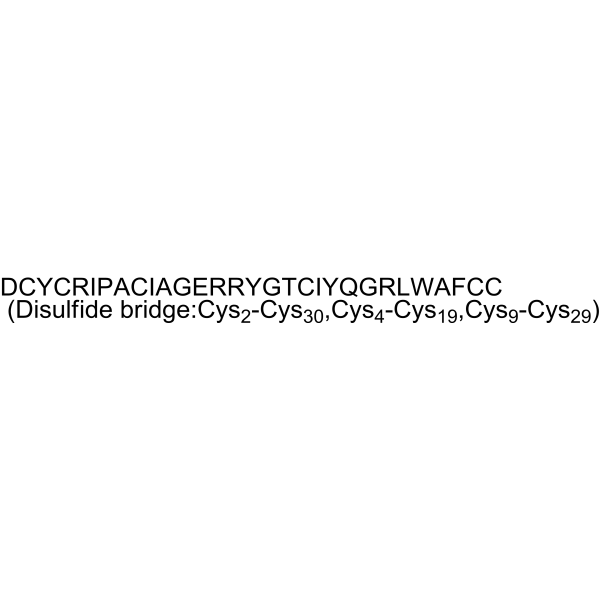
Defensin HNP-3 human is an α-defensin stored in the azurophilic granules of human neutrophils. Defensin HNP-3 human exerts broad-spectrum bactericidal, antifungal and antiviral activities mainly by forming bacterial membrane pores, and acts as a chemoattractant for monocytes and T cells. Defensin HNP-3 human maintains epithelial integrity to support periodontal tissue homeostasis, and exerts concentration-dependent effects on epithelial cell proliferation, adhesion and bacterial adhesion. Defensin HNP-3 human targets solid tumors and leukemia by inducing single-strand DNA breaks and membrane permeabilization in tumor cells via electrostatic binding and pore formation. Defensin HNP-3 human is abundant in human tongue squamous cell carcinoma and neutrophils infiltrating oral squamous cell carcinoma. Defensin HNP-3 human can be applied to research related to periodontitis and human tongue squamous cell carcinoma .
loading...
    loading...
Cat. No.: HY-79602
CAS No.: 70-55-3
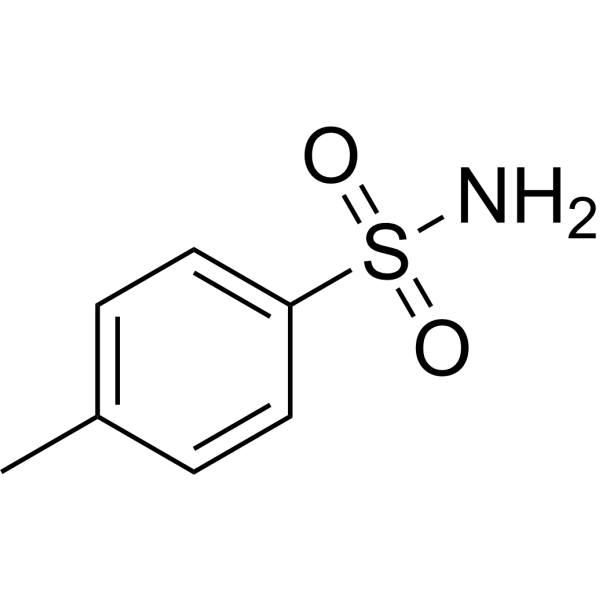
p-Toluenesulfonamide is a small-molecule anticancer agent and plasticizer. p-Toluenesulfonamide exerts antitumor activity by inducing lysosomal membrane permeabilization, cathepsin B release and lysosome-mediated cell death. p-Toluenesulfonamide modulates cholesterol distribution in lipid rafts of tumor cell membranes and the Akt/mTOR/p70S6K pathway. p-Toluenesulfonamide shows activity against various cancers including hepatocellular carcinoma, non-small cell lung cancer and tongue squamous cell carcinoma; intrapleural injection effectively reduces malignant pleural effusion without causing pleural adhesion. p-Toluenesulfonamide is also the main degradation product of the disinfectant Chloramine-T (HY-B0959) in water. p-Toluenesulfonamide facilitates the localization of fluorescent probes to the endoplasmic reticulum. p-Toluenesulfonamide can be used in cancer-related research .
loading...
    loading...
Cat. No.: HY-79602S1
CAS No.: 287476-18-0
p-Toluenesulfonamide- 15N is the 15N-labeled p-Toluenesulfonamide (HY-79602). p-Toluenesulfonamide is a small-molecule anticancer agent and plasticizer. p-Toluenesulfonamide exerts antitumor activity by inducing lysosomal membrane permeabilization, cathepsin B release and lysosome-mediated cell death. p-Toluenesulfonamide modulates cholesterol distribution in lipid rafts of tumor cell membranes and the Akt/mTOR/p70S6K pathway. p-Toluenesulfonamide shows activity against various cancers including hepatocellular carcinoma, non-small cell lung cancer and tongue squamous cell carcinoma; intrapleural injection effectively reduces malignant pleural effusion without causing pleural adhesion. p-Toluenesulfonamide is also the main degradation product of the disinfectant Chloramine-T (HY-B0959) in water. p-Toluenesulfonamide facilitates the localization of fluorescent probes to the endoplasmic reticulum. p-Toluenesulfonamide can be used in cancer-related research .
loading...
    loading...
Cat. No.: HY-W769935
CAS No.: 2161370-68-7
Target:  

Src

Research Areas:  

Metabolic Disease

5-POHSA is a CD36 and Src kinase modulator acting on taste bud cells, and belongs to the fatty acid esters of hydroxy fatty acids (FAHFA) family. 5-POHSA binds to lingual CD36 to initiate intracellular signaling pathways, activate downstream Src kinase, and rapidly elevate intracellular calcium levels. 5-POHSA interacts with the tongue-brain axis by binding to CD36, so as to ameliorate taste disorders and obesity-related adverse reactions. 5-POHSA is applicable to the research of obesity .
loading...
    loading...
Cat. No.: HY-79602R
CAS No.: 70-55-3
p-Toluenesulfonamide (Standard) is the analytical standard of p-Toluenesulfonamide (HY-79602). This product is intended for research and analytical applications. p-Toluenesulfonamide is a small-molecule anticancer agent and plasticizer. p-Toluenesulfonamide exerts antitumor activity by inducing lysosomal membrane permeabilization, cathepsin B release and lysosome-mediated cell death. p-Toluenesulfonamide modulates cholesterol distribution in lipid rafts of tumor cell membranes and the Akt/mTOR/p70S6K pathway. p-Toluenesulfonamide shows activity against various cancers including hepatocellular carcinoma, non-small cell lung cancer and tongue squamous cell carcinoma; intrapleural injection effectively reduces malignant pleural effusion without causing pleural adhesion. p-Toluenesulfonamide is also the main degradation product of the disinfectant Chloramine-T (HY-B0959) in water. p-Toluenesulfonamide facilitates the localization of fluorescent probes to the endoplasmic reticulum. p-Toluenesulfonamide can be used in cancer-related research .
loading...
    loading...
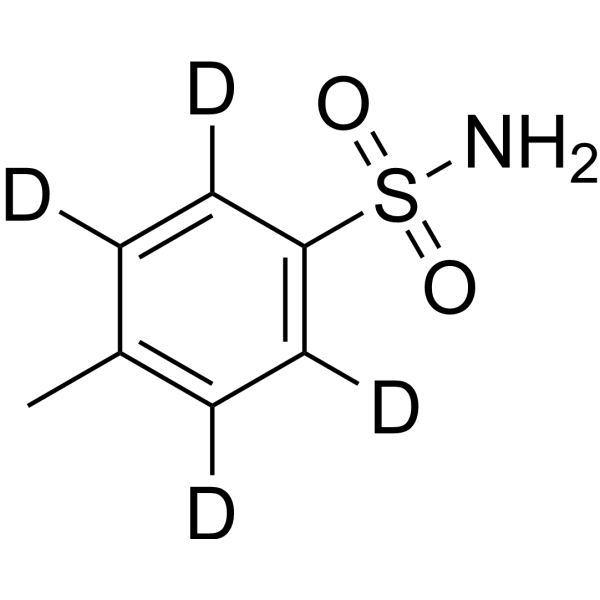
Cat. No.: HY-79602S
CAS No.: 1219795-34-2
Synonyms: p-Tosylamide-d4
4-Tolyl-d4-sulfonamide (p-Tosylamide-d4) is the d4-labeled p-Toluenesulfonamide (HY-79602). p-Toluenesulfonamide is a small-molecule anticancer agent and plasticizer. p-Toluenesulfonamide exerts antitumor activity by inducing lysosomal membrane permeabilization, cathepsin B release and lysosome-mediated cell death. p-Toluenesulfonamide modulates cholesterol distribution in lipid rafts of tumor cell membranes and the Akt/mTOR/p70S6K pathway. p-Toluenesulfonamide shows activity against various cancers including hepatocellular carcinoma, non-small cell lung cancer and tongue squamous cell carcinoma; intrapleural injection effectively reduces malignant pleural effusion without causing pleural adhesion. p-Toluenesulfonamide is also the main degradation product of the disinfectant Chloramine-T (HY-B0959) in water. p-Toluenesulfonamide facilitates the localization of fluorescent probes to the endoplasmic reticulum. p-Toluenesulfonamide can be used in cancer-related research .
loading...
    loading...
Cat. No.: HY-184741
Target:  

GSK-3 VEGFR Akt MEK ERK

Research Areas:  

Cancer

GSK-3β/VEGFR2-IN-1 is an orally active dual inhibitor of GSK-3β (IC50 = 325 nM) and VEGFR2 (IC50 = 78 nM). GSK-3β/VEGFR2-IN-1 suppresses the phosphorylation of VEGFR2, AKT, MEK and ERK, inhibits human tongue squamous cell carcinoma cells migration and suppresses formation of HUVECs, exhibits low toxicity towards other cancer cells and normal cells, demonstrates significant antitumor efficacy in a CAL27 xenograft mouse model. GSK-3β/VEGFR2-IN-1 can be used for the study of tongue squamous cell carcinoma .
loading...
    loading...
Cat. No.: HY-126443A
CAS No.: 1352296-65-1
Target:  

Fungal

Research Areas:  

Infection

Antifungal agent 173 is an orally active antifungal (fungal) agent. Antifungal agent 173 disrupts fungal cell membrane integrity, inhibits yeast-hypha transition in Candida species, and suppresses biofilms. Antifungal agent 173 prevents mouse mortality in a mouse model of systemic candidiasis and reduces tongue lesions in a mouse model of oropharyngeal candidiasis. Antifungal agent 173 is applicable to research related to candidiasis .
loading...
    loading...
Cat. No.: HY-153514
CAS No.: 2098896-13-8
Research Areas:  

Cancer

HDAC-IN-54 is a HDAC inhibitor with an IC50 of 25 nM against human HDAC1, 66 nM against HDAC2, 6.5 nM against HDAC3, and 281 nM against HDAC6. HDAC-IN-54 induces acetylation of α-tubulin and histone H3. HDAC-IN-54 acts synergistically with cisplatin to induce cancer cell apoptosis. HDAC-IN-54 can be used in research related to head and neck cancer, ovarian cancer, and tongue squamous cell carcinoma .
loading...
    loading...
Cat. No.: HY-181807
Target:  

SOS1 Ras Apoptosis

Research Areas:  

Cancer

SOS1/KRAS-IN-2 (Compound 20) is a SOS1::KRAS G12C protein-protein interaction inhibitor with a IC50 of 4.11 nM. SOS1/KRAS-IN-2 blocks the interaction between SOS1 and KRAS G12C. SOS1/KRAS-IN-2 induces cell Apoptosis. SOS1/KRAS-IN-2 exhibits anticancer activity against colorectal cancer and tongue squamous cell carcinoma .
loading...
    loading...
  • 1

