20 Results for "

trophozoite

" in MedChemExpress (MCE) Product Catalog:
Products (20)

20 Results for "trophozoite" in MCE Product Catalog:

17
17 Cited Publications
Cat. No.: HY-B0217
CAS No.: 55981-09-4
Synonyms: NTZ; NSC 697855
Research Areas:  

Infection Cancer

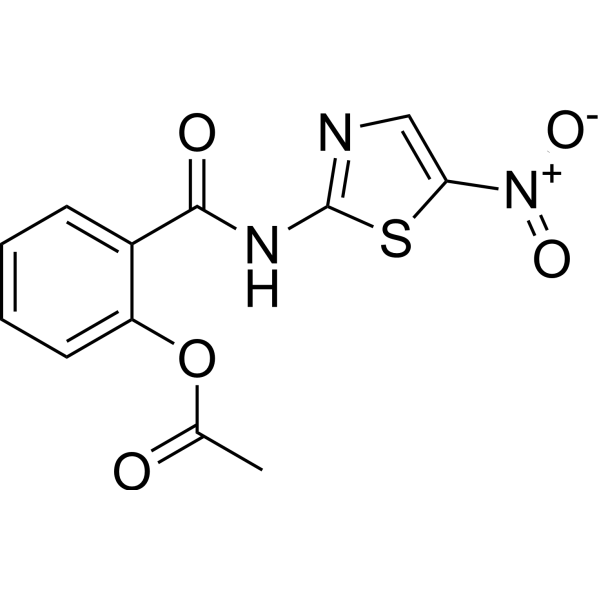
Nitazoxanide (NTZ), an anthelmintic agent, exhibits a broad spectrum of activities against a wide variety of helminths, protozoa, and enteric bacteria infecting animals and humans. Nitazoxanide inhibits Giardia lamblia trophozoite proliferation in axenic culture with an IC50 of 2.4 μM . Nitazoxanide can be used for the research of parasitic gastroenteritis. Nitazoxanide shows anti-Japanese encephalitis virus (JEV) activity in a mouse model .
loading...
    loading...
Cat. No.: HY-131904A
CAS No.: 2004714-32-1
Purity:  99.96%
Target:  

Enolase Parasite

Research Areas:  

Infection Cancer

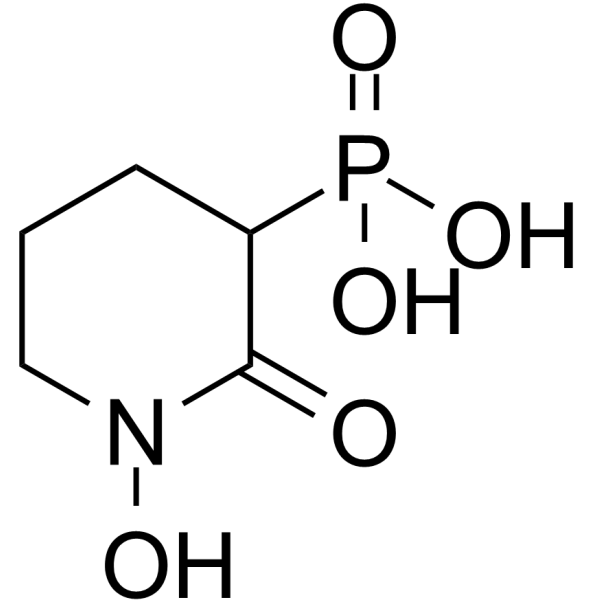
Hex is an enolase inhibitor and antimalarial agent with Ki values of 74.4 nM and 269.4 nM for ENO2 and ENO1, respectively. Hex is a NfENO and TbENO inhibitor with IC50s value of 0.14 μM and 2.1 μM, respectively. Hex has antimalarial activity against Plasmodium falciparum 3D7, Naegleria fowleri trophozoites and Plasmodium berghei ANKA strain. Hex has anti-tumor effects against intracranial tumors .
loading...
    loading...
Cat. No.: HY-126323
CAS No.: 2413716-15-9
Purity:  99.90%
Target:  

Parasite

Research Areas:  

Infection

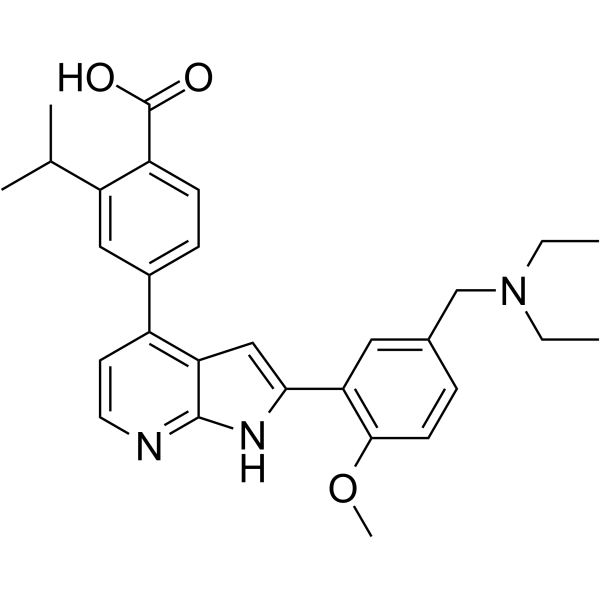
TCMDC-135051 is a highly selective and potent protein kinase PfCLK3 inhibitor with low off-target toxicity. TCMDC-135051 prevents trophozoite-to-schizont transition, disrupts transcription and reduces transmission to the mosquito vector. TCMDC-135051 has antiparasiticidal activity (EC50=320 nM) .
loading...
    loading...
Cat. No.: HY-126323B
CAS No.: 2705545-47-5
Purity:  98.30%
Target:  

Parasite

Research Areas:  

Infection

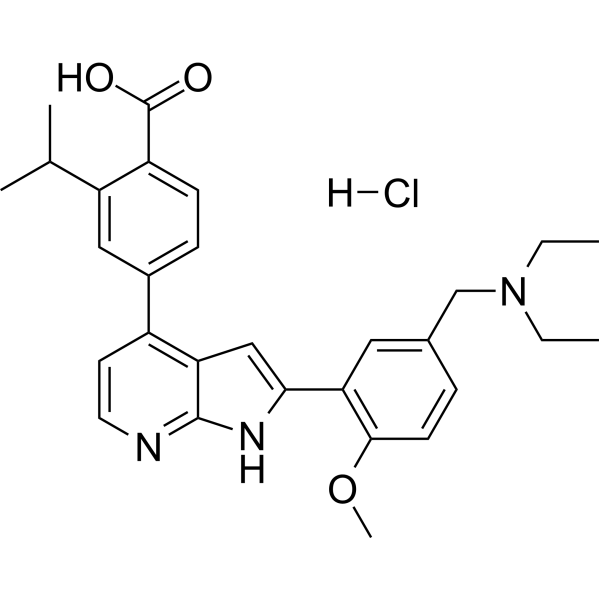
TCMDC-135051 hydrochloride is a highly selective and potent protein kinase PfCLK3 inhibitor with low off-target toxicity. TCMDC-135051 hydrochloride prevents trophozoite-to-schizont transition, disrupts transcription and reduces transmission to the mosquito vector. TCMDC-135051 hydrochloride has antiparasiticidal activity (EC50=320 nM) .
loading...
    loading...
Cat. No.: HY-I0673
CAS No.: 370-50-3
Target:  

Apoptosis

Research Areas:  

Infection Inflammation/Immunology

Flucofuron exhibits high efficacy against trophozoites of both N. fowleri strains (ATCC 30808 : IC50 = 2.58 μM and ATCC 30215: IC50 = 2.47 μM), being even active against the resistant cyst stage (IC50 = 0.88 μM). Flucofuron can induce cell apoptosis. Flucofuron can be used for the researches of infection and inflammation, such as Primary amoebic meningoencephalitis (PAM) .
loading...
    loading...
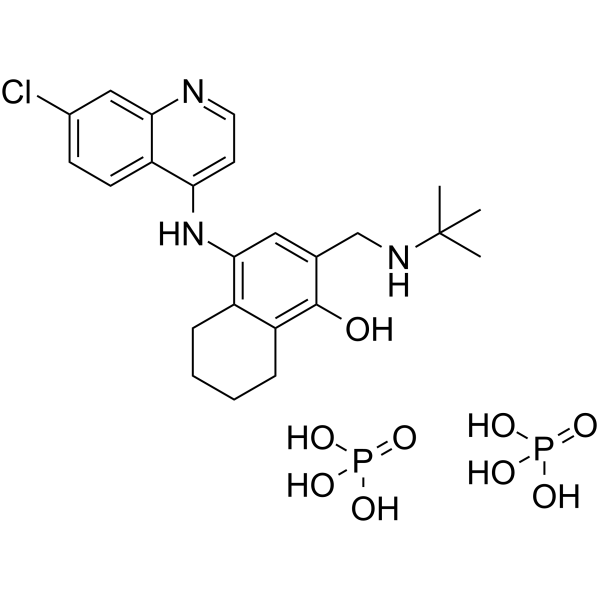
Cat. No.: HY-17036
CAS No.: 173531-58-3
Target:  

Parasite SARS-CoV

Research Areas:  

Infection

Naphthoquine phosphate is an orally active antimalarial and antiviral agent. Naphthoquine phosphate exhibits ex vivo activity against multidrug-resistant Plasmodium falciparum and Plasmodium vivax, preferentially targeting ring-stage rather than trophozoite-stage parasites. Naphthoquine phosphate inhibits coronavirus (SARS-CoV-2, HCoV-OC43, HCoV-229E) replication by affecting viral entry and post-entry replication. Naphthoquine phosphate is used for research on malaria and Covid-19 .
loading...
    loading...
Cat. No.: HY-B0217R
CAS No.: 55981-09-4
Synonyms: NTZ (Standard); NSC 697855 (Standard)
Nitazoxanide (Standard) is the analytical standard of Nitazoxanide. This product is intended for research and analytical applications. Nitazoxanide (NTZ), an anthelmintic agent, exhibits a broad spectrum of activities against a wide variety of helminths, protozoa, and enteric bacteria infecting animals and humans. Nitazoxanide inhibits Giardia lamblia trophozoite proliferation in axenic culture with an IC50 of 2.4 μM . Nitazoxanide can be used for the research of parasitic gastroenteritis. Nitazoxanide shows anti-Japanese encephalitis virus (JEV) activity in a mouse model .
loading...
    loading...
Cat. No.: HY-119599
CAS No.: 113973-98-1
Linearolactone is a compound with anti-Giardia activity that induces necrotic death of Giardia trophozoites and may act through a predicted target protein.
loading...
    loading...
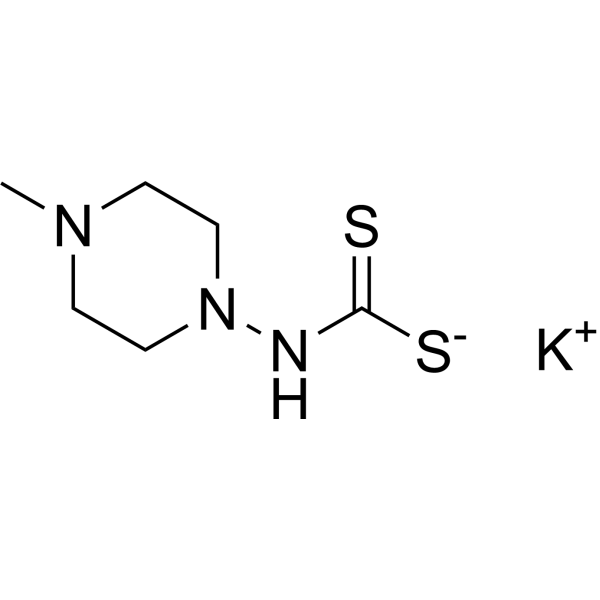
Cat. No.: HY-157462
CAS No.: 1358567-64-2
Target:  

Carbonic Anhydrase

Research Areas:  

Infection

FC14-584B, a dithiocarbamate, is a β-Carbonic Anhydrase inhibitor. FC14-584B inhibits the growth of trophozoites. FC14-584B can be used for the research of tuberculosis .
loading...
    loading...
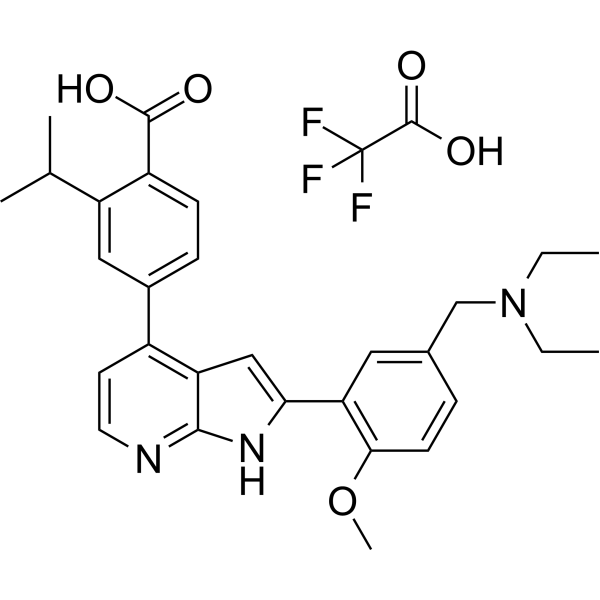
Cat. No.: HY-126323A
CAS No.: 2571578-55-5
Target:  

Parasite

Research Areas:  

Infection

TCMDC-135051 TFA is a highly selective and potent protein kinase PfCLK3 inhibitor with low off-target toxicity. TCMDC-135051 TFA prevents trophozoite-to-schizont transition, disrupts transcription and reduces transmission to the mosquito vector. TCMDC-135051 TFA has antiparasiticidal activity (EC50=320 nM) .
loading...
    loading...
Cat. No.: HY-B2085
CAS No.: 119-96-0
Synonyms: Arsthinol; Balarsen
Arsthinenol (Arsthinol; Balarsen) is an orally active small organic arsenic molecule. Arsthinenol exhibits anti-amoebic activity by eliminating cysts and trophozoites of Entamoeba histolytica in feces and promoting the healing of amoebic rectal ulcers. Arsthinenol forms the hydroxypropyl-β-cyclodextrin inclusion complex STB-HPβCD, which has an IC50 of 31.6 μM against U87 MG cells and possesses anti-tumor activity. Arsthinenol can be used in the research of intestinal amoebiasis and glioblastoma .
loading...
    loading...
Cat. No.: HY-173356
Antiparasitic agent-26 (Compound 8) is an antiparasitic compound that potently inhibits the growth of Naegleria fowleri, with IC50 values of 22.87 μM (trophozoite stage) and 25.16 μM (cyst stage). Antiparasitic agent-26 exerts its antiparasitic activity by inducing programmed cell death, including cytoplasmic calcium accumulation, mitochondrial membrane potential collapse, ATP synthesis inhibition, ROS accumulation, and chromatin condensation. Antiparasitic agent-26 can be used in the research of primary amoebic meningoencephalitis (PAM) .
loading...
    loading...
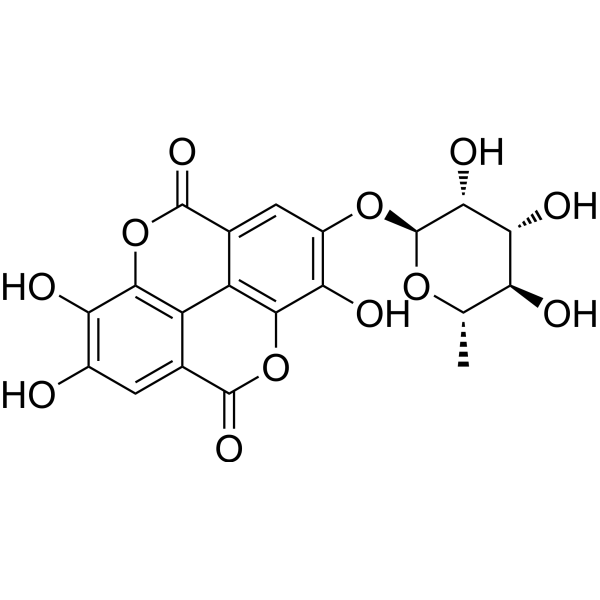
Cat. No.: HY-N12352
CAS No.: 211371-02-7
Eschweilenol C is a selective Plasmodium falciparum growth inhibitor. Eschweilenol C disrupts haemoglobin metabolism, reduces haemozoin production, kills Plasmodium falciparum ring and trophozoite stages. Eschweilenol C can be used for the research of inflammatory disorders and malaria .
loading...
    loading...
Cat. No.: HY-183450
CAS No.: 71458-51-0
Target:  

Parasite

Research Areas:  

Infection

Supradamal is a peptidyl-prolyl cis-trans isomerase (PPIase) inhibitor with an IC50 of 83 nM against *Plasmodium falciparum* and an IC50 of 75 nM against *Plasmodium vivax*. Supradamal inhibits the development, maturation and in vitro growth of *Plasmodium falciparum* trophozoites. Supradamal is applicable to malaria-related research .
loading...
    loading...
Cat. No.: HY-184661
CAS No.: 2581277-82-7
Target:  

Parasite

Research Areas:  

Infection

MMV022224 is an antimalarial agent that acts by selectively binding to and inhibiting the enzymatic activity of PfPK6. MMV022224 disrupts hemoglobin catabolism, induces peptide accumulation, and targets the ring and trophozoite stages of Plasmodium falciparum. MMV022224 can be used in malaria-related research .
loading...
    loading...
Cat. No.: HY-183238
Target:  

Parasite

Research Areas:  

Infection

Antimalarial agent 61 is an antimalarial agent. Antimalarial agent 61 disrupts hemoglobin breakdown in Plasmodium falciparum asexual blood stage trophozoites. Antimalarial agent 61 exerts antiplasmodial activity against Chloroquine (HY-17589A)-sensitive Plasmodium falciparum parasites. Antimalarial agent 61 can be used for the research of malaria .
loading...
    loading...
Cat. No.: HY-180945
Target:  

Paraptosis

Research Areas:  

Infection

Antimalarial agent 54 (Compound 23) is a potent antimalarial agent that mainly kills the late-stage trophozoites of the malaria parasite. Antimalarial agent 54 can inhibit the formation of hemozoin in the malaria parasite, resulting in the accumulation of free hemoglobin within the malaria parasite. Antimalarial agent 54 shows IC50 values of 0.14 and 0.19 μM against P. falciparum NF54 and Dd2 parasite. Antimalarial agent 54 can be used for research of malaria .
loading...
    loading...
Cat. No.: HY-17036A
CAS No.: 173531-57-2
Target:  

Parasite SARS-CoV

Research Areas:  

Infection

Naphthoquine is an orally active antimalarial and antiviral agent. Naphthoquine exhibits ex vivo activity against multidrug-resistant Plasmodium falciparum and Plasmodium vivax, preferentially targeting ring-stage rather than trophozoite-stage parasites. Naphthoquine inhibits coronavirus (SARS-CoV-2, HCoV-OC43, HCoV-229E) replication by affecting viral entry and post-entry replication. Naphthoquine is used for research on malaria and Covid-19 .
loading...
    loading...
Cat. No.: HY-183574
Target:  

Parasite

Research Areas:  

Infection

Antimalarial agent 62 is an orally active imidazopyridine-6-carboxamide antimalarial agent with a high resistance barrier. Antimalarial agent 62 kills trophozoite-stage Plasmodium ring forms, effectively clears dihydroartemisinin-induced dormant Plasmodium ring forms, and eliminates parasitemia in mice infected with Plasmodium yoelii. In AReBaR resistance omics screening, Antimalarial agent 62 is not affected by different target- and efflux-mediated resistance mutations and can withstand resistance selection. Antimalarial agent 62 has been applied to studies of malaria-related mechanisms .
loading...
    loading...
Cat. No.: HY-Z20873
CAS No.: 84210-35-5
Target:  

Parasite

Research Areas:  

Infection

MK-4815 is an orally active small-molecule allosteric inhibitor of Falcilysin (FLN) with antimalarial activity. MK-4815 inhibits the viability of Plasmodium falciparum NF54 and Dd2 strains with IC50 values of 38 and 40 ng/mL, respectively. MK-4815 preferentially accumulates in erythrocytes containing mature trophozoite/schizont-stage parasites. MK-4815 preferentially binds to the partially closed conformation of FLN, shifting the FLN conformational equilibrium toward the partially closed state and restricting the hinge region-mediated transition from the partially closed state to the open state, thereby interfering with the catalytic cycle of FLN. MK-4815 can be used for malaria-related research .
loading...
    loading...
  • 1

