



Propanil

Based on 1 Customer Validation
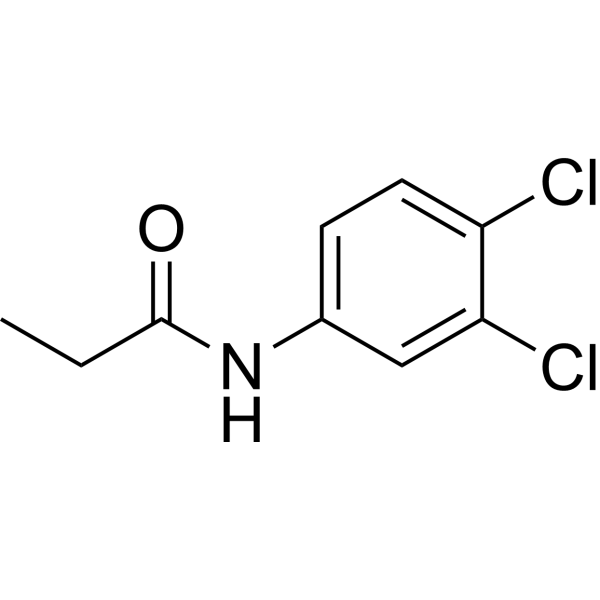
Propanil is an orally active immunotoxic Herbicide. Propanil causes delayed and sustained loss of CTL lytic function, as well as irreversible impairment of secondary/tertiary CTL responses. Propanil inhibits PHA-induced increases in IL-10, IFN-gamma, IL-2, and intracellular calcium, as well as anti-CD3-induced IL-10 and IFN-gamma release. Propanil induces splenomegaly, thymic atrophy, bone marrow toxicity, and hemoglobin oxidation. Propanil can be used in research on methemoglobinemia and anemia, as well as liver injury.
For research use only. We do not sell to patients.
- Purity : 99.91%
- CAS No.: 709-98-8
- Formula: C9H9Cl2NO
- Molecular Weight:218.08
-
Storage:Powder -20°C, 3 years ; In solvent -80°C, 6 months , -20°C, 1 month

To place orders, for customer services and technical support, please contact: MedChemExpress USA
Tel: 609-228-6898 E-mail: [email protected] [email protected]


-
 Biological Activity
-
Chemical Information
-
Solvent & Solubility
- Protocols
- Purity & Documentation
- References
-
 Help & FAQs


-

HY-B2030R
Propanil (Standard)Reference Standard -
HY-B0863
GlyphosateEPSPS Inhibitor -
HY-B0863R
Glyphosate (Standard)Herbicide -
HY-B2050
TrifluralinPre-Emergence Herbicide -
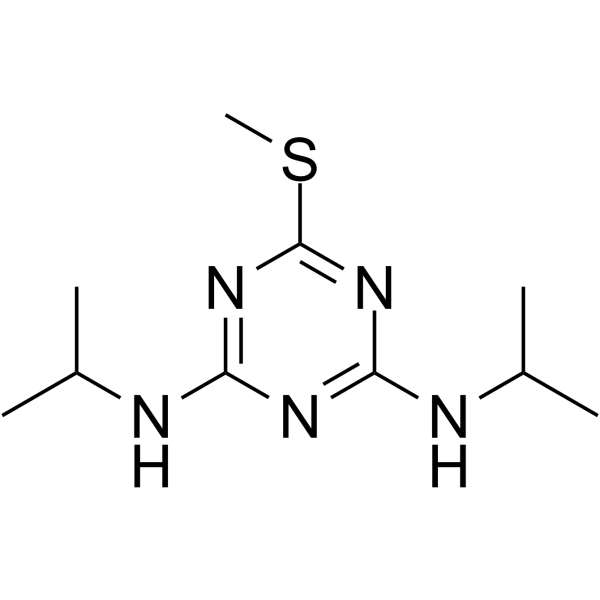
HY-121324
PrometrynHerbicide -
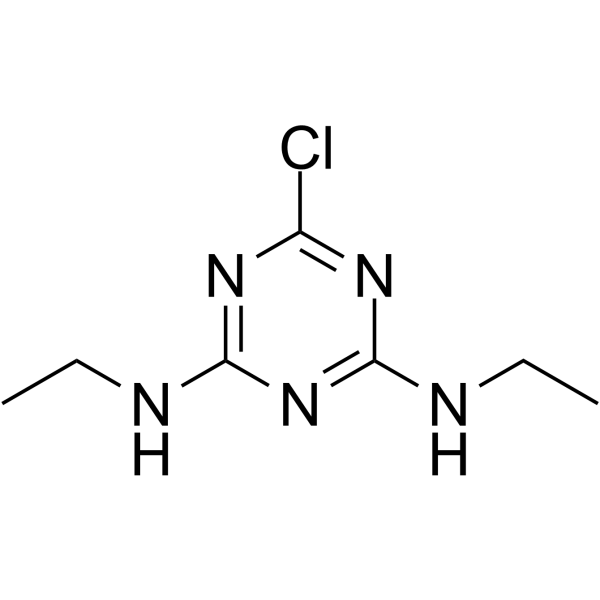
HY-B2046
SimazineHerbicide -
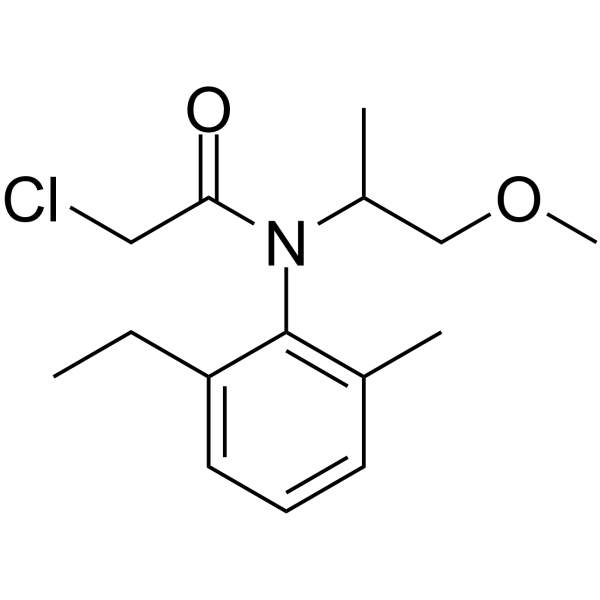
HY-B1871
MetolachlorHerbicide -
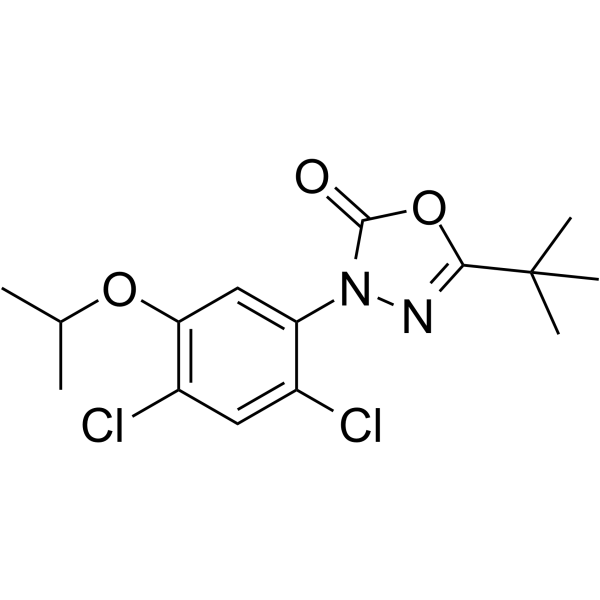
HY-B1880
OxadiazonHerbicide -
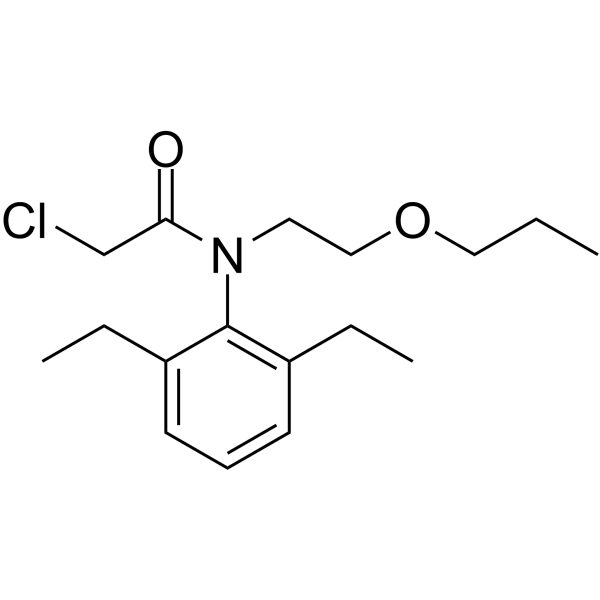
HY-B2035
PretilachlorHerbicide -

HY-B1880R
Oxadiazon (Standard)Herbicide -

HY-B1871R
Metolachlor (Standard)Chloroacetanilide Herbicide -

HY-121324R
Prometryn (Standard)Active Compound
All Calcium Channel Isoforms
More

Biological Activity
Description
|
IL-10 |
IL-2 |
Cellular Effect
|
Cell Line

|
Type | Value | Description | References |
|---|---|---|---|---|
| CFU-GM | IC50 |
>500 μM
Compound: Propanil
|
Cytotoxicity against human CFU-GM cells
Cytotoxicity against human CFU-GM cells
|
[PMID: 20667728] |
In Vitro
Propanil (10-50 μM; 3-72 h) reduces PMA-induced IL-2 secretion in EL-4 cells, with 50 μM producing the major potency effect (14.87 ng/mL vs 29.08 ng/mL for the control), and 20 μM causing a moderate reduction[6].
Propanil (20-50 μM) dose-dependently reduces peak IL-2 mRNA levels in PMA-activated EL-4 cells, with 50 μM causing a 5-fold reduction and 20 μM causing a 2-fold reduction[6].
Propanil (72 h) does not increase estrogen-induced alkaline phosphatase activity in Ishikawa cells[4].
MedChemExpress (MCE) has not independently confirmed the accuracy of these methods. They are for reference only.
-
Cell Line:murine lymphoma T cell line EL-4
-
Concentration:10, 20, 50 μM (Propanil); 10 ng/mL (PMA)
-
Incubation Time:3 to 72 h after stimulation; 24 h (control IL-2 peak)
-
Result:Control IL-2 production peaked at 24 h at 29.08 ng/mL.
At 50 μM, IL-2 was reduced to 14.87 ng/mL; at 20 μM, IL-2 was reduced to 22.54 ng/mL; at 10 μM, IL-2 production was not affected.
20 and 50 μM corresponded to decreases to 78% and 51% of control, respectively.
In Vivo
Propanil (150 mg/kg; intraperitoneal injection; once on day 0) enhances the PC-specific ASC response independently of estrogen receptor signaling in female mice[4].
Propanil (40-400 mg/kg; oral; single dose) reduces IL-6 and TNF-alpha production by macrophages in C57B1/6 mice and induces thymic atrophy and splenomegaly at 400 mg/kg[5].
MedChemExpress (MCE) has not independently confirmed the accuracy of these methods. They are for reference only.
-
Animal Model:C57BL/6 (female, 6-8 weeks old; sham-operated and ovariectomized groups)[4]
-
Dosage:150 mg/kg
-
Administration:i.p.; once on day 0
-
Result:In sham-operated mice, propanil increased PC-specific IgG2b, IgG3, and IgM ASCs in the spleen; the response was four- to sixfold over control animals at day 7.
Ovariectomy abrogated the propanil-induced increase in PC-specific ASCs; the ovariectomized propanil group was similar to the ovariectomized vehicle group.
Comparable results were obtained when data were normalized to 1 × 10^6 splenic B cells or to the total spleen.
-
Animal Model:C57BL/6 (female, 6-8 weeks old; ovariectomized and sham-operated groups)[4]
-
Dosage:150 mg/kg (propanil); 10 µg/kg/day (E2)
-
Administration:i.p.; once on day 0; E2 s.c. daily for 7 days starting 1 h before propanil/vehicle
-
Result:Exogenous E2 administration failed to restore the propanil-induced increase in PC-specific ASCs in ovariectomized mice.
Ovariectomized propanil + E2 mice did not show the increased ASC response seen with propanil alone, and all ovariectomized groups had similar numbers of PC-specific ASCs to vehicle controls.
-
Animal Model:C57B1/6 (female, SPF, 18-20 g, 7-12 weeks)[5]
-
Dosage:200 mg/kg
-
Administration:i.p.; single injection
-
Result:The production of IL-6 by macrophages was decreased from 10.9 to 3.1 ng/mL in the 3-day postpropanil exposure group when compared to the vehicle-treated groups.
As illustrated in Fig. 1, 7 days after propanil exposure, ex vivo cultures from control animals produced 62.1 ng/mL while the propanil-treated groups produced 42.3 ng/mL.
TNF-alpha production by macrophages from 3- and 7-day propanil-treated mice was also reduced by 71% at 3 days (from 720 to 209 pg/mL) and by 55% at 7 days (from 695 to 313 pg/mL).
The time course studies demonstrated that ip exposure to propanil 3 days prior to ex vivo culture suppressed LPS-stimulated IL-6 production dramatically at 6 hr (from 11.6 to 2.15 ng/mL).
The level of TNF-alpha in the propanil-treated group was reduced up to 54% (from 710 to 325 pg/mL) at the 12-hr time point and returned to the control level by 72 hr.
-
Animal Model:C57B1/6 (SPF, 18-20 g, 7-12 weeks)[5]
-
Dosage:40 or 400 mg/kg
-
Administration:p.o. (gavage); single dose
-
Result:Acute oral exposure to 400 mg/kg propanil significantly inhibited LPS-induced IL-6 production by 60% in the 3-day postexposure group and by 40% in the 7-day postexposure group.
Propanil at 40 mg/kg moderately reduced the production of IL-6; however, the effect was not consistently significant.
In addition, TNF-alpha production by macrophages was significantly decreased by propanil at doses of 40 and 400 mg/kg in both the 3-day and 7-day postexposure groups.
Oral exposure to only the 400 mg/kg dose of propanil led to significant thymic atrophy 3 days after exposure, and by 7 days after oral exposure thymus weights had returned to normal.
Additionally, only the high dose of propanil (400 mg/kg) induced splenomegaly 7 days after exposure.
The liver showed no significant differences in weight at any of the doses during the same time period.
Oral exposure to propanil also did not affect the overall body weights of the mice.
-
Animal Model:AB wild-type and transgenic lines cmlc2:DsRed, flk1:EGFP, olig2:DsRed, lfabp:DsRed;elastase:EGFP, insulin:EGFP (embryos exposed at 9-10 hpf, assessed up to 96 hpf)[7]
-
Dosage:1, 2, 5, 10, 20, 50, and 100 mg/L (survival/LC50); 2, 5, and 6 mg/L (hatching, morphological, transgenic, apoptosis, ROS, and organ assays); 6 mg/L (qRT-PCR, WISH, and mitochondrial respiration at 24 hpf)
-
Administration:waterborne exposure; starting at 9-10 hpf; up to 96 hpf
-
Result:LC50 at 96 hpf was 7.46 mg/L.
Hatching ratios at 96 hpf were approximately 77%, 15%, and 10% for 2, 5, and 6 mg/L propanil, respectively.
Body length decreased to 96.96%, 92.10%, and 87.32% of control at 2, 5, and 6 mg/L, respectively.
Eye size decreased to 88.74%, 76.98%, and 66.62% of control at 2, 5, and 6 mg/L, respectively.
Yolk sac edema increased to 122.42%, 124.34%, and 149.44% of control at 2, 5, and 6 mg/L, respectively.
Heart edema increased to 104.06%, 109.97%, and 134.31% of control at 2, 5, and 6 mg/L, respectively.
Atrial area increased by 136% at 5 mg/L and 118% at 6 mg/L.
mRNA levels of bmp2b, bmp4, and bmp6 decreased to 0.02-fold, 0.03-fold, and 0.02-fold, respectively.
Acridine orange fluorescence increased by 214% in the brain and 184% in the eyes.
bcl2 expression decreased to 0.24-fold; tp53, cycs, casp3a, and casp9 expression increased by 1.60-fold, 1.33-fold, 1.14-fold, and 1.13-fold, respectively.
DCFH-DA green fluorescence intensity increased by 1.14-fold at 6 mg/L.
sod2, cat, and gpx1b expression decreased to 0.65-fold, 0.74-fold, and 0.85-fold, respectively.
Basal respiration, maximal respiration, and ATP production were reduced by 28%, 24%, and 38%, respectively.
Expression levels of subunit genes of mitochondrial complex I (ndufs1, ndufs2, ndufs3, ndufs4, ndufs6, ndufa4l, mtnd3, and mtnd4), complex III (uqcrc2a, uqcrh, uqcr10, and uqcrc1), and complex V (si:dkey-21c1.4, atp5fa1, atpmc1, and atp5f1b) were reduced after propanil exposure.
Cerebrovascular intensity decreased by 63%, and intersegmental vessel length decreased by 87% at 6 mg/L.
kdr and vegfab expression decreased to 0.03-fold and 0.13-fold, respectively.
Axon length decreased by approximately 70% at 6 mg/L.
islet1, olig2, pparg, and mbp expression decreased to 0.41-fold, 0.59-fold, 0.41-fold, and 0.55-fold, respectively.
Liver size decreased by approximately 62%; relative fluorescence intensities of the liver and pancreas decreased by approximately 39% and 42%, respectively.
insulin:EGFP size and intensity decreased by 52% and 59% at 6 mg/L.
hdac3, prox1, and prss1 expression decreased to 0.52-fold, 0.31-fold, and 0.14-fold, respectively.
cela1.1, ins, nr5a2, pdx1, and slc2a2 expression decreased to 0.58-fold, 0.76-fold, 0.50-fold, 0.88-fold, and 0.40-fold, respectively.
WISH showed reduced prss1, ins, and pdx1 expression in larvae exposed to 6 mg/L.
-
Animal Model:C57B1/6 (female, 5-6 weeks old, 18-20 g)[8]
-
Dosage:50 mg/kg, 100 mg/kg, and 200 mg/kg
-
Administration:i.p.; single administration on Day 0
-
Result:Bone marrow cellularity per femur at 200 mg/kg decreased by approximately 25%, but this decrease was not statistically significant due to variability between animals.
Doses below 200 mg/kg did not reduce bone marrow cell numbers.
Leukocytes per femur showed no statistically significant difference between propanil-treated and control mice, although a trend toward reduced leukocyte numbers per femur was noted.
CFU-S at 200 mg/kg: 100 per 10^6 bone marrow cells versus 390 per 10^6 bone marrow cells in controls, an approximately fourfold decrease.
CFU-IL-3: 50 mg/kg caused a 40% reduction.
100 mg/kg reduced CFU-IL-3 to 60% of control.
200 mg/kg reduced CFU-IL-3 to 64% of control.
The decrease appeared to plateau between 100 and 200 mg/kg.
CFU-GM: propanil doses of 50 mg/kg and greater reduced CFU-GM by 30-55% across the doses administered, without dose dependence.
CFU-M at 200 mg/kg was 315 versus control 323.
CFU-G at 200 mg/kg was 230 versus control 208.
50 mg/kg also showed no reduction in CFU-M or CFU-G.
BFU-E at 200 mg/kg was reduced to 42% of control.
CFU-E at 200 mg/kg was not reduced.
-
Animal Model:Wistar (male albino, 140-160 g)[9]
-
Dosage:200 mg/kg
-
Administration:7 days
-
Result:In the propanil group, body weight was 132.70 g, liver weight was 5.37 g, liver:body weight ratio was 0.041, and the change in liver:body weight ratio was 36% compared with control (0.030; Table 2).
Significantly increased hepatic NO and MPO levels compared with control.
Decreased hepatic phospho-p38MAPK and phospho-STAT3 levels and increased hepatic phospho-SAPK/JNK levels compared with control; these PRP-induced changes in hepatic phospho-p38MAPK, phospho-STAT3, and phospho-SAPK/JNK were not significantly different from control.
Increased hepatic iNOS, COX-2, and NF-κB protein expression compared with control.


Chemical Information
-
CAS No. 709-98-8
-
Appearance Solid
-
Molecular Weight 218.08
-
Formula C9H9Cl2NO
-
Color Off-white to pink
-
SMILES
C(NC1=CC=C(Cl)C(Cl)=C1)(=O)CC
-
Shipping
Room temperature in continental US; may vary elsewhere.
-
Storage
Powder -20°C 3 years In solvent -80°C 6 months -20°C 1 month


Solvent & Solubility
In Vitro:
DMSO : 100 mg/mL (458.55 mM; Need ultrasonic; Hygroscopic DMSO has a significant impact on the solubility of product, please use newly opened DMSO)
Please refer to the solubility information to select the appropriate solvent. Once prepared, please aliquot and store the solution to prevent product inactivation from repeated freeze-thaw cycles.
Storage method and period of stock solution: -80°C, 6 months; -20°C, 1 month. When stored at -80°C, please use it within 6 months. When stored at -20°C, please use it within 1 month.
Concentration (start) × Volume (start) = Concentration (final) × Volume (final)
In Vivo:
Select the appropriate dissolution method based on your experimental animal and administration route.
- For the following dissolution methods, please ensure to first prepare a clear stock solution using an In Vitro approach and then sequentially add co-solvents:
- To ensure reliable experimental results, the clarified stock solution can be appropriately stored based on storage conditions. As for the working solution for In Vivo experiments, it is recommended to prepare freshly and use it on the same day.
- The percentages shown for the solvents indicate their volumetric ratio in the final prepared solution. If precipitation or phase separation occurs during preparation, heat and/or sonication can be used to aid dissolution.
Add each solvent one by one: 10% DMSO 40% PEG300 5% Tween-80 45% Saline
Solubility: ≥ 2.5 mg/mL (11.46 mM); Clear solution
This protocol yields a clear solution of ≥ 2.5 mg/mL (saturation unknown).
Taking 1 mL working solution as an example, add 100 μL DMSO stock solution (25.0 mg/mL) to 400 μL PEG300, and mix evenly; then add 50 μL Tween-80 and mix evenly; then add 450 μL Saline to adjust the volume to 1 mL.
Preparation of Saline: Dissolve 0.9 g sodium chloride in ddH₂O and dilute to 100 mL to obtain a clear Saline solution.
Add each solvent one by one: 10% DMSO 90% (20% SBE-β-CD in Saline)
Solubility: ≥ 2.5 mg/mL (11.46 mM); Clear solution
This protocol yields a clear solution of ≥ 2.5 mg/mL (saturation unknown).
Taking 1 mL working solution as an example, add 100 μL DMSO stock solution (25.0 mg/mL) to 900 μL 20% SBE-β-CD in Saline, and mix evenly.
Preparation of 20% SBE-β-CD in Saline (4°C, storage for one week): 2 g SBE-β-CD powder is dissolved in 10 mL Saline, completely dissolve until clear.
In Vivo Dissolution Calculator
Please enter the basic information of animal experiments:
-
-
-
-
Recommended: Prepare an additional quantity of animals to account for potential losses during experiments.
Please enter your animal formula composition:
-
%DMSO +
Recommended: Keep the proportion of DMSO in working solution below 2% if your animal is weak.
-
%+
-
+%Tween-80 + +
-
%Saline +
The co-solvents required include: DMSO, . All of co-solvents are available by MedChemExpress (MCE). , Tween 80. All of co-solvents are available by MedChemExpress (MCE).
Working solution concentration: 0.22 mg/mL
Method for preparing stock solution: mg drug dissolved in μL DMSO. Stock solution concentration: mg/mL.
1. Take μL DMSO stock solution;
2. Add μL .
μL , mix evenly;
3. Then add μL Tween 80, mix evenly;
4. Then add μL
Please ensure that the stock solution in the first step is dissolved to a clear state, and add co-solvents in sequence. You can use ultrasonic heating (ultrasonic cleaner, recommended frequency 20-40 kHz), vortexing, etc. to assist dissolution.


Purity & Documentation
-
Data Sheet (302 KB)
-
SDS (597 KB)
- English - EN (597 KB)
- Français - FR (597 KB)
- Deutsch - DE (597 KB)
- Norwegian - NO (597 KB)
- Español - ES (597 KB)
- Swedish - SV (597 KB)
- Italian - IT (597 KB)
- Korean - KR (597 KB)
- Portuguese - PT (597 KB)
-
Handling Instructions (2659 KB)
References


Complete Stock Solution Preparation Table
Please refer to the solubility information to select the appropriate solvent. Once prepared, please aliquot and store the solution to prevent product inactivation from repeated freeze-thaw cycles.
Storage method and period of stock solution: -80°C, 6 months; -20°C, 1 month. When stored at -80°C, please use it within 6 months. When stored at -20°C, please use it within 1 month.
| Optional Solvent | Concentration Solvent Mass | 1 mg | 5 mg | 10 mg | 25 mg |
|---|---|---|---|---|---|
| DMSO | 1 mM | 4.5855 mL | 22.9274 mL | 45.8547 mL | 114.6368 mL |
| 5 mM | 0.9171 mL | 4.5855 mL | 9.1709 mL | 22.9274 mL | |
| 10 mM | 0.4585 mL | 2.2927 mL | 4.5855 mL | 11.4637 mL | |
| 15 mM | 0.3057 mL | 1.5285 mL | 3.0570 mL | 7.6425 mL | |
| 20 mM | 0.2293 mL | 1.1464 mL | 2.2927 mL | 5.7318 mL | |
| 25 mM | 0.1834 mL | 0.9171 mL | 1.8342 mL | 4.5855 mL | |
| 30 mM | 0.1528 mL | 0.7642 mL | 1.5285 mL | 3.8212 mL | |
| 40 mM | 0.1146 mL | 0.5732 mL | 1.1464 mL | 2.8659 mL | |
| 50 mM | 0.0917 mL | 0.4585 mL | 0.9171 mL | 2.2927 mL | |
| 60 mM | 0.0764 mL | 0.3821 mL | 0.7642 mL | 1.9106 mL | |
| 80 mM | 0.0573 mL | 0.2866 mL | 0.5732 mL | 1.4330 mL | |
| 100 mM | 0.0459 mL | 0.2293 mL | 0.4585 mL | 1.1464 mL |


Propanil Related Classifications
HY-B2030 Related Classifications
 Powered by Bioz