14 Results for "

β-sheet structures

" in MedChemExpress (MCE) Product Catalog:
Products (14)

14 Results for "β-sheet structures" in MCE Product Catalog:

Cat. No.: HY-122958
CAS No.: 130464-57-2
Purity:  95.07%
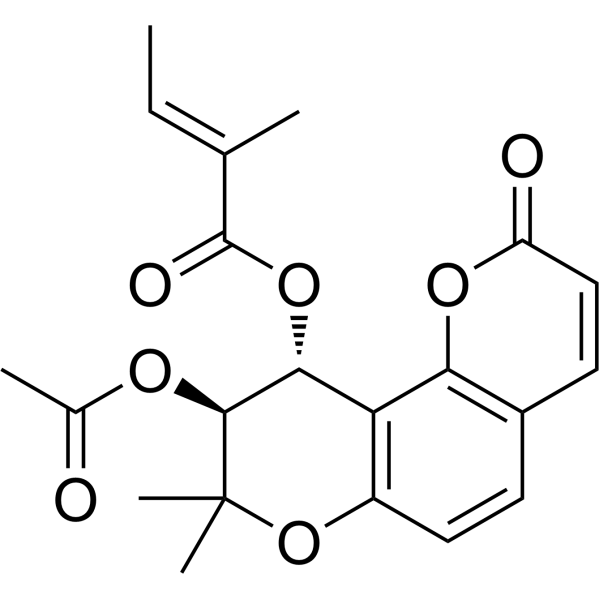
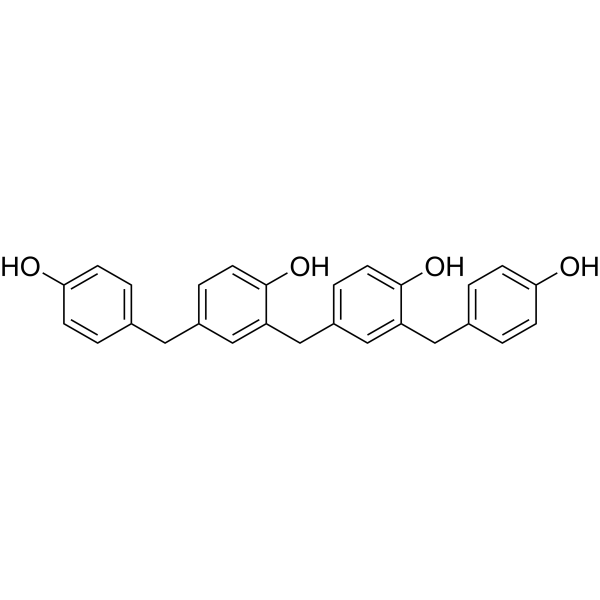
Peucedanocoumarin III is an α-synuclein fiber depolymerizer with blood-brain barrier permeability. Peucedanocoumarin III depolymerizes β-sheet aggregate structures, promotes aggregate clearance, inhibits β23-induced cytotoxicity, blocks the formation of Lewy body-like inclusions, and prevents dopaminergic neuron loss. Peucedanocoumarin III can be used in studies related to Parkinson's disease .
loading...
    loading...
Cat. No.: HY-P1889
CAS No.: 721885-31-0
Target:  

Bcl-2 Family Amyloid-β

Research Areas:  

Neurological Disease

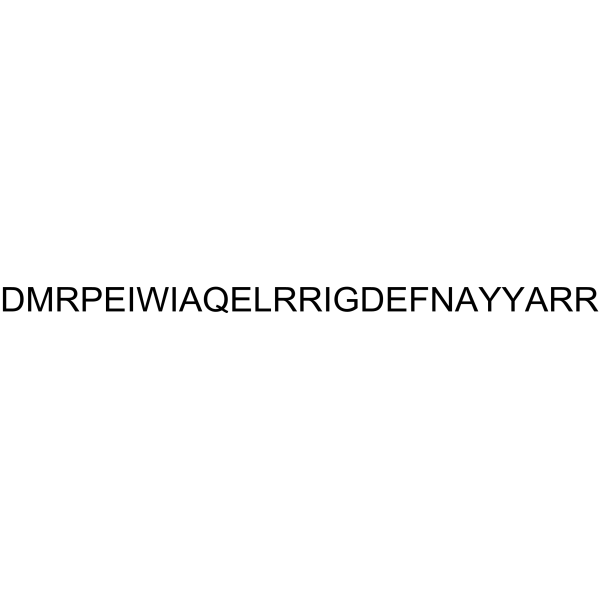
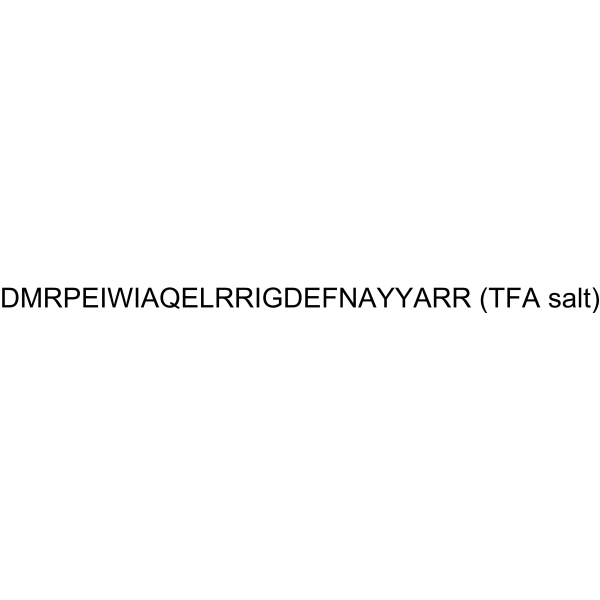
Bim BH3, Peptide IV is an Aβ42-binding peptide and the pro-apoptotic BH3 domain of the BIM protein. Bim BH3, Peptide IV binds Aβ42 with a Kd of 7.1 μM. Bim BH3, Peptide IV modulates Aβ42 structure, fibrillization pathways, aggregate morphology, and membrane interactions, inhibiting fibril formation while enhancing protofibril assembly. Bim BH3, Peptide IV promotes Aβ42 β-sheet formation and accelerates aggregation. Bim BH3, Peptide IV enhances Aβ42 membrane internalization and bilayer stiffening. Bim BH3, Peptide IV induces neuronal cell death by enhancing BH3-induced membrane interactions of Aβ42 prefibrillar species. Bim BH3, Peptide IV can be used for research on Alzheimer's disease .
loading...
    loading...
Cat. No.: HY-P4882A
Target:  

Amyloid-β Tau Protein

Research Areas:  

Neurological Disease

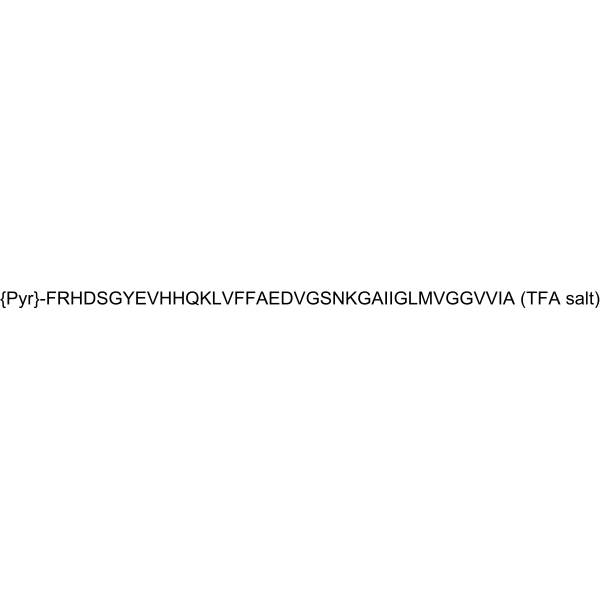
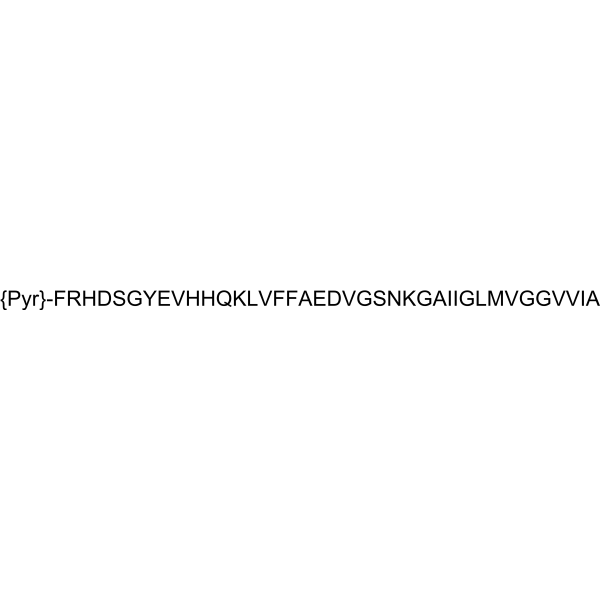
(Pyr3)-Amyloid β-Protein (3-42) TFA is an N-terminally truncated pyroglutamylated β-amyloid peptide. (Pyr3)-Amyloid β-Protein (3-42) TFA forms stable β-sheet structures across different pH values, co-oligomerizes with Aβ1-42 to form cytotoxic oligomers, induces tau-dependent cytotoxicity and neuronal loss, inhibits hippocampal LTP, and exhibits stronger protease resistance. (Pyr3)-Amyloid β-Protein (3-42) TFA exists in the brain tissues of human Alzheimer's disease patients, correlates with the pathogenesis of Alzheimer's disease, and follows a unique, faster oligomerization pathway. (Pyr3)-Amyloid β-Protein (3-42) TFA can be used in Alzheimer's disease-related research .
loading...
    loading...
Cat. No.: HY-N8671
CAS No.: 256520-90-8
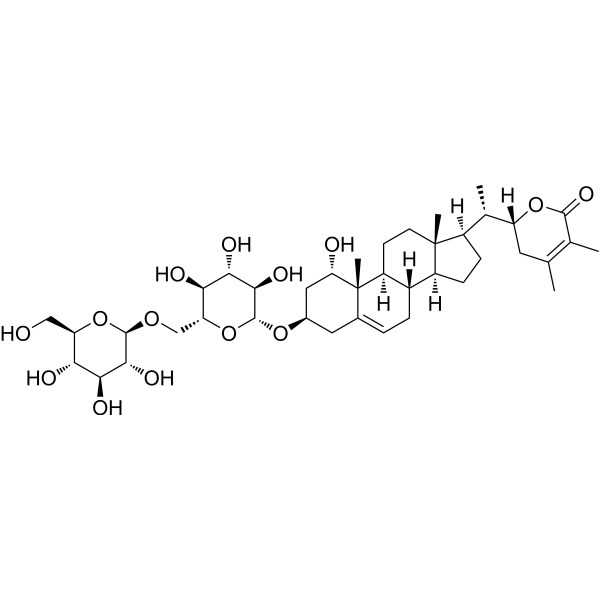
Withanoside V is a blood-brain barrier-permeable withanolide derivative . Withanoside V binds strongly to Sudlow I (domain IIA) of human serum albumin (HSA) to form a stable complex and alter the secondary structure of albumin, thereby increasing helix content and reducing β-sheet and random coil. Withanoside V binds to Aβ (1-42) to block the interaction between monomers and subsequent aggregation. Withanoside V inhibits the viability of neuroblastoma cells, reduces the number of apoptotic cells induced by Aβ (1-42), and decreases ROS production. Withanoside V inhibits SARS-CoV-2 Mpro. Withanoside V can be used for research on Alzheimer's disease and coronavirus disease 2019 .
loading...
    loading...
Cat. No.: HY-P4882
CAS No.: 183449-57-2
Target:  

Amyloid-β Tau Protein

Research Areas:  

Neurological Disease

(Pyr3)-Amyloid β-Protein (3-42) is an N-terminally truncated pyroglutamylated β-amyloid peptide. (Pyr3)-Amyloid β-Protein (3-42) forms stable β-sheet structures across different pH values, co-oligomerizes with Aβ1-42 to form cytotoxic oligomers, induces tau-dependent cytotoxicity and neuronal loss, inhibits hippocampal LTP, and exhibits stronger protease resistance. (Pyr3)-Amyloid β-Protein (3-42) exists in the brain tissues of human Alzheimer's disease patients, correlates with the pathogenesis of Alzheimer's disease, and follows a unique, faster oligomerization pathway. (Pyr3)-Amyloid β-Protein (3-42) can be used in Alzheimer's disease-related research .
loading...
    loading...
Cat. No.: HY-P4370
CAS No.: 342790-23-2
Target:  

Bacterial Fungal

Research Areas:  

Infection

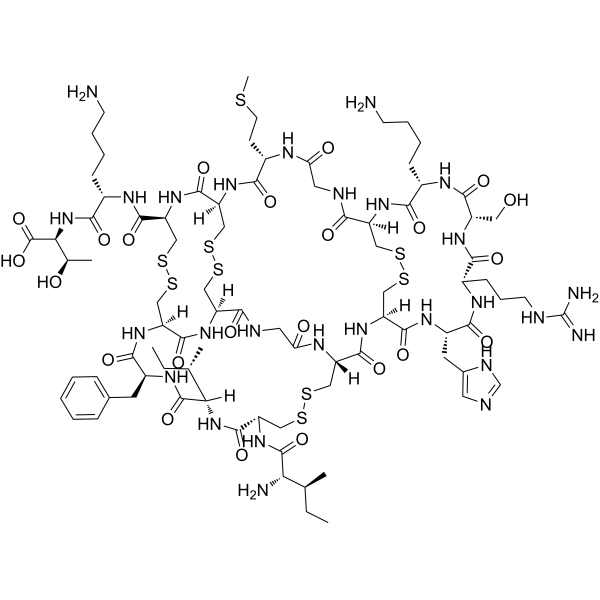
Hepcidin-20 (human) is a histidine-containing, cysteine-rich, β-sheet structured peptide. Hepcidin-20 (human) shows antifungal activity. Hepcidin-20 (human) inhibits biofilm formation and bacterial cell metabolism of polysaccharide intercellular adhesin (PIA)-positive and PIA-negative strains .
loading...
    loading...
Cat. No.: HY-P5515
CAS No.: 409085-40-1
Target:  

Inhibitory Antibodies

Research Areas:  

Others

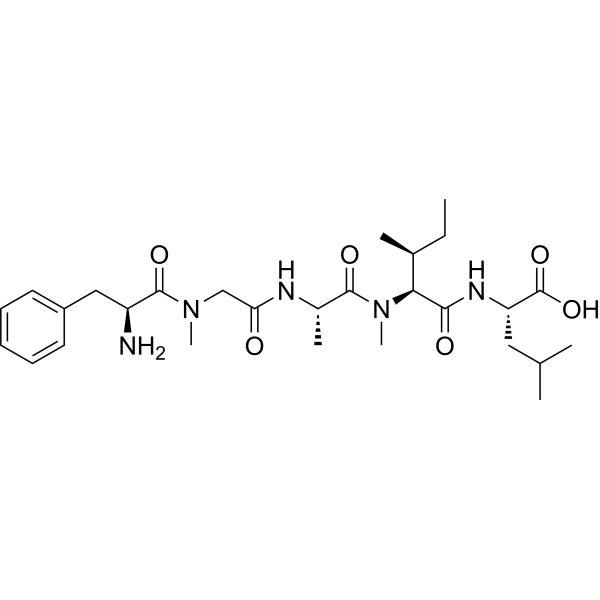
F(N-Me)GA(N-Me)IL is a biological active peptide. (Double N-methylated derivatives of amyloidogenic and cytotoxic partial IAPP sequence were found to be devoid of β-sheet structure, amyloidogenicity and cytotoxicity, The derivatives were able to interact with the native sequences and inhibit amyloid formation)
loading...
    loading...
Cat. No.: HY-P5967
CAS No.: 189064-06-0
Target:  

Inhibitory Antibodies

Research Areas:  

Neurological Disease

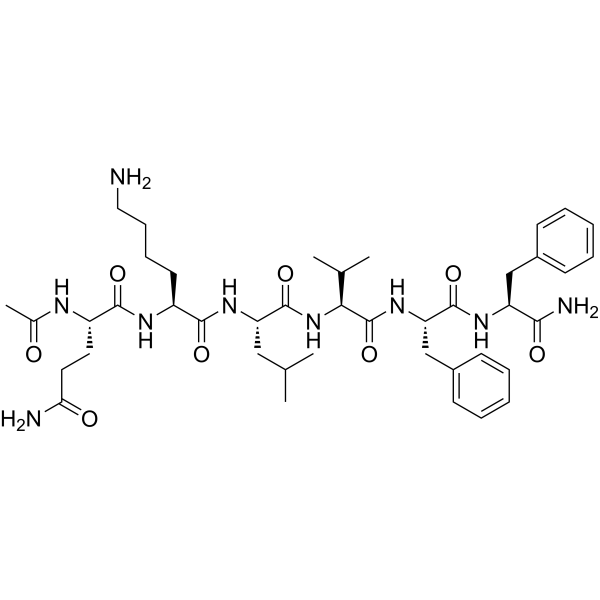
Acetly-β Amyloid (15-20), Amide is a peptides fragment. Acetly-β Amyloid (15-20), Amide inhibits the β-sheet formation and stabilizes structure of Aβ (1–40) peptide. Acetly-β Amyloid (15-20), Amide can be used in study Alzheimer’s disease .
loading...
    loading...
Cat. No.: HY-149509
CAS No.: 1510825-03-2
Target:  

α-synuclein

Research Areas:  

Neurological Disease

α-Synuclein inhibitor 9 (Compound 20C) is an α-Synuclein inhibitor. α-Synuclein inhibitor 9 binds to cavities in mature α-synuclein fibrils and reduces the β-sheet structure. α-Synuclein inhibitor 9 inhibits A53T α-Syn aggregation. α-Synuclein inhibitor 9 has neuroprotective effect, improves brain functional connection and relieves motor dysfunction.α-Synuclein inhibitor 9 can be used for Parkinson’s disease (PD) research. .
loading...
    loading...
Cat. No.: HY-P5340
CAS No.: 339091-39-3
Target:  

Inhibitory Antibodies

Research Areas:  

Others

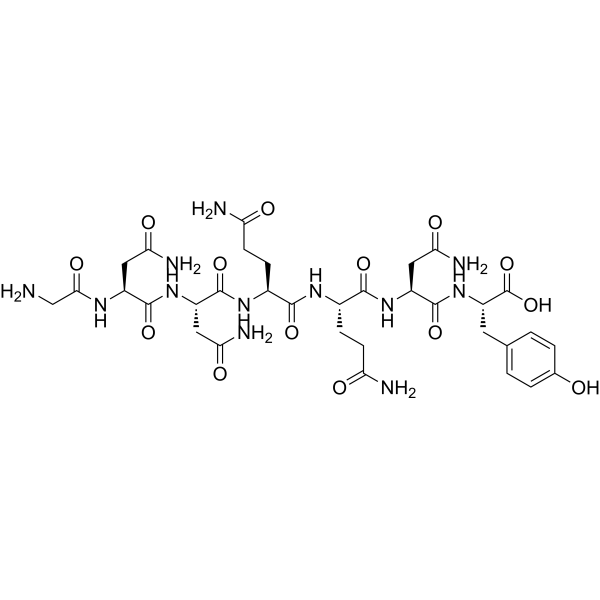
Amyloid-Forming peptide GNNQQNY is a biological active peptide. (This is a heptapeptide from the N-terminal prion-determining domain of the yeast protein Sup35 that forms amyloid fibrils. The availability of its detailed atomic oligomeric structure makes it a good model for studying the early stage of aggregation. The GNNQQNY dimer forms three stable sheet structures. in-register parallel, off-register parallel, and anti-parallel. The in-register parallel dimer, which is close to the amyloid beta-sheet structure, has few interpeptide hydrogen bonds, making hydrophobic interactions more important and increasing the conformational entropy compared to the anti-parallel sheet.)
loading...
    loading...
Cat. No.: HY-P1889A
Target:  

Bcl-2 Family Amyloid-β

Research Areas:  

Neurological Disease

Bim BH3, Peptide IV TFA is an Aβ42-binding peptide and the pro-apoptotic BH3 domain of the BIM protein. Bim BH3, Peptide IV TFA binds Aβ42 with a Kd of 7.1 μM. Bim BH3, Peptide IV TFA modulates Aβ42 structure, fibrillization pathways, aggregate morphology, and membrane interactions, inhibiting fibril formation while enhancing protofibril assembly. Bim BH3, Peptide IV TFA promotes Aβ42 β-sheet formation and accelerates aggregation. Bim BH3, Peptide IV TFA enhances Aβ42 membrane internalization and bilayer stiffening. Bim BH3, Peptide IV TFA induces neuronal cell death by enhancing BH3-induced membrane interactions of Aβ42 prefibrillar species. Bim BH3, Peptide IV TFA can be used for research on Alzheimer's disease .
loading...
    loading...
Cat. No.: HY-161658
Target:  

Amyloid-β

Research Areas:  

Neurological Disease

N-Caffeoyldopamine (Compound 6i) is an amyloid-beta aggregation inhibitor. N-Caffeoyldopamine can inhibit Aβ aggregation to form nano-rod-like structures, thereby preventing β-sheet formation. N-Caffeoyldopamine can be used for Alzheimer's disease research .
loading...
    loading...
Cat. No.: HY-D3430
PTPA-QM is a low-cytotoxicity Aβ protein probe that can be used for live-cell imaging and tissue section staining (Lys. Ex/Em = 385/615 nm). PTPA-QM can intercalate into the β-sheet layered structure of β-amyloid fibrils, form intermolecular interactions with amino acid residues, restrict intramolecular rotation and trigger fluorescence activation for imaging purposes. PTPA-QM is applicable to Alzheimer's disease-related research. Maximum excitation/emission wavelength: 448/605 nm .
loading...
    loading...
Cat. No.: HY-167189
CAS No.: 682763-67-3
Target:  

Tau Protein Amyloid-β

Research Areas:  

Neurological Disease

BF-158 is a quinoline-based Tau Protein fluorescent imaging probe that produces specific staining by recognizing the β-sheet structure of paired helical filaments (PHF)/neurofibrillary tangles (NFT) in tau aggregates, with EC50 values of 399 nM and 659 nM for tau fibrils and Aβ1-42 fibrils, respectively. BF-158 preferentially labels NFTs, neuropil threads, and PHF-type neurites. BF-158 is useful for the study and imaging of tau pathology in Alzheimer's disease .
loading...
    loading...
  • 1

