14 Results for "

Allosteric Modulation

" in MedChemExpress (MCE) Product Catalog:
Products (14)

14 Results for "Allosteric Modulation" in MCE Product Catalog:

2
2 Cited Publications
Cat. No.: HY-12150
CAS No.: 917837-54-8
Purity:  99.97%
Synonyms: AVL-3288; UCI-4083
Target:  

nAChR

Research Areas:  

Neurological Disease

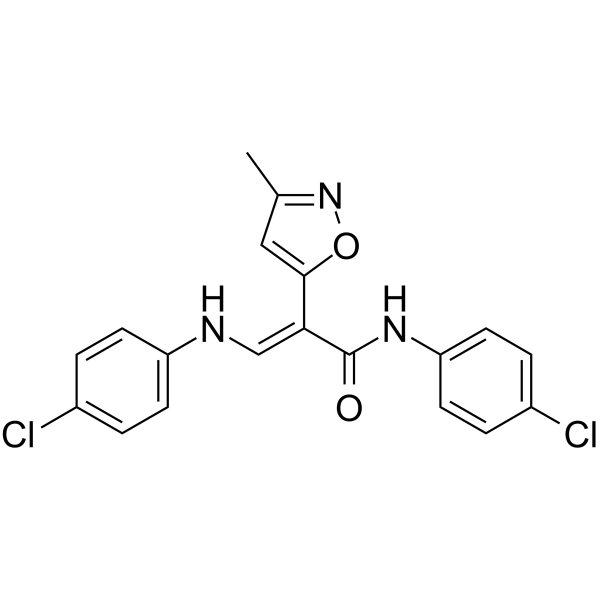
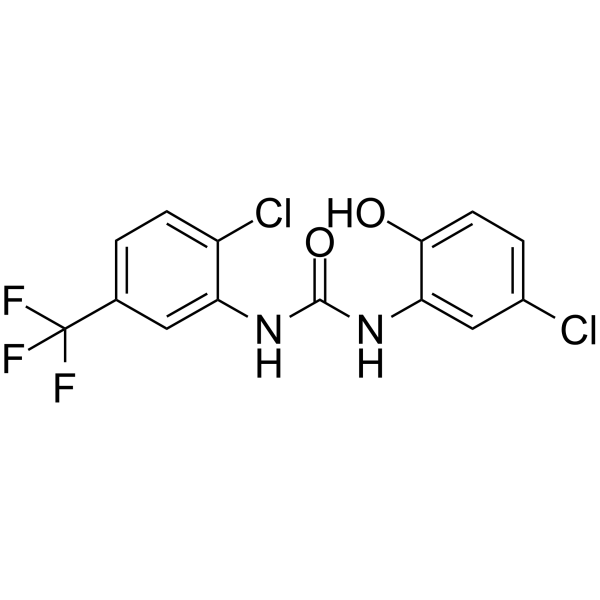
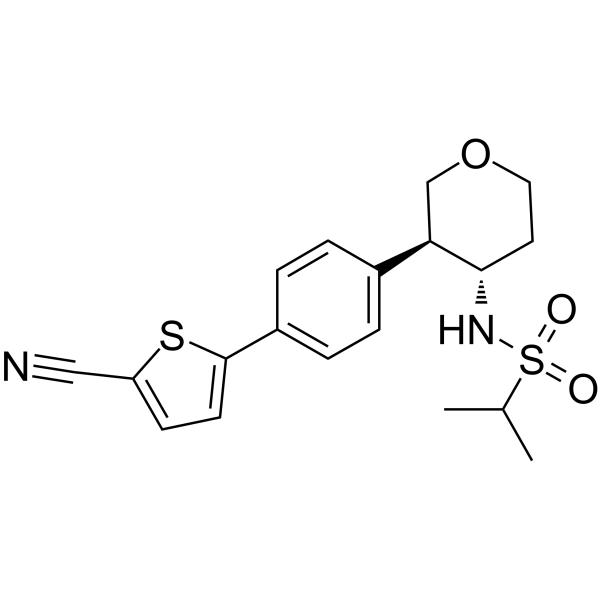
CCMI (AVL-3288) is a potent and selective α7 nAChR-positive allosteric modulator, does not bind to or activate α7 nAChRs via the orthosteric site, and causes significant positive modulation of agonist-induced currents at α7 nAChRs. CCMI has potential in CNS diseases with cognitive dysfunction .
loading...
    loading...
1
1 Cited Publications
Cat. No.: HY-147007
CAS No.: 1005288-15-2
Purity:  96.58%
Target:  

β-catenin Wnt CDK

Research Areas:  

Cancer

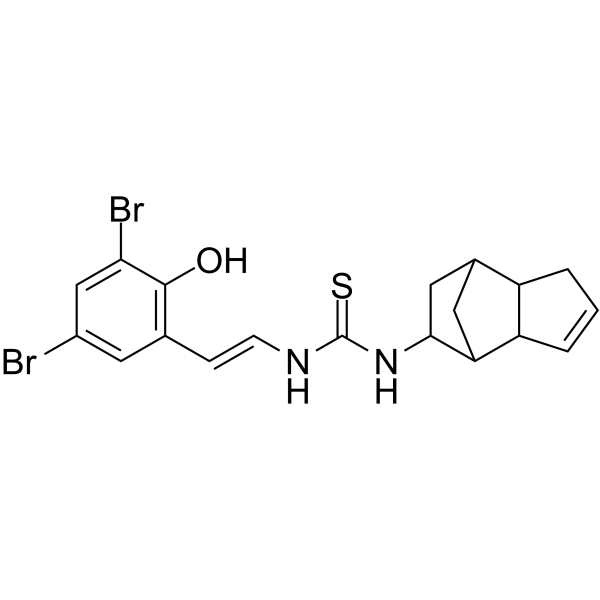
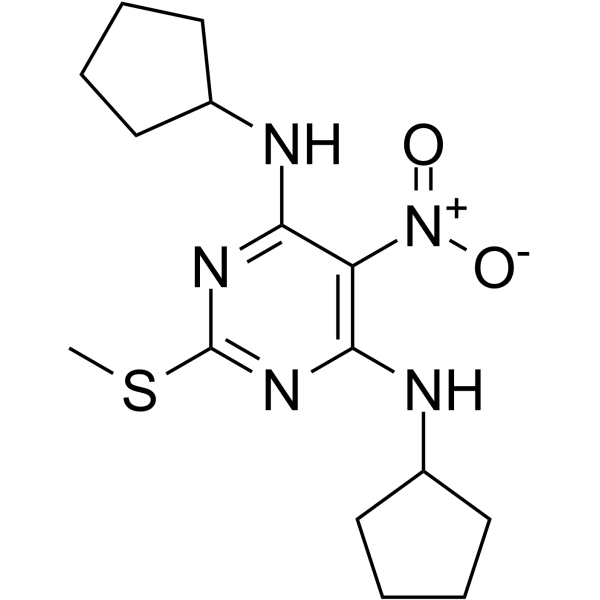
β-catenin-IN-3 (Compound C2) is a selective β-catenin inhibitor. β-catenin-IN-3 binds to allosteric site on the surface of β-catenin with K D calculated at 54.96 nM. β-catenin-IN-3 selectively inhibits β-catenin via targeting a cryptic allosteric modulation site, lowers its cellular load. β-catenin-IN-3 significantly reduces viability of β-catenin driven cancer cells, and triggers β-catenin degradation via proteasome system in β-catenin-overexpressing cancer cells .
loading...
    loading...
Cat. No.: HY-107409
CAS No.: 2026635-66-3
Purity:  99.50%
Target:  

iGluR

Research Areas:  

Neurological Disease

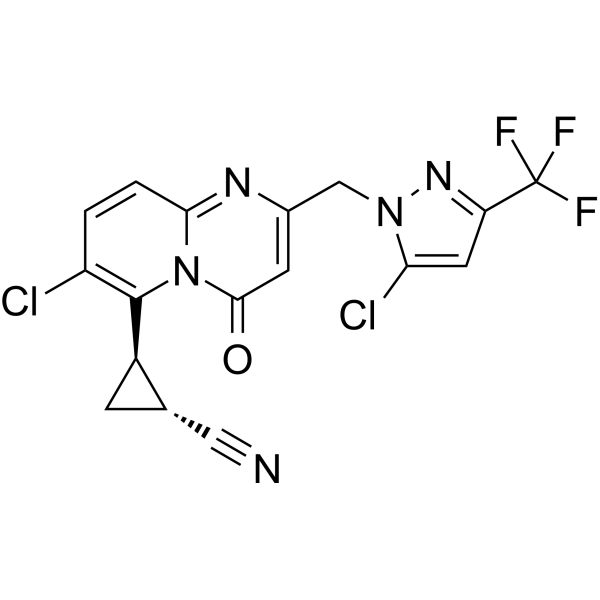
GNE 5729 is an orally active, blood-brain barrier-penetrant positive allosteric modulator of NMDARs containing the GluN2A subunit. GNE 5729 enhances NMDAR responses through allosteric modulation, exhibits selectivity over other NMDAR subtypes and AMPARs, and can be used for research on depression .
loading...
    loading...
Cat. No.: HY-139644
CAS No.: 1146188-19-3
Purity:  98.21%
Target:  

Adenosine Receptor

Research Areas:  

Neurological Disease

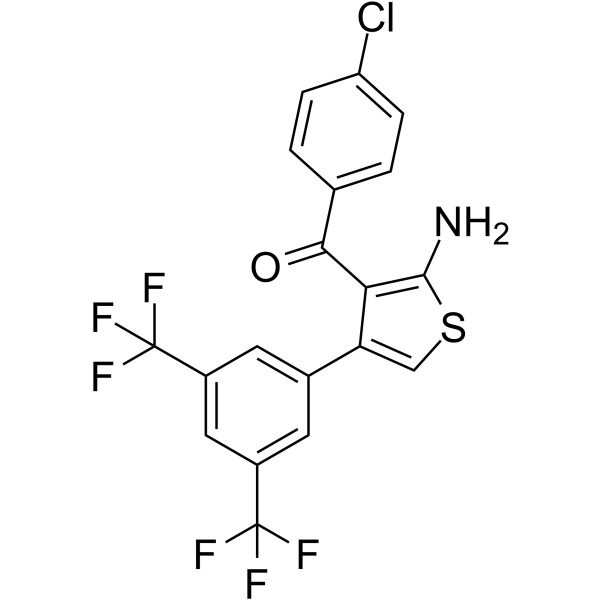
MIPS521 is a positive allosteric modulator of adenosine A1 receptor (A1AR). MIPS521 also has a lower A1R allosteric affinity (pKB=4.95; KB=11 μM). MIPS521 exhibits pain-relieving effects in vivo through modulation of the increased levels of endogenous adenosine .
loading...
    loading...
Cat. No.: HY-12151
CAS No.: 501684-93-1
Purity:  99.79%
Synonyms: NSC 213859
Target:  

nAChR

Research Areas:  

Neurological Disease

NS 1738 (NSC 213859) is a novel positive allosteric modulator of the α7 nAChR, with respect to positive modulation of α7 nAChR (EC50=3.4 μM in oocyte experiments).
loading...
    loading...
Cat. No.: HY-103475
CAS No.: 39069-52-8
Purity:  99.72%
Target:  

GABA Receptor

Research Areas:  

Neurological Disease

GS39783 is a positive allosteric modulator (PAM) of GABABR. Positive modulation of the GABABR can be used for the research of Nicotine addiction .
loading...
    loading...
Cat. No.: HY-112603
CAS No.: 1623194-37-5
Research Areas:  

Metabolic Disease

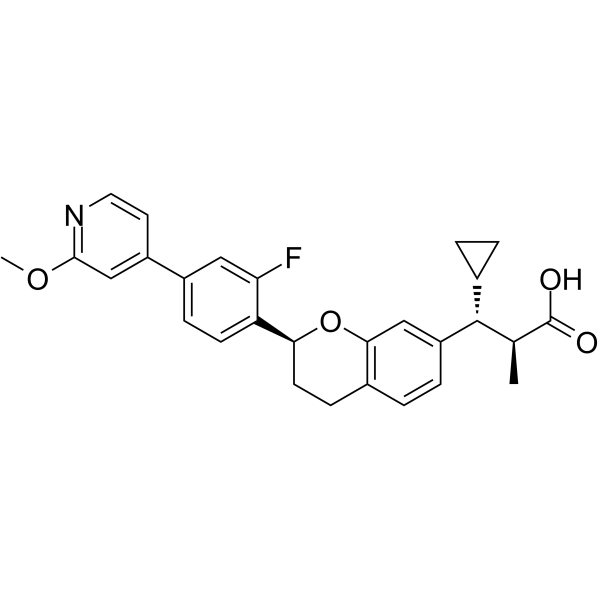
AP5 is a potent, orlly active, and selective GPR40 receptor agonist with a positive allosteric modulation of endogenous ligand (AgoPAM). AP5 demonstrates rat and human inositol monophosphate (IP1) EC50 values of 0.49 nM and 0.8 nM against the GPR40 receptor, respectively. AP5 has the potential for type II diabetes research .
loading...
    loading...
Cat. No.: HY-P1073
CAS No.: 484598-35-8
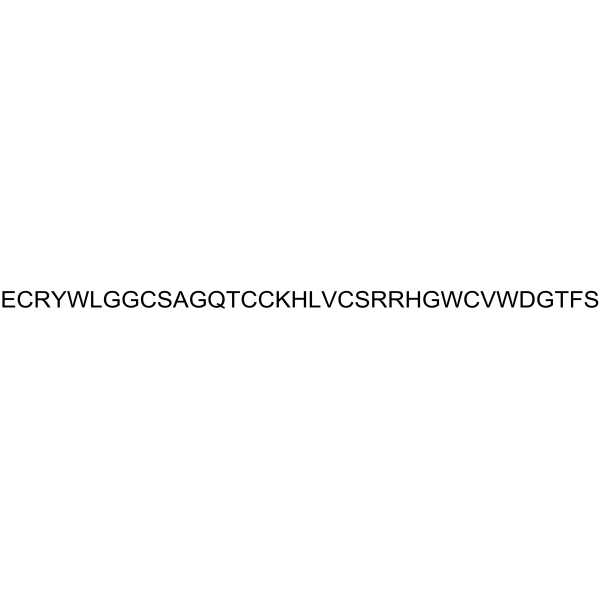
ProTx-I is a toxin derived from Thrixopelma pruriens and a peptide inhibitor targeting TTX-resistant sodium channels. ProTx-I interacts with voltage sensors of multiple domains such as NaV1.7, reduces neuronal excitability through allosteric modulation of channel gating and alteration of voltage dependence. The IC50 values of ProTx-I against human NaV1.7, NaV1.2, NaV1.6, and NaV1.5 are 95 nM, 104 nM, 21 nM, and 358 nM, respectively; ProTx-I also potently inhibits Ba 2+ currents of hCav3.1, while its inhibitory potency against hCav3.2 is approximately 160-fold lower. ProTx-I is applicable to the research of chronic pain .
loading...
    loading...
Cat. No.: HY-W634748
CAS No.: 2894-61-3
Synonyms: Bromonordiazepam
Desalkylgidazepam (Bromonordiazepam) is the major active metabolite of Gidazepam (HY-U00315) and a benzodiazepine agent. Desalkylgidazepam activates GABAA receptors, binds to the benzodiazepine site, enhances GABA-mediated inhibitory neurotransmission, and potentiates GABA-induced chloride ion influx through positive allosteric modulation at α1β2γ2 receptors .
loading...
    loading...
Cat. No.: HY-103320B
Purity:  99.07%
Target:  

CaSR

Research Areas:  

Metabolic Disease

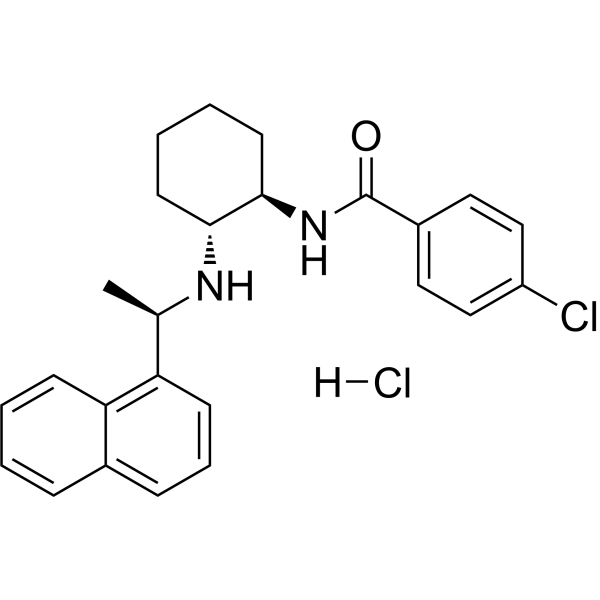
(1R,2R)-Calhex 231 hydrochloride is the isomer of Calhex 231 hydrochloride (HY-103320A), and can be used as an experimental control. Calhex 231 hydrochloride is a CaSR inhibitor via negative allosteric modulation. Calhex 231 hydrochloride blocks Ca 2+-induced accumulation of [ 3H]inositol phosphate with an IC50 of 0.39 μM in HEK293 cells. Calhex 231 hydrochloride has the potential for diabetic cardiomyopathy (DCM) treatment .
loading...
    loading...
Cat. No.: HY-14451
CAS No.: 1219633-99-4
Target:  

iGluR

Research Areas:  

Neurological Disease

PF-4778574 is a positive allosteric modulation of AMPA receptor with EC50 of 45 to 919 nM in differenct cells.
loading...
    loading...
Cat. No.: HY-155484
CAS No.: 1422251-09-9
Target:  

Sigma Receptor

Research Areas:  

Neurological Disease

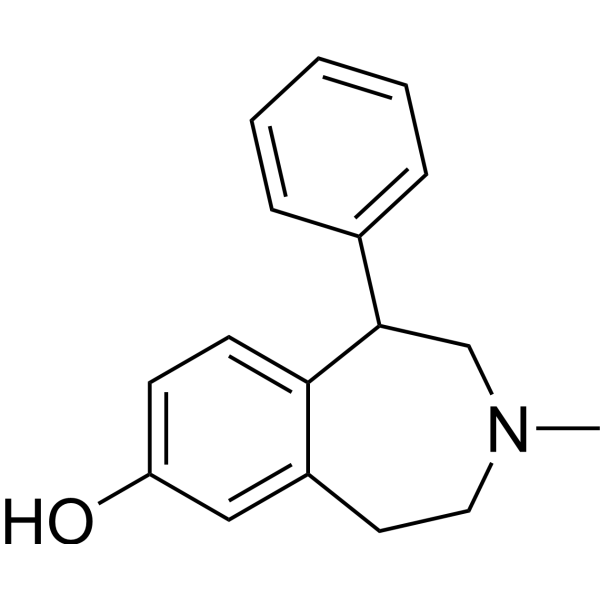
SOMCL-668 is a selective and potent sigma-1 receptor allosteric modulator. ?SOMCL-668 shows positive modulation of improvement in social deficits and cognitive impairment induced by the selective sigma-1 agonist PRE084.?SOMCL-668 displays anti-seizure activities and can be used for psychotic illness research .
loading...
    loading...
Cat. No.: HY-112603A
CAS No.: 1623143-67-8
Research Areas:  

Metabolic Disease

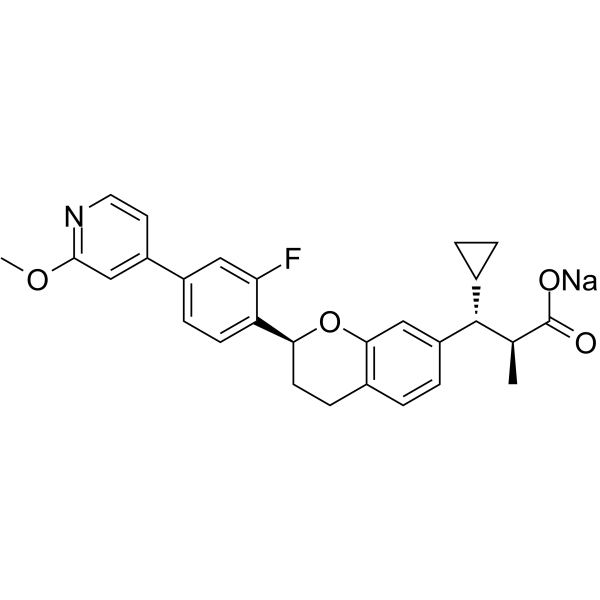
AP5 sodium is a potent, orall active, and selective GPR40 receptor agonist with a positive allosteric modulation of endogenous ligand (AgoPAM). AP5 sodium demonstrates rat and human inositol monophosphate (IP1) EC50 values of 0.49 nM and 0.8 nM against the GPR40 receptor, respectively. AP5 sodium has the potential for type II diabetes research .
loading...
    loading...
Cat. No.: HY-L944
11028 compounds

MCE 18 stands for Medicinal Chemistry Evolution 2018. This metric was established based on structural data of 28,161 patented lead molecules, 1,370 marketed innovative drugs, and nearly 30,000 investigational candidates from preclinical to Phase III stages across 23 major global pharmaceutical companies from 1950 to 2018. After scaffold clustering analysis, a scoring model was constructed by integrating five three dimensional scaffold characteristics, including aromatic rings (AR), non aromatic heterocycles (NAR), chiral centers (CHIRAL), spirocycles (SPIRO), and the sp³ carbon ratio in cyclic and acyclic moieties, enabling quantitative assessment of molecular scaffold novelty and three dimensional complexity.

According to the score distribution of patented molecules, the top 25% of the original patent dataset was defined as the high novelty region. MCE 18 high scoring compounds selected based on this criterion can effectively avoid scaffold patent conflicts and intellectual property risks from the source. Molecules in this range typically feature a high sp³ carbon ratio, abundant chiral centers, spirocycles, and fused heterocycles with prominent three dimensional conformations. Their spatial properties allow precise matching to complex non traditional undruggable target pockets such as PPI interfaces and allosteric sites, making them ideal structural types for early stage screening of First in class drugs.

MCE‑18 Novelty Focused drug‑Like library strictly selects molecules from the aforementioned high scoring range, containing more than 10,000 premium drug like molecules with highly diverse scaffolds and rich 3D diversity. It can be used for high throughput screening of well established targets such as kinases, GPCRs, and proteases, and is especially suitable for hit identification in allosteric modulation, protein–protein interactions, and various undruggable orphan targets, fully supporting early stage drug discovery for cutting edge innovat

  • 1

