29 Results for "

Biflavonoids

" in MedChemExpress (MCE) Product Catalog:
Products (29)

29 Results for "Biflavonoids" in MCE Product Catalog:

4
4 Cited Publications
Cat. No.: HY-N2119
CAS No.: 521-34-6
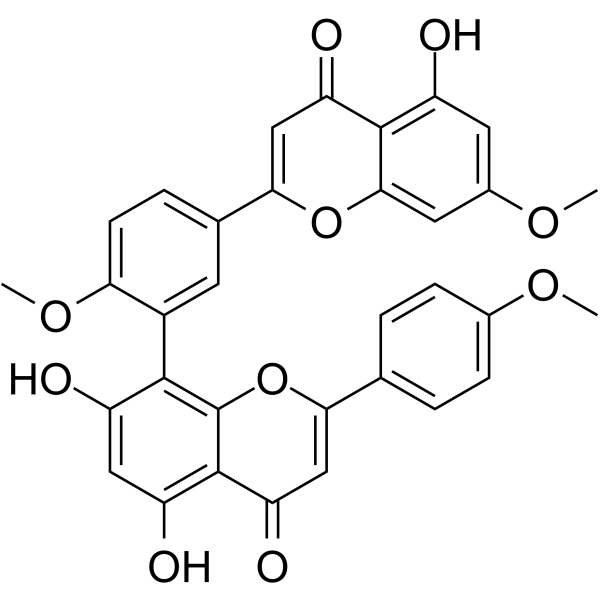
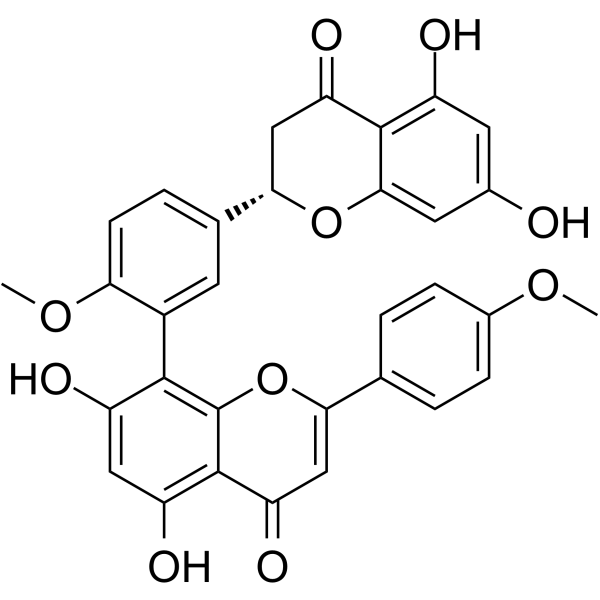
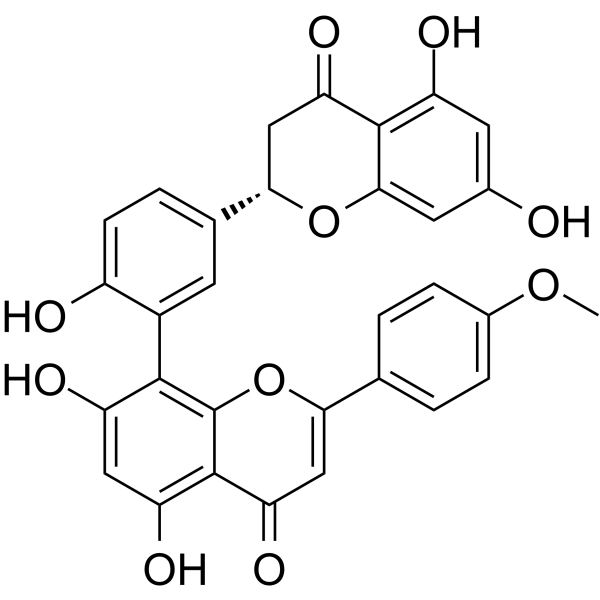
Sciadopitysin is a type of biflavonoids in leaves from ginkgo biloba . Sciadopitysi inhibits RANKL-induced osteoclastogenesis and bone loss by inhibiting NF-κB activation and reducing the expression of c-Fos and NFATc1 .
loading...
    loading...
loading...
    loading...
Cat. No.: HY-N2198
CAS No.: 22136-74-9
Podocarpusflavone A is a biflavonoid present in the leaves of Podocarpus henkelii, with anti-tumor, topoisomerase I inhibitory, antibacterial and antifungal activities. Podocarpusflavone A exhibits antibacterial activity against Enterococcus faecalis and Pseudomonas aeruginosa. Podocarpusflavone A shows weak activity against fungal pathogens. Podocarpusflavone A targets topoisomerase I and induces cell cycle arrest and apoptosis in MCF-7 cells. Podocarpusflavone A can be used for studies on cancer, bacterial and fungal infections .
loading...
    loading...
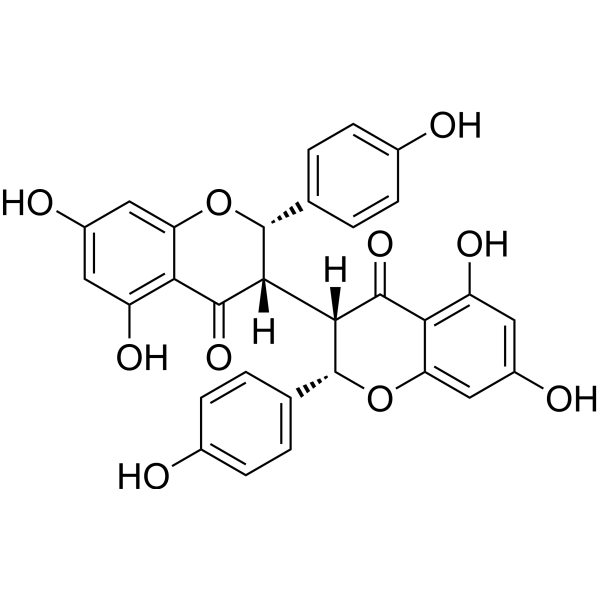
Cat. No.: HY-N10093
CAS No.: 69618-96-8
Synonyms: Chamaejasmin
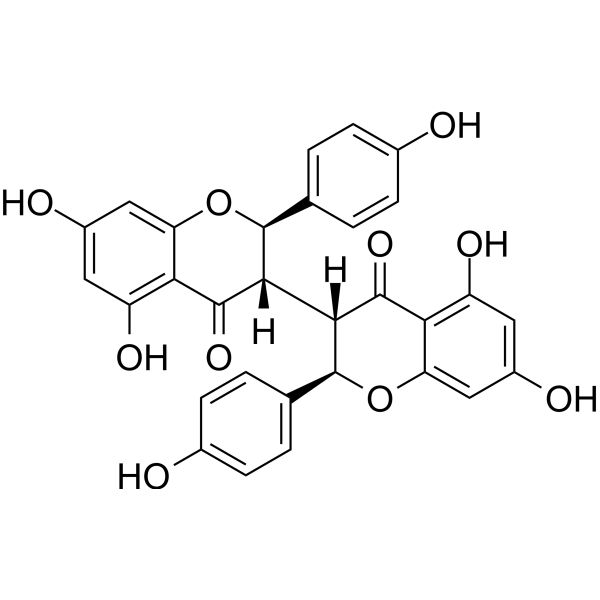
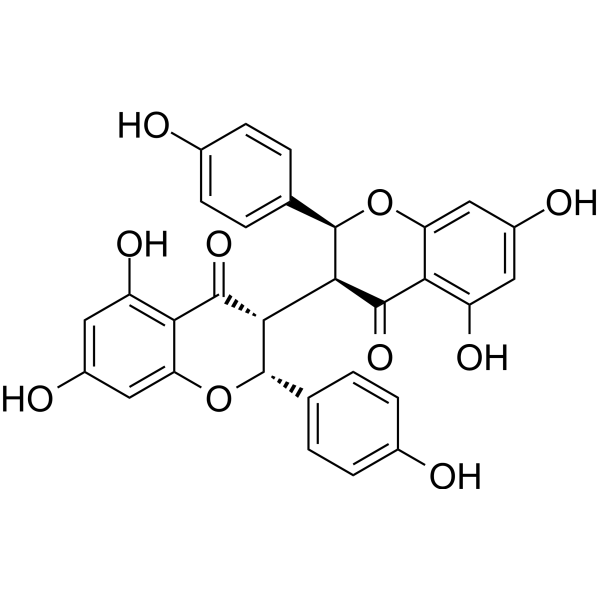
Chamaejasmine (Chamaejasmin) is a natural biflavonoid found in the roots of Stellera chamaejasme, exhibiting antitumor activity. Chamaejasmine inhibits Bcl-2, upregulates Bax, and induces cleavage of caspase-9/-3 and PARP. Chamaejasmine induces ROS production, Δψm loss, cytochrome c release, G2/M arrest, apoptosis, and autophagy. Chamaejasmine induces apoptosis and autophagy through activation of AMPK and inhibition of mTOR, and inhibits microtubule depolymerization by binding to β-tubulin. Chamaejasmine inhibits IL-4, IgE, β-hexosaminidase, and mast cell infiltration, and improves skin barrier function in AD models. Chamaejasmine exhibits cytotoxicity against various cancer cells. Chamaejasmine can be used in research related to various cancers such as lung adenocarcinoma and osteosarcoma, as well as atopic dermatitis .
loading...
    loading...
Cat. No.: HY-133721
CAS No.: 93413-00-4
Purity:  99.81%
Chamaechromone is a biflavonoid ingredient isolated from the roots of Stellera chamaejasme L. (Thymelaeaceae). Chamaechromone possesses anti-hepatitis B virus (HBV) effects against the surface antigen of HBV (HBsAg) secretion and has insecticidal activities .
loading...
    loading...
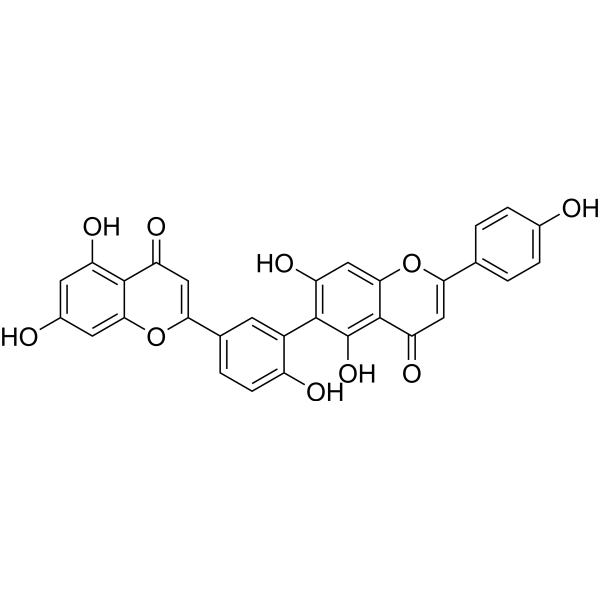
Cat. No.: HY-N5013
CAS No.: 49620-13-5
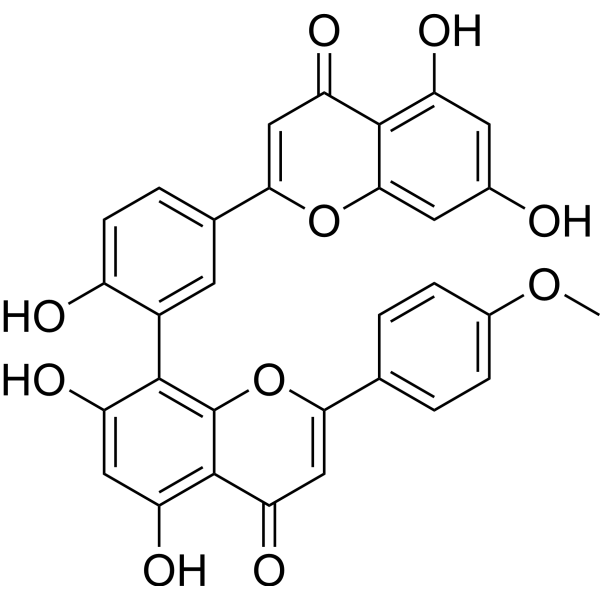
Robustaflavone is a biflavonoid isolated from Doradilla that has natriuretic properties .
loading...
    loading...
Cat. No.: HY-126412
CAS No.: 90411-13-5
Neochamaejasmine A is a biflavonoid that can be isolated from the roots of Stellera chamaejasme L.. Neochamaejasmine A inhibits proliferation, induces cell cycle arrest and apoptosis in tumor cells. Neochamaejasmine A can be used in the research of cancers such as prostate cancer, hepatoma cancer .
loading...
    loading...
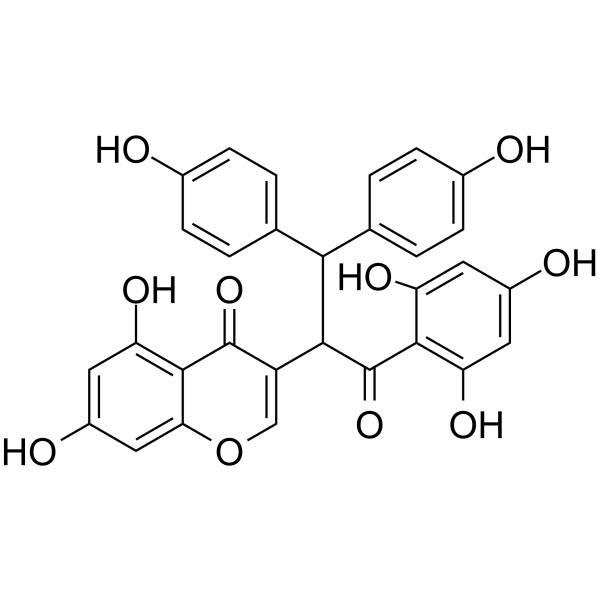
Cat. No.: HY-N10871
CAS No.: 20931-36-6
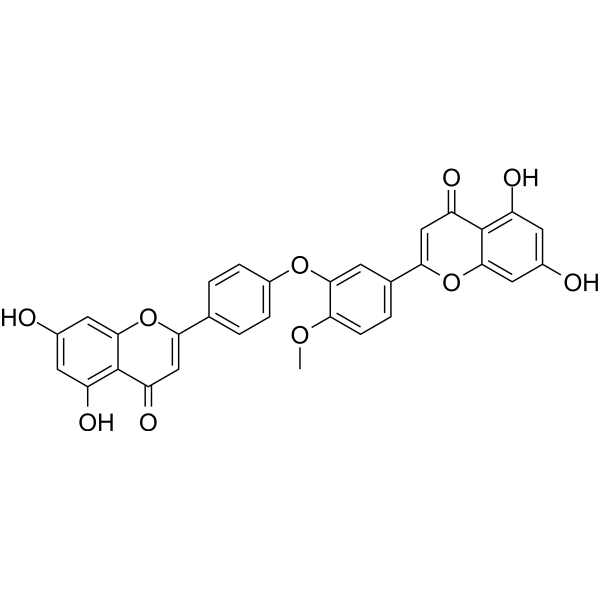
Neocryptomerin, a biflavonoid, shows inhibitory activity against U251, MCF-7, HeLa cell. Neocryptomerin has favorable binding affinities in the active pocket of SARS-CoV-2. Neocryptomerin is the leading compound of rational compounds against COVID-19 .
loading...
    loading...
Cat. No.: HY-N9861
CAS No.: 481-45-8
Kayaflavone is a biflavonoid compound from the seed kernel of Torreya grandis. Kayaflavone exhibits anticancer activity and is cytotoxic to human tumor cell lines. Kayaflavone inhibits amyloid-β toxicity in PC-12 cells with an EC50 of 5.29 μM. Kayaflavone is predicted to bind to the catalytic site of the SARS-CoV-2 main protease (Mpro/3CLpro) and block enzyme activity, indicating potential antiviral activity. Kayaflavone can be used in cancer-related research, such as cervical cancer and breast cancer, as well as in research related to neurological diseases .
loading...
    loading...
Cat. No.: HY-124537
CAS No.: 27542-37-6
(+)-Volkensiflavone is a biflavonoid, that can be isolated from the fruits of Garcinia livingstonei (Clusiaceae) .
loading...
    loading...
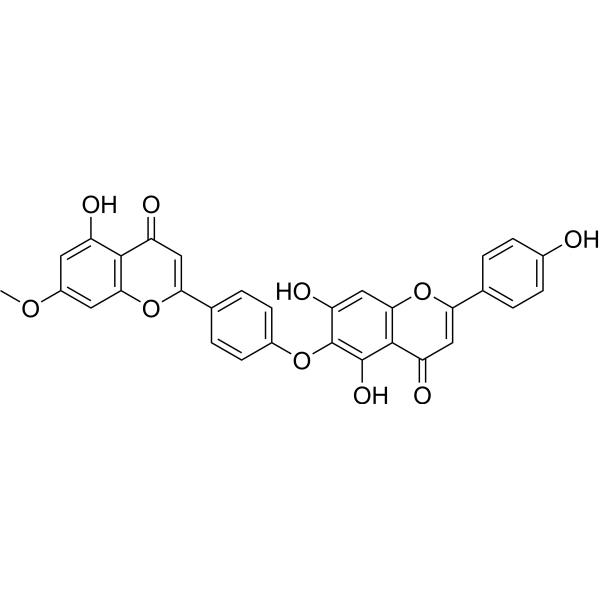
Cat. No.: HY-N1658
CAS No.: 828923-27-9
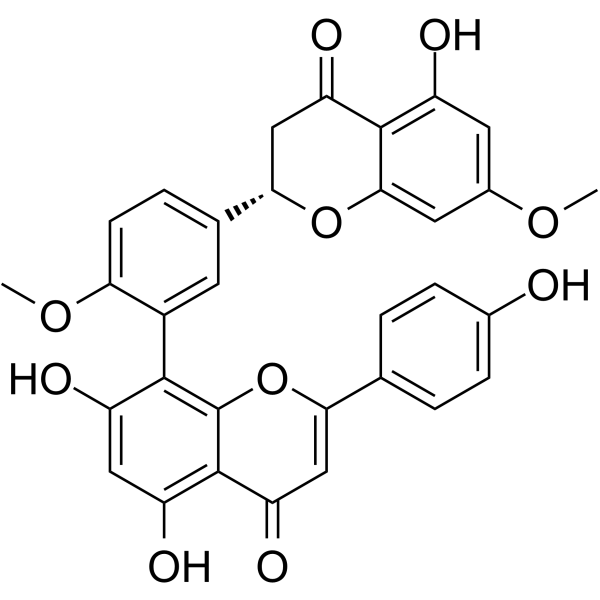
2,3-Dihydroisoginkgetin, a biflavonoid, is a inhibitor of Tyrosinase, with 36.84% inhibition at 0.1 mM. 2,3-Dihydroisoginkgetin shows less toxicity in HEMn (human epidermal melanocytes) cells, with an IC50 of 86.16 μM .
loading...
    loading...
Cat. No.: HY-N1655
CAS No.: 873999-88-3
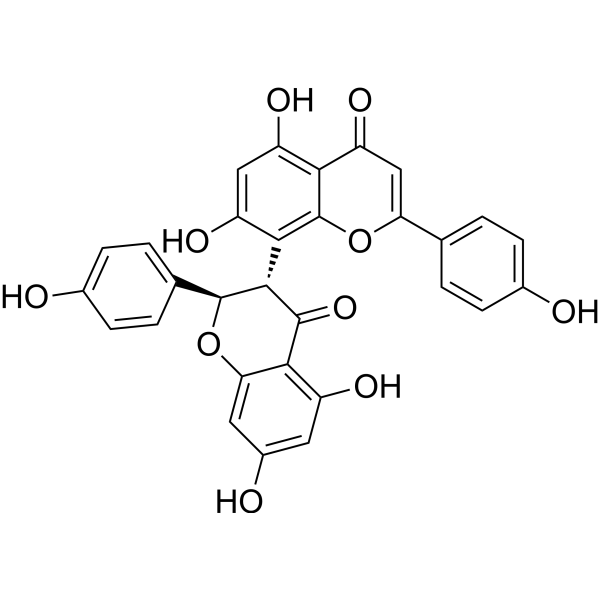
2,3-Dihydroamentoflavone 7,4'-dimethyl ether is a biflavonoid, which can be isolated from the aerial parts of Selaginella delicatula. 2,3-Dihydroamentoflavone 7,4'-dimethyl ether exhibits cytotoxicities against P-388 and HT-29 cell lines, with ED50 (median effective dose) values of 3.50 and 5.25 µg/mL, respectively .
loading...
    loading...
Cat. No.: HY-N3205A
CAS No.: 871319-96-9
Synonyms: INCA
Isoneochamaejasmin A (INCA), a biflavonoid, is one of main active ingredients in the root of Stellera chamaejasme L .
loading...
    loading...
loading...
    loading...
Cat. No.: HY-N10920
CAS No.: 151283-11-3
Genkwanol C, a biflavonoid, has effective antiviral activity against respiratory syncytial virus (RSV) in vitro .
loading...
    loading...
Cat. No.: HY-N16510
CAS No.: 163565-66-0
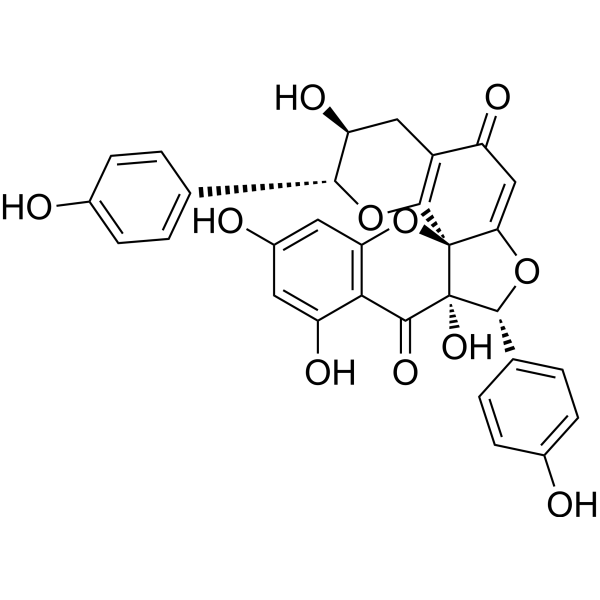
Cinnabarone is a biflavonoid that can be isolated from dragon's blood of Dracaena cinnabari. Cinnabarone is a reducing and stabilizing agent which can be used for formation of silver nanoparticles .
loading...
    loading...
Cat. No.: HY-N1649
CAS No.: 678138-59-5
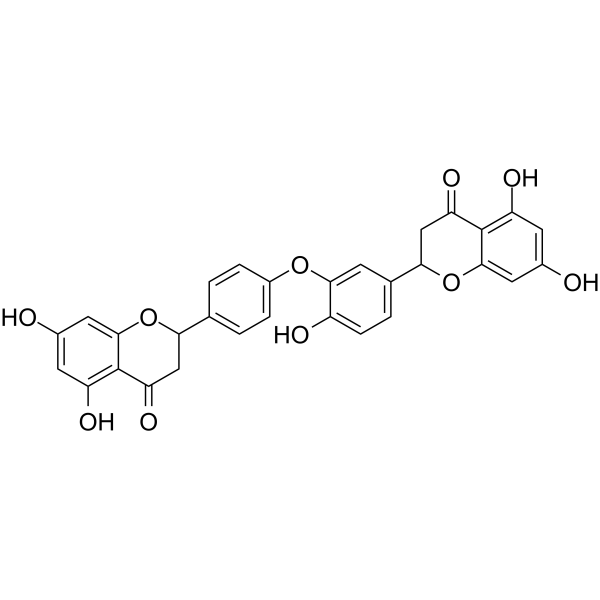
2,3,2'',3''-Tetrahydroochnaflavone is a biflavonoid, which can be isolated from the leaves of Quintinia acutifolia. 2,3,2'',3''-Tetrahydroochnaflavone shows some cytotoxicity against P388 murine lymphocytic leukemia cells, with an IC50 of 8.2 µg/mL .
loading...
    loading...
Cat. No.: HY-N2119R
CAS No.: 521-34-6
Sciadopitysin (Standard) is the analytical standard of Sciadopitysin. This product is intended for research and analytical applications. Sciadopitysin is a type of biflavonoids in leaves from ginkgo biloba . Sciadopitysi inhibits RANKL-induced osteoclastogenesis and bone loss by inhibiting NF-κB activation and reducing the expression of c-Fos and NFATc1 .
loading...
    loading...
Cat. No.: HY-N3497
CAS No.: 93859-63-3
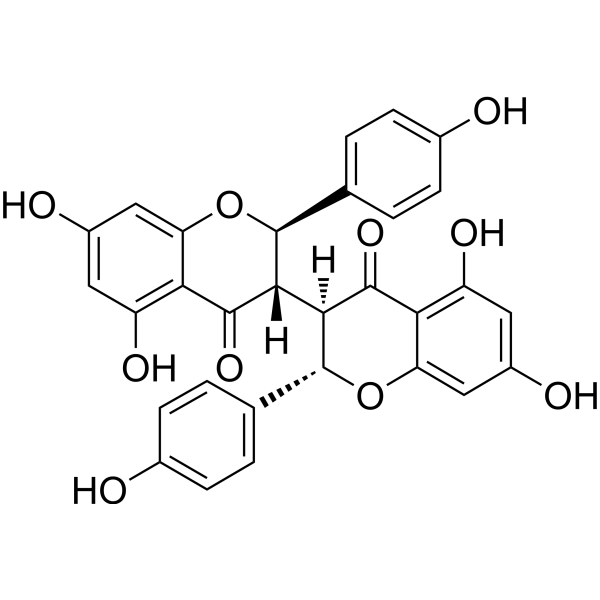
Isochamaejasmin is a biflavonoid with anti-cancer, antiplasmodial and insecticidal activities. Isochamaejasmin displays a potent NF-κB (NF-κB) activation activity. Isochamaejasmin could cause DNA damage and induce apoptosis via the mitochondrial pathway in AW1 cells . Isochamaejasmin also has a moderate antiplasmodial activity (IC50 of 7.3 μM for P. falciparum) and relatively low cytotoxicity (CC50 of 29.0 μM) .
loading...
    loading...
Cat. No.: HY-N9779
CAS No.: 34340-51-7
2,3-Dihydroamentoflavone is a biflavonoid compound that can be isolated from Selaginella sinensis .
loading...
    loading...

