41 Results for "

Charge transfer

" in MedChemExpress (MCE) Product Catalog:
Products (41)

41 Results for "Charge transfer" in MCE Product Catalog:

1
1 Cited Publications
Cat. No.: HY-W127832
CAS No.: 123148-15-2
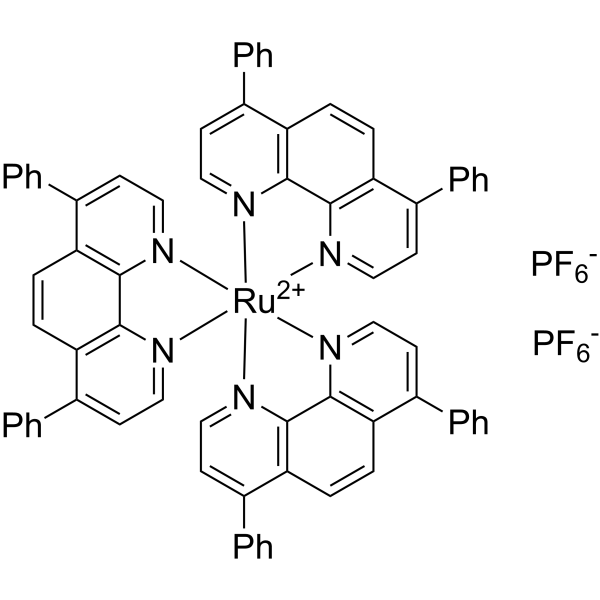
Ru(dpp)3(PF6)2 is a ruthenium (II) polypyridine complex and oxygen-sensing luminophore with excellent photostability and bright orange emission properties based on metal-to-ligand charge transfer (MLCT). Ru(dpp)3(PF6)2 undergoes oxygen-induced collisional luminescence quenching following the Stern-Volmer relationship, and can also engage in Förster-type resonance energy transfer with closed-form BTF6. Featuring excellent photophysical and electrochemical properties, Ru(dpp)3(PF6)2 is applied in studies on quenching-type oxygen sensors based on fluorinated ORMOSIL/xerogels and solid-state light-emitting devices .
loading...
    loading...
Cat. No.: HY-I0259
CAS No.: 118-46-7
8-Amino-2-naphthol is a photoactive charge transfer compounds, which can be used as fluorescent probe. 8-Amino-2-naphthol undergoes excited-state proton transfer (ESPT) to form a zwitterion under acidic conditions, where the photoacidity of its hydroxyl group is regulated by the protonation state of the amino group, enabling pH to act as an on/off switch for photoacidity. 8-Amino-2-naphthol is also utilized as chiral organocatalyst .
loading...
    loading...
Cat. No.: HY-152073
CAS No.: 2924598-24-1
Purity:  98.76%
Target:  

Fluorescent Dye

Research Areas:  

Others

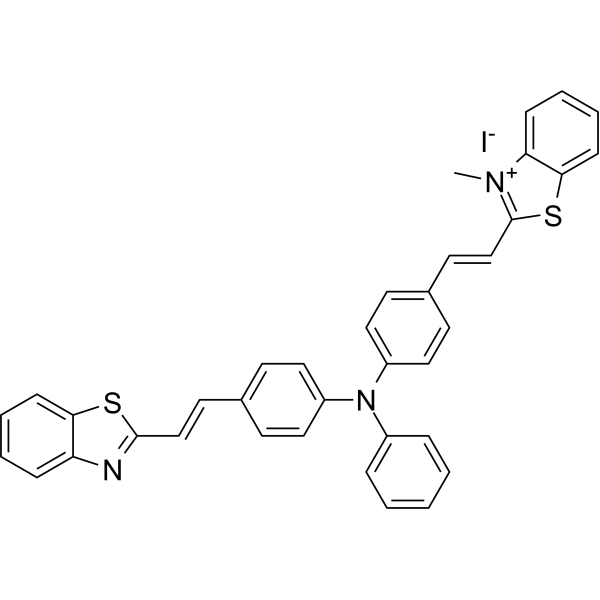
BETA-1 is the first twisted intramolecular charge transfer (TICT)-aggregation-induced emission (AIE) integration molecule. BETA-1 emits cyan fluorescence in lipid droplets (LDs) and red fluorescence in mitochondria. BETA-1 can be used for the simultaneous and dual-color imaging of LDs and mitochondria in vivo and in vitro .
loading...
    loading...
Cat. No.: HY-D0303A
CAS No.: 532-82-1
Synonyms: Solvent Orange 3 hydrochloride; Basic Orange 2; Chrysoidine Y
Research Areas:  

Others

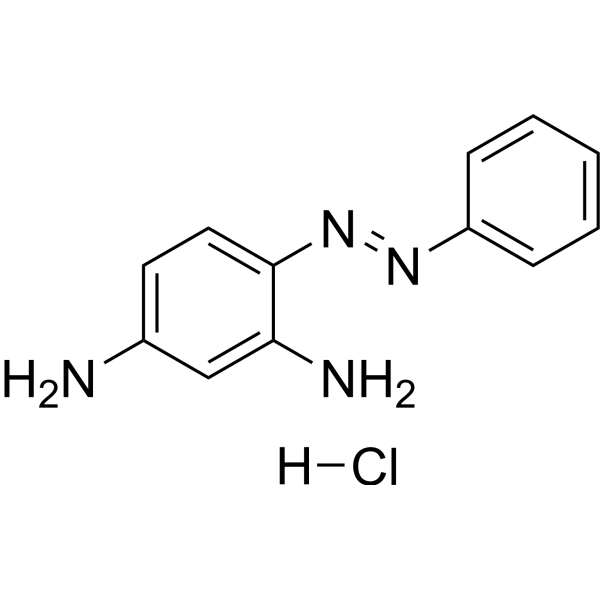
Chrysoidine G (Solvent Orange 3 hydrochloride; Basic Orange 2) is an industrial azo dye. Chrysoidine G is used in most textile dyeing, absorption fluorescent probes, and colorimetric sensors. Chrysoidine G can chemically complex with Co 2+, or bind with Cs + to inhibit the intramolecular charge transfer process, thereby triggering a red shift in the absorption spectrum and producing a significant color change. Chrysoidine G can induce DNA damage, and has moderate toxicity and carcinogenicity .
loading...
    loading...
Cat. No.: HY-D0948
CAS No.: 1562-90-9
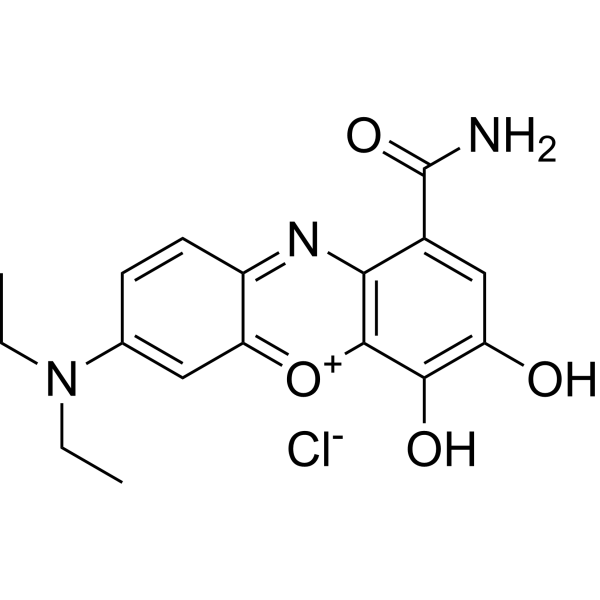
Celestine Blue is a electroactive indicator in DNA biosensors. Celestine Blue is strongly adsorbed on the spinel phases and CNT (carbon nanotubes), facilitates dispersion, acts as a capping agent and allows for the fabrication of spinel decorated CNT. Celestine Blue is an efficient charge transfer mediator, which allows for significant improvement of capacitive behavior. TiO2 nanoparticles doped with Celestine Blue can be used as a label in a sandwich immunoassay for the hepatitis C virus (HCV) core antigen .
loading...
    loading...
Cat. No.: HY-W024271
CAS No.: 63149-33-7
Synonyms: 9-Formyl-8-hydroxyjulolidine
8-Hydroxyjulolidine-9-carboxaldehyde (9-Formyl-8-hydroxyjulolidine) is a highly selective fluorescent probe for hydrogen sulfide (S 2−) and silicate (SiO3 2−). 8-Hydroxyjulolidine-9-carboxaldehyde operates via a mechanism of blocking intramolecular charge transfer (ICT), exhibiting significant fluorescence enhancement in the presence of weak acid ions. 8-Hydroxyjulolidine-9-carboxaldehyde is promising for research of fluorescence imaging of hydrogen sulfide within living cells .
loading...
    loading...
Cat. No.: HY-D2479
CAS No.: 2978635-30-0
DMANI is an intramolecular charge transfer (ICT)-based mitochondria-targeted ratiometric fluorescent probe. DMANI can monitor mitochondrial peroxynitrite (ONOO −) in living cells .
loading...
    loading...
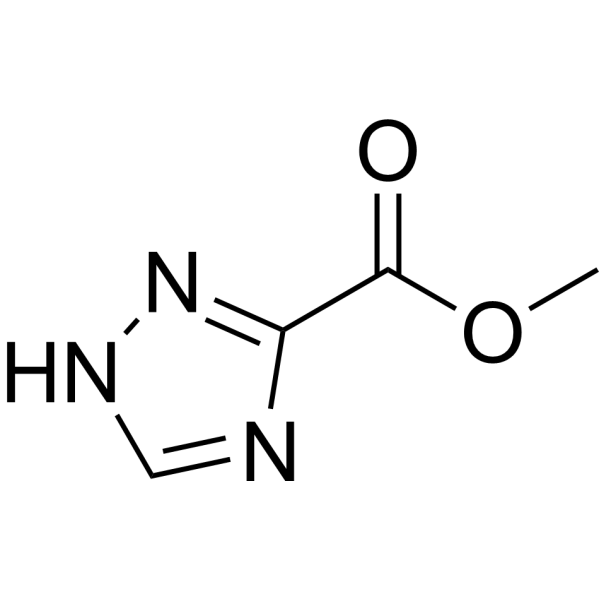
Cat. No.: HY-W007685
CAS No.: 4928-88-5
Research Areas:  

Others

Methyl 1H-1,2,4-triazole-5-carboxylate is a triazole-based corrosion inhibitor. Methyl 1H-1,2,4-triazole-5-carboxylate simultaneously inhibits cathodic and anodic reactions by forming a dense adsorption layer, limiting interfacial charge transfer and ion diffusion. Methyl 1H-1,2,4-triazole-5-carboxylate can be used in research related to SAC305 solder alloy in organic acid-containing media .
loading...
    loading...
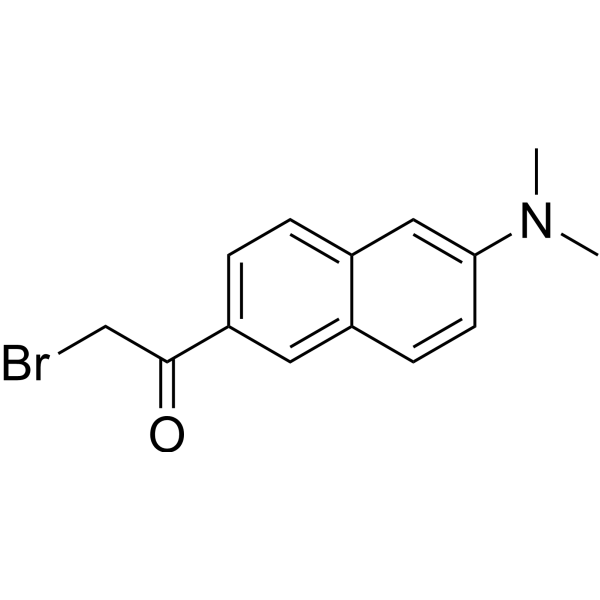
Cat. No.: HY-D1470
CAS No.: 210832-86-3
Target:  

Fluorescent Dye

Research Areas:  

Others

BADAN is a thiol-reactive, environment-sensitive fluorescent probe used for site-specific labeling of protein cysteine residues to detect protein topology, local polarity, protein-lipid interactions, and conformational changes. The bromoacetyl group of BADAN covalently binds to cysteine thiols, and its fluorescence originates from the intramolecular charge transfer (ICT) excited state. The emission peak position varies with the polarity of the surrounding medium: it blue-shifts to approximately 488 nm in nonpolar environments (such as the hydrophobic core of lipid bilayers) and red-shifts to approximately 496-507 nm in polar environments (such as aqueous phases), independent of enzymes, pH, or membrane potential. Ex = 380-402 nm; Em = 400-600 nm .
loading...
    loading...
Cat. No.: HY-124357
CAS No.: 127685-30-7
Synonyms: S-Norfluoxetine hydrochloride; LY 215229 hydrochloride
Target:  

Dopamine Receptor

Research Areas:  

Neurological Disease

Seproxetine (S-Norfluoxetine) hydrochloride is a selective serotonin reuptake inhibitor (SSRI) that enhances serotonin levels in the brain by specifically inhibiting the serotonin uptake carrier. Seproxetine hydrochloride exhibits strong charge transfer interactions with π-electron acceptors, forming stable complexes that enhance its binding affinity to multiple receptors, including serotonin and dopamine receptors. Seproxetine hydrochloride demonstrates improved biological activity when interacting with charge transfer complexes, leading to increased stability and efficacy in therapeutic applications.
loading...
    loading...
Cat. No.: HY-D1259
CAS No.: 2414276-32-5
Synonyms: VDP-green (NEP)
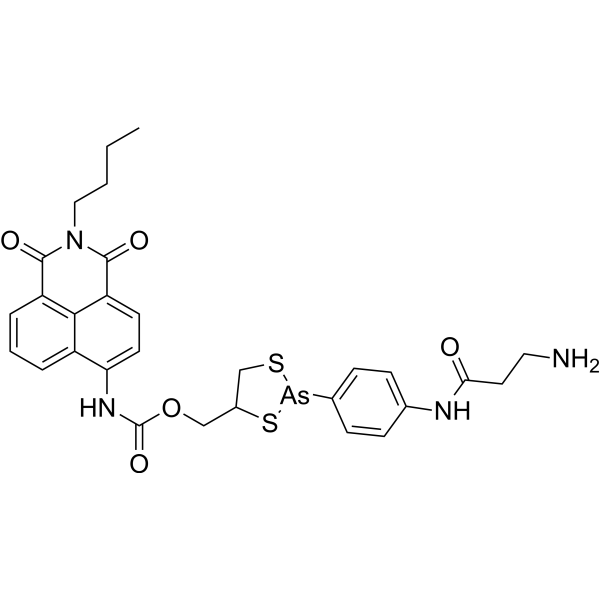
NEP (VDP-green (NEP)) is a turn-on fluorescent probe based on the intramolecular charge transfer (ICT) mechanism for sensing vicinal dithiol-containing proteins (VDPs). NEP exhibits high selectivity toward VDPs in live cells and in vivo and displays a strong green fluorescence signal (λex/λem=430/535 nm). NEP has the potential for parkinsonism .
loading...
    loading...
Cat. No.: HY-149203
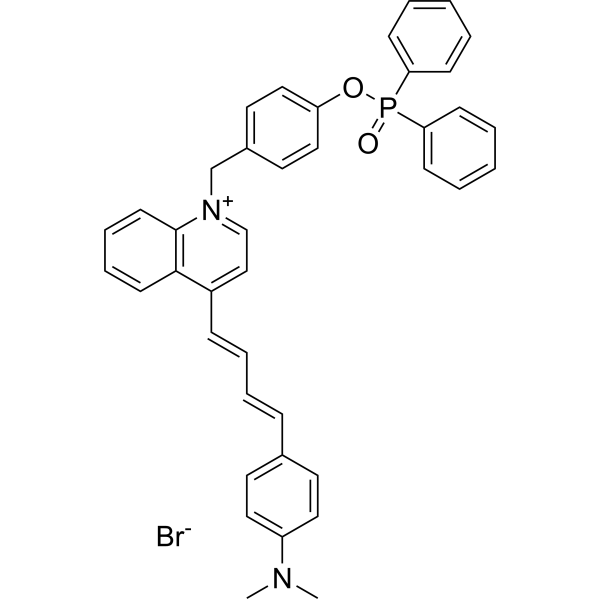
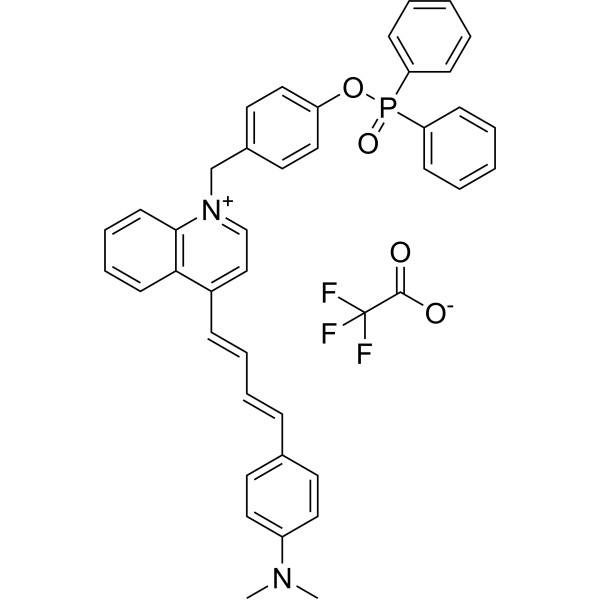
MQA-P is a multifunctional near-infrared (NIR) fluorescent probe for simultaneously detecting ONOO -, viscosity, and polarity within mitochondria. MQA-P exhibits a remarkable turn-on response to ONOO - (λem=645 nm) and is highly sensitive to viscosity/polarity in the NIR channel with λem>704 nm. MQA-P exhibits excited-state intramolecular charge transfer (ESICT) feature that is highly polarity-sensitive by engineering N,N-dimethylamino as the electron donor and a quinoline cationic unit as the electron acceptor. MQA-P is used for ferroptosis or cancer diagnosis in vitro and in vivo via dual-channel images .
loading...
    loading...
Cat. No.: HY-D0303
CAS No.: 495-54-5
Synonyms: Solvent Orange 3; Basic Orange 2 free base; Chrysoidine Y free base
Research Areas:  

Others

Chrysoidine G free base (Solvent Orange 3; Basic Orange 2 free base) is an industrial azo dye. Chrysoidine G free base is used in most textile dyeing, absorption fluorescent probes, and colorimetric sensors. Chrysoidine G free base can chemically complex with Co 2+, or bind with Cs + to inhibit the intramolecular charge transfer process, thereby triggering a red shift in the absorption spectrum and producing a significant color change. Chrysoidine G free base can induce DNA damage, and has moderate toxicity and carcinogenicity .
loading...
    loading...
Cat. No.: HY-149203A
Purity:  97.36%
Target:  

Fluorescent Dye

Research Areas:  

Others

MQA-P is a multifunctional near-infrared (NIR) fluorescent probe that simultaneously detects ONOO -, viscosity, and polarity within mitochondria. MQA-P exhibits significant response to ONOO -, λem=645 nm; and NIR channel at λem>704 nm Medium is highly sensitive to viscosity/polarity. MQA-P possesses excited-state intramolecular charge transfer (ESICT) properties that are highly sensitive to polarity by designing the N,N-dimethylamino group as the electron donor and the quinoline cation unit as the electron acceptor. MQA-P is used for ferroptosis or cancer diagnosis in vitro and in vivo via dual-channel images .
loading...
    loading...
Cat. No.: HY-D0303AR
CAS No.: 532-82-1
Synonyms: Solvent Orange 3 hydrochloride (Standard); Basic Orange 2 (Standard); Chrysoidine Y (Standard)
Chrysoidine G (Solvent Orange 3 hydrochloride; Basic Orange 2) Standard is the analytical standard of Chrysoidine G (HY-D0303A). This product is intended for research and analytical applications. Chrysoidine G (Solvent Orange 3 hydrochloride; Basic Orange 2) is an industrial azo dye. Chrysoidine G is used in most textile dyeing, absorption fluorescent probes, and colorimetric sensors. Chrysoidine G can chemically complex with Co 2+, or bind with Cs + to inhibit the intramolecular charge transfer process, thereby triggering a red shift in the absorption spectrum and producing a significant color change. Chrysoidine G can induce DNA damage, and has moderate toxicity and carcinogenicity .
loading...
    loading...
Cat. No.: HY-W094110
CAS No.: 10028-22-5
Iron (III) sulfate is a stable rhombohedral NASICON compound. Iron (III) sulfate can serve as a sodium ion intercalation host, enabling sodium ion intercalation and deintercalation via a single-phase mechanism relying on the Fe 2+/Fe 3+ redox couple. Iron (III) sulfate exhibits reversible electrochemical behavior and moderate polarization in cyclic voltammetry tests, and its charge transfer resistance changes during charge-discharge cycles. Iron (III) sulfate possesses a high redox potential, excellent rate capability, and long-cycle stability .
loading...
    loading...
Cat. No.: HY-N21563
CAS No.: 7196-09-0
Synonyms: Pantothenoylcysteine 4'-phosphate; PPC
4'-Phosphopantothenoylcysteine (Pantothenoylcysteine 4'-phosphate) serves as a substrate for phosphopantothenoylcysteine decarboxylase (PPC-DC) and MdHAL3. 4'-Phosphopantothenoylcysteine enables flavin-mediated decarboxylation of the cysteine moiety via formation of a charge-transfer complex and generation of a thioaldehyde intermediate. 4'-Phosphopantothenoylcysteine is a metabolism-related biomarker and a raw material for coenzyme A synthesis, and it participates in the regulation of the TCA cycle. 4'-Phosphopantothenoylcysteine can be used in studies related to hepatocellular carcinoma .
loading...
    loading...
Cat. No.: HY-D3224
CAS No.: 2413777-91-8
HCP is a two-photon fluorescent probe capable of crossing the blood-brain barrier, which is specifically designed for real-time detection of hypochlorous acid (HClO/ClO -) produced by myeloperoxidase (MPO). Chlorination of the quinoline skeleton of HCP generates HCP-Cl, which eliminates intramolecular charge transfer (ICT) quenching and thereby produces fluorescence. HCP is suitable for in vivo dynamic imaging of HClO in the brains of epileptic mice and high-throughput screening of antiepileptic drugs (HCP-Cl: Ex/Em = 800 nm/495 nm) .
loading...
    loading...
Cat. No.: HY-D3408
STB-2 is a fluorescent dye for near-infrared window II (NIR-II) fluorescence angiography. STB-2 achieves high-brightness NIR-II fluorescence by restricting the twisted intramolecular charge transfer state. STB-2, when modified with ApoE to form nanoparticles, can cross the blood-brain barrier and accumulate in gliomas (Ex/Em = 808/1020 nm). STB-2 is used in studies related to NIR-II fluorescence and single-/two-photon cerebrovascular imaging of gliomas .
loading...
    loading...
Cat. No.: HY-D3093
CAS No.: 2757682-02-1
Target:  

Fluorescent Dye

Research Areas:  

Cancer

NRERcl is a Golgi-targeting lipid order probe. NRERcl can be used for imaging the lipid order and polarity of the endoplasmic reticulum. NRERcl carries a propyl chloride targeting group that directs it to the endoplasmic reticulum, and it functions via excited-state charge transfer, emitting colors according to local polarity changes associated with lipid order. NRERcl partitions into lipid membranes, with a higher fluorescence quantum yield in membrane environments than in aqueous buffers; its excitation wavelength is 520 nm, and the emission maximum varies with the environment (Ex/Em = 520/584-653 nm) .
loading...
    loading...

