66 Results for "

Forced proximity

" in MedChemExpress (MCE) Product Catalog:
Products (66)

66 Results for "Forced proximity" in MCE Product Catalog:

7
7 Publications Verification
Cat. No.: HY-120088
CAS No.: 1632250-49-7
Target:  

PCSK9

Research Areas:  

Cardiovascular Disease

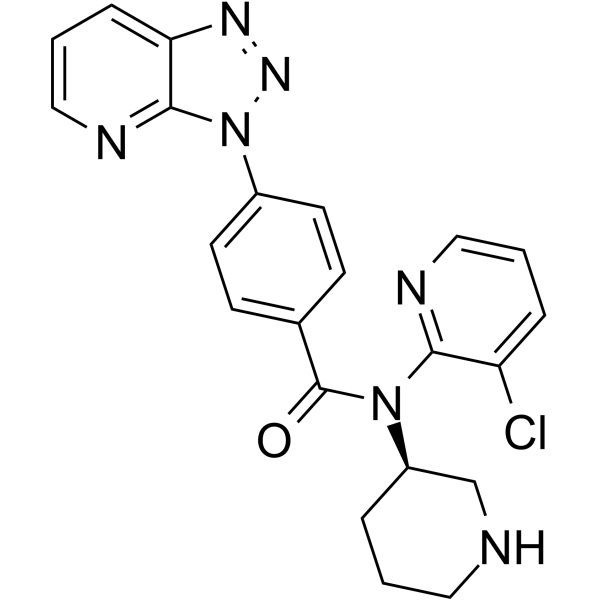
PF-06446846 is an orally active proprotein convertase subtilisin/kexin type 9 (PCSK9) inhibitor. PF-06446846 directly and selectively inhibits translation of PCSK9 by stalling the 80S ribosome in the proximity of codon region .
loading...
    loading...
2
2 Cited Publications
Cat. No.: HY-129523
CAS No.: 2378258-52-5
Purity:  95.66%
Target:  

PROTACs Ras

Research Areas:  

Cancer

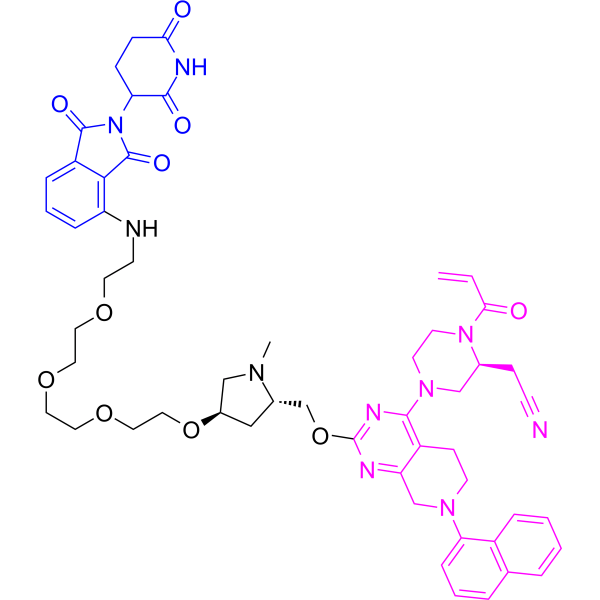
PROTAC K-Ras Degrader-1 is a K-Ras PROTAC degrader. It binds to both K-Ras and the Cereblon E3 ubiquitin ligase, bringing K-Ras into proximity with the ligase, thereby achieving its degradation and inhibition. PROTAC K-Ras Degrader-1 can be used for research in various cancers .
loading...
    loading...
1
1 Cited Publications
Cat. No.: HY-19949
CAS No.: 1799948-06-3
Research Areas:  

Metabolic Disease

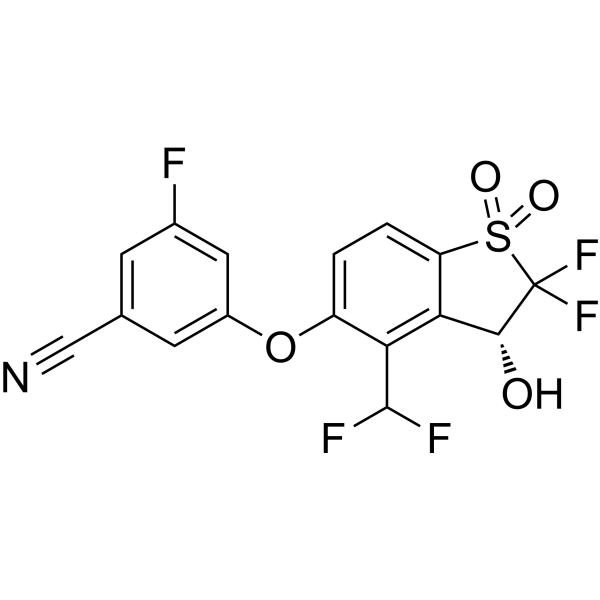
HIF-2α-IN-1 (compound 9b) is a HIF-2α inhibitor (IC50=1.7 μM, SPA/scintillation proximity assay) .
loading...
    loading...
1
1 Cited Publications
Cat. No.: HY-14196
CAS No.: 29218-27-7
Purity:  98.11%
Synonyms: MD 69276
Target:  

Monoamine Oxidase

Research Areas:  

Neurological Disease

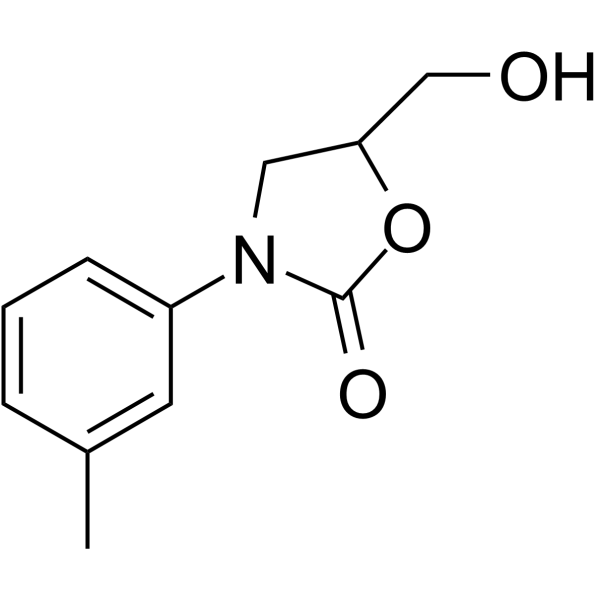
Toloxatone (MD 69276) is a reversible, selective MAO-A inhibitor that can cross the blood-brain barrier. Toloxatone increases the levels of serotonin (5-HT) and norepinephrine in the brain. Toloxatone reduces the immobility time in the forced swimming test in mice, inhibits killing behavior in rats without causing sedation, and shows a correlation between its free plasma concentration and cerebrospinal fluid concentration. Toloxatone is widely used in research related to depression, depressive disorders and Parkinson's disease .
loading...
    loading...
1
1 Cited Publications
Cat. No.: HY-D1423
CAS No.: 68654-25-1
Target:  

Fluorescent Dye

Research Areas:  

Others

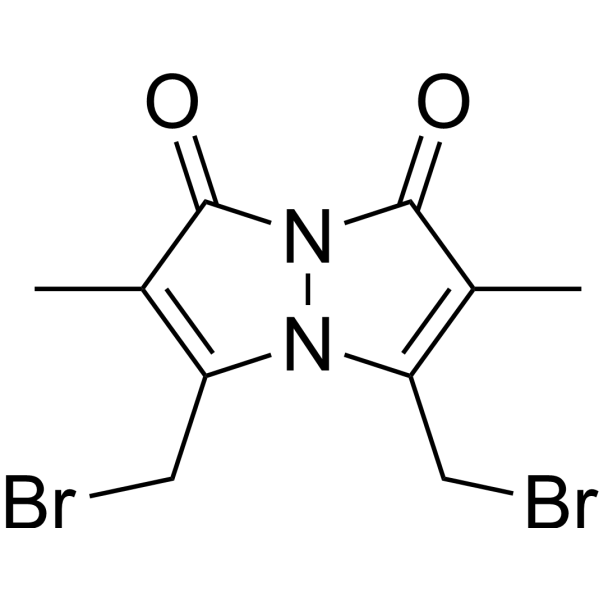
Dibromobimane is a Fluorescent dye and probe that can be used for the detection of intracellular reduced glutathione and the analysis of spatial proximity of closely adjacent cysteine thiol groups. Dibromobimane activates fluorescence through binding to thiol groups; its excitation/emission wavelengths are Ex/Em = 393/477 nm for glutathione detection, and Ex/Em = 385/477 nm for cysteine thiol cross-linking. Dibromobimane uses two equivalent bromomethyl groups to cross-link cysteine thiolates with a distance ranging from 3-6 Å. Dibromobimane can be applied to 96-well microplate-based high-throughput assays for labeling intracellular glutathione, and its fluorescence signal is normalized against nuclear staining results to eliminate the impact of cell density .
loading...
    loading...
Cat. No.: HY-176521
CAS No.: 3083307-42-7
Research Areas:  

Cancer

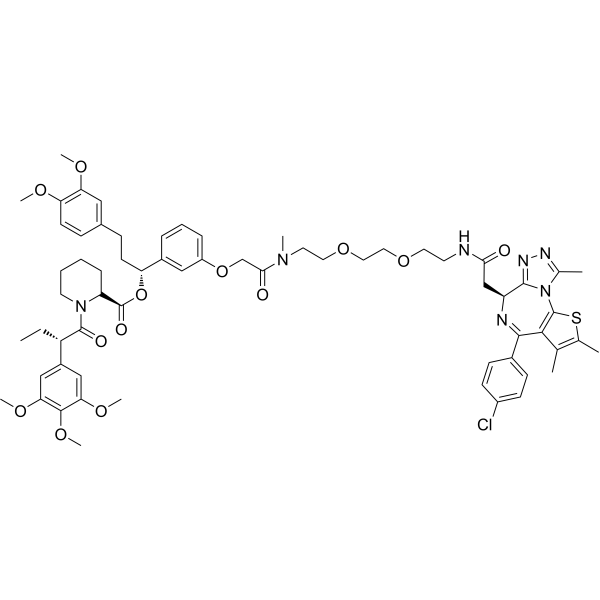
AR/BRD4 RIPTAC-1 (Compound II-5) is an orally active Regulatory-inducible proximity-targeting chimera (RIPTAC). AR/BRD4 RIPTAC-1 induces the formation of a stable ternary complex between the androgen receptor (AR) and BRD4, thereby blocking BRD4 function. AR/BRD4 RIPTAC-1 inhibits the growth and proliferation of tumor cells. AR/BRD4 RIPTAC-1 holds promise for use in prostate cancer research .
loading...
    loading...
Cat. No.: HY-175452
MRT-3486 is a molecular glue degrader.MRT-3486 induces ternary complex formation between CRBN and predicted β-hairpin G-loop proteins.MRT-3486 is selected from an internal compound library for proximity-ligation experiments .
loading...
    loading...
Cat. No.: HY-156820
CAS No.: 3077339-82-0
Research Areas:  

Cancer

HLDA-221 is a non-covalent regulated induced proximity targeting chimeras (RIPTAC). The binding of HLDA-221 to BRD4-BD1 is significantly increased after pre-incubation with FKBP. HLDA-221 can be used in cancer research .
loading...
    loading...
Cat. No.: HY-122582
CAS No.: 2229037-04-9
Purity:  98.06%
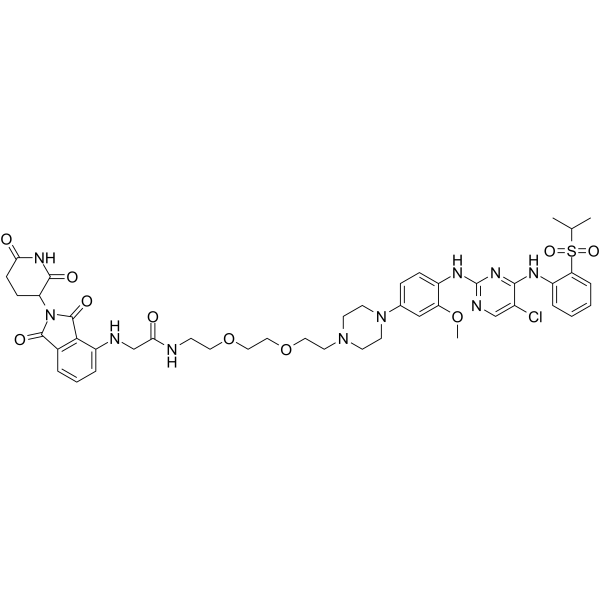
TL13-12 is a CRBN-recruiting ALK PROTAC degrader, with a DC50 of 10 nM in H3122 cells. TL13-12 induces dimerization of CRBN and truncated ALK, which brings the DNA-binding domain and transactivation domain into close proximity, thereby activating the expression of downstream reporter genes, while exhibiting extremely low leaky expression under non-inducing conditions. TL13-12 serves as a tool molecule for the orthogonal PROTAC-CID system, and is applied in research on non-small cell lung cancer, anaplastic large cell lymphoma, and neuroblastoma .
loading...
    loading...
Cat. No.: HY-151071
CAS No.: 2488761-18-6
Research Areas:  

Cancer

TMX-3013 is a CDK inhibitor capable of inhibiting the activity of CDK1, CDK2, CDK4, CDK5, and CDK6, with IC50 values of 0.9 nM, <0.5 nM, 24.5 nM, 0.5 nM, and 15.6 nM, respectively. TMX-3013 can be used as a target protein ligand, conjugated with the PROTAC linker and the CRBN ligand Thalidomide (HY-14658) for the synthesis of PROTAC TMX-2138 (HY-164906). TMX-3013 can also act as an effector ligand, binding to target proteins HaloTag or FKBP, and can be used in the synthesis of regulated induced proximity targeting chimeras (RIPTACs) .
loading...
    loading...
Cat. No.: HY-P1173
CAS No.: 706785-93-5
Synonyms: Myristoylated L 803; GSK-3β Inhibitor XIII
Target:  

GSK-3 Amyloid-β

Research Areas:  

Neurological Disease

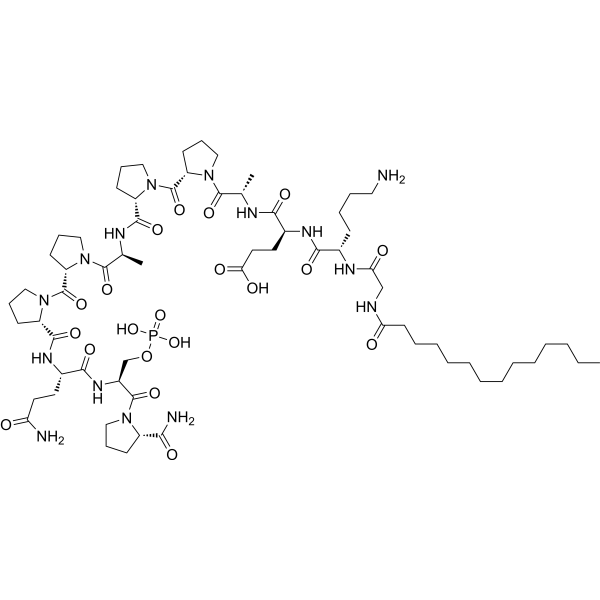
L803-mts (Myristoylated L 803) is a selective and substrate-competitive GSK-3 peptide inhibitor (IC50: 40 μM). L803-mts also reduces Aβ deposits and ameliorates cognitive deficits in 5XFAD mice. L803-mts shows antidepressive effect in the forced swimming test .
loading...
    loading...
Cat. No.: HY-130256
CAS No.: 2380000-55-3
Purity:  99.37%
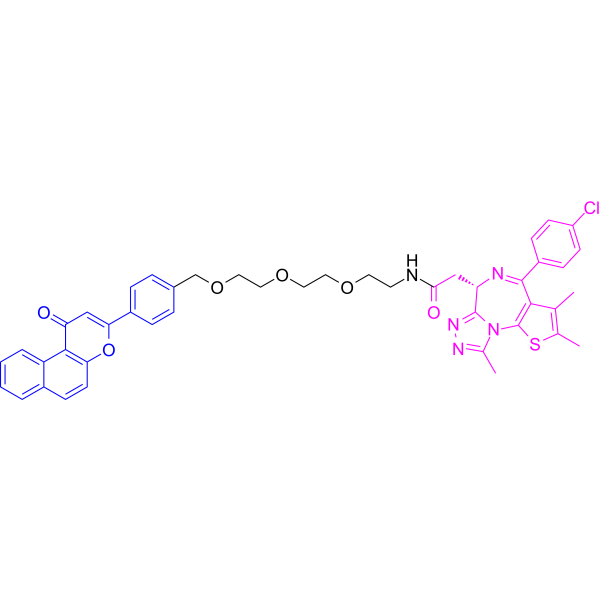
β-NF-JQ1 is a BRD2/3/4 PROTAC degrader. β-NF-JQ1 recruits the AhR E3 ligase complex to BRD2, BRD3 and BRD4, induces AhR-BRD interaction, and mediates AhR-dependent degradation through the proximity effect between the target protein and AhR. β-NF-JQ1 acts as an antiproliferative and cytotoxic agent that induces anticancer activity associated with BRD protein knockdown. β-NF-JQ1 can be used for research on breast cancer and neuroblastoma .
loading...
    loading...
Cat. No.: HY-117080
CAS No.: 167410-92-6
Purity:  ≥90.0%
Research Areas:  

Others

Sulfo-EGS is a homobifunctional, amine-reactive chemical crosslinker. Sulfo-EGS is used to study protein-protein or protein-peptide interactions, which can determine the spatial proximity of amino acid residues in a protein complex, without relying on standards .
loading...
    loading...
Cat. No.: HY-12392
CAS No.: 5560-72-5
Purity:  98.02%
Target:  

Opioid Receptor

Research Areas:  

Neurological Disease

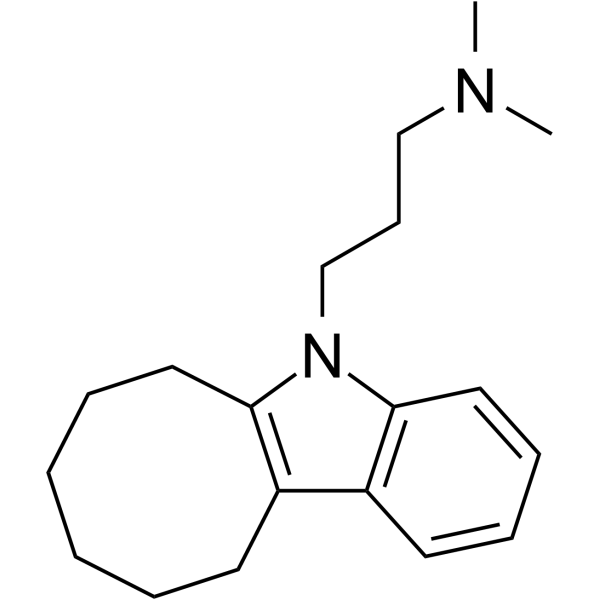
Iprindole, an opioid receptor agonist, is a tricyclic antidepressant. Iprindole shortens the immobility time in mice forced swimming test, which can be reversed by the opiate antagonist Naloxone (HY-17417A). Iprindole induces lamellar body formation but devoid of lamellar bodies. Iprindole can be used for the research of depression .
loading...
    loading...
Cat. No.: HY-161794A
Research Areas:  

Cancer

SP3N hydrochloride is a specific degrader of the prolyl isomerase FKBP12. As a prodrug, SP3N hydrochloride is metabolized by Diamine oxidase into the active aldehyde metabolite SP3CHO (HY-161795). SP3N hydrochloride induces the proximity of FKBP12 to the SCF FBXO22 E3 ligase complex, thereby triggering the polyubiquitination and proteasomal degradation of FKBP12. SP3N hydrochloride can be used in cancer research .
loading...
    loading...
Cat. No.: HY-148606
CAS No.: 2839639-94-8
Target:  

STING

Research Areas:  

Cancer

STING modulator-3 is a STING inhibitor. STING modulator-3 inhibits R232 STING with an Ki value of 43.1 nM in scintillation proximity assay. STING modulator-3 has no effect on IRF-3 activation or TNF-β induction in THP-1 cells .
loading...
    loading...
Cat. No.: HY-139748
Target:  

Antibiotic Bacterial

Research Areas:  

Infection

S32212 is a serotonin type 2C receptor inverse agonist and an α2 adrenoceptor antagonist. S32212 exhibits antidepressant activity and can reduce immobility time in forced-swim test in rats .
loading...
    loading...
Cat. No.: HY-W096122
CAS No.: 142702-31-6
Research Areas:  

Others

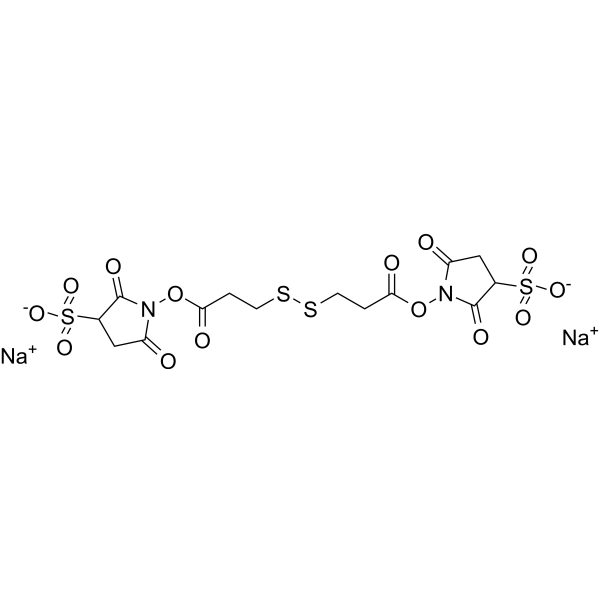
DTSSP Crosslinker disodium is a protein cross-linker containing a disulfide bond. DTSSP Crosslinker disodium can react with sidechains of amino acids that are within close proximity .
loading...
    loading...
Cat. No.: HY-175463
CAS No.: 3095032-50-8
Target:  

Molecular Glues Src

Research Areas:  

Cancer

LCK degrader-2 is a selective CRBN-dependent molecular glue degrader targeting LCK. LCK degrader-2 induces the proximity effect between LCK and CRBN, stabilizes the CRBN-LCK ternary complex, and triggers the ubiquitination and degradation of LCK. LCK degrader-2 can be used for the research of acute lymphoblastic leukemia .
loading...
    loading...
Cat. No.: HY-13974
CAS No.: 847968-58-5
Target:  

Adrenergic Receptor

Research Areas:  

Neurological Disease

S32212 is a serotonin type 2C receptor inverse agonist and an 2 adrenoceptor antagonist. S32212 exhibits antidepressant activity and can reduce immobility time in forced-swim test in rats .
loading...
    loading...

