16 Results for "

GABA binding site

" in MedChemExpress (MCE) Product Catalog:
Products (16)

16 Results for "GABA binding site" in MCE Product Catalog:

2
2 Cited Publications
Cat. No.: HY-120051
CAS No.: 1398496-82-6
Purity:  98.40%
Synonyms: S44819; Egis-13529
Target:  

GABA Receptor

Research Areas:  

Neurological Disease

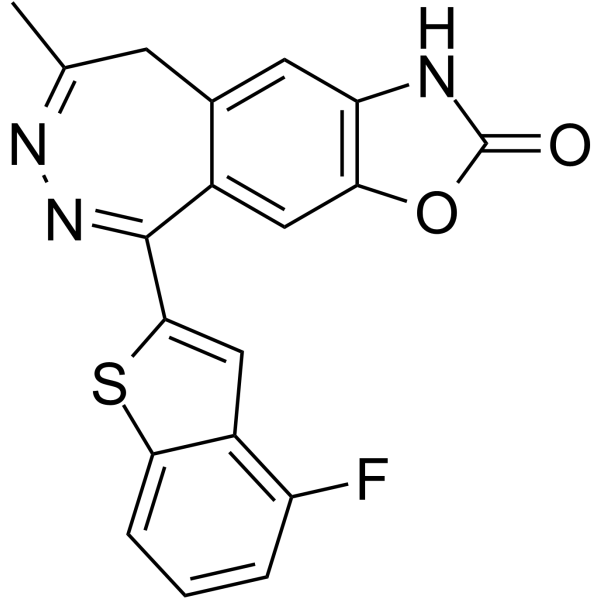
Afizagabar (S44819) is a first-in-class, competitive, and selective antagonist at the GABA-binding site of the α5-GABAAR, with an IC50 of 585 nM for α5β2γ2 and a Ki of 66 nM for α5β3γ2. Afizagabar enhances hippocampal synaptic plasticity and exhibits pro-cognitive efficacy .
loading...
    loading...
Cat. No.: HY-Y1840
CAS No.: 150-19-6
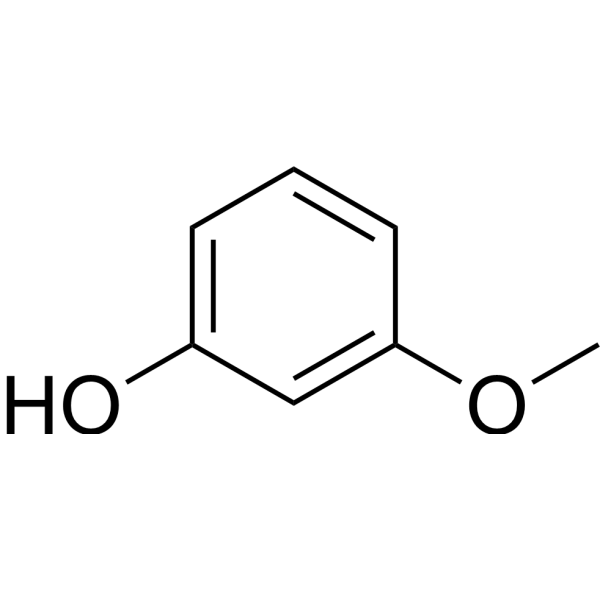
3-Methoxyphenol is an environmental pollutant. 3-Methoxyphenol occurs in the aroma components of dried bonito. 3-Methoxyphenol potentially enhances GABA-evoked responses of α1β1 GABAA receptors by increasing the affinity of GABA binding sites. 3-Methoxyphenol is used as a flavoring substance in food and animal feed. 3-Methoxyphenol prolongs pentobarbital-induced sleeping time and reduces elevated plus maze behavior .
loading...
    loading...
Cat. No.: HY-W015050
CAS No.: 610-49-1
Synonyms: 1-Aminoanthracene
1-Anthramine (1-aminoanthracene) is a fluorescent general anesthetic. potentiates GABAergic transmission with Kd = 0.1 mM, for binding to the general anesthetic site in horse spleen apoferritin (HSAF). 1-Anthramine fluorescence is enhanced when bound to HSAF. 1-Anthramine potentiates chloride currents elicited by GABA. 1-Anthramine can reversibly inhibit the movement of Xenopus laevis, with an EC50 value of 16 μM .
loading...
    loading...
Cat. No.: HY-129927
CAS No.: 62020-54-6
Target:  

GABA Receptor

Research Areas:  

Others

Thiomuscimol is a GABAA receptor agonist (IC50=19 nM). It has been used as a photoaffinity label for the purification and identification of GABA binding sites within the GABAA receptor complex.
loading...
    loading...
Cat. No.: HY-108035
CAS No.: 1013427-48-9
Synonyms: MR04A3
Target:  

GABA Receptor

Research Areas:  

Neurological Disease

(-)-JM-1232 (MR04A3) targets GABA A receptors and exerts its analgesic effects by binding to the benzodiazepine binding site of GABA A receptors. (-)-JM-1232 demonstrates potent analgesic effects in mice against acute thermal stimuli, mechanically induced pain, and visceral pain, with CI50 values of 2.96, 3.06, and 2.27 mg/kg, respectively. (-)-JM-1232 can be used in research related to pain and analgesia .
loading...
    loading...
Cat. No.: HY-147735
Target:  

GABA Receptor

Research Areas:  

Neurological Disease

GABAA receptor agonist 1 (compound 3e) is a potent GABAA receptor agonist. GABAA receptor agonist 1 shows anti-depression activities in classical mouse models of depression of FST and TST. GABAA receptor agonist 1 binds at the GABA binding site of GABAA receptor in order to produce GABAergic effects. GABAA receptor agonist 1 has the potential for the research of depression .
loading...
    loading...
Cat. No.: HY-147736
Target:  

GABA Receptor

Research Areas:  

Neurological Disease

GABAA receptor agonist 2 (compound 4c) is a potent GABAA receptor agonist. GABAA receptor agonist 2 shows anti-depression activities in classical mouse models of depression of FST and TST. GABAA receptor agonist 2 binds at the GABA binding site of GABAA receptor in order to produce GABAergic effects. GABAA receptor agonist 2 has the potential for the research of depression .
loading...
    loading...
Cat. No.: HY-Y1840R
CAS No.: 150-19-6
3-Methoxyphenol (Standard) is the analytical standard of 3-Methoxyphenol (HY-Y1840). This product is intended for research and analytical applications. 3-Methoxyphenol is an environmental pollutant. 3-Methoxyphenol occurs in the aroma components of dried bonito. 3-Methoxyphenol potentially enhances GABA-evoked responses of α1β1 GABAA receptors by increasing the affinity of GABA binding sites. 3-Methoxyphenol is used as a flavoring substance in food and animal feed. 3-Methoxyphenol prolongs pentobarbital-induced sleeping time and reduces elevated plus maze behavior .
loading...
    loading...
Cat. No.: HY-Y1840S
CAS No.: 104714-88-7
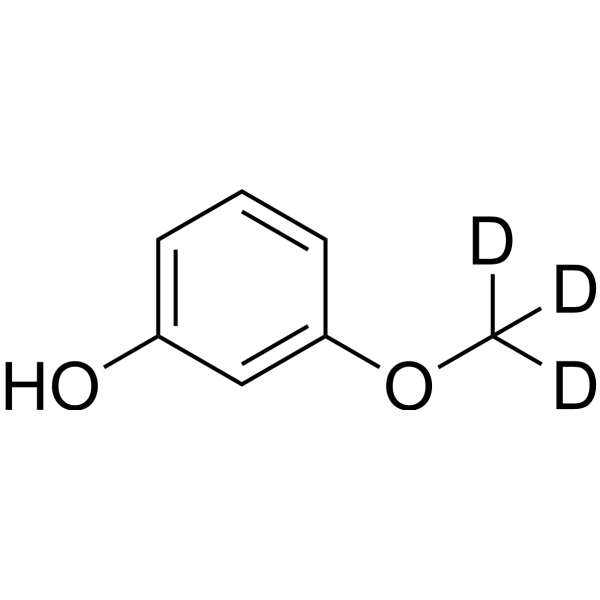
3-Methoxyphenol-d3 is the d3-labeled 3-Methoxyphenol (HY-Y1840). 3-Methoxyphenol is an environmental pollutant. 3-Methoxyphenol occurs in the aroma components of dried bonito. 3-Methoxyphenol potentially enhances GABA-evoked responses of α1β1 GABAA receptors by increasing the affinity of GABA binding sites. 3-Methoxyphenol is used as a flavoring substance in food and animal feed. 3-Methoxyphenol prolongs pentobarbital-induced sleeping time and reduces elevated plus maze behavior .
loading...
    loading...
Cat. No.: HY-129090
CAS No.: 77779-50-1
Target:  

GABA Receptor

Research Areas:  

Neurological Disease

CGS-​9895 is a GABA antagonist that acts via the benzodiazepine binding site of ag containing GABA receptors .
loading...
    loading...
Cat. No.: HY-183471
CAS No.: 34966-41-1
Synonyms: SQ 65396
Cartazolate (SQ 65396) is a pyrazolopyridine modulator with benzodiazepine receptor agonist activity and cyclic AMP phosphodiesterase inhibitory activity. Cartazolate enhances the affinity of 3H-diazepam for brain-specific binding sites, regulates the GABA/benzodiazepine receptor complex, reversibly increases Na +-independent GABA receptor binding sites, and stimulates the binding of [ 3H]flunitrazepam to cerebellar membranes. Cartazolate restores punishment-suppressed behavior and exhibits anxiolytic properties. Cartazolate is applicable to anxiety-related research .
loading...
    loading...
Cat. No.: HY-169651
CAS No.: 61-38-1
Target:  

GABA Receptor

Research Areas:  

Neurological Disease

GABA-IN-4 (Compound 17) is a N-(indol-3-ylglyoxylyl)benzylamine derivative. GABA-IN-4 exhibits high affinity for the benzodiazepine receptor (BzR) (binding site in GABAA receptor complex) with Ki value of 67 nM. Benzodiazepines are widely used as antianxiety, sedative-hypnotic and anticonvulsant agents .
loading...
    loading...
Cat. No.: HY-189042
CAS No.: 738562-57-7
Target:  

GABA Receptor

Research Areas:  

Neurological Disease

EF1500 is a potent human GABA transporter 1 (hGAT1) inhibitor and a lipophilic THPO analog. EF1500 occupies the binding site by forming a hydrogen bond with active residues of hGAT1 (such as Tyr139) through its exocyclic amino group, thereby blocking GABA reuptake. EF1500 can be used for research on central nervous system diseases .
loading...
    loading...
Cat. No.: HY-114811
CAS No.: 25006-32-0
Leptophos oxon, a metabolite of leptophos, is a GABAA receptor chloride channel inhibitor with an IC50 values of 89.6 μM. Leptophos oxon inhibits GABA-induced chloride influx, binds to GABAA receptor-associated TBPS sites, and inhibits TBPS binding to voltage-dependent chloride channels. Leptophos oxon is a insecticide. Leptophos oxon can be used for the research of neurological disease .
loading...
    loading...
Cat. No.: HY-P992360

Target:  

GABA Receptor

Research Areas:  

Neurological Disease Cancer

GT-002 is a partial positive allosteric modulator targeting the α3 subtype of GABAA receptors, as well as a specific binder of tumor-associated TF-glycosylated LYPD3. GT-002 mildly enhances GABA-induced chloride currents by binding to the benzodiazepine site of GABAA receptors, thereby alleviating prefrontal hypofunction and improving cognitive, memory and social interaction abilities. GT-002 can be used in research related to schizophrenia spectrum disorders, various squamous cell carcinomas, colorectal cancer, non-small cell lung cancer, and aromatic L-amino acid decarboxylase deficiency .
loading...
    loading...
Cat. No.: HY-L166
1,764 compounds

Ion channel is a membrane-binding enzyme whose catalytic site is an ion conduction pore, which is opened and closed in response to specific environmental stimuli (voltage, ligand concentration, membrane tension, temperature, etc.). Ion channel provide pores for the passive diffusion of ions on the biofilm. Due to their high selectivity for ion, ion channel are generally classified as sodium (Na+ ), potassium (K+ ), calcium (Ca2+ ), chloride (Cl- ), and non-specific cation channel. Ion channel is an important contributor to cell signal transduction and homeostasis. In addition to electrical signal transduction, ion channel also have many functions: regulating vascular smooth muscle contraction, maintaining normal cell volume, regulating glandular secretion, protein kinase activation, etc. Therefore, dysfunction of ion channel can lead to many diseases, and its mechanism research is particularly important.

MCE designs a unique collection of 1,764 small molecules related to ion channel, mainly targeting Na+ channel, K+ channel, Ca2+ channel, GABA receptor, iGluR, etc. It is an essential tool for research of cardiovascular diseases, Nervous system diseases and other diseases.

  • 1

