15 Results for "

NADH oxidation

" in MedChemExpress (MCE) Product Catalog:
Products (15)

15 Results for "NADH oxidation" in MCE Product Catalog:

11
11 Publications Verification
Cat. No.: HY-F0001
CAS No.: 606-68-8
Synonyms: Disodium NADH
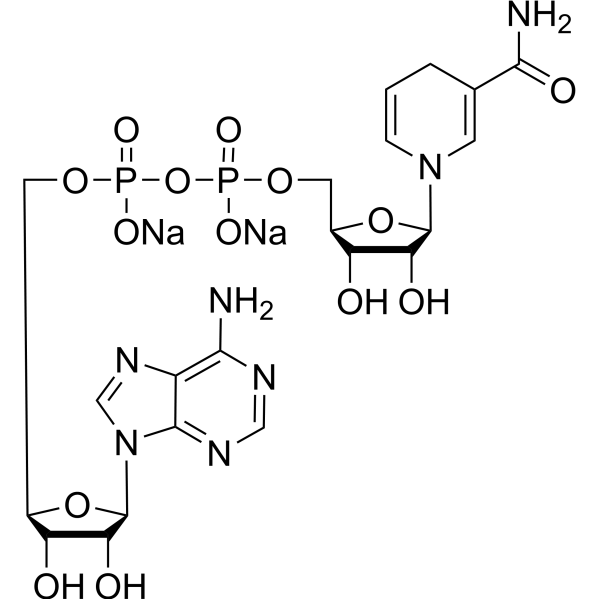
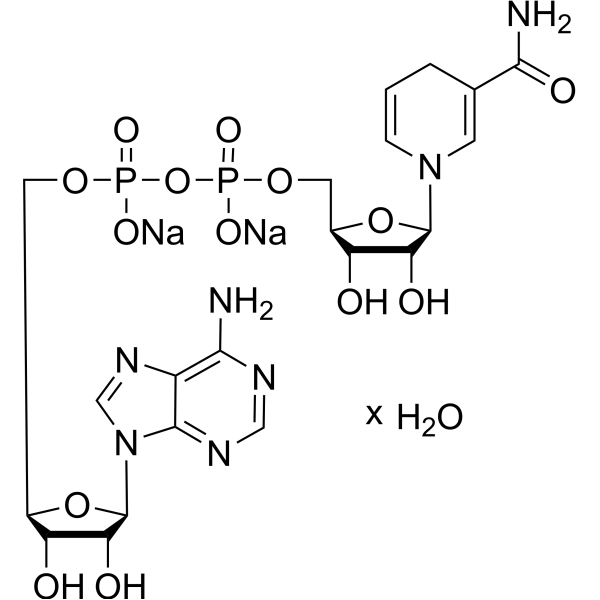
NADH disodium salt (Disodium NADH) is an orally effective reduced coenzyme. NADH disodium salt plays a role in regenerating electron donors during cellular energy metabolism, including glycolysis, β-oxidation, and the tricarboxylic acid (TCA) cycle. NADH disodium salt regulates calcium homeostasis by promoting the opening of IP3-gated Ca 2+ channels and inhibiting Ryanodine receptor, and affects mitochondrial function through direct interaction with VDAC. NADH disodium salt is used in cytoprotective studies related to cerebral ischemic injury, neurodegenerative diseases, aging, and signal transduction .
loading...
    loading...
1
1 Cited Publications
Cat. No.: HY-128895
CAS No.: 1800405-30-4
Purity:  99.94%
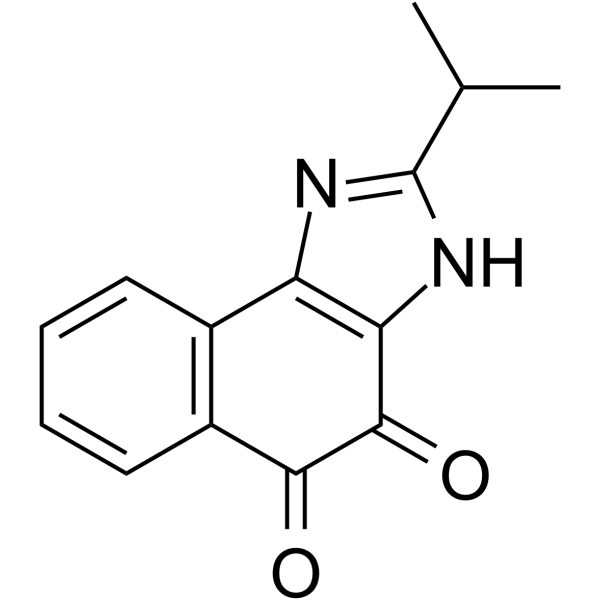
KL1333, a derivative of β-lapachone, is an orally available NAD+ modulator. KL1333 reacts with NAD(P)H:quinone oxidoreductase 1 (NQO1) as a substrate, resulting in increases in intracellular NAD+ levels via NADH oxidation. KL1333 improves energy metabolism and mitochondrial dysfunction in MELAS fibroblasts. KL1333 protects against Cisplatin-induced ototoxicity in mouse cochlear cultures .
loading...
    loading...
1
1 Cited Publications
Cat. No.: HY-F0001R
CAS No.: 606-68-8
Synonyms: Disodium NADH (Standard)
NADH disodium salt (Disodium NADH) Standard is the analytical standard of NADH disodium salt (HY-F0001). This product is intended for research and analytical applications. NADH disodium salt (Disodium NADH) is an orally effective reduced coenzyme. NADH disodium salt plays a role in regenerating electron donors during cellular energy metabolism, including glycolysis, β-oxidation, and the tricarboxylic acid (TCA) cycle. NADH disodium salt regulates calcium homeostasis by promoting the opening of IP3-gated Ca 2+ channels and inhibiting Ryanodine receptor, and affects mitochondrial function through direct interaction with VDAC. NADH disodium salt is used in cytoprotective studies related to cerebral ischemic injury, neurodegenerative diseases, aging, and signal transduction .
loading...
    loading...
1
1 Cited Publications
Cat. No.: HY-158421
CAS No.: 63498-32-8
Purity:  99.95%
MS-L6 is a OXPHOS inhibitor and antimalarial agent. MS-L6 inhibits NADH oxidation and electron transport. MS-L6 induces OXPHOS uncoupling, dissipates mitochondrial membrane potential, increases non-ATP-coupled oxygen consumption, and reduces ATP synthesis. MS-L6 triggers the production of ROS. MS-L6 exhibits anti-amoebic activity. MS-L6 exerts antitumor activity in mouse lymphoma xenograft models. MS-L6 can be used in research related to B-cell lymphoma, T-cell lymphoma, and non-Hodgkin B-cell lymphoma .
loading...
    loading...
Cat. No.: HY-113355
CAS No.: 58-68-4
NADH is an orally active dehydrogenase coenzyme that acts as a crucial electron carrier in cellular respiration and participates in ATP production. NADH promotes metabolism, supports brain function, and counteracts oxidative stress by transferring electrons to the electron transport chain. As a signaling molecule, NADH regulates multiple biological processes, including anti-apoptosis, synaptic plasticity, gene expression, and calcium homeostasis. Redox imbalance of NADH/NAD⁺ is one of the key pathological mechanisms of various diseases, such as diabetic nephropathy, neurodegenerative diseases, and ischemia-reperfusion injury.
loading...
    loading...
Cat. No.: HY-P3185
CAS No.: 9028-54-0
Research Areas:  

Metabolic Disease

Beta-galactose dehydrogenase is a selective catalyst for β-galactose. Under pH 8.6 conditions, beta-galactose dehydrogenase catalyzes the oxidation of β-galactose, produced by the hydrolysis of lactose by β-galactosidase, with nicotinamide adenine dinucleotide (NAD) to produce reduced nicotinamide adenine dinucleotide (NADH). Beta-galactose dehydrogenase specifically mediates this oxidation reaction for the quantitative detection of the substrate, used in the analysis of lactose concentration in samples such as breast milk .
loading...
    loading...
Cat. No.: HY-P3186
CAS No.: 9028-53-9
Target:  

Endogenous Metabolite

Research Areas:  

Metabolic Disease

Glucose dehydrogenase, recombinant Microorganisms is a FDA-dependent oxidoreductase. Glucose dehydrogenase (GDH) catalyzes the oxidation of β-D-glucose to β-D-glucono-1,5-lactone with simultaneous reduction of the cofactor NADP + to NADPH or, to a lesser extent, NAD + to NADH. Glucose dehydrogenase (GDH) accepts both NAD + and NADP + as cofactors and can be used for the regeneration of NADH and NADPH .
loading...
    loading...
Cat. No.: HY-B1044
CAS No.: 20098-14-0
Synonyms: Kemantane; 5-Hydroxy-2-adamantanone
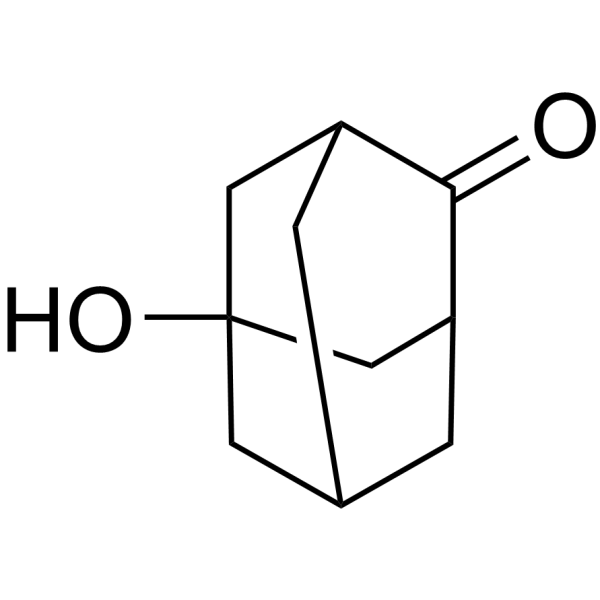
Idramantone (Kemantane, 5-Hydroxy-2-adamantanone) is an adamantane-based immunomodulator. Idramantone increases the activity of T helper cells by 1.5 to 2-fold, but exerts no significant effect on the functional activity, induction or accumulation of antigen-specific T suppressor cells. Idramantone serves as a key intermediate for the synthesis of various adamantane derivatives, and can be produced via the regioselective oxidation of 2-adamantanone catalyzed by P450cam monooxygenase, a process that relies on an NADH regeneration system to provide reducing equivalents. Idramantone can be used in studies related to immunomodulation .
loading...
    loading...
Cat. No.: HY-161685
Antibiofilm agent-8 (compound Ru2) enhances antimicrobial activity on visible-light exposure (400-700 nm, 10 J cm-2). Antibiofilm agent-8 generates of oxidative stress via NADH oxidation and ROS generation and compromises bacterial wall .
loading...
    loading...
Cat. No.: HY-Y1668
CAS No.: 630-19-3
Synonyms: Pivalic aldehyde; Pivalaldehyde
Research Areas:  

Others

Trimethylacetaldehyde (Pivalic aldehyde; Pivalaldehyde) is an inhibitor of E. coli betaine aldehyde dehydrogenase (ALDH) with a Ki of 4.5 mM. Trimethylacetaldehyde serves as a substrate for Drosophila melanogaster alcohol dehydrogenase (AdhS), undergoing oxidation and disproportionation reactions with the release of NADH, and also forms an inactive binary enzyme-aldehyde complex via a compulsory ordered reaction mechanism .
loading...
    loading...
Cat. No.: HY-131829
CAS No.: 59587-50-7
Synonyms: 6-AE-NAD+
Target:  

Lactate Dehydrogenase

Research Areas:  

Others

N6-(2-Aminoethyl)-NAD+ (6-AE-NAD+) is an adenine-modified NAD analog with coenzyme activity and the property of targeting lactate dehydrogenase (LDH). N6-(2-Aminoethyl)-NAD+ undergoes transient affinity binding with LDH, thereby crosslinking the enzyme monolayer into an integrated electrode. N6-(2-Aminoethyl)-NAD + is a component of the PQQ (HY-100196)-NAD + binary interface, and supports the bioelectrocatalytic oxidation of lactate through PQQ-mediated immobilized NADH oxidation .
loading...
    loading...
Cat. No.: HY-F0001A
CAS No.: 1949720-50-6
Synonyms: Disodium NADH hydrate
NADH disodium hydrate (Disodium NADH hydrate) is an orally effective reduced coenzyme. NADH disodium hydrate plays a role in regenerating electron donors during cellular energy metabolism, including glycolysis, β-oxidation, and the tricarboxylic acid (TCA) cycle. NADH disodium hydrate regulates calcium homeostasis by promoting the opening of IP3-gated Ca 2+ channels and inhibiting Ryanodine receptor, and affects mitochondrial function through direct interaction with VDAC. NADH disodium hydrate is used in cytoprotective studies related to cerebral ischemic injury, neurodegenerative diseases, aging, and signal transduction .
loading...
    loading...
Cat. No.: HY-128895A
CAS No.: 1800406-26-1
KL1333 hydrochloride is an orally active NAD + modulator that reacts with NAD(P)H:quinone oxidoreductase 1 (NQO1) as a substrate, leading to increased intracellular NAD + levels through NADH oxidation. Elevated NAD + levels trigger activation of SIRT1 and AMPK, and subsequently activate PGC-1α. KL1333 hydrochloride improves energy metabolism and mitochondrial dysfunction in mitochondrial encephalomyopathy, lactic acidosis, and stroke-like episodes (MELAS) fibroblasts. KL1333 hydrochloride protects against cisplatin-induced ototoxicity in mouse cochlear cultures .
loading...
    loading...
Cat. No.: HY-131829A
Synonyms: 6-AE-NAD+ sodium
Target:  

Lactate Dehydrogenase

Research Areas:  

Others

N6-(2-Aminoethyl)-NAD+ (6-AE-NAD+) sodium is an adenine-modified NAD analog with coenzyme activity and the property of targeting lactate dehydrogenase (LDH). N6-(2-Aminoethyl)-NAD+ sodium undergoes transient affinity binding with LDH, thereby crosslinking the enzyme monolayer into an integrated electrode. N6-(2-Aminoethyl)-NAD + is a component of the PQQ (HY-100196)-NAD + binary interface, and supports the bioelectrocatalytic oxidation of lactate through PQQ-mediated immobilized NADH oxidation .
loading...
    loading...
Cat. No.: HY-189724
mtCI Modulator 1 is an orally active and blood-brain barrier-permeable mtCI modulator. mtCI Modulator 1 reduces NADH oxidation/respiration, triggers adaptive stress signaling, activates AMPK to produce neuroprotective/antioxidant/autophagy/anti-inflammatory/mitochondrial biogenesis effects, and promotes Akt/AMPK-dependent inhibitory phosphorylation of GSK3β while reducing Tau phosphorylation. mtCI Modulator 1 prevents Aβ toxicity, increases oxidative stress resistance and NADPH/glutathione, inhibits NF-κB, induces autophagy/mitochondrial biogenesis, reduces Aβ/p-Tau in brain organoids, and improves mitochondrial reserve respiratory capacity. mtCI Modulator 1 activates AMPK-centered brain signaling in wild-type mice. mtCI Modulator 1 can be used for research on Alzheimer's disease .
loading...
    loading...
  • 1

