17 Results for "

active-site probing

" in MedChemExpress (MCE) Product Catalog:
Products (17)

17 Results for "active-site probing" in MCE Product Catalog:

Cat. No.: HY-W751238
CAS No.: 931418-92-7
Synonyms: DMMB
Dimethyl methylene blue zinc chloride double salt (DMMB) is a cationic dye. Dimethyl methylene blue zinc chloride double salt competitively binds to the active site of the PANI-Benz-Ag nanocomposite with endotoxin, releasing DMMB and increasing the fluorescence intensity. Dimethyl methylene blue zinc chloride double salt can be used as a fluorescent probe for the detection of bacteria (such as E. Coli) endotoxin . Dimethyl methylene blue zinc chloride double salt can be used for the quantification of sulfated glycosaminoglycans .
loading...
    loading...
Cat. No.: HY-153552A
CAS No.: 2990021-73-1
Purity:  99.89%
Target:  

FAP

Research Areas:  

Cancer

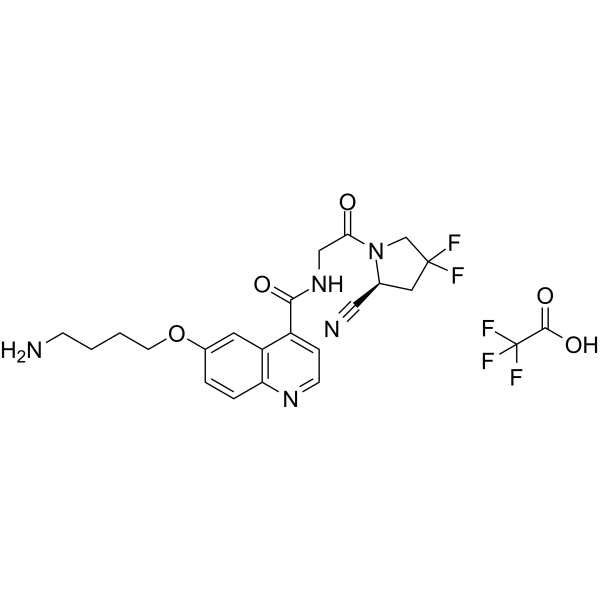
NH2-UAMC1110 TFA is an aminobutoxy derivative of the fibroblast activation protein (FAP) inhibitor UAMC1110 (HY-100684), and is a precursor compound for the synthesis of FAP inhibitor probes, not directly used in bioactivity experiments. For example, NH2-UAMC1110 TFA is involved in the synthesis of the radiotracer FAPI-QS, which exhibits high tumor selectivity and high dose effect, and has been used in tumor diagnosis. NH2-UAMC1110 TFA structurally incorporates an active amino group, allowing it to form covalent bonds with various molecules (such as DOTA, DATA5m, radionuclide chelators, etc.) to synthesize molecular imaging probes or targeted compounds with the ability to target FAP. NH2-UAMC1110 TFA specifically binds to the FAP active site, inhibiting its proline-selective serine protease activity (including dipeptidyl peptidase and endopeptidase activity), blocking FAP-mediated tissue remodeling-related processes. Its key activity is high targeting and high affinity, and its core function is to act as a targeting module coupled with bifunctional chelators (such as DOTA, DATA5m). NH2-UAMC1110 TFA can be applied to diagnostic imaging studies of tumors expressing FAP (such as colorectal cancer, pancreatic cancer, etc.), and also provides molecular tools for targeted research of FAP-related diseases with high FAP expression, such as fibrosis and arthritis .
loading...
    loading...
Cat. No.: HY-D0053
CAS No.: 194785-18-7
Synonyms: 6-Carboxy-X-rhodamine
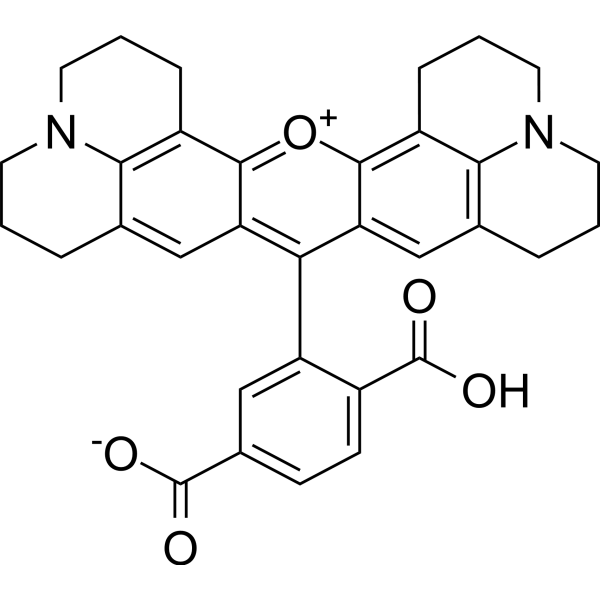
6-ROX is a selective fluorescent probe and potential inhibitor of COX-2. 6-ROX binds to the active site of COX-2 and inhibits its conversion of arachidonic acid into prostaglandins. 6-ROX is often used in the field of optical imaging related to tumors and inflammation, and helps detect diseased tissues with high expression of COX-2 .
loading...
    loading...
Cat. No.: HY-153552
CAS No.: 2758337-19-6
Target:  

FAP

Research Areas:  

Cancer

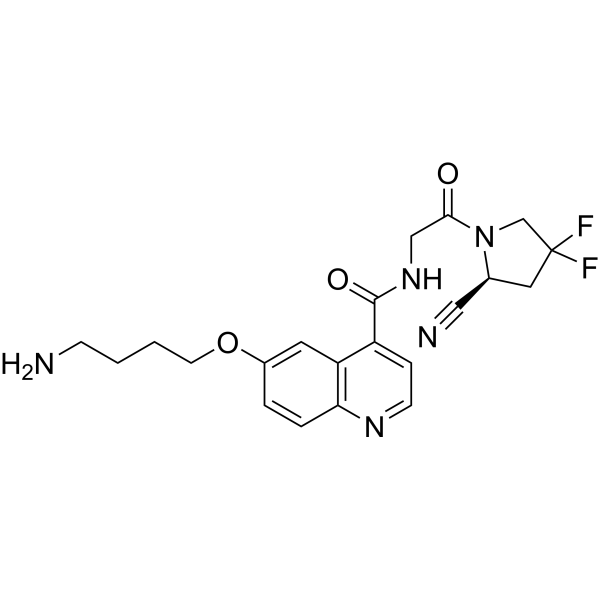
NH2-UAMC1110 is an aminobutoxy derivative of the fibroblast activation protein (FAP) inhibitor UAMC1110 (HY-100684), and is a precursor compound for the synthesis of FAP inhibitor probes, not directly used in bioactivity experiments. For example, NH2-UAMC1110 is involved in the synthesis of the radiotracer FAPI-QS, which exhibits high tumor selectivity and high dose-response, and has been used for tumor diagnosis. NH2-UAMC1110 introduces an active amino group into its structure, enabling it to form covalent bonds with various molecules (such as DOTA, DATA5m, radionuclide chelators, etc.), thereby synthesizing molecular imaging probes or targeted compounds with the ability to target FAP. NH2-UAMC1110 specifically binds to the FAP active site, inhibiting its proline-selective serine protease activity (including dipeptidyl peptidase and endopeptidase activity), blocking FAP-mediated tissue remodeling processes. Its key activity is high targeting and high affinity, and its core function is to be coupled with bifunctional chelators (such as DOTA, DATA5m) as a targeting module. NH2-UAMC1110 can be applied to diagnostic imaging studies of tumors expressing FAP (such as colorectal cancer, pancreatic cancer, etc.), and also provides molecular tools for targeted research of FAP-related diseases with high FAP expression, such as fibrosis and arthritis .
loading...
    loading...
Cat. No.: HY-148254
CAS No.: 2705841-52-5
Purity:  99.78%
Target:  

Deubiquitinase

Research Areas:  

Others

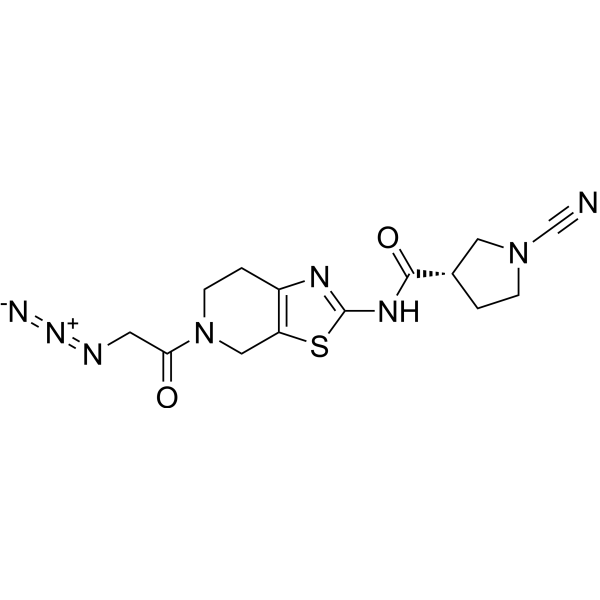
8RK64 is a UCHL1 inhibitor that covalently binds the active-site cysteine residue to form an isothiourea adduct, with selectivity over UCHL3, UCHL5, and other cysteine DUBs. 8RK64 inhibits human UCHL1 with an IC50 of 0.32 μM. 8RK64 is an azide-containing precursor usable as a two-step activity-based probe via click chemistry. 8RK64 can be used for the research of Parkinson's disease .
loading...
    loading...
Cat. No.: HY-171036
CAS No.: 252212-58-1
Research Areas:  

Metabolic Disease

GAPDH-IN-1 (Compound F8) is a GAPDH inhibitor (IC50 of 39.31 μM for GAPDH enzymatic activity). GAPDH-IN-1 forms a covalent adduct with an aspartic acid in the active site to displace NAD +, a cofactor of the enzyme, with concomitant enhancement of the cysteine-reactive probe reaction with the catalytic cysteine .
loading...
    loading...
Cat. No.: HY-12679
CAS No.: 1621002-24-1
Target:  

Btk

Research Areas:  

Cancer

PF-06658607 is an alkynylated irreversible Brutons tyrosine kinase (BTK) inhibitor that covalently reacts with active site cysteines in the ATP-binding pocket. PF-06658607 can be used to detect "off "-targets for covalent kinase inhibitors in cancer cells. The alkyne moiety allows for azide-based detection probe via copper-catalyzed click chemistry .
loading...
    loading...
Cat. No.: HY-D2188
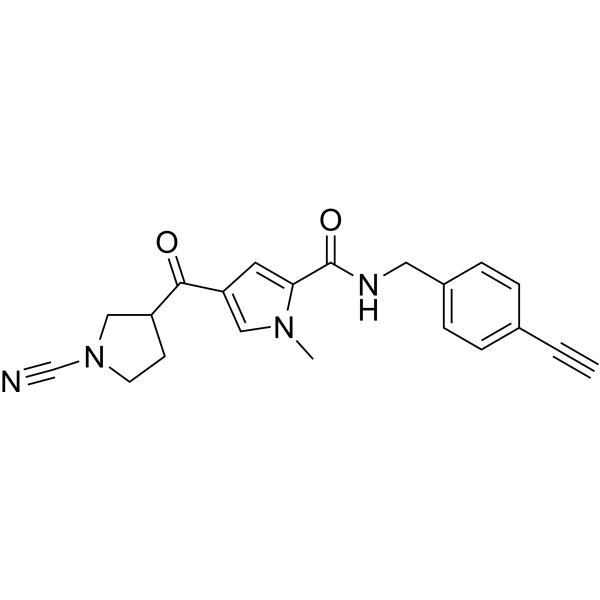
IMP-2373 is a low-toxicity activity-based probe targeting covalent pan-deubiquitinase (DUB), which modulates and monitors DUB activity via covalent binding to the catalytic cysteine and active site of DUB. IMP-2373 enables real-time tracking of dynamic intracellular DUB activity in physiologically relevant living cell systems, and quantitative analysis of activity changes induced by pharmacological inhibition or MYC dysregulation. IMP-2373 can be used for research on related diseases such as B-cell lymphoma .
loading...
    loading...
Cat. No.: HY-125209A
CAS No.: 2253744-57-7
Research Areas:  

Cancer

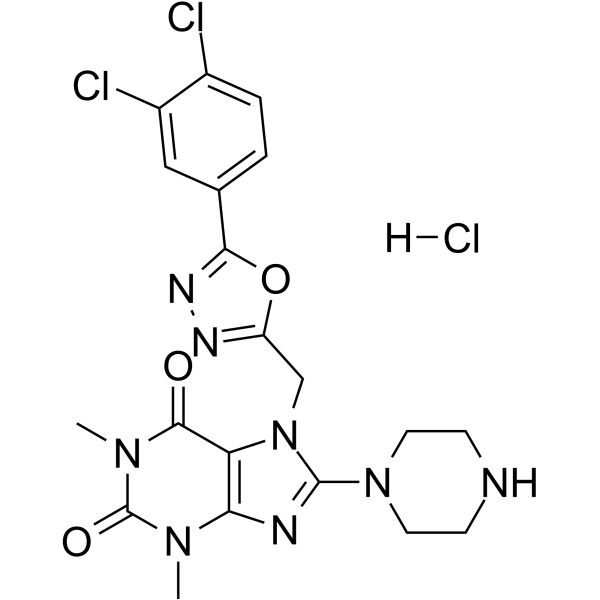
TH5427 hydrochloride is a NUDT5 inhibitor with a human target IC50 of 29 nM, ~690-fold selectivity over MTH1 in vitro, and selective functional inhibition over other NUDIX hydrolases including NUDT9 .TH5427 hydrochloride binds to the active site of NUDT5, blocking enzymatic activity related to ADP-ribose metabolism and PAR-derived ATP synthesis .TH5427 hydrochloride blocks progestin-dependent nuclear ATP synthesis, impairs progestin-induced chromatin remodeling, inhibits histone H1 displacement, disrupts progestin-dependent gene regulation, and abrogates progestin-dependent proliferation in breast cancer cells .TH5427 hydrochloride functions as a versatile probe to study nuclear ATP dynamics and ADP-ribose-related metabolism in cells .TH5427 hydrochloride engages NUDT5 at physiological temperatures, as demonstrated by Drug Affinity Responsive Target Stability (DARTS) assay .TH5427 hydrochloride stabilizes NUDT5 against thermal denaturation in cell lysates and intact cells, as shown by cellular thermal shift assay (CETSA) .TH5427 hydrochloride functionally inhibits NUDT5 activity, leading to downstream effects on oxidative DNA damage and DNA replication in triple-negative breast cancer (TNBC) cells .TH5427 hydrochloride suppresses proliferation of TNBC cells without inducing cell death or apoptosis, slows DNA replication in TNBC cells, promotes accumulation of oxidative DNA lesions, and triggers DNA damage response in TNBC cells .TH5427 hydrochloride suppresses growth of TNBC cells in vitro, inhibits growth of TNBC xenograft tumors in nude mice in vivo, and shows greater potency against TNBC cell lines compared to ER-positive and normal-like breast cell lines .TH5427 hydrochloride can be used for the research of breast cancer and triple-negative breast cancer .
loading...
    loading...
Cat. No.: HY-D1188
CAS No.: 2379390-76-6
Target:  

PARP

Research Areas:  

Cancer

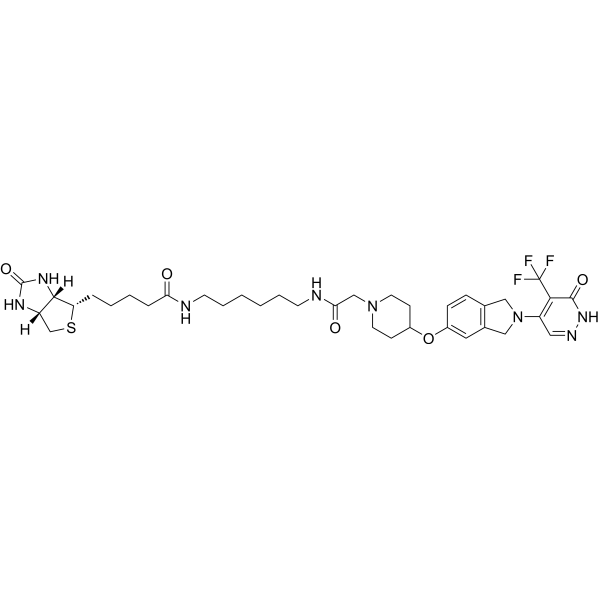
PARP7-probe-1 is a chemiluminescent labeled PARP7 probe. PARP7-probe-1 is a biotinylated probe binding to the PARP7 active site. PARP7-probe-1 can be used for the research of PARP7 function .
loading...
    loading...
Cat. No.: HY-P11331
CAS No.: 1356828-49-3
Target:  

Proteasome

Research Areas:  

Others

Az-NC-002 is a Proteasome trypsin-like site (β2) and immunoproteasome β2i-specific active probe. Az-NC-002 has weak off-target effects with no significant inhibition for Cathepsin D (HY-P2750), but this inhibition reacts outside of the active site or influence on a small fraction of the enzyme .
loading...
    loading...
Cat. No.: HY-10572A
CAS No.: 154801-74-8
Synonyms: (R)-DMP 266; (R)-EFV; (R)-L-743726
Target:  

Reverse Transcriptase

Research Areas:  

Infection

(R)-Efavirenz ((R)-DMP 266) is a non-nucleoside reverse transcriptase inhibitor that acts by non-competitive inhibition of the viral enzyme. (R)-Efavirenz can be metabolized by CYP2B6 to 8-hydroxyefavirenz in a highly stereoselective manner. (R)-Efavirenz is promising to be a useful probe for the CYP2B6 active site and catalytic mechanisms .
loading...
    loading...
Cat. No.: HY-132913
CAS No.: 2771119-22-1
Research Areas:  

Cancer

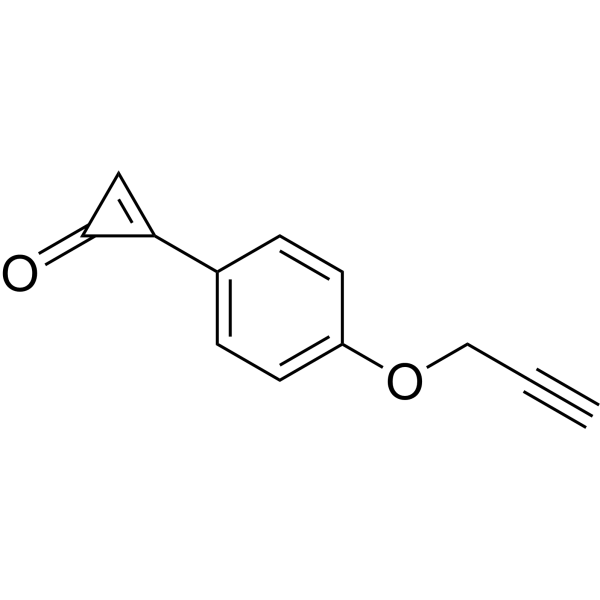
Cyclopropenone probe 1 can specifically and efficiently modify a triple-negative breast cancer driver, glutathione S-transferase pi-1 (GSTP1), by covalently binding at the catalytic active site. Cyclopropenone probe 1 is a click chemistry reagent, it contains an Alkyne group and can undergo copper-catalyzed azide-alkyne cycloaddition (CuAAc) with molecules containing Azide groups.
loading...
    loading...
Cat. No.: HY-185905
CAS No.: 1811556-64-5
Target:  

Ser/Thr Protease

Research Areas:  

Inflammation/Immunology

TTAMRA-FP is an activity-based probe for serine hydrolases (Serine Hydrolase) that irreversibly and covalently labels the active-site serine of catalytically active serine hydrolases. TTAMRA-FP can be used for activity-based protein profiling of serine hydrolases and related studies on the activity of osteoarthritis-associated proteases .
loading...
    loading...
Cat. No.: HY-D3102
CAS No.: 1015251-87-2
Target:  

Fluorescent Dye

Research Areas:  

Others

CGTDP is a fluorescent probe used for selective labeling of active-site arginine residues, detection of local polarity, and monitoring of conformational changes in enzyme active sites. CGTDP contains a neutral red moiety serving as a polarity-sensitive fluorophore, and a phenylglyoxal unit acting as an arginine-specific labeling group; it undergoes a selective reaction via its α-dicarbonyl moiety with the guanidyl group of arginine residues in enzyme active sites to form a covalent linkage, thereby enabling the reporting of the local microenvironment at the labeled site. The excitation/emission wavelengths are Ex/Em = 398/607 nm and Ex/Em = 507/607 nm; these wavelengths blue-shift in organic solvents, such as Ex/Em = 375/569 nm and Ex/Em = 469/569 nm in THF, and Ex/Em = 375/587 nm and Ex/Em = 470/587 nm in acetonitrile. When labeled onto creatine kinase, its excitation/emission wavelengths are Ex/Em = 493/590 nm .
loading...
    loading...
N1-Methyl-GTP
0 Images
Guanosine 5′-(tetrahydrogen triphosphate), 1-methyl-
Cat. No.: HY-177582
CAS No.: 52940-67-7
N1-Methyl-GTP is a nucleotide analog of GTP. N1-Methyl-GTP shows a half-maximal inhibitory concentration of 8.1 μM and an inhibition constant of 1.5 μM against yeast RTPase. N1-Methyl-GTP can be used as a probe molecule to explore the structural flexibility of the active site of RNA triphosphatase and the mechanism of substrate recognition .
loading...
    loading...
Cat. No.: HY-183468
CAS No.: 945611-89-2
Research Areas:  

Others

MV152 serves as the inactive control for the proteasome activity probe MV151. It contains a reduced ethyl sulfone group that replaces the vinyl sulfone reactive group of MV151, while retaining the identical fluorescent reporter group and peptide recognition sequence. MV152 does not bind to the active site of the proteasomal catalytic subunit β, does not induce peptide-mediated elevation of 20S proteasome activity, and does not label the proteasomal catalytic subunit β in brain tissue homogenates. MV152 can be used as an inactive negative control in proteasome-related experiments .
loading...
    loading...
  • 1

