21 Results for "

aromatic interaction

" in MedChemExpress (MCE) Product Catalog:
Products (21)

21 Results for "aromatic interaction" in MCE Product Catalog:

1
1 Cited Publications
Cat. No.: HY-103609
CAS No.: 129-00-0
Purity:  99.72%
Synonyms: Benzo[def]phenanthrene
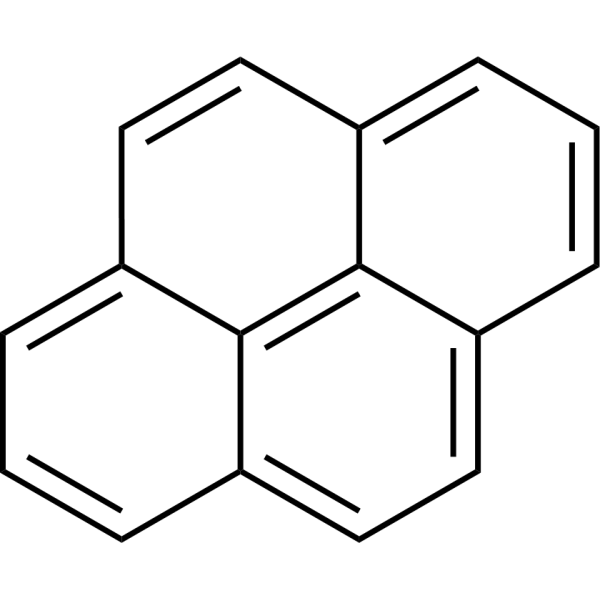
Pyrene is a polycyclic aromatic hydrocarbon (PAH) composed of four fused benzene rings. It has a distinct aromatic odor, produced by incomplete combustion of organic matter. Pyrene exhibits strong fluorescence, emitting in the blue region of the spectrum, making it useful as a probe for studying molecular interactions in solution and on surfaces. Pyrene is also used as a model compound for the study of PAHs in various environments and biological systems because of its ubiquity in these environments. However, long-term exposure to pyrene has been associated with potential health risks, including carcinogenicity and mutagenicity.
loading...
    loading...
Cat. No.: HY-N3057
CAS No.: 18956-15-5
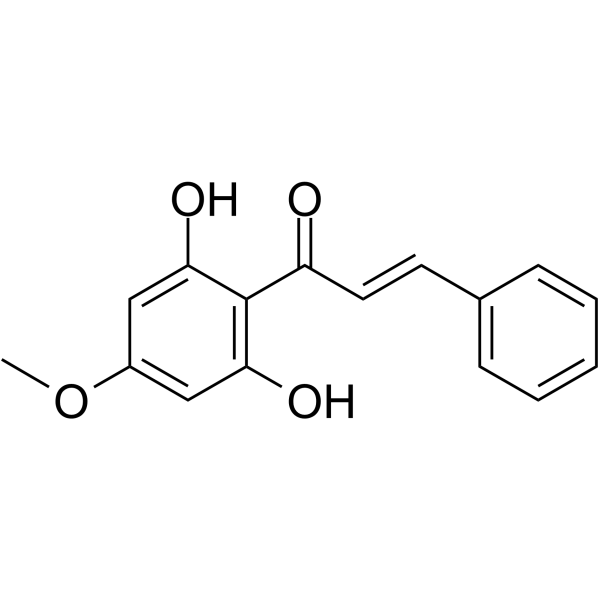
Pinostrobin chalcone is a chalcone found in Boesenbergia rotunda and Alpinia mutica. Pinostrobin chalcone exhibits cytotoxicity against various cancer cells. Pinostrobin chalcone is predicted to bind to the JAK active site, forming a hydrogen bond with Asn859 and hydrophobic interactions with aromatic residues. Pinostrobin chalcone can be used in research related to breast cancer, colon cancer, cervical cancer, and epidermoid carcinoma .
loading...
    loading...
Cat. No.: HY-Y1207
CAS No.: 103-73-1
Research Areas:  

Others

Ethoxybenzene is a SARM1 NAD + hydrolase inhibitor (human SARM1 IC50 = 0.385 μM). Ethoxybenzene co-crystallizes with the SARM1 TIR domain and exhibits an edge-to-face aromatic interaction with Trp638. Ethoxybenzene can be used in research on SARM1-related axonal degeneration .
loading...
    loading...
Cat. No.: HY-Y1725
CAS No.: 81-04-9
Synonyms: Armstrong's acid
Research Areas:  

Cancer

1,5-Naphthalenedisulfonic acid (Armstrong's acid) is an aromatic disulfonic acid compound commonly used as an intermediate in the dye industry and organic synthesis. 1,5-Naphthalenedisulfonic acid is a pharmaceutical co-former that significantly improves the solubility and thermodynamic stability of poorly soluble drugs. 1,5-Naphthalenedisulfonic acid constructs a stable supramolecular network through coordination, hydrogen bonding, and electrostatic interactions, thereby effectively preventing drug crystallization. 1,5-Naphthalenedisulfonic acid exhibits certain cytotoxicity and antitumor activity in some human hepatoma cells. 1,5-Naphthalenedisulfonic acid can be used for research on human hepatoma .
loading...
    loading...
Cat. No.: HY-W012278
CAS No.: 56-55-3
Synonyms: Tetraphene
Benz[a]anthracene (Tetraphene) is a polycyclic aromatic hydrocarbon pollutant and also a ligand of aryl hydrocarbon receptor 2 (AHR2), with a pIC50 of 7.319. Benz[a]anthracene can be detected in spruce needles near aluminum smelters. Exposure to Benz[a]anthracene during zebrafish embryonic stage activates the AHR-CYP1A signaling pathway and induces AHR2 expression, leading to social behavioral deficits that persist into adulthood, accompanied by impaired neuro-immune interaction, while anxiety levels remain unaffected. Benz[a]anthracene can be used in studies related to PAH environmental toxicology, developmental neurotoxicity and biodegradation .
loading...
    loading...
Cat. No.: HY-W009071
CAS No.: 211366-30-2
Research Areas:  

Cancer

1,5-Naphthalenedisulfonic acid tetrahydrate is an aromatic disulfonic acid compound commonly used as an intermediate in the dye industry and organic synthesis. 1,5-Naphthalenedisulfonic acid tetrahydrate is a pharmaceutical co-former that significantly improves the solubility and thermodynamic stability of poorly soluble drugs. 1,5-Naphthalenedisulfonic acid tetrahydrate constructs a stable supramolecular network through coordination, hydrogen bonding, and electrostatic interactions, thereby effectively preventing drug crystallization. 1,5-Naphthalenedisulfonic acid tetrahydrate exhibits certain cytotoxicity and antitumor activity in some human hepatoma cells. 1,5-Naphthalenedisulfonic acid tetrahydrate can be used for research on human hepatoma .
loading...
    loading...
Cat. No.: HY-W739372
CAS No.: 25704-18-1
Research Areas:  

Others

Poly (sodium 4-styrenesulfonate) is an anionic cation-exchange polyelectrolyte and metal ion binding/retention agent. It selectively retains Cr III and Fe II under pH 1 conditions, and its retention effect on all tested metal ions is enhanced under higher pH conditions. Poly (sodium 4-styrenesulfonate) inhibits nanosheet aggregation through edge-face interactions between aromatic rings and the graphite surface, thereby stabilizing the dispersion of reduced graphene oxide nanosheets. When incorporated into the mixed Nafion coating of bismuth film electrodes, Poly (sodium 4-styrenesulfonate) improves the reproducibility, stability, sensitivity, and anti-fouling capability for trace metal detection .
loading...
    loading...
Cat. No.: HY-P2788
CAS No.: 2493080-84-3
Target:  

Inhibitory Antibodies

Research Areas:  

Others

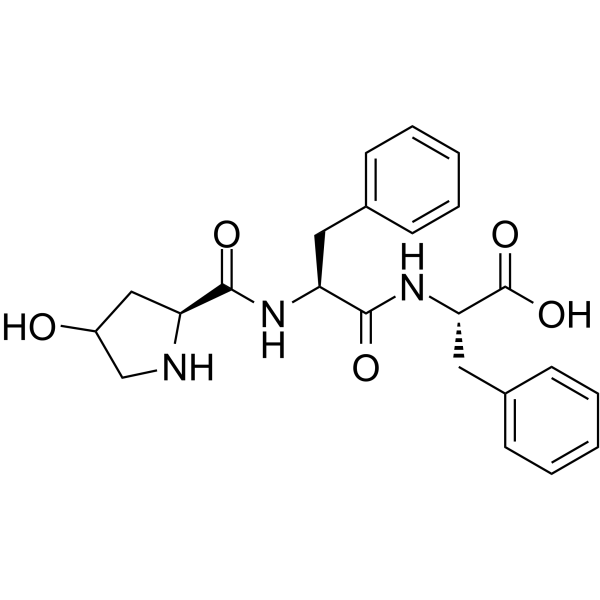
Hyp-Phe-Phe is a tripeptide that forms helical-like sheets via aromatic interactions of the Phe rings to comprise a cross helical architecture. Hyp-Phe-Phe possesses a high shear piezoelectricity and acts as piezoelectric material .
loading...
    loading...
Cat. No.: HY-103609R
CAS No.: 129-00-0
Synonyms: Benzo[def]phenanthrene (Standard)
Pyrene (Standard) is the analytical standard of Pyrene. This product is intended for research and analytical applications. Pyrene is a polycyclic aromatic hydrocarbon (PAH) composed of four fused benzene rings. It has a distinct aromatic odor, produced by incomplete combustion of organic matter. Pyrene exhibits strong fluorescence, emitting in the blue region of the spectrum, making it useful as a probe for studying molecular interactions in solution and on surfaces. Pyrene is also used as a model compound for the study of PAHs in various environments and biological systems because of its ubiquity in these environments. However, long-term exposure to pyrene has been associated with potential health risks, including carcinogenicity and mutagenicity.
loading...
    loading...
Cat. No.: HY-D0910
CAS No.: 102185-48-8
5-Bromo-6-chloro-1H-indol-3-yl acetate, a member of the indole family, is a derivative of the aromatic heterocyclic compound indole. It has been used in a variety of research settings, including studies of enzyme kinetics and protein-ligand interactions. 5-Bromo-6-chloro-1H-indol-3-yl acetate is a biomaterial or organic compound that can be used as a biomaterial or organic compound related to life science research .
loading...
    loading...
Cat. No.: HY-N3057R
CAS No.: 18956-15-5
Pinostrobin chalcone (Standard) is the analytical standard of Pinostrobin chalcone (HY-N3057). This product is intended for research and analytical applications. Pinostrobin chalcone is a chalcone found in Boesenbergia rotunda and Alpinia mutica. Pinostrobin chalcone exhibits cytotoxicity against various cancer cells. Pinostrobin chalcone is predicted to bind to the JAK active site, forming a hydrogen bond with Asn859 and hydrophobic interactions with aromatic residues. Pinostrobin chalcone can be used in research related to breast cancer, colon cancer, cervical cancer, and epidermoid carcinoma .
loading...
    loading...
Cat. No.: HY-155817
Research Areas:  

Others

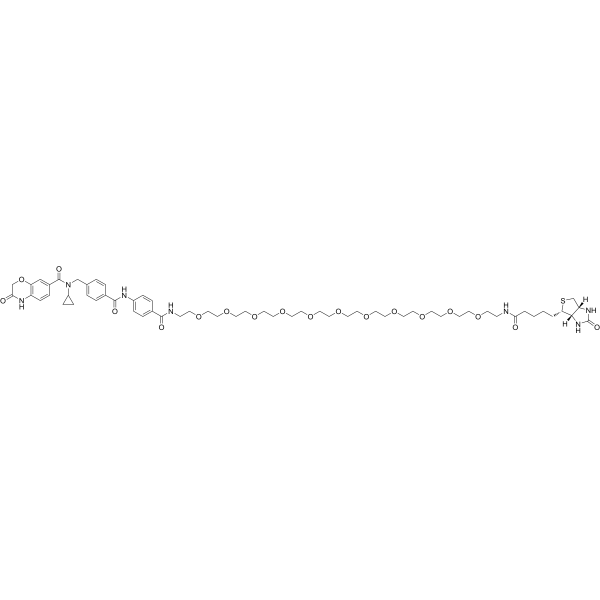
UNC7096 (compound 53) is a biotinylated affinity reagent. The phenyl ring of UNC7096 replaces the pyrimidine ring in UNC6934 (HY-145103) and introduces biotin at the para position of the phenyl ring, which has a high binding affinity to the NSD2-PWWP1 domain (Kd=46 nM). UNC7096 blocks the interaction between NSD2-PWWP1 and nucleosomal H3K36me2 by occupying the methyl-lysine binding pocket of NSD2-PWWP1. This binding is achieved by covalent binding through the formation of hydrogen bonds and a specific aromatic cage structure. UNC7096 can be used to capture proteins that interact with the NSD2-PWWP1 domain to further analyze the biological significance of these interactions .
loading...
    loading...
Cat. No.: HY-W012278S
CAS No.: 1718-53-2
Synonyms: Tetraphene-d12
Benz[a]anthracene-d12 (Tetraphene-d12) is the deuterated-labeled Benz[a]anthracene (HY-W012278). Benz[a]anthracene (Tetraphene) is a polycyclic aromatic hydrocarbon pollutant and also a ligand of aryl hydrocarbon receptor 2 (AHR2), with a pIC50 of 7.319. Benz[a]anthracene can be detected in spruce needles near aluminum smelters. Exposure to Benz[a]anthracene during zebrafish embryonic stage activates the AHR-CYP1A signaling pathway and induces AHR2 expression, leading to social behavioral deficits that persist into adulthood, accompanied by impaired neuro-immune interaction, while anxiety levels remain unaffected. Benz[a]anthracene can be used in studies related to PAH environmental toxicology, developmental neurotoxicity and biodegradation .
loading...
    loading...
Cat. No.: HY-160125
CAS No.: 2154373-61-0
Research Areas:  

Others

25,25-Difluoro-27-norcholestenoic acid is an LXRb ligand that disrupts the His435-Trp457 aromatic-aromatic interaction, destabilizing the H11-H12 region and favoring corepressor binding .
loading...
    loading...
Cat. No.: HY-D0005
CAS No.: 4733-39-5
Target:  

Amyloid-β

Research Areas:  

Neurological Disease

Bathocuproine is a phenanthroline chelator that binds specifically to Cu +. Bathocuproine preferentially binds Cu + over Cu 2+ to form a chromogenic complex, which is used to detect the oxidation state of copper in biomolecules. Bathocuproine undergoes concentration-dependent self-association to form dimers, and it can engage in aromatic stacking interactions with aromatic residues of Aβ (Kd ≈ 1 mM). Bathocuproine is applicable to research related to Alzheimer's disease .
loading...
    loading...
Cat. No.: HY-103084
CAS No.: 2109805-65-2
Research Areas:  

Cardiovascular Disease

PDE5-IN-1 is an orally active, selective PDE5 inhibitor with an IC50 of 5.6 nM. PDE5-IN-1 forms hydrogen bond interactions with the Q817 residue in the catalytic domain of PDE5, and aromatic π-π stacking interactions with the F820 residue. PDE5-IN-1 exerts anti-cardiac hypertrophy and vasodilatory effects, reduces mean pulmonary arterial pressure and right ventricular hypertrophy index. PDE5-IN-1 can be used in the research of pulmonary arterial hypertension .
loading...
    loading...
Cat. No.: HY-183603
Target:  

DNA/RNA Synthesis

Research Areas:  

Cancer

FRC-222 is a CHD1 tandem chromodomain inhibitor with a Kd of 0.15 μM and an IC50 of 0.18 μM. FRC-222 binds to the H3K4me3 binding site of CHD1 tandem chromodomain via aromatic cage interactions and extended ligand contacts. FRC-222 can be used for the research of prostate cancer[1].
loading...
    loading...
Cat. No.: HY-183602
Target:  

DNA/RNA Synthesis

Research Areas:  

Cancer

FRC-303 is a CHD1 inhibitor with a Kd of 0.14 μM and an IC50 of 0.18 μM. FRC-303 binds to the H3K4me3 binding site of CHD1 tandem chromodomain, forms aromatic cage interactions and extended ligand contacts, acts as a methyl-lysine mimic, and occupies natural peptide ligand-binding regions. FRC-303 can be used for the research of prostate cancer .
loading...
    loading...
Cat. No.: HY-P992360

Target:  

GABA Receptor

Research Areas:  

Neurological Disease Cancer

GT-002 is a partial positive allosteric modulator targeting the α3 subtype of GABAA receptors, as well as a specific binder of tumor-associated TF-glycosylated LYPD3. GT-002 mildly enhances GABA-induced chloride currents by binding to the benzodiazepine site of GABAA receptors, thereby alleviating prefrontal hypofunction and improving cognitive, memory and social interaction abilities. GT-002 can be used in research related to schizophrenia spectrum disorders, various squamous cell carcinomas, colorectal cancer, non-small cell lung cancer, and aromatic L-amino acid decarboxylase deficiency .
loading...
    loading...
Cat. No.: HY-L913
105 compounds

Recently, significant advancements in tyrosine-targeting electrophiles have primarily occurred in the field of protein-protein interactions (PPIs), where cysteine residues are often underrepresented and novel chemistries are needed to address these interfaces. In this context, tyrosines are frequently more accessible compared to more buried binding sites. Moreover, they are commonly found at "hot spots," which are functional epitopes of PPIs, with 12.3% of the residues consisting of tyrosines. This prevalence is likely due to the hydrophobic nature of tyrosine, its ability to participate in aromatic π-interactions, and its capacity for hydrogen bonding. Beyond PPIs, some progress has also been made in covalent tyrosine targeting in other areas where more commonly addressed side chains are lacking. Even though tyrosine has a slightly lower pKa value compared to the protonated lysine side chain (approximately 10 vs. 10.5 for the unprotected amino acid side chains), significantly less progress has been made in the development of tyrosine-targeted covalent ligands compared to lysine. This is likely due to the reduced flexibility of the tyrosine side chain and the greater steric hindrance of its hydroxy group, which makes it more challenging to adopt suitable reaction geometries.

Through careful selection, we constructed a structural filter containing over 110 electrophilic groups. By analyzing the electrophilic fragments selected by the structural filter, we removed any molecules with trivial or undesirable structural features. Ultimately, we obtained 124 fragment molecules which can target tyrosine residue and can be used for fragment-based covalent drug discovery.

