25 Results for "

cAMP decrease

" in MedChemExpress (MCE) Product Catalog:
Products (25)

25 Results for "cAMP decrease" in MCE Product Catalog:

2
2 Cited Publications
Cat. No.: HY-P3419
CAS No.: 929905-12-4
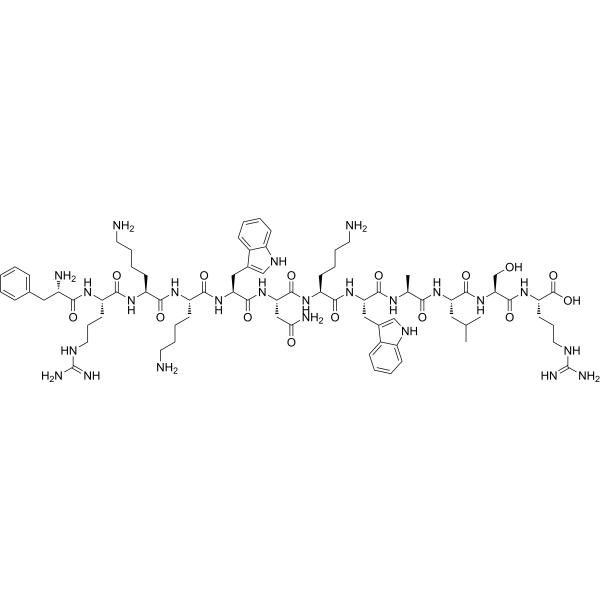
PAMP-12 (unmodified) is an endogenous peptide and is a MrgX2 agonist. PAMP-12 (unmodified) can reduce cAMP accumulation, increase Ca 2+ levels, enhance beta-arrestin recruitment, decrease IP-1, and increases phosphoERK. PAMP-12 (unmodified) can elicit hypotension through inhibiting catecholamine secretion from sympathetic nerve endings and adrenal chromaffin cells. PAMP-12 (unmodified) can be used for the research of hypotension and ulcerative colitis .
loading...
    loading...
1
1 Cited Publications
Cat. No.: HY-W140439
CAS No.: 19420-56-5
Synonyms: 18:1 Lyso PC
Target:  

Endogenous Metabolite

Research Areas:  

Inflammation/Immunology

1-Oleoyl-sn-glycero-3-phosphocholine (18:1 Lyso PC), a lysophospholipid, is a GPR82 inhibitor. 1-Oleoyl-sn-glycero-3-phosphocholine abrogates constitutive Gi-coupled GPR82 activity, shifts active/inactive equilibrium to inactive, suppresses Gi protein activation, increases cAMP production, and decreases GTPγS binding to Gαi proteins. 1-Oleoyl-sn-glycero-3-phosphocholine contributes to adipocyte lipolysis regulation.1-Oleoyl-sn-glycero-3-phosphocholine exhibits reduced serum levels in mouse models of steatohepatitis, linked to hepatic Lpcat 1-4 up-regulation .
loading...
    loading...
1
1 Cited Publications
Cat. No.: HY-P4633
CAS No.: 7432-23-7
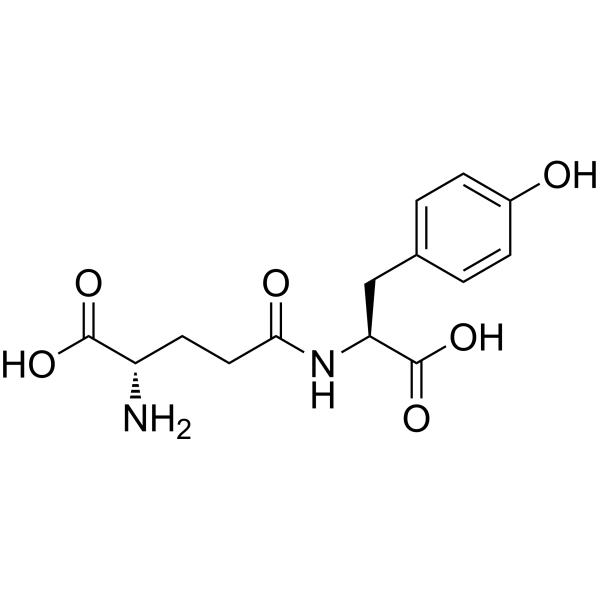
γ-Glu-Tyr is an orally active gut microbiota-derived metabolite and a competitive DPP-IV inhibitor with an IC50 of 6.77 mM against hDPP-IV. γ-Glu-Tyr weakly activates hCaSR. γ-Glu-Tyr decreases colonic pro-inflammatory cytokine (IL-6, IL-1β, TNF-α) levels. γ-Glu-Tyr activates the cAMP/PKA signaling pathway and inhibits NF-κB phosphorylation, thereby reducing inflammatory responses. γ-Glu-Tyr can be used for research on type 2 diabetes and ulcerative colitis .
loading...
    loading...
Cat. No.: HY-160734
CAS No.: 2685823-26-9
Synonyms: GSBR-1290
Target:  

GLP Receptor

Research Areas:  

Metabolic Disease

Aleniglipron (GSBR-1290) is an orally active glucagon-like peptide-1 receptor (GLP-1R) agonist, with an EC50 value of less than 0.1 nM in HDB cell lines in cAMP stimulation assays. Aleniglipron selectively activates the Gαs-cAMP signaling pathway of GLP-1R without β-arrestin recruitment. Aleniglipron induces insulin release, promotes glucose clearance, reduces food intake and decreases body weight. Aleniglipron is applicable to research related to type 2 diabetes and obesity .
loading...
    loading...
Cat. No.: HY-167856
CAS No.: 3034664-39-3
Target:  

GPR88

Research Areas:  

Neurological Disease

RTI-122 is a selective, blood-brain barrier-permeable GPR88 agonist (cAMP EC50=11 nM), with EC50 values of 11.5 nM and 155 nM for human and mouse GPR88, respectively ([ 35S]GTPγS assay). By activating the GPR88 receptor to regulate the cAMP signaling pathway and G protein activity, RTI-122 significantly attenuates Binge-like drinking, reduces alcohol intake, and decreases alcohol-seeking motivation. RTI-122 blocks the reinstatement of alcohol-seeking behavior without affecting water or sucrose intake. RTI-122 exhibits metabolic stability in mice (T1/2=5.8 h) and can be used to investigate alcohol use disorder .
loading...
    loading...
Cat. No.: HY-113058
CAS No.: 14292-27-4
Purity:  ≥98.0%
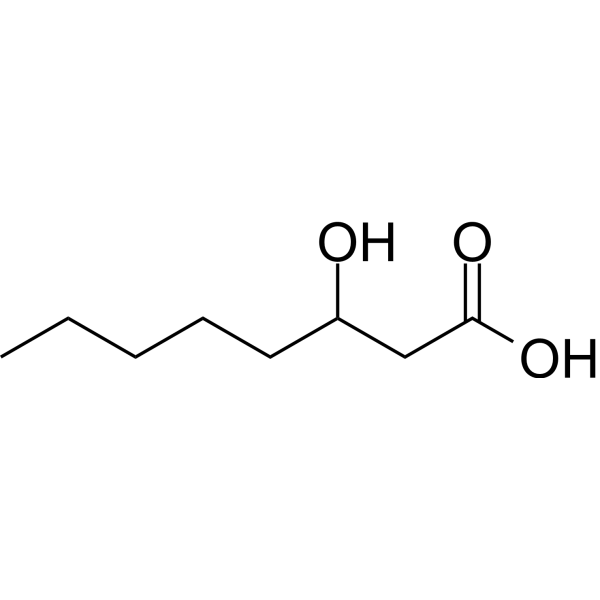
3-Hydroxyoctanoic acid is a medium-chain β-hydroxy fatty acid that possesses antibacterial, antifungal, and quorum-sensing regulatory activities. 3-Hydroxyoctanoic acid is an endogenous agonist of the human HCAR3 receptor, decreases intracellular cAMP, reduces IL-1beta secretion, increases IL-10 secretion, and decreases ROS production in macrophages. 3-Hydroxyoctanoic acid inhibits quorum-sensing-regulated pyocyanin production in Pseudomonas aeruginosa PAO1 and inhibits the yeast-to-hypha transition in Candida albicans. 3-Hydroxyoctanoic acid is used in research related to metabolism, bacterial infections, and fungal infections .
loading...
    loading...
Cat. No.: HY-N6901
CAS No.: 56857-57-9
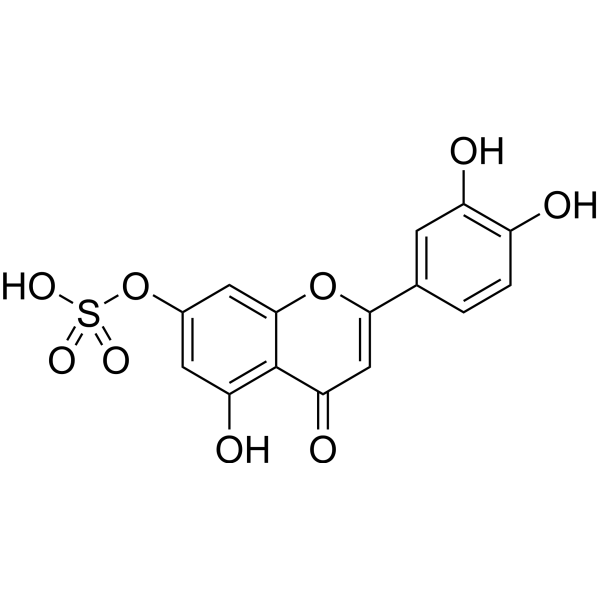
Luteolin 7-sulfate is isolated from Phyllospadix iwatensis Makino, a marine plant. Luteolin 7-sulfate attenuates TYR gene expression through the intervention of a cAMP-responsive element binding protein (CREB)- and microphthalmia-associated transcription factor (MITF)-mediated signaling pathway, leading to the decreased melanin synthesis .
loading...
    loading...
Cat. No.: HY-W700715
CAS No.: 1215622-76-6
3-Hydroxyoctanoic acid-d12 is the deuterated-labeled 3-Hydroxyoctanoic acid (HY-113058). 3-Hydroxyoctanoic acid is a medium-chain β-hydroxy fatty acid that possesses antibacterial, antifungal, and quorum-sensing regulatory activities. 3-Hydroxyoctanoic acid is an endogenous agonist of the human HCAR3 receptor, decreases intracellular cAMP, reduces IL-1beta secretion, increases IL-10 secretion, and decreases ROS production in macrophages. 3-Hydroxyoctanoic acid inhibits quorum-sensing-regulated pyocyanin production in Pseudomonas aeruginosa PAO1 and inhibits the yeast-to-hypha transition in Candida albicans. 3-Hydroxyoctanoic acid is used in research related to metabolism, bacterial infections, and fungal infections .
loading...
    loading...
Cat. No.: HY-178780
CAS No.: 2137977-29-6
Synonyms: MKP10241
Target:  

GPR119

Deziglipel (MKP10241) is an orally active GPR119 agonist (human EC50: 3.7 nM; IC50 > 7.2 μM). Deziglipel activates GPR119 to increase cAMP levels, promotes active GLP-1 release, reduces blood glucose and HbA1c, decreases body weight and feed intake, and resolves MASH via altered lipid, cytokine, and liver enzyme levels. Deziglipel shows low hERG channel inhibition, minimal CYP450 inhibition, no PXR activation, and no significant transporter inhibition. Deziglipel can be used for the research of type 2 diabetes mellitus, obesity, MASH/MASLD, and metabolic disorders .
loading...
    loading...
Cat. No.: HY-124681
CAS No.: 1003000-59-6
Research Areas:  

Metabolic Disease

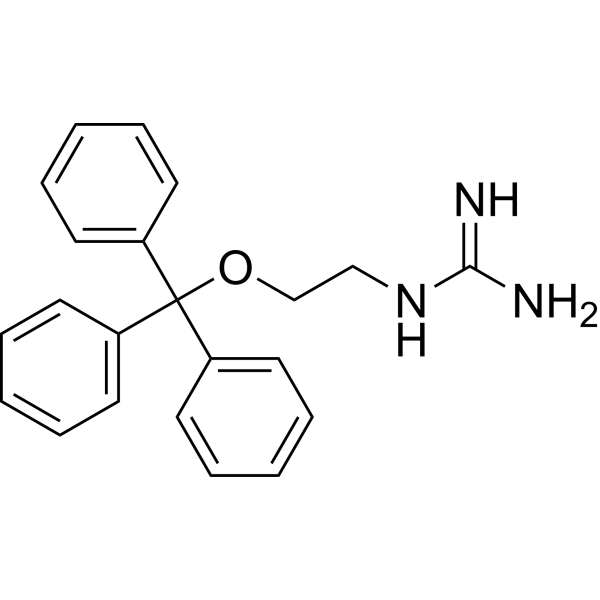
NY0116 is a neuromedin U receptor 2 (NMUR2) agonist with EC50 values of 27.76 μM for hNMUR1 and 13.61 μM for hNMUR2. NY0116 decreases cAMP while stimulating calcium signaling in stably expressing NMUR2 HEK293 cells .
loading...
    loading...
Cat. No.: HY-177493A
Target:  

Somatostatin Receptor

Research Areas:  

Metabolic Disease Endocrinology

SSTR3 agonist-1 TFA is a potent, orally active, and selective SSTR3 agnoist (EC50 =0.14 nM). SSTR3 agonist-1 TFA binds to SSTR3 receptor to inhibit cAMP activity. SSTR3 agonist-1 TFA decreases kidney weight and kidney cystic index (KCI) in a mouse model of autosomal dominant polycystic kidney disease (ADPKD). SSTR3 agonist-1 TFA can be used for ADPKD research .
loading...
    loading...
Cat. No.: HY-P4497
CAS No.: 71835-80-8
Target:  

ERK

Research Areas:  

Cancer

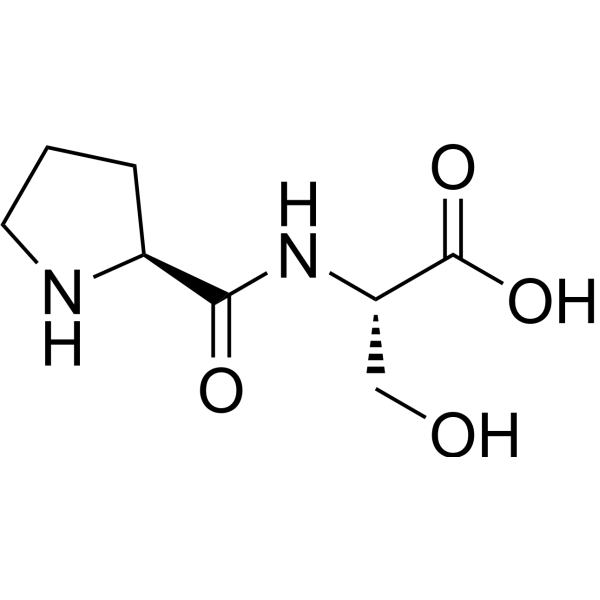
Prolylserine, a dipeptide, is an inhibitor of melanogenesis production in Mel-Ab cells. Prolylserine decreases expression of microphthalmia-associated transcription factor (MITF) and tyrosinase, induces phorphosylation of ERK, but not cAMP response element binding protein (CREB) .
loading...
    loading...
Cat. No.: HY-113058R
CAS No.: 14292-27-4
3-Hydroxyoctanoic acid (Standard) is the analytical standard of 3-Hydroxyoctanoic acid (HY-113058). This product is intended for research and analytical applications. 3-Hydroxyoctanoic acid is a medium-chain β-hydroxy fatty acid that possesses antibacterial, antifungal, and quorum-sensing regulatory activities. 3-Hydroxyoctanoic acid is an endogenous agonist of the human HCAR3 receptor, decreases intracellular cAMP, reduces IL-1beta secretion, increases IL-10 secretion, and decreases ROS production in macrophages. 3-Hydroxyoctanoic acid inhibits quorum-sensing-regulated pyocyanin production in Pseudomonas aeruginosa PAO1 and inhibits the yeast-to-hypha transition in Candida albicans. 3-Hydroxyoctanoic acid is used in research related to metabolism, bacterial infections, and fungal infections .
loading...
    loading...
Cat. No.: HY-P3419A
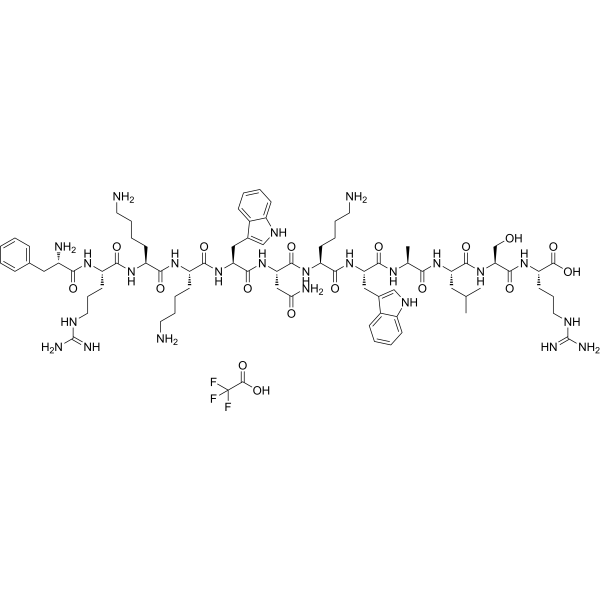
PAMP-12 (unmodified) TFA is an endogenous peptide and is a MrgX2 agonist. PAMP-12 (unmodified) TFA can reduce cAMP accumulation, increase Ca 2+ levels, enhance beta-arrestin recruitment, decrease IP-1, and increases phosphoERK. PAMP-12 (unmodified) TFA can elicit hypotension through inhibiting catecholamine secretion from sympathetic nerve endings and adrenal chromaffin cells. PAMP-12 (unmodified) TFA can be used for the research of hypotension and ulcerative colitis .
loading...
    loading...
Cat. No.: HY-11032
CAS No.: 902750-48-5
Target:  

Others

Research Areas:  

Metabolic Disease

SM-350300 is a glucoprotein. SM-350300 stimulates lipolysis in white adipocytes by activating the cyclic AMP (cAMP) pathway, and upregulates the expression of lipolytic enzymes and uncoupling proteins (UCP1, UCP3) in brown adipose tissue (BAT) and white adipose tissue (WAT). SM-350300 reduces body weight by decreasing carcass fat while increasing lean muscle mass in metabolic disorder models. SM-350300 can be used for the study of metabolic disorders including obesity, type 2 diabetes, and cachexia .
loading...
    loading...
Cat. No.: HY-110107
CAS No.: 469861-49-2
Purity:  99.98%
GW438014A is a selective NPY-Y5 receptor competitive antagonist capable of crossing the blood-brain barrier, with IC50 values of 197 nM and 211 nM against human receptors. GW438014A reverses PYY-mediated inhibition of Forskolin (HY-15371)-induced cAMP production, reduces NPY-induced food intake and nocturnal food intake in rodents, decreases body weight gain and fat mass in Zucker rats, and inhibits centrally mediated feeding behavior. GW438014A can be used in research related to obesity and epilepsy .
loading...
    loading...
Cat. No.: HY-P0165B
CAS No.: 1022150-16-8
Synonyms: ITM077 acetate; R1583 acetate; BIM51077 acetate
Target:  

GLP Receptor

Research Areas:  

Metabolic Disease

Taspoglutide (R1583) acetate is an agonist of the glucagon-like peptide 1 receptor (GLP-1R) with an Ki value of 1.1 nM. Taspoglutide acetate induces cAMP accumulation in CHO-K1 cells expressing human GLP-1R (EC50 = 0.06 nM). Taspoglutide acetate decreases blood levels of glucose and increases blood levels of insulin in a glucose tolerance test in Zucker diabetic obese rats. Taspoglutide acetate reduces blood levels of gastric inhibitory polypeptide (GIP), plasma levels of triglycerides, and body weight in the same model .
loading...
    loading...
Cat. No.: HY-148032
CAS No.: 20776-45-8
Synonyms: 5-BT
Target:  

5-HT Receptor

Research Areas:  

Neurological Disease

5-Benzyloxytryptamine (5-BT) is a selective partial agonist for 5-hydroxytryptamine 1D/1B (5-HT1D/1B) receptors with an IC50 value of 40 nM for bovine caudate 5-HT1D and reduced affinity for other receptors (5-HT2 IC50>470 nM). 5-Benzyloxytryptamine inhibits adenylate cyclase to decrease neurotransmitter release and downregulate cAMP signaling. 5-Benzyloxytryptamine is promising for research of neurotransmitter imbalance-related disorders like migraine .
loading...
    loading...
Cat. No.: HY-180220
Target:  

GLP Receptor

Research Areas:  

Metabolic Disease

GLP-1R agonist 40 (Compound I-1) is an orally active, potent and selective GLP-1R agonist (EC50 = 26.7 pM for cAMP accumulation). GLP-1R agonist 40 shows significant decrease in blood glucose levels. GLP-1R agonist 40 can be used in the research of type 2 diabetes .
loading...
    loading...
Cat. No.: HY-182414
CAS No.: 81907-78-0
Target:  

Ser/Thr Protease

Research Areas:  

Inflammation/Immunology

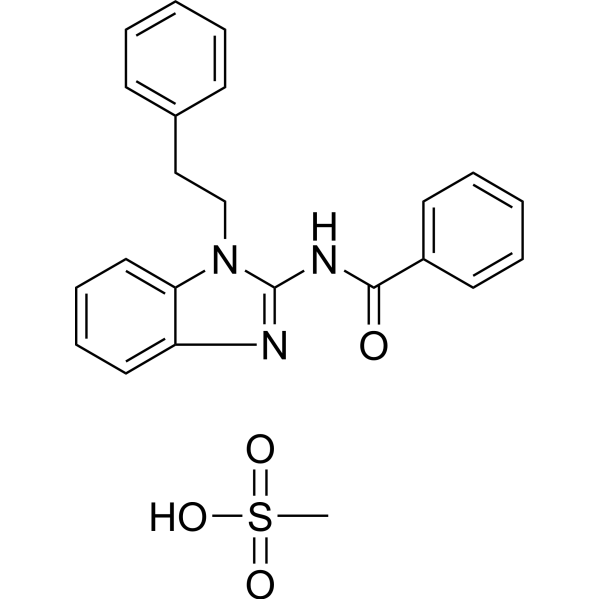
NCO-650 free base is an antiallergic agent that acts by inhibiting tryptase, a key trypsin-like protease in mast cells. NCO-650 free base inhibits mast cell histamine release, increases intracellular cAMP levels in mast cells, suppresses bronchoconstriction, and prevents decreases in perfusion pressure and systemic blood pressure. NCO-650 free base is applicable to the research of allergic diseases and bronchial asthma .
loading...
    loading...

