
12 Results for "

catheters

" in MedChemExpress (MCE) Product Catalog:
Products (12)

12 Results for "catheters" in MCE Product Catalog:

1
1 Cited Publications
Cat. No.: HY-16485
CAS No.: 560130-42-9
Synonyms: TD-6424 hydrochloride
Target:  

Antibiotic Bacterial

Research Areas:  

Infection

Telavancin hydrochloride (TD-6424 hydrochloride) is a bactericidal agent that exhibits inhibitory activity against Staphylococcus aureus. Telavancin hydrochloride inhibits bacterial cell wall synthesis by binding to the lipid-linked N-acetylglucosamine-N-muramyl pentapeptide (with a D-Ala-D-Ala terminus), a peptidoglycan precursor, and blocks the transglycosylation and transpeptidation steps. Telavancin hydrochloride disrupts bacterial membrane barrier function, induces dissipation of bacterial membrane potential, and causes leakage of cytoplasmic ATP and potassium ions, with its activity restricted exclusively to bacterial membranes. Telavancin hydrochloride can be used in research on bacterial infections, central venous catheter-related bloodstream infections, and Gram-positive bacterial pneumonia .
loading...
    loading...
Cat. No.: HY-108865
CAS No.: 105857-23-6
Synonyms: Actilyse; Activase
Target:  

Ser/Thr Protease

Research Areas:  

Cardiovascular Disease Cancer

Alteplase (Actilyse; Activase), a tissue plasminogen activator prepared by recombination, is a thrombolytic agent that play important roles in acute ischemic stroke, pulmonary embolism, acute myocardial infarction, and occluded catheters .
The product size below only indicate the effective content of Alteplase. The ratio of Alteplase effective content : total content = 1:46-1:50. The actual ratio depends on the batch.)
loading...
    loading...
Cat. No.: HY-A0269
CAS No.: 32887-01-7
Synonyms: Amdinocillin; FL 1060
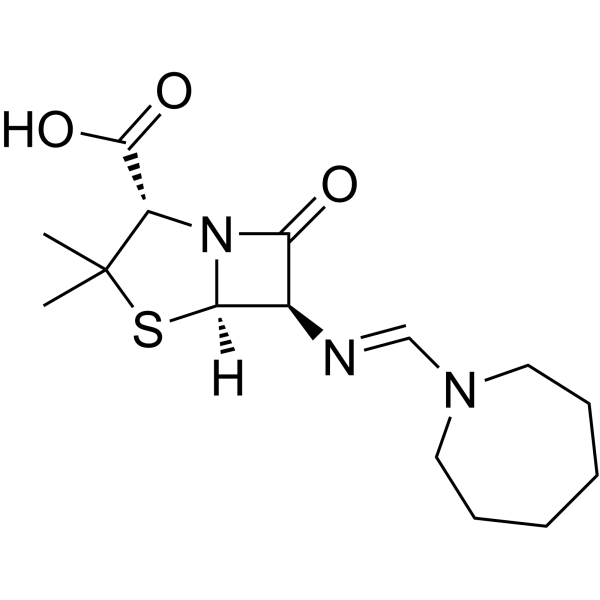
Mecillinam (Amdinocillin) is a β-lactam Antibiotic. Mecillinam inhibits PBP2. Mecillinam exhibits activity against Gram-negative Enterobacteriaceae, and NDM-/OXA-producing E. coli and K. pneumoniae, and can eradicate catheter/bladder mucosa biofilms and clear planktonic bacteria in urine. Mecillinam acts synergistically with β-lactams and Avibactam (HY-14879), enhancing the activity of β-lactams against E. coli in vitro/in vivo. Mecillinam can be used in research on catheter-associated bacteriuria, chlamydial infection and peritonitis/sepsis .
loading...
    loading...
Cat. No.: HY-P2292
Target:  

Bacterial Fungal

Research Areas:  

Infection

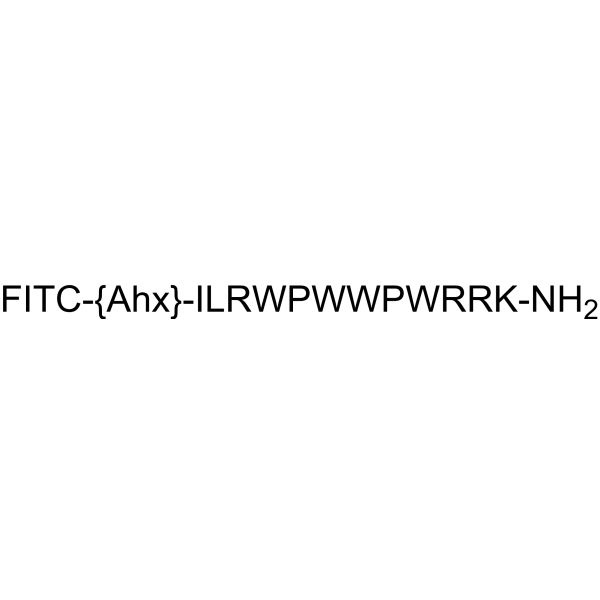
Omiganan, FITC labeled is a peptide-FITC complex composed of Omiganan and a FITC. Omiganan is a bactericidal and fungicidal cationic peptide being developed as a topical gel for prevention of catheter-associated infections. FITC is a derivative of fluorescein for the labeling of amines .
loading...
    loading...
Cat. No.: HY-145941
CAS No.: 44992-01-0
Synonyms: 2-Acryloxyethyltrimethylammonium chloride
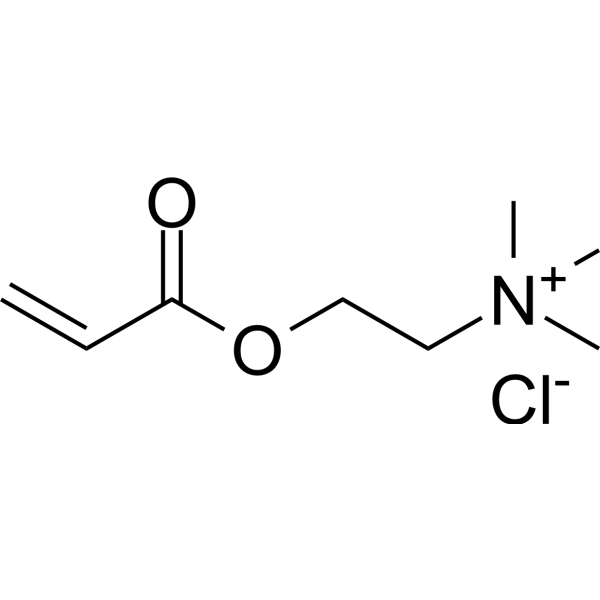
AETA (2-Acryloxyethyltrimethylammonium chloride) can be used for the synthesis of hydrophilic polymers and hydrogels. Hydrogels are used for membranes, catheters, contact lenses, and drug delivery systems .
loading...
    loading...
Cat. No.: HY-P5694
Research Areas:  

Infection

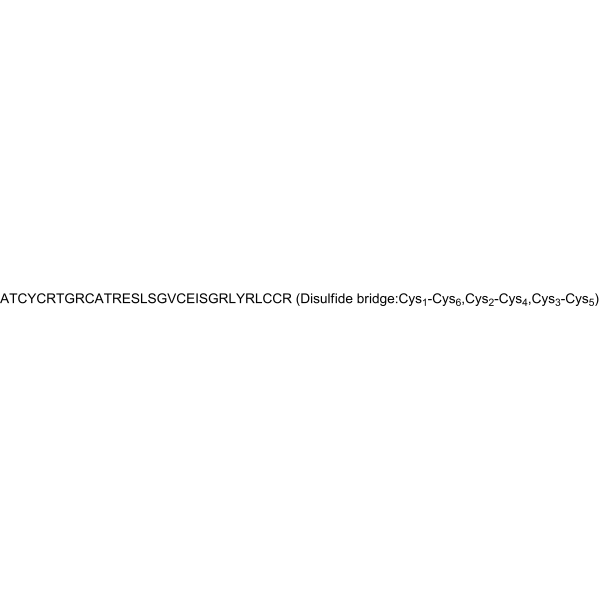
Human α-defensin 5 is an orally active antimicrobial peptide with diverse biological activities including antibacterial, antiviral, and antiparasitic effects. Human α-defensin 5 kills UPEC, inhibits bacterial biofilm formation, and disrupts bacterial outer membrane integrity. Human α-defensin 5 is hijacked by Shigella flexneri, enhancing Shigella adhesion, aggregation, and invasion of host epithelial cells, and aggravating histopathological damage in corneal and colonic tissues as well as fever. Human α-defensin 5 inhibits LPS-induced pro-inflammatory cytokine production and NF-κB signaling pathway activation, upregulates the tight junction proteins ZO-1 and occludin, and maintains intestinal epithelial barrier integrity. Human α-defensin 5 inhibits various non-enveloped viruses and exhibits killing activity against Toxoplasma gondii tachyzoites. Human α-defensin 5 reduces UPEC bacterial load in the bladder and urine and alleviates inflammatory damage in a rat catheter-associated urinary tract infection model. Human α-defensin 5 can be used in research related to bacterial infections, viral infections, parasitic infections, and inflammatory bowel disease .
loading...
    loading...
Cat. No.: HY-A0269S
Synonyms: Amdinocillin-d12; FL 1060-d12
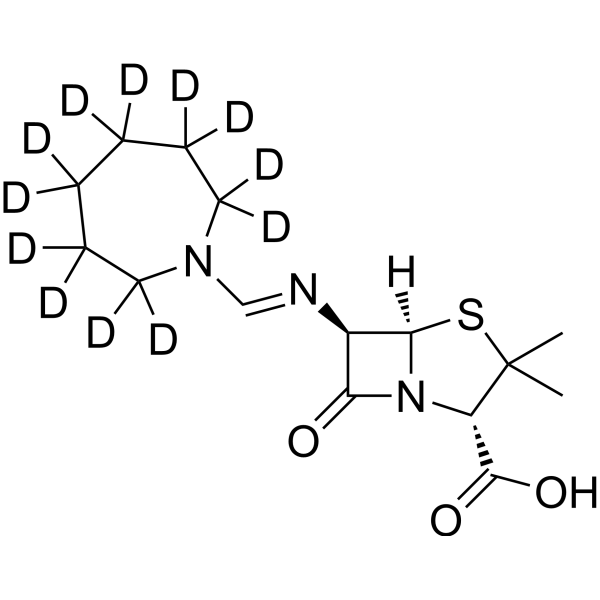
Mecillinam-d12 (Amdinocillin-d12) is the d12-labeled Mecillinam hydrochloride (HY-A0269A). Mecillinam hydrochloride is a β-lactam Antibiotic. Mecillinam hydrochloride inhibits PBP2. Mecillinam hydrochloride exhibits activity against Gram-negative Enterobacteriaceae, and NDM-/OXA-producing E. coli and K. pneumoniae, and can eradicate catheter/bladder mucosa biofilms and clear planktonic bacteria in urine. Mecillinam hydrochloride acts synergistically with β-lactams and Avibactam (HY-14879), enhancing the activity of β-lactams against E. coli in vitro/in vivo. Mecillinam hydrochloride can be used in research on catheter-associated bacteriuria, chlamydial infection and peritonitis/sepsis .
loading...
    loading...
Cat. No.: HY-105048A
CAS No.: 269062-93-3
Target:  

Bacterial

Research Areas:  

Infection

Omiganan pentahydrochloride is a cationic peptide compound with a broad antibacterial profile. Omiganan pentahydrochloride is capable of inhibiting a variety of bacteria, including yeast, and is active against both gram-positive and gram-negative bacteria. Omiganan pentahydrochloride is able to interact with the bacterial cell membrane, causing the destruction of the cell membrane and the death of the bacteria. Omiganan pentahydrochloride can be used for the study of antimicrobial activity against pathogens commonly associated with catheter-associated infections, including strains with drug-resistant phenotypes .
loading...
    loading...
Cat. No.: HY-P2292A
Target:  

Bacterial Fungal

Research Areas:  

Infection

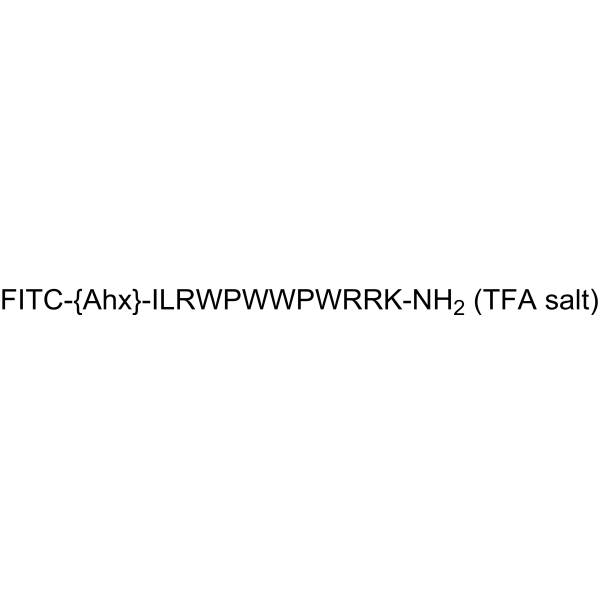
Omiganan, FITC labeled TFA is a peptide-FITC complex composed of Omiganan and a FITC. Omiganan is a bactericidal and fungicidal cationic peptide being developed as a topical gel for prevention of catheter-associated infections .
loading...
    loading...
Cat. No.: HY-116262
CAS No.: 167298-74-0
SCH 51866 is a potent, selective and orally active inhibitor of PDE1 (IC50=70 nM) and PDE5 (IC50=60 nM). SCH 51866 inhibits collagen-induced aggregation of human washed platelets (IC50=10 μM), prevents neointimal formation in balloon catheter-injured carotid arteries of spontaneously hypertensive rats (SHR), and reduces blood pressure in SHR. SCH 51866 can be used in the study of hypertension .
loading...
    loading...
Cat. No.: HY-184201
CAS No.: 3123310-71-1
Research Areas:  

Infection

Anti-MRSA agent 44 is a potent anti-methicillin-resistant Staphylococcus aureus (MRSA) agent. Anti-MRSA agent 44 exihibits antibiofilm activity against MRSA. Anti-MRSA agent 44 reduces bacterial counts and biofilm burdens, accelerates wound healing, lowers inflammatory cytokine levels in mouse models. Anti-MRSA agent 44 can be used for the research of MRSA skin wound infection and MRSA catheter-associated biofilm infection .
loading...
    loading...
Cat. No.: HY-187797
CAS No.: 2408524-70-7
Synonyms: GSK3882347
Target:  

Bacterial

Research Areas:  

Infection

Luxafimloc (GSK3882347) is a FimH inhibitor and anti-infective agent. Luxafimloc inhibits the activity of the FimH adhesin molecule. Luxafimloc reduces the bacterial load in the bladder of mice with acute cystitis induced by Klebsiella pneumoniae infection. Luxafimloc can be used in studies related to urinary tract infections, including cystitis, uncomplicated urinary tract infection, complicated urinary tract infection, catheter-associated urinary tract infection, acute urinary tract infection, recurrent urinary tract infection, and chronic urinary tract infection .
loading...
    loading...
  • 1

