8 Results for "

cell surface membrane labeling

" in MedChemExpress (MCE) Product Catalog:
Products (8)

8 Results for "cell surface membrane labeling" in MCE Product Catalog:

2
2 Cited Publications
Cat. No.: HY-156404
CAS No.: 1449483-78-6
Purity:  99.04%
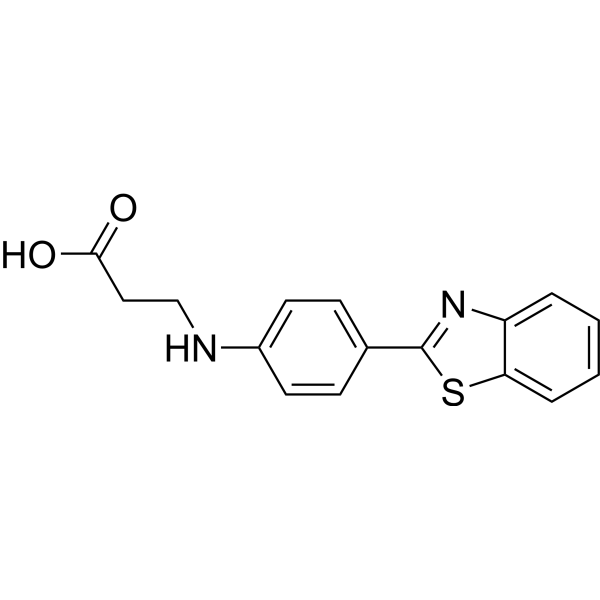
PM-1, a derivative of Thioflavin-T (ThT; HY-D0218), is a small but highly specific plasma membrane (PM) fluorescent dye for specific and long-time membrane imaging of living and fixed cells. PM-1 is embedded directly into the cell membrane and exhibits a very long retention time on the plasma membrane with a half-life of approximately 15 h. PM-1 can be used in combination with protein labeling probes to study ectodomain shedding and endocytosis processes of cell surface proteins .
loading...
    loading...
1
1 Cited Publications
Cat. No.: HY-NP163A
Synonyms: WGA-AF488
Wheat germ agglutinin-AF488 (WGA-AF488) is a cell membrane-specific staining agent prepared by conjugating wheat germ agglutinin with the Alexa Fluor 488 (HY-D1304) fluorescent dye, and it binds to cell surface glycoproteins with high affinity. Wheat germ agglutinin-AF488 is applied in fluorescence microscopy and confocal imaging techniques, and it can clearly label the membrane structures of various cells including breast cancer cells, enabling high-resolution visual observation. Wheat germ agglutinin-AF488 is used in studies of breast cancer and triple-negative breast cancer to observe cell morphology and membrane dynamic changes .
loading...
    loading...
Cat. No.: HY-158082B
Synonyms: Tetramethyl rhodamine isothiocyanate glucan, MW 40000
Target:  

Fluorescent Dye

Research Areas:  

Others

TRITC-dextran (Tetramethyl rhodamine isothiocyanate glucan), MW 40000 is a TRITC (HY-D0791)-labeled neutral 40 kDa fluorescent polysaccharide probe. TRITC-dextran, MW 40000 forms a membrane layer on the surface of protocells composed of protamine/folate condensates, and is used to assess membrane fluidity via fluorescence recovery after photobleaching. TRITC-dextran, MW 40000 can also be used to evaluate the anti-bacterial invasion ability and colloidal stability of coated condensates, as well as analyze the permeability of vascular and lymphatic endothelial cell layers .
loading...
    loading...
Cat. No.: HY-W010736S
CAS No.: 1872379-48-0
Research Areas:  

Metabolic Disease

1,2-Dipalmitoyl-sn-glycerol-d9 is the deuterated-labeled 1,2-Dipalmitoyl-sn-glycerol (HY-W010736). 1,2-Dipalmitoyl-sn-glycerol is a diacylglycerol that activates PKC. 1,2-Dipalmitoyl-sn-glycerol promotes GLUT4 translocation to the cell surface and recruitment to the plasma membrane of adipocytes. 1,2-Dipalmitoyl-sn-glycerol can be used in research on type 2 diabetes .
loading...
    loading...
Cat. No.: HY-B1319S1
Synonyms: Pramoxine-d9 hydrochloride
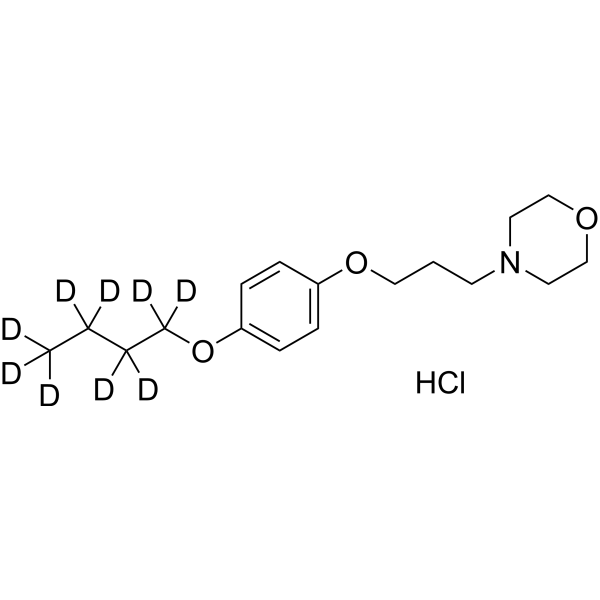
Pramocaine-d9 (Pramoxine-d9) hydrochloride is the d9-labeled Pramocaine hydrochloride (HY-B1319). Pramocaine hydrochloride is a topical surface anesthetic and antipruritic agent. Pramocaine hydrochloride reversibly inhibits voltage-gated sodium channel, reduces transmembrane permeability of sodium ions, stabilizes cell membranes, prevents depolarization, blocks action potential conduction, and inhibits peripheral slow C-fiber pathways associated with pain, pruritus and thermoception. Pramocaine hydrochloride can be used in research related to chronic pruritus, renal pruritus, atopic dermatitis, xerotic pruritus, uremic pruritus, and cutaneous hyperalgesia/pain .
loading...
    loading...
Cat. No.: HY-D3385
Target:  

Fluorescent Dye

Research Areas:  

Others

AM4-66 is a fluorescent dye used for cell membrane surface labeling. AM4-66 serves as a cell membrane surface marker and can label intact plasma membranes; when used sequentially with fluid-phase endocytosis markers such as fluorescent dextran, it does not stain dextran-positive intracellular structures that have detached from the cell surface, thus confirming that these internalized membranes no longer belong to the intact cell membrane surface (Ex/Em = 510/750 nm) .
loading...
    loading...
Cat. No.: HY-D3358
CAS No.: 1424433-17-9
Target:  

Fluorescent Dye

Research Areas:  

Others

Disulfo-Cy3 NHS ester is a fluorescent dye used for plasma membrane protein labeling and detection antibody labeling. Disulfo-Cy3 NHS ester can covalently bind to amino groups on cell surface proteins or detection antibodies. Disulfo-Cy3 NHS ester lacks a low-affinity membrane anchoring site, avoiding transient binding to lipid membranes. Disulfo-Cy3 NHS ester, via a conjugated detection antibody, enables visualization and detection of on-cell immune sandwich structures targeting secreted proteins (Ex/Em = 550/570 nm) .
loading...
    loading...
Cat. No.: HY-D3419
Neuro-DiO 4-chlorobenzenesulfonate is a hydrophobic C18 alkyl chain carbocyanine dye with green fluorescence, commonly used as a vascular marker, cell internalizer and deposition agent. Neuro-DiO 4-chlorobenzenesulfonate inserts its alkyl chain into the endothelial plasma membrane via liposome-mediated perfusion to achieve vascular labeling. Neuro-DiO chlorobenzenesulfonate can also stain the cell membrane and cytoplasm of cancer cells to assist in confocal microscopy observations. Neuro-DiO chlorobenzenesulfonate can be released from nanosponges and accumulate on the surface of mouse retina, then internalize into retinal ganglion cells, which is applicable to researches related to glaucoma and other diseases. It should be noted that during liposome-mediated vascular staining in mice, Neuro-DiO 4-chlorobenzenesulfonate may cause leakage of airway lavage fluid .
loading...
    loading...

