24 Results for "

conformational groups

" in MedChemExpress (MCE) Product Catalog:
Products (24)

24 Results for "conformational groups" in MCE Product Catalog:

1
1 Cited Publications
Cat. No.: HY-132830
CAS No.: 1933514-13-6
Purity:  99.58%
Synonyms: KVD900
Target:  

Kallikrein

Research Areas:  

Cardiovascular Disease

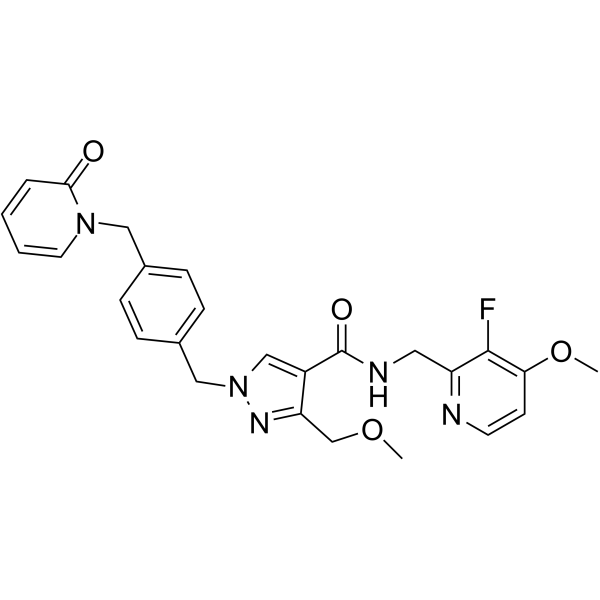
Sebetralstat (KVD900) is an orally active and selective plasma kallikrein inhibitor, with an IC50 of 6.0 nM and a Ki of 3.0 nM against the human target. Sebetralstat binds to the active site of plasma kallikrein, inducing a conformational flip of Trp215 to form a U-shaped conformation; its P1 group interacts with the S1 pocket through hydrophobic interactions and displacement of high-energy water molecules, independent of the Asp189 ionic bond. Sebetralstat inhibits plasma kallikrein-kinin system activation in whole plasma, rapidly relieves laryngeal and abdominal attack symptoms of hereditary angioedema (HAE-C1INH), and reduces attack severity. Sebetralstat can be used in research related to hereditary angioedema (HAE) .
loading...
    loading...
1
1 Cited Publications
Cat. No.: HY-W039897
CAS No.: 617-04-9
Synonyms: α-Methyl-D-mannoside
Target:  

Bacterial

Research Areas:  

Infection

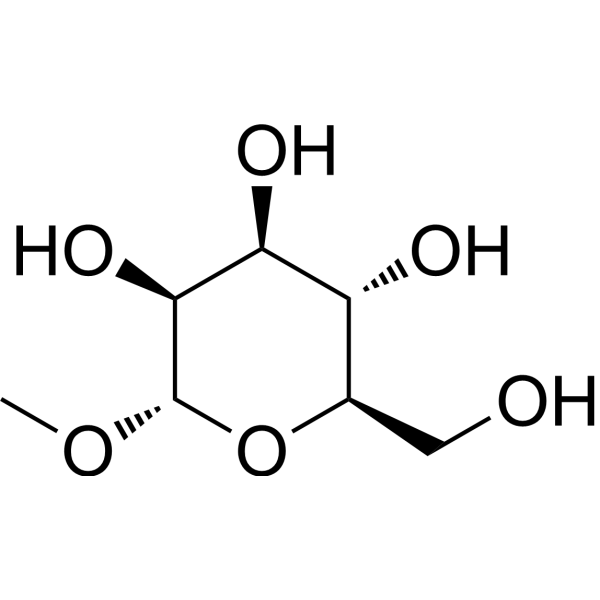
Methyl α-D-mannopyranoside (α-Methyl-D-mannoside) is a methyl glycoside derivative and conformational stabilizer of α-D-mannopyranose. The glycosidic bond conformation of Methyl α-D-mannopyranoside is significantly affected by the environment. In aqueous solution, Methyl α-D-mannopyranoside stabilizes into a trans conformation via intermolecular hydrogen bonds; in the gas phase, however, steric interactions drive Methyl α-D-mannopyranoside to prefer a clockwise gauche conformation. Methyl α-D-mannopyranoside also serves as a major component of secondary cell wall polymers in some bacteria and an active precursor site for virus-targeted glycoproteins. Methyl α-D-mannopyranoside acts as an acceptor substrate for alternansucrase, mediating the transfer of D-glucopyranosyl groups to generate a variety of glycosylated oligosaccharide products, with methyl α-D-glucopyranosyl-(1→6)-α-D-mannopyranoside as the main component. Methyl α-D-mannopyranoside is applicable to studies on bacterial pathogenic mechanisms associated with mannose-specific fimbrial lectins .
loading...
    loading...
Cat. No.: HY-164899
CAS No.: 2765091-45-8
Synonyms: 2-aminopyridine-3-carboxylic acid imidazolide
Target:  

DNA/RNA Synthesis

Research Areas:  

Infection

2A3 (2-aminopyridine-3-carboxylic acid imidazolide) is a covalent probe reagent for Selective 2'-Hydroxyl Acylation analyzed by Primer Extension (SHAPE) that targets the RNA ribose 2'-OH group. 2A3 efficiently permeates the biological membranes of Gram-negative bacteria, Gram-positive bacteria, and mammalian cells. 2A3 exhibits no base bias and specifically labels conformationally flexible, unpaired regions within RNA. 2A3 forms covalent adducts by acylating the 2'-OH groups of flexible RNA residues. When combined with SHAPE-MaP (mutational profiling) sequencing technology, these modification sites are converted into detectable mutational signals, thereby accurately reflecting local RNA backbone flexibility and base-pairing status. 2A3 is primarily utilized in molecular biology and transcriptomics research, including the resolution of RNA structuromes in living cells, the study of RNA folding regulatory mechanisms, and the investigation of non-coding RNA functions .
loading...
    loading...
Cat. No.: HY-W244398
CAS No.: 13239-97-9
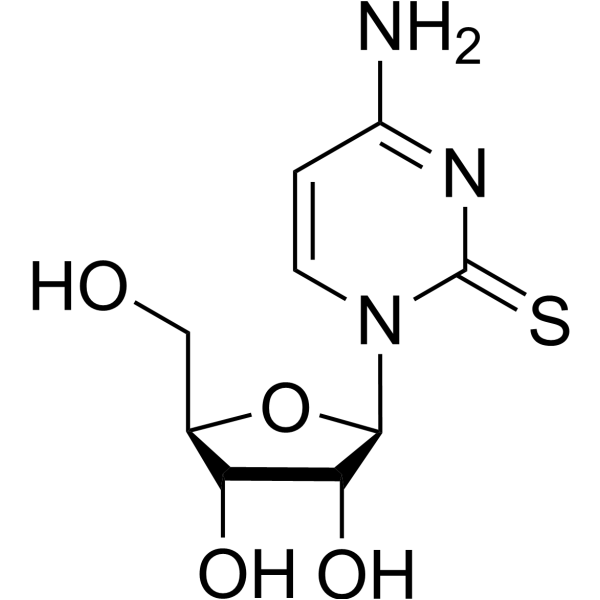
2-Thiocytidine is a natural thionucleoside in prokaryotic tRNA, which is biosynthesized under the catalysis of intracellular sulfur transferase systems and possesses multiple activities such as metal coordination and nucleic acid conformation regulation. 2-Thiocytidine forms stable Zn 2+ and Cd 2+ complexes via its (C2) S group, with partial involvement of N3; metal binding acidifies the deprotonation process of (C4) NH2. 2-Thiocytidine can be used in related research in various fields including nanotechnology and click chemistry for interstrand DNA crosslinking .
loading...
    loading...
Cat. No.: HY-W013154
CAS No.: 136030-33-6
Research Areas:  

Others

Fmoc-Tic-OH, an Fmoc-protected derivative of Tic, is a solid-phase peptide synthesis monomer. Fmoc-Tic-OH protects the amino group of Tic via a base-labile Fmoc group, allowing conformationally constrained Tic residues to be stepwise coupled to peptide chains, and the Fmoc protecting group can be removed under piperidine conditions. Fmoc-Tic-OH can be used for peptide synthesis and opioid receptor ligand research .
loading...
    loading...
Cat. No.: HY-W025438
CAS No.: 103285-22-9
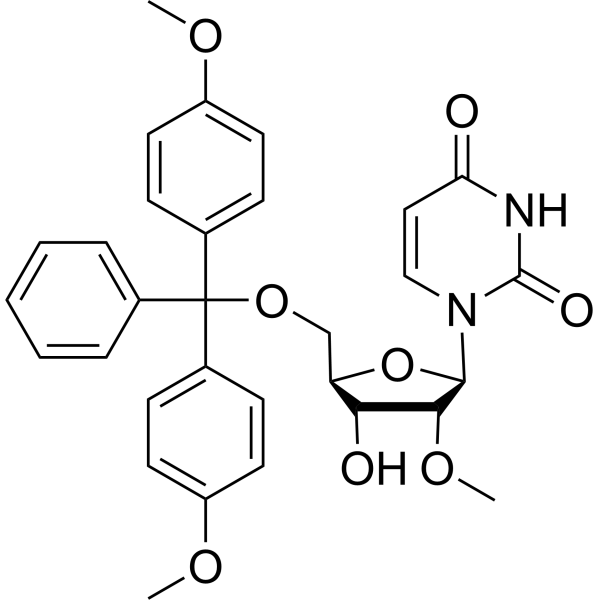
5’-O-(4,4’-Dimethoxytrityl)-2’-O-methyluridine is a 2'-O-methyluridine derivative bearing a 5'-O-(4,4'-dimethoxytrityl) protecting group.5’-O-(4,4’-Dimethoxytrityl)-2’-O-methyluridine serves as a starting material for synthesis of a conformationally rigid cyclic uridylic acid derivative .
loading...
    loading...
Cat. No.: HY-P2822
CAS No.: 9001-83-6
Synonyms: PGK
Phosphoglycerate kinase (PGK), yeast is a monomeric glycolytic/gluconeogenic enzyme that can be found in Saccharomyces cerevisiae. Phosphoglycerate kinase, yeast catalyzes phosphoryl-group transfer from 1,3-bisphosphoglycerate to ADP to form 3-phosphoglycerate and ATP, binds 3PGA, ATP, and Mg 2+, and adopts a closed conformation. Phosphoglycerate kinase, yeast is commonly used in biochemical research .
loading...
    loading...
Cat. No.: HY-P2516
CAS No.: 330456-25-2
Target:  

Tau Protein

Research Areas:  

Neurological Disease

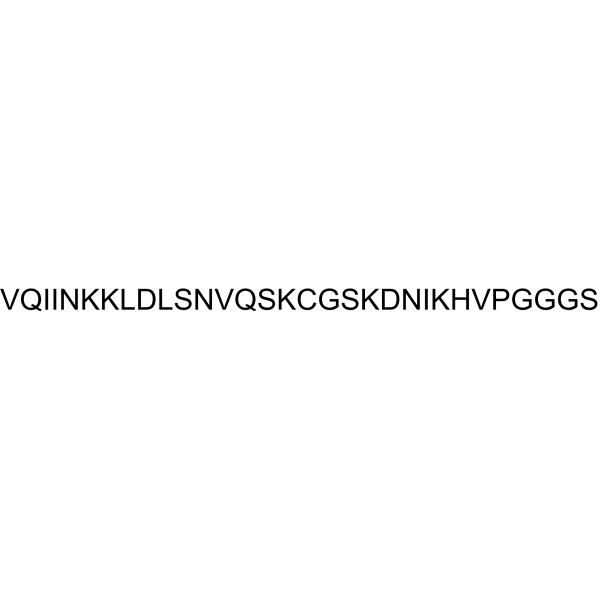
Tau Peptide (275-305) (Repeat 2 domain) is the Alzheimer's Tau fragment R2, corresponding to the second repeat unit of the microtubule-binding domain, which is believed to be pivotal to the biochemical properties of full tau protein. Tau Peptide (275-305) specifically coordinates with group IIB metal ions (Zn²⁺, Cd²⁺, Hg²⁺), which can induce their conformational changes and significantly promote their pathological accumulation. Tau Peptide (275-305) can be used to study the role of heavy metals in neurodegenerative diseases .
loading...
    loading...
Cat. No.: HY-D1470
CAS No.: 210832-86-3
Target:  

Fluorescent Dye

Research Areas:  

Others

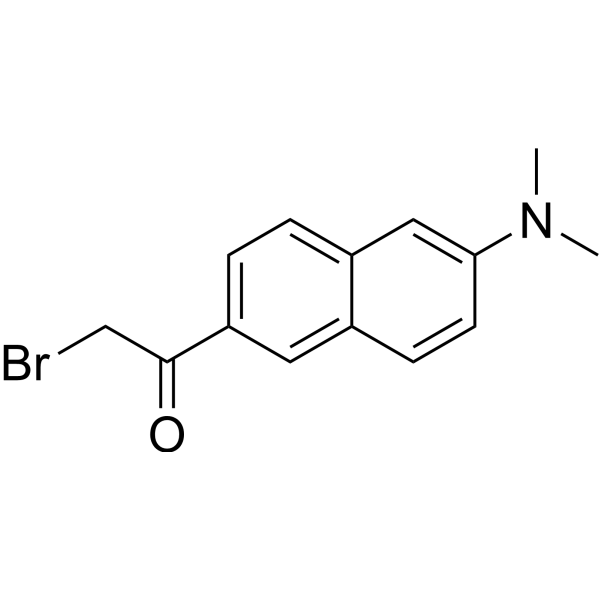
BADAN is a thiol-reactive, environment-sensitive fluorescent probe used for site-specific labeling of protein cysteine residues to detect protein topology, local polarity, protein-lipid interactions, and conformational changes. The bromoacetyl group of BADAN covalently binds to cysteine thiols, and its fluorescence originates from the intramolecular charge transfer (ICT) excited state. The emission peak position varies with the polarity of the surrounding medium: it blue-shifts to approximately 488 nm in nonpolar environments (such as the hydrophobic core of lipid bilayers) and red-shifts to approximately 496-507 nm in polar environments (such as aqueous phases), independent of enzymes, pH, or membrane potential. Ex = 380-402 nm; Em = 400-600 nm .
loading...
    loading...
Cat. No.: HY-151738
CAS No.: 1935981-35-3
Target:  

ADC Linkers

Research Areas:  

Others

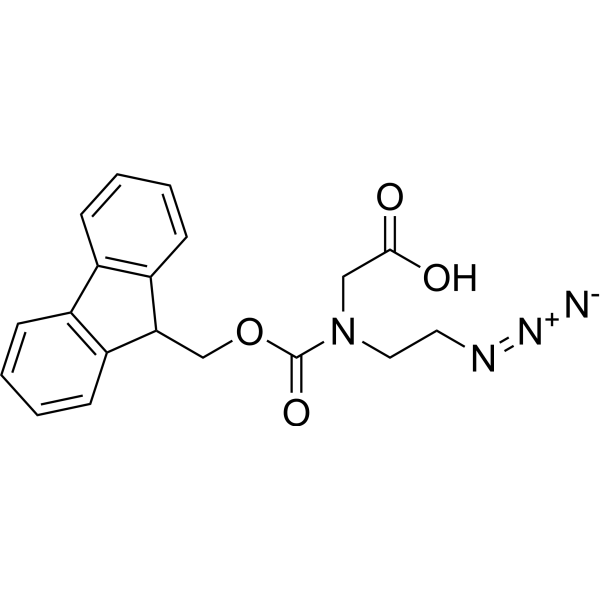
Fmoc-Aeg(N3)-OH is a click chemistry reagent containing an Azide. Alkylating the Nitrogen of an amide bond results in peptoid structures, which leads to conformational restrains, like N-methylation and allows backbone derivatisation. Altering cytotoxicity, bacterial cell selectivity and receptor pharmacology through formation of peptoid derivatives have been published for Cilengitide, Piscidin 1, and MC3, MC4 and MC5 receptor agonist. This building block enables design of macrocycles through intermolecular crosslinking or backbone stabilization through intermolecular ring-closure. This compound is a potential building block for the construction of (customized) peptide nucleic acids (PNAs) and for peptoid synthesis . Fmoc-Aeg(N3)-OH is a click chemistry reagent, it contains an Azide group and can undergo copper-catalyzed azide-alkyne cycloaddition reaction (CuAAc) with molecules containing Alkyne groups. It can also undergo strain-promoted alkyne-azide cycloaddition (SPAAC) reactions with molecules containing DBCO or BCN groups.
loading...
    loading...
Cat. No.: HY-N2687
CAS No.: 70110-60-0
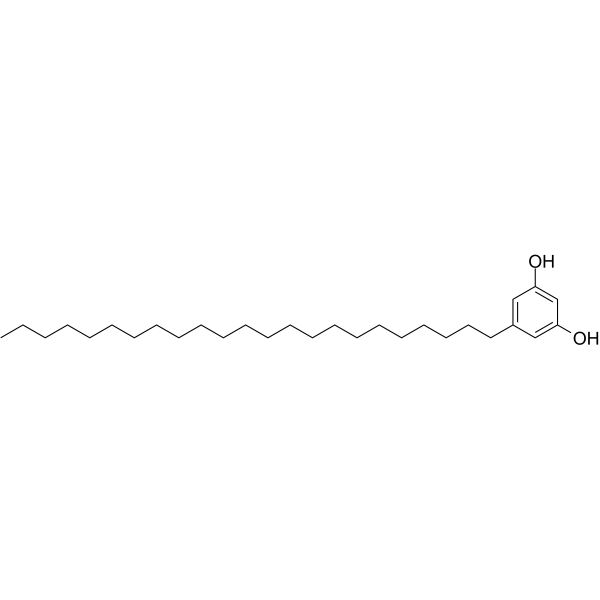
5-n-Tricosylresorcinolthe is the first cyst lipid. 5-n-Tricosylresorcinolthe has metahydroxyl group which allows it to self-associate forming a staggered-chain conformation in which the polar head groups have heaxagonal symmetry. 5-n-Tricosylresorcinolthe reduces hydrogen peroxide-induced DNA damage .
loading...
    loading...
Cat. No.: HY-P11353
CAS No.: 117138-19-9
Research Areas:  

Infection Cancer

HA2 peptide is a potent pH-responsive fusion peptide derived from hemagglutinin (HA), corresponding to the N-terminal fusion peptide domain consisting of 23 amino acid residues of HIV-1 gp41 envelope glycoprotein. HA2 peptide adopts a random coil structure under physiological pH conditions; in acidic endosomes, protonation of carboxyl groups reduces negative charge, inducing a transition to an α-helical conformation that can fuse with and destabilize the endosomal membrane. After binding to membranes, the N-terminal and middle regions of HA2 peptide mainly adopt a β-strand conformation, while the C-terminal region remains unstructured. HA2 peptide induces lipid mixing and promotes aqueous content leakage from large unilamellar vesicles whose lipid composition matches that of HIV-1 viruses and target T cells. HA2 peptide is anionic and can bind to cationic peptides to achieve siRNA condensation. HA2 peptide can be used in studies related to cancer and human immunodeficiency virus (HIV) infection .
loading...
    loading...
Cat. No.: HY-131642
CAS No.: 53861-57-7
Synonyms: H-Gla-OH
Target:  

mGluR

Research Areas:  

Neurological Disease

L-γ-Carboxyglutamic acid (H-Gla-OH) is a mGluR2 antagonist with an IC50 of 102 μM. L-γ-Carboxyglutamic acid binds to the mGluR2 receptor site via the overlapping extended amino acid conformation of its amino and carboxyl groups with glutamic acid, and its additional acidic group locates in a restricted region, thereby blocking the full activation of the receptor. L-γ-Carboxyglutamic acid can be used for the research of neurological disorders .
loading...
    loading...
Cat. No.: HY-E71140
Research Areas:  

Others

1,2-Diacylglycerol 3-α-glucosyltransferase (EC 2.4.1.337) functions under phosphate-deficient conditions, generating glycolipids as substitutes for phospholipids. 1,2-Diacylglycerol 3-α-glucosyltransferase (EC 2.4.1.337) belongs to the GT4 family of conformation-retaining glycosyltransferases. Many diacylglycerols with long-chain acyl groups can act as acceptors.
loading...
    loading...
Cat. No.: HY-132830A
CAS No.: 2163789-76-0
Synonyms: KVD900 hydrochloride
Target:  

Kallikrein

Research Areas:  

Cardiovascular Disease

Sebetralstat hydrochloride (KVD900 hydrochloride) is an orally active and selective plasma kallikrein inhibitor, with an IC50 of 6.0 nM and a Ki of 3.0 nM against the human target. Sebetralstat hydrochloride binds to the active site of plasma kallikrein, inducing a conformational flip of Trp215 to form a U-shaped conformation; its P1 group interacts with the S1 pocket through hydrophobic interactions and displacement of high-energy water molecules, independent of the Asp189 ionic bond. Sebetralstat hydrochloride inhibits plasma kallikrein-kinin system activation in whole plasma, rapidly relieves laryngeal and abdominal attack symptoms of hereditary angioedema (HAE-C1INH), and reduces attack severity. Sebetralstat hydrochloride can be used in research related to hereditary angioedema (HAE) .
loading...
    loading...
Cat. No.: HY-D3377
CAS No.: 1616953-95-7
Synonyms: LysoRhoNox
Target:  

Fluorescent Dye

Research Areas:  

Others

HMRhoNox-M (LysoRhoNox) is a selective fluorescent probe for detecting Fe 2+ (ferrous iron ions), with excitation/emission wavelengths of Ex/Em = 550/575 nm. HMRhoNox-M exists in a non-fluorescent spirocyclic closed conformation under physiological pH conditions. Fe 2+ triggers the deoxidation of its N-oxide group, shifting the equilibrium toward the fluorescent quinone-type (TMHMR) open conformation. HMRhoNox-M shows selectivity for Fe 2+ over other metal ions, as well as biologically relevant reactive oxygen species, reactive sulfur species, reactive nitrogen species and reducing agents. HMRhoNox-M can penetrate cell membranes and localize to lysosomes, enabling the imaging of intracellular Fe 2+ fluctuations, transferrin-mediated labile iron accumulation, and lysosomal Fe 2+ changes associated with ferroptosis .
loading...
    loading...
Cat. No.: HY-189717
CAS No.: 2648548-71-2
Research Areas:  

Neurological Disease

EA-RK-110 is a dopamine D3 receptor inverse agonist derived from Cariprazine (HY-14763) that stabilizes the inactive conformation and attenuates G protein signaling. EA-RK-110 weakly activates dopamine D2 receptor-mediated signaling. EA-RK-110 mediates inverse agonism through its meta-nitrile group via receptor residue interactions and toggle-switch modulation. EA-RK-110 can be used for research on dopamine receptor-related diseases .
loading...
    loading...
Cat. No.: HY-131975
CAS No.: 901259-15-2
Target:  

Influenza Virus

Research Areas:  

Infection

CBS1194 is a selective group 2 influenza virus inhibitor. CBS1194 binds to the pocket region adjacent to the HA fusion peptide, generates steric hindrance, and blocks the low pH-induced HA conformational rearrangement required for membrane fusion. CBS1194 exerts inhibitory activity in the early stage of viral infection and can inhibit HA-mediated hemolysis. CBS1194 serves as a lead compound for the development of improved influenza virus entry inhibitors. CBS1194 is applicable to studies related to influenza virus infection .
loading...
    loading...
Cat. No.: HY-184447
CAS No.: 3091508-49-2
Target:  

PAK

Research Areas:  

Others

RN193 is a type II kinase inhibitor with a human PAK1 IC50 of 4.28 μM. RN193 functionally inhibits kinase activity of PAK1, PAK2, and PAK3, and engages with their kinase domains in live cells. RN193 induces thermal shifts in CLK1, GSK3B, ULK1, MELK, MAPK13, BRAF, and STK10, indicating binding and stabilization of these proteins. RN193 induces formation of PAK3:PAK2 heterodimers and displaces PAK2 homodimers in live cells. RN193 acts as a tool compound for studying group I PAK conformational states .
loading...
    loading...
Cat. No.: HY-D3102
CAS No.: 1015251-87-2
Target:  

Fluorescent Dye

Research Areas:  

Others

CGTDP is a fluorescent probe used for selective labeling of active-site arginine residues, detection of local polarity, and monitoring of conformational changes in enzyme active sites. CGTDP contains a neutral red moiety serving as a polarity-sensitive fluorophore, and a phenylglyoxal unit acting as an arginine-specific labeling group; it undergoes a selective reaction via its α-dicarbonyl moiety with the guanidyl group of arginine residues in enzyme active sites to form a covalent linkage, thereby enabling the reporting of the local microenvironment at the labeled site. The excitation/emission wavelengths are Ex/Em = 398/607 nm and Ex/Em = 507/607 nm; these wavelengths blue-shift in organic solvents, such as Ex/Em = 375/569 nm and Ex/Em = 469/569 nm in THF, and Ex/Em = 375/587 nm and Ex/Em = 470/587 nm in acetonitrile. When labeled onto creatine kinase, its excitation/emission wavelengths are Ex/Em = 493/590 nm .
loading...
    loading...

