
61 Results for "

covalent coupling

" in MedChemExpress (MCE) Product Catalog:
Products (61)

61 Results for "covalent coupling" in MCE Product Catalog:

1
1 Cited Publications
Cat. No.: HY-D2468
Target:  

Fluorescent Dye

Research Areas:  

Others

Sulfonylurea Receptor HRP-Streptavidin is a biotin-binding signal amplifier designed to bind tightly with biotinylated anti-TSH monoclonal antibodies, thereby constituting a key component of the signal amplification system in immunoassays. HRP-Streptavidin is formed by the covalent coupling of Horseradish Peroxidase (HRP) with Streptavidin; it combines the highly efficient catalytic activity of the enzyme with the high affinity of Streptavidin for biotin, making it a potent and sensitive tool for signal amplification. HRP-Streptavidin is suitable for use in Western Blotting, ELISA, and other detection techniques .
loading...
    loading...
1
1 Cited Publications
Cat. No.: HY-D2171A
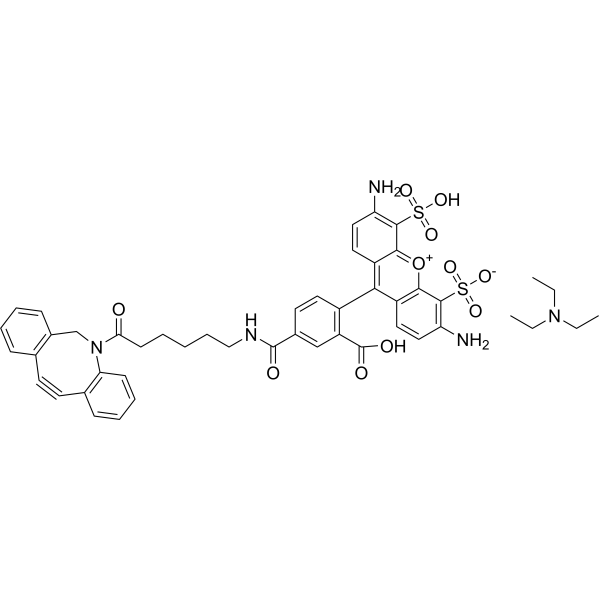
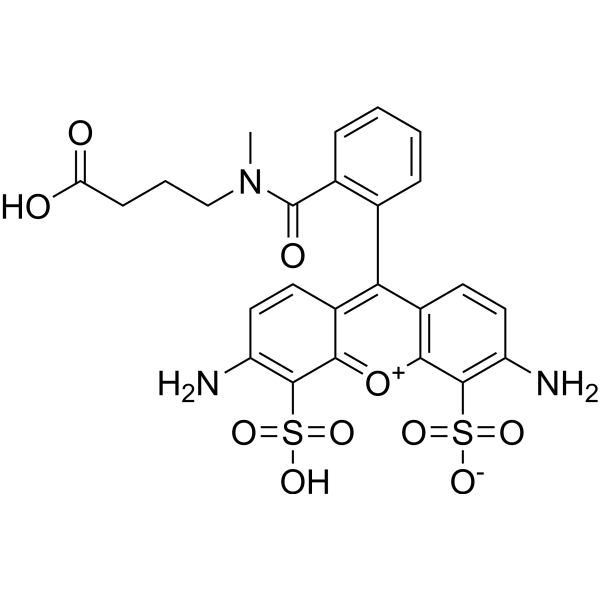
AF488 DBCO ditriethylamineis a fluorescent dye and also a click chemistry reagent that can label azide-containing biomolecules. AF488 DBCO ditriethylaminemediates the coupling reaction with azide-modified 2'-OMe RNA oligonucleotides. DBCO is a bioorthogonal partner of azides and enables covalent coupling without copper (Ex/Em = 470/520 nm) .
loading...
    loading...
1
1 Cited Publications
Cat. No.: HY-D2171
AF488 DBCO is a fluorescent dye and also a click chemistry reagent that can label azide-containing biomolecules. AF488 DBCO mediates the coupling reaction with azide-modified 2'-OMe RNA oligonucleotides. DBCO is a bioorthogonal partner of azides and enables covalent coupling without copper (Ex/Em = 470/520 nm) .
loading...
    loading...
Cat. No.: HY-140698
CAS No.: 92451-01-9
Purity:  ≥95.0%
Synonyms: mPEG5000-SC; mPEG5000-Succinimidyl ester
Research Areas:  

Cancer

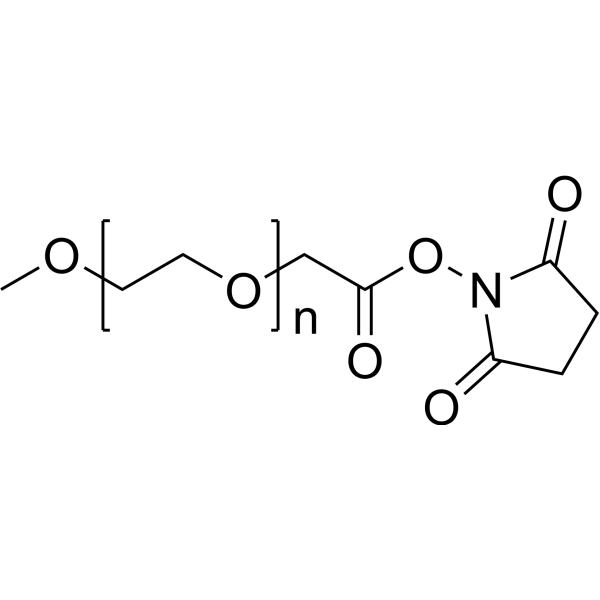
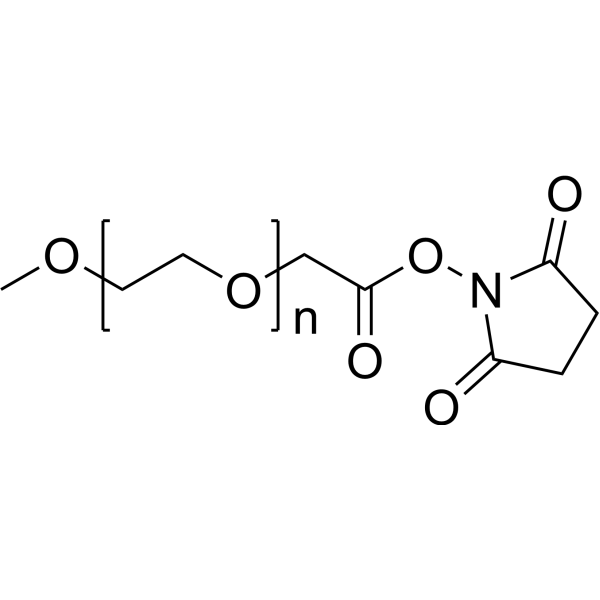
m-PEG5000-NHS ester (mPEG5000-SC; mPEG5000-Succinimidyl ester) is a pegylation reagent that targets the primary amino groups of branched polyethyleneimine on gold nanoparticles. m-PEG1000-NHS ester covalently links its PEG moiety to target amino groups via amine-mediated coupling chemistry. m-PEG1000-NHS ester helps improve the biocompatibility of modified gold nanoparticles used as CT contrast agents and prolongs their blood circulation time.
loading...
    loading...
Cat. No.: HY-130086
CAS No.: 1314378-11-4
Purity:  99.29%
Target:  

ADC Linkers

Research Areas:  

Cancer

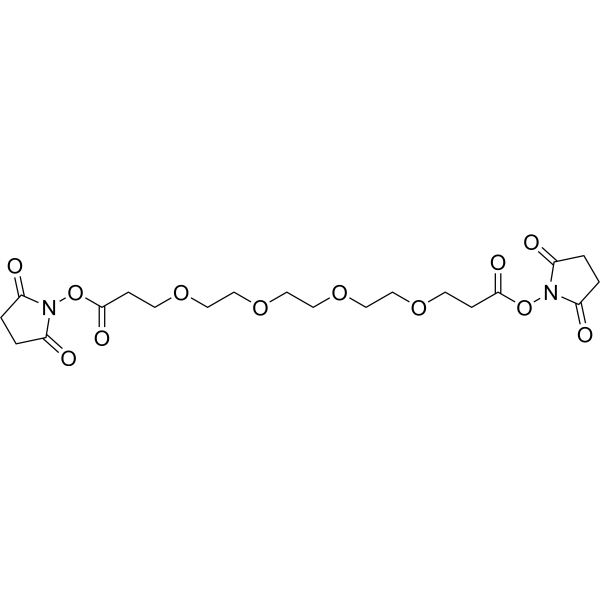
Bis-PEG4-NHS ester is a crosslinking reagent and amine-reactive modulator .Bis-PEG4-NHS ester reacts with primary amine groups on liposome surfaces via amide bond formation to covalently attach dibenzylcyclooctyne groups, with a hydrophilic PEG4 spacer reducing steric hindrance for subsequent click chemistry .Bis-PEG4-NHS ester enables site-specific antibody coupling to liposome surfaces via copper-free strain-promoted alkyne-azide cycloaddition click chemistry without disrupting liposome structure in minimal organic solvent volumes .Bis-PEG4-NHS ester undergoes hydrolysis during annealing to form -COOH groups that interact with PbI and FAI to enhance perovskite structural integrity, passivate defects, and modulate nucleation kinetics to regulate crystal growth .Bis-PEG4-NHS ester enhances device efficiency and long-term stability when used as an antisolvent additive for p-i-n perovskite solar cells .
loading...
    loading...
Cat. No.: HY-W591476
CAS No.: 134874-49-0
Synonyms: mPEG1000-SH
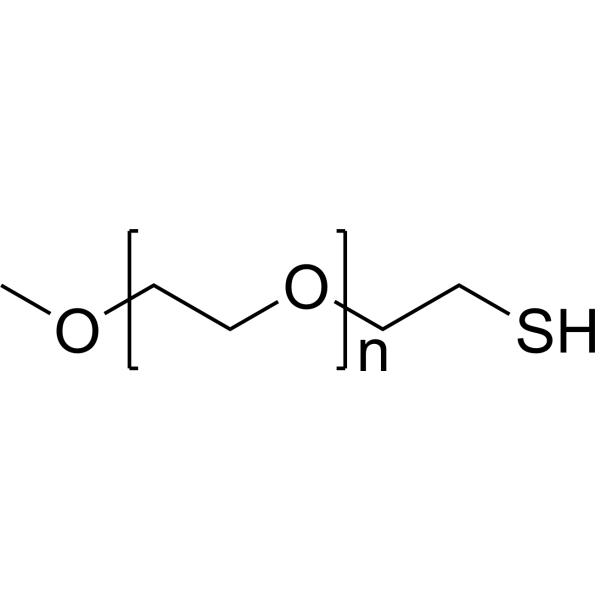
m-PEG1000-thiol (mPEG1000-SH) is a surface modifier that can modify DNA thiolation and is used in the synthesis of gold nanorods (AuNR). m-PEG1000-thiol can load thiolated DNA onto AuNR, form a covalent bond with the surface of gold nanoparticles through the thiol group, and stabilize the nanoparticles by the steric hindrance effect of the polyethylene glycol chain, preventing aggregation and enhancing its biocompatibility. m-PEG1000-thiol can also provide a platform for the subsequent coupling of biomolecules (such as DNA, antibodies) by replacing surfactants (such as CTAB) on the surface of nanoparticles, thereby exerting its activity in promoting the functionalization of nanomaterials [2].
loading...
    loading...
Cat. No.: HY-D1916
CAS No.: 1253909-75-9
ATTO 594 is a Fluorescent dye (excitation/emission = 603/626 nm). ATTO 594 is covalently conjugated to Mucin via carbodiimide coupling .
loading...
    loading...
Cat. No.: HY-D0068
CAS No.: 139346-57-9
Synonyms: 7-Diethylaminocoumarin-3-carboxylic acid, SE
Target:  

Fluorescent Dye

Research Areas:  

Others

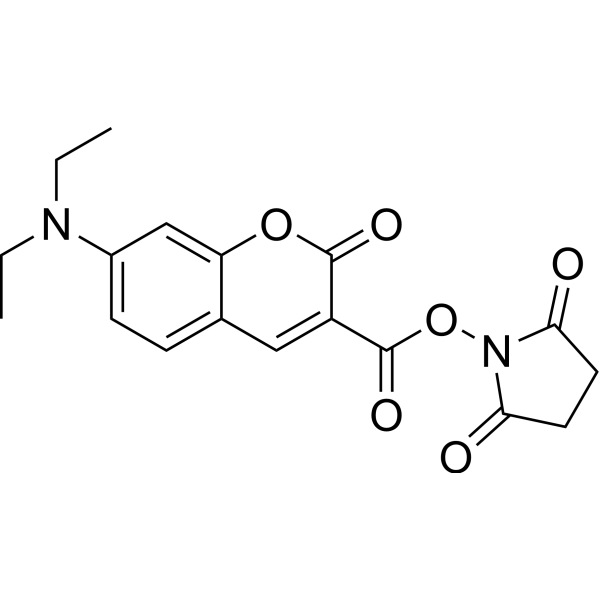
DEAC, SE (7-Diethylaminocoumarin-3-carboxy acid, SE) is an amine-reactive fluorescent succinimidyl ester (NHS ester) dye that is excitable by a 405 nm laser and emits blue fluorescence. DEAC, SE covalently couples with APTES, incorporates into organosilica colloids through co-condensation with TPM or other silane coupling agents, and can also be used for post-synthetic infiltration labeling of porous titanium dioxide protrusions and covalent binding with surface hydroxyl groups. DEAC, SE is used for fluorescent labeling of colloidal particles and confocal microscopy imaging studies .
loading...
    loading...
Cat. No.: HY-170704
CAS No.: 1480940-53-1
Target:  

Liposome

Research Areas:  

Metabolic Disease Cancer

DSPE-PEG2000-TCO is a click chemistry coupling partner. DSPE-PEG2000-TCO undergoes a reverse electron-demand Diels-Alder click reaction to form a covalent linkage with tetrazine-modified Cetuximab (HY-P9905). DSPE-PEG2000-TCO maintains the stability of lipid nanoparticles (LNPs) and has high mRNA encapsulation efficiency, which supports cellular uptake and mRNA transfection. DSPE-PEG2000-TCO is used to prepare EGFR-targeted and APN-targeted mRNA-loaded LNPs, mediating receptor-dependent endocytosis, mRNA delivery, and intestinal epithelial transcytosis .
loading...
    loading...
Cat. No.: HY-140699
CAS No.: 92451-01-9
Purity:  ≥98.0%
Synonyms: mPEG10000-SC; mPEG10000-Succinimidyl ester
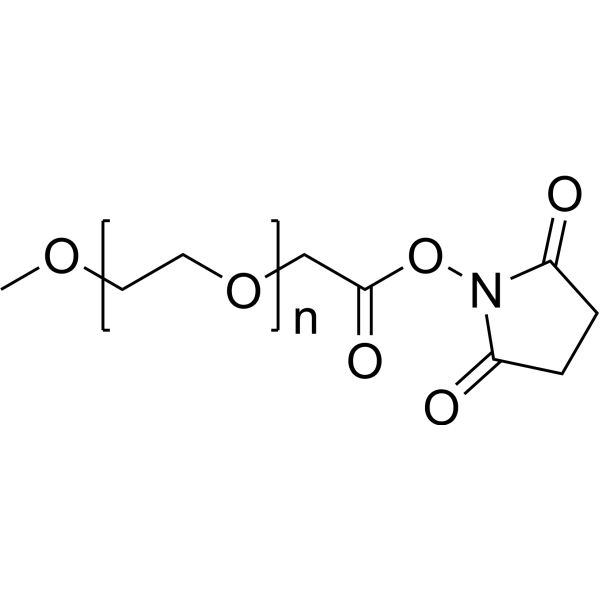
m-PEG10000-NHS ester (mPEG10000-SC) is a pegylation reagent that targets the primary amino groups of branched polyethyleneimine on gold nanoparticles. m-PEG1000-NHS ester covalently links its PEG moiety to target amino groups via amine-mediated coupling chemistry. m-PEG1000-NHS ester helps improve the biocompatibility of modified gold nanoparticles used as CT contrast agents and prolongs their blood circulation time.
loading...
    loading...
Cat. No.: HY-W043748
CAS No.: 38862-24-7
Synonyms: N-Succinimidyl acrylate
Research Areas:  

Others

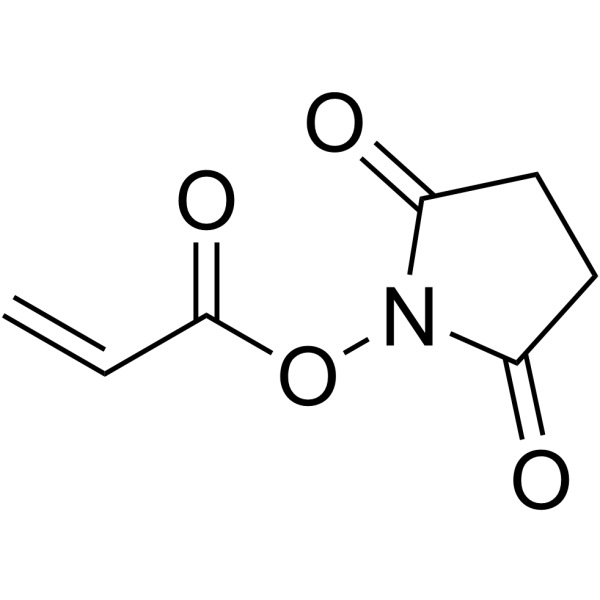
2,5-Dioxopyrrolidin-1-yl acrylate (N-Succinimidyl acrylate) is a lysine residue modifier and coupling monomer. 2,5-Dioxopyrrolidin-1-yl acrylate covalently modifies the primary amines of lysine residues on monoclonal anti-horseradish peroxidase IgG antibodies, neutralizes positive charges and replaces them with low-affinity acrylate groups. 2,5-Dioxopyrrolidin-1-yl acrylate inhibits the formation of rapid hard coronas on citrate-coated gold nanoparticles, induces antibody unfolding and loss of antigen-binding function, but does not affect the antigen-binding function of antibodies in free solution. 2,5-Dioxopyrrolidin-1-yl acrylate reacts with the ε-amino groups on lysine residues of L-asparaginase, introduces vinyl groups and generates N-hydroxysuccinimide. 2,5-Dioxopyrrolidin-1-yl acrylate regulates the activity of L-asparaginase .
loading...
    loading...
Cat. No.: HY-D1305
CAS No.: 1443553-08-9
Target:  

Fluorescent Dye

Research Areas:  

Others

ATTO 488 carboxylic acid is a bright green fluorescent dye with high photostability, which is commonly used in protein fluorescent labeling, single-molecule fluorescence imaging and super-resolution microscopy studies. The carboxylic acid form of ATTO 488 can be covalently coupled to primary amines of proteins via activation, or prepared into a maleimide derivative for coupling with thiol groups; it emits green fluorescence after labeling. Ex/Em = 488/524 nm .
loading...
    loading...
Cat. No.: HY-140700
CAS No.: 92451-01-9
Purity:  ≥98.0%
Synonyms: mPEG20000-SC; mPEG20000-Succinimidyl ester
m-PEG20000-NHS ester (mPEG20000-SC) is a pegylation reagent that targets the primary amino groups of branched polyethyleneimine on gold nanoparticles. m-PEG1000-NHS ester covalently links its PEG moiety to target amino groups via amine-mediated coupling chemistry. m-PEG1000-NHS ester helps improve the biocompatibility of modified gold nanoparticles used as CT contrast agents and prolongs their blood circulation time.
loading...
    loading...
Cat. No.: HY-D2161A
Target:  

Fluorescent Dye

Research Areas:  

Others

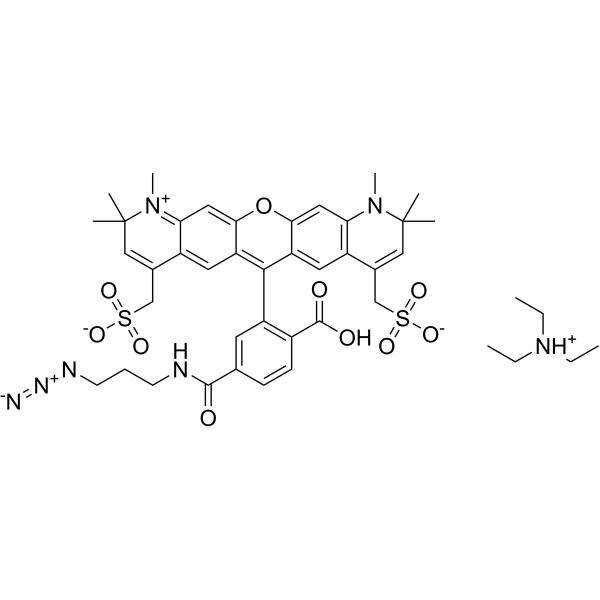
AF 594 azide triethylamine is a red-emitting alkyne-azide click chemistry (CuAAC) fluorescent probe, with an Alexa Fluor 594 analog fluorophore (Ex/Em ≈ 590/617 nm) at one end of the molecule and an azide (-N3) reactive group at the other end. Under Cu (I) catalysis, AF 594 azide triethylamine undergoes efficient covalent coupling with nucleic acids, proteins, lipids, or materials bearing terminal alkynes (-C≡CH), and is a versatile dye for fluorescent labeling of alkyne-modified metabolic markers (EdU/EdA/EU and other alkynyl nucleosides), alkynyl unnatural amino acids, and alkynyl lipids/liposomes .
loading...
    loading...
Cat. No.: HY-113553
CAS No.: 102185-28-4
Synonyms: (p-Aminophenyl)phosphocholine; p-Aminophenylphosphorylcholine; 4-APPC
Research Areas:  

Others

4-Aminophenylphosphorylcholine ((p-Aminophenyl) phosphocholine; p-Aminophenylphosphorylcholine; 4-APPC) is a phosphatidylcholine derivative that serves as a coupling ligand and antigen probe. When conjugated with gold nanoclusters, the phosphocholine head epitope of 4-Aminophenylphosphorylcholine is specifically recognized by anti-Pc IgM and CRP. It can be covalently coupled to human serum albumin (HSA) or glutathione-protected gold nanoclusters (Au-GSH) via covalent chemistry, respectively. The 4-Aminophenylphosphorylcholine-HSA complex acts as an ELISA coating antigen for detecting endogenous anti-Pc IgM antibodies in plasma; 4-Aminophenylphosphorylcholine-modified Au-GSH can be used to construct an ultra-stealthy NIR-II fluorescent gold nanocluster probe for imaging-related studies in mouse breast cancer and colon cancer models .
loading...
    loading...
Cat. No.: HY-D2502
Cy7 hydrazide is a Cy7 (HY-D0825) dye derivative with hydrazine functionality. The hydrazide group of Cy7 hydrazide can form hydrazinone coupling with molecules containing aldehydes or ketones to form covalent bonds .
loading...
    loading...
Cat. No.: HY-118112
CAS No.: 64191-06-6
Research Areas:  

Others

4-N-Maleimidobenzoicacid-NHS is a PEG linker that finds utility in bioconjugation endeavors and protein labeling ventures. Specifically designed for selective reaction with thiol groups, the maleimide group establishes covalent linkages, thereby facilitating the coupling of proteins, peptides, or diverse molecules to thiol-bearing biomolecules. The NHS ester is able to react specifically and efficiently with primary amines (e.g. the side chain of lysine residues or aminosilane-coated surfaces) at neutral or slightly basic conditions to form a covalent bond.
loading...
    loading...
Cat. No.: HY-D2154
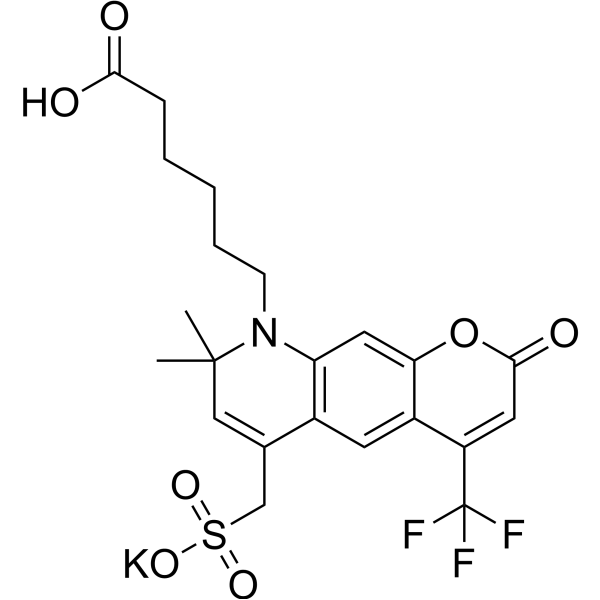
AF 430 carboxylic acid is a derivative of the yellow fluorescent dye AF 430. AF430 has an excitation wavelength of 425 nm and an emission wavelength of 542 nm. AF 430 carboxylic acid can form covalent bonds through a condensation reaction between carboxylic acid groups and molecules containing amino groups. To achieve specific coupling of dye labels and biomolecules .
loading...
    loading...
Cat. No.: HY-D2161
Target:  

Fluorescent Dye

Research Areas:  

Others

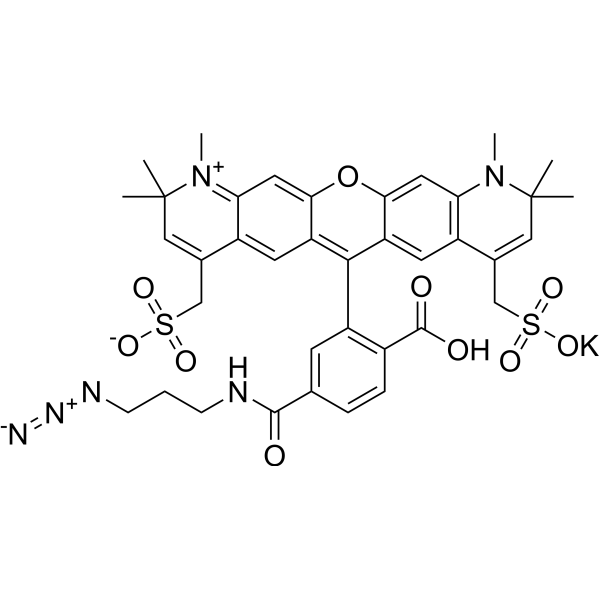
AF 594 azide is a red-emitting alkyne-azide click chemistry (CuAAC) fluorescent probe, with an Alexa Fluor 594 analog fluorophore (Ex/Em ≈ 590/617 nm) at one end of the molecule and an azide (-N3) reactive group at the other end. Under Cu (I) catalysis, AF 594 azide undergoes efficient covalent coupling with nucleic acids, proteins, lipids, or materials bearing terminal alkynes (-C≡CH), and is a versatile dye for fluorescent labeling of alkyne-modified metabolic markers (EdU/EdA/EU and other alkynyl nucleosides), alkynyl unnatural amino acids, and alkynyl lipids/liposomes .
loading...
    loading...
Cat. No.: HY-D2150
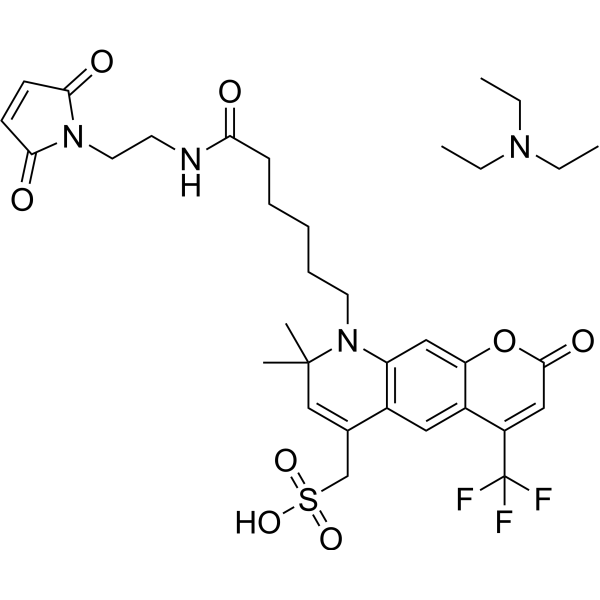
AF 430 maleimide is a derivative of the yellow fluorescent dye AF 430. AF430 has an excitation wavelength of 425 nm and an emission wavelength of 542 nm. AF 430 maleimide contains maleimide groups that react with thiol groups to form covalent bonds. To achieve specific coupling of dye labels and biomolecules .
loading...
    loading...

