
7 Results for "

episodic

" in MedChemExpress (MCE) Product Catalog:
Products (7)

7 Results for "episodic" in MCE Product Catalog:

2
2 Cited Publications
Cat. No.: HY-120782
CAS No.: 2097826-24-7
Purity:  99.34%
Target:  

Notch

Research Areas:  

Neurological Disease

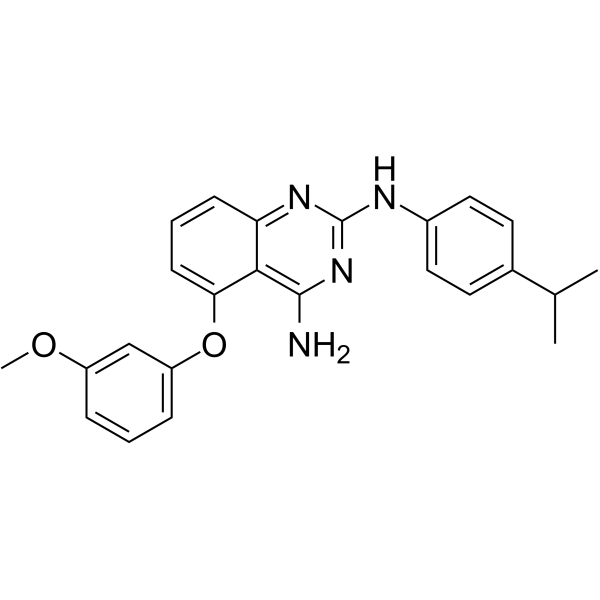
Yhhu-3792 is a Notch activator. Yhhu-3792 enhances the self-renewal capability of neural stem cells (NSCs). Yhhu-3792 promotes the expression of Hes3 and Hes5. Yhhu-3792 increases the spatial and episodic memory abilities of mice. Yhhu-3792 can be used for the study of neurodegenerative diseases (such as Alzheimer's disease) or for neural regeneration after brain injury .
loading...
    loading...
1
1 Cited Publications
Cat. No.: HY-P9938
CAS No.: 1582205-90-0
Synonyms: AMG 334
Target:  

CGRP Receptor

Research Areas:  

Neurological Disease

Erenumab (AMG-334) is a fully human monoclonal antibody. Erenumab inhibits the calcitonin gene-related peptide (CGRP) receptor. Erenumab prevents the increase in dermal blood flow in cynomolgus monkeys. Erenumab can be used in the research of episodic migraine .
loading...
    loading...
Cat. No.: HY-W354851
CAS No.: 67494-15-9
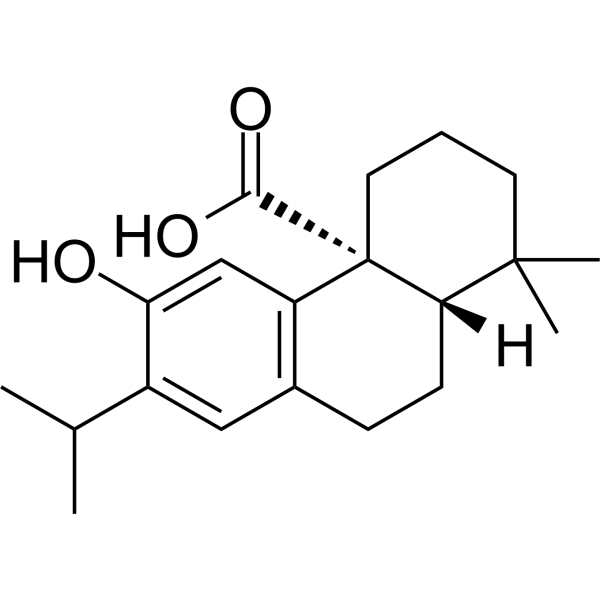
Pisiferic acid is a blood-brain barrier-permeable Kv1.1/Kv1.2 opener and Antibacterial agent. Pisiferic acid has no activity against KCNQ2/3, hERG, or Kv2.1. Pisiferic acid inhibits Perilipin1 and PPARγ protein expression. Pisiferic acid activates PP2C, inhibits PP2B/calcineurin, and induces Apoptosis/Caspase-3/7. Pisiferic acid inhibits macromolecule synthesis in Proteus vulgaris and inhibits DNA/lipid/peptidoglycan synthesis in Bacillus subtilis. Pisiferic acid has antibacterial effects against Proteus vulgaris, Staphylococcus aureus, and Bacillus subtilis. Pisiferic acid can be used for research on episodic ataxia type 1, Kv1.2 loss-of-function channelopathy, obesity, and acute promyelocytic leukemia .
loading...
    loading...
Cat. No.: HY-120782A
CAS No.: 2624336-93-0
Target:  

Notch

Research Areas:  

Neurological Disease

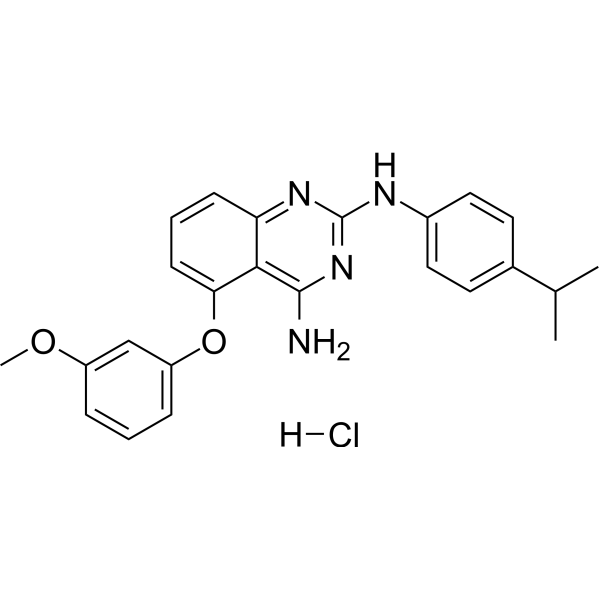
Yhhu-3792 hydrochloride is a Notch activator. Yhhu-3792 hydrochloride enhances the self-renewal capability of neural stem cells (NSCs). Yhhu-3792 hydrochloride promotes the expression of Hes3 and Hes5. Yhhu-3792 hydrochloride increases the spatial and episodic memory abilities of mice. Yhhu-3792 hydrochloride can be used for the study of neurodegenerative diseases (such as Alzheimer's disease) or for neural regeneration after brain injury .
loading...
    loading...
Cat. No.: HY-187591
CAS No.: 1158221-32-9
D-159404 is an orally active, blood-brain barrier-permeable, selective allosteric PDE4D inhibitor. It partially inhibits cAMP hydrolysis by binding to the UCR2 regulatory domain, elevates intracellular cAMP levels, and triggers calcium influx, thereby improving working memory and episodic memory consolidation. D-159404 is used in research on asthma, chronic obstructive pulmonary disease, and cognitive impairment .
loading...
    loading...
Cat. No.: HY-116488
CAS No.: 1778682-59-9
Target:  

nAChR

Research Areas:  

Neurological Disease

IND8 is a α7 nAChR activator and cognitive enhancer. IND8 mediates cognitive enhancement by activating α7 nAChR . IND8 improves spatial working memory, episodic short-term memory and spatial long-term memory in amnesic mice induced by Scopolamine (HY-N0296). IND8 improves memory function in mice with delayed natural memory decline. IND8 can be used in research related to Alzheimer's disease .
loading...
    loading...
Cat. No.: HY-184832
CAS No.: 1246751-68-7
Synonyms: Peptide 021
Target:  

Amyloid-β Tau Protein

Research Areas:  

Neurological Disease

P021 (Peptide 021) is an orally active, blood-brain barrier penetrant neurotrophic/neurogenic pentapeptide derived from the most active region of ciliary neurotrophic factor (CNTF). P021 competitively inhibits leukemia inhibitory factor (LIF) and promotes BDNF transcription. P021 targets neurogenesis and synaptic plasticity. P021 prevents neurodegeneration, Amyloid-β pathology, tau protein pathology and cognitive deficits, rescues episodic memory impairment and reduces mortality in 3xTg-AD mice. P021 is applicable to the research of Alzheimer's disease .
loading...
    loading...

