16 Results for "

green light

" in MedChemExpress (MCE) Product Catalog:
Products (16)

16 Results for "green light" in MCE Product Catalog:

2
2 Cited Publications
Cat. No.: HY-112697
CAS No.: 36877-69-7
Purity:  97.97%
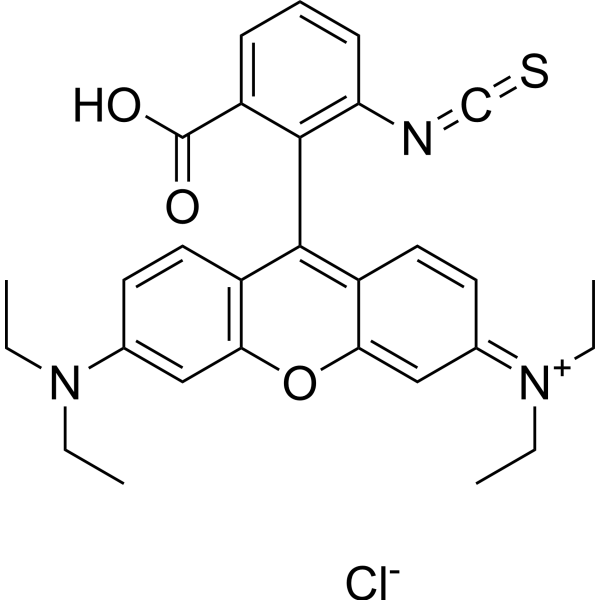
Rhodamine B isothiocyanate (RBITC) is a fluorescent dye commonly used in biological imaging and labeling applications. It has an isothiocyanate functional group that can be covalently attached to amino groups on proteins and other biomolecules, making it useful for fluorescent labeling of cells and tissues. RBITC fluoresces bright orange-red under green light excitation, which makes it easy to detect and track labeled molecules in complex samples. Due to its stability and sensitivity, RBITC has been widely used in various research fields, including cell biology, immunology, and neurobiology.
loading...
    loading...
1
1 Cited Publications
Cat. No.: HY-126367
CAS No.: 5141-20-8
Purity:  ≥75.0%
Synonyms: Acid green 5
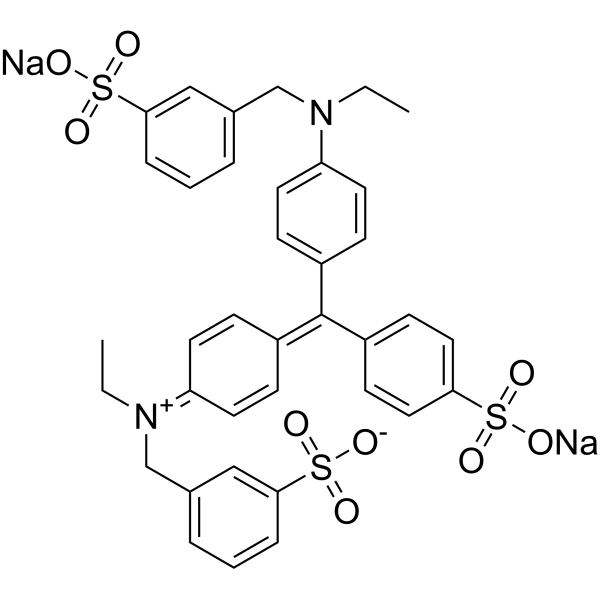
Light green SF yellowish (Acid Green 5) is a water-soluble triarylmethane dye. Light green SF yellowish serves as a histological stain that selectively labels mitochondria, collagen, and cartilage, while being an essential component of Papanicolaou staining. Light green SF yellowish is commonly used as a cytoplasmic counterstain for nuclear stains, and is applied in Masson's trichrome staining for collagen fibers, Pap staining, and cytological polychromatic staining in histopathology. Light green SF yellowish also induces growth inhibition and local fibrosarcomas in rats and exerts mild pulmonary tumorigenicity in mice .
loading...
    loading...
Cat. No.: HY-D1176
CAS No.: 186501-28-0
Target:  

Fluorescent Dye

Research Areas:  

Others

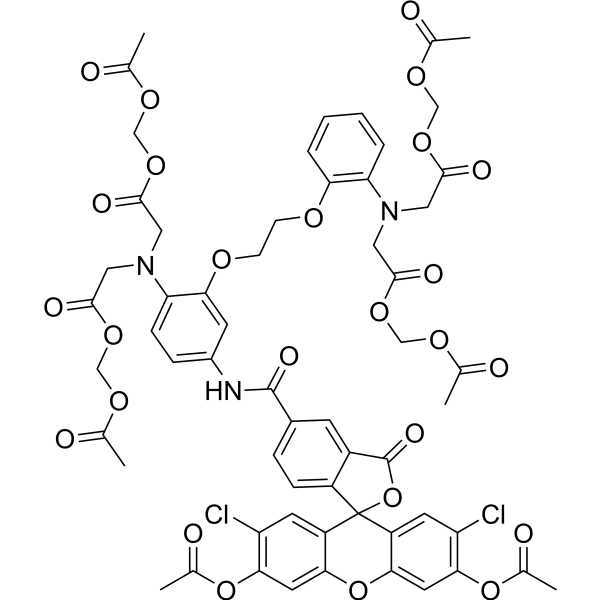
Calcium Green 1AM is a cell-permeable fluorescent calcium indicator dye. Calcium Green 1AM detects intracellular calcium signals and reports calcium transients in spontaneously rhythmic tissues as relative fluorescence changes. Calcium Green 1AM is excited by an argon laser, captures emission light at 488 nm, and is detected using an epifluorescence illumination system on an upright microscope equipped with a fluorescein filter block .
loading...
    loading...
Cat. No.: HY-157036
CAS No.: 2962939-33-7
Purity:  98.82%
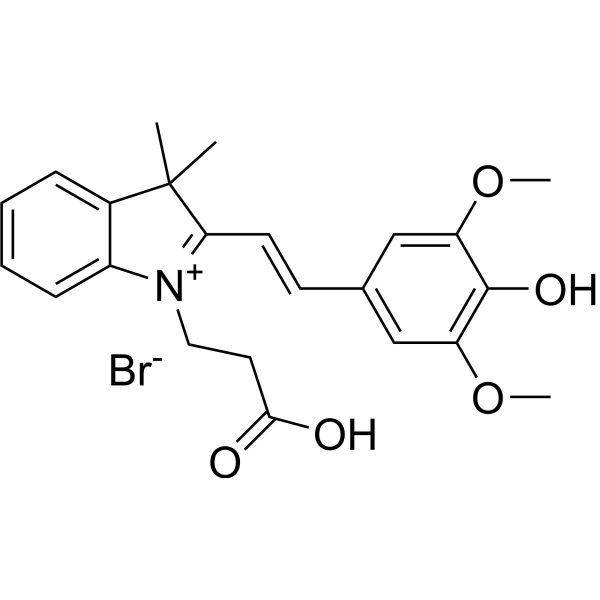
INSA is a a pH-sensitive fluorescent probe. INSA can simultaneously light up mitochondria (red emission) and lysosomes (green emission) for their internal pH differences .
loading...
    loading...
Cat. No.: HY-N7523
CAS No.: 14660-91-4
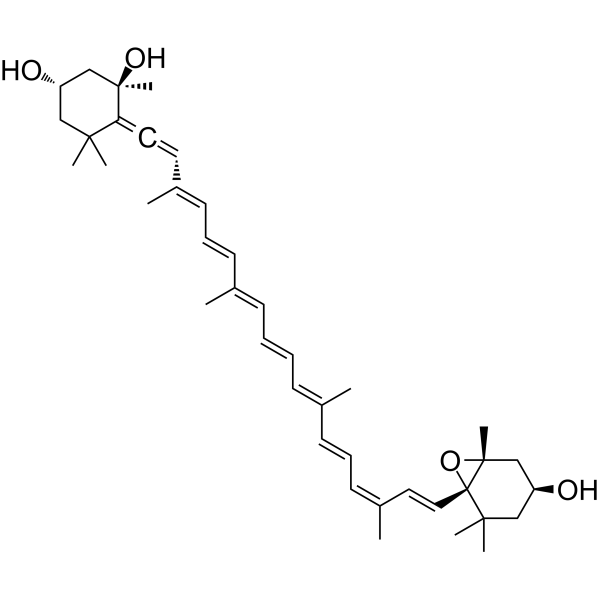
Neoxanthin is a major xanthophyll carotenoid and a precursor of the plant hormone abscisic acid in dark green leafy vegetables. Neoxanthin is a potent antioxidant and light-harvesting pigment. Neoxanthin induces apoptosis and has anticancer actions .
loading...
    loading...
Cat. No.: HY-D1343
CAS No.: 223920-67-0
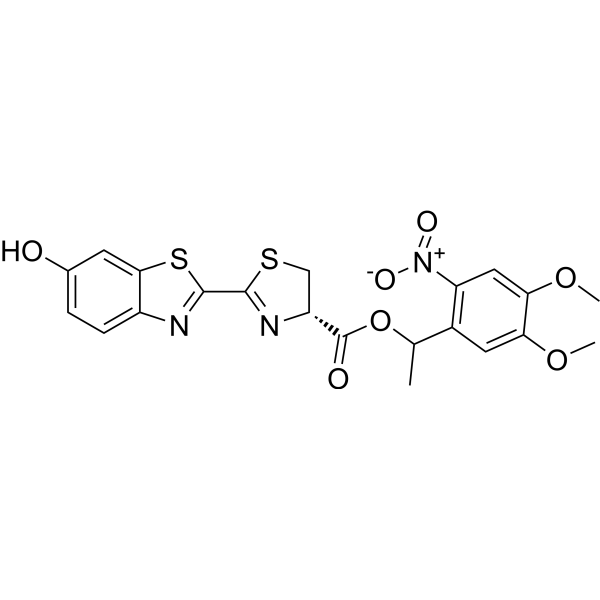
DMNPE-caged D-luciferin is a heterocyclic luminescent compound that is a natural ligand for luciferase, an enzyme used to detect cell activity. Its reaction requires ATP and emits yellow-green light with a peak wavelength of about 530 nm. The luciferin in the DMNPE cage easily crosses the cell membrane.
loading...
    loading...
Cat. No.: HY-W087913
CAS No.: 596-01-0
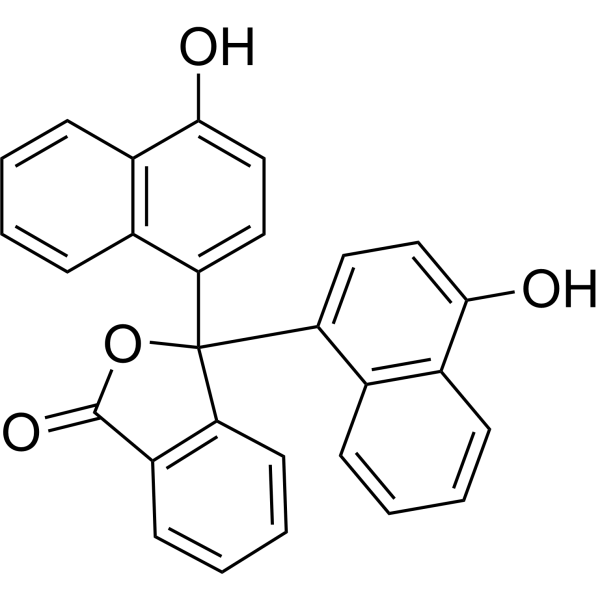
alpha-Naphtholphthalein is an indicator that is light yellow at pH 6 and gradually shows a clear color change with increasing pH to light green-green-blue. alpha-Naphtholphthalein can be impregnated into cotton-blend fabrics and used to develop medical supplies for wound pH monitoring, such as medical gauze, hospital gowns and compression bandages .
loading...
    loading...
Cat. No.: HY-D1189
CAS No.: 1471982-33-8
Synonyms: Lucifer Yellow 3-amino-D-alanine
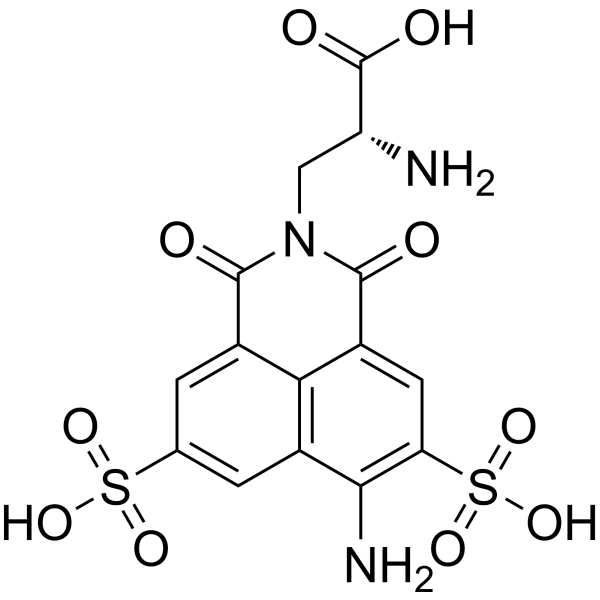
YADA (Lucifer Yellow 3-amino-D-alanine) is a conjugate of the fluorescent dyes Lucifer yellow and D-alanine, which is a green-yellow fluorescent dye. YADA is suitable for labeling peptidoglycans in living bacteria that can be incorporated into the cell wall where they are being synthesized. YADA has a large Stokes shift and a wide emission spectrum, allowing excitation through a purple light source and detection using a green filter. YADA showed good water solubility, light stability and thermal stability.
loading...
    loading...
Cat. No.: HY-W114781
CAS No.: 405-66-3
Research Areas:  

Others

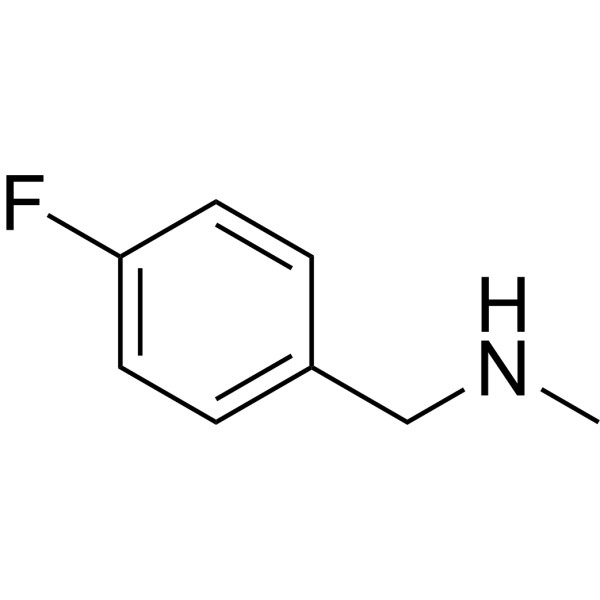
4-Fluoro-N-methylbenzylamine is a secondary amine that can serve as a model substrate for BODIPY photoprotecting group studies. 4-Fluoro-N-methylbenzylamine can react with an activated p-nitrophenyl BODIPY carbonate to give the corresponding carbamate caged adduct; moreover, under 530 nm green-light photolysis conditions, it can be released from the caged carbamate conjugate .
loading...
    loading...
Cat. No.: HY-D1242
CAS No.: 128-58-5
CI Vat green 1 is a vat dye used in fabric with good wash, light and rubbing fastness .
loading...
    loading...
Cat. No.: HY-143617
CAS No.: 2892235-56-0
photoCORM-1 is a visible light-induced carbon monoxide-releasing molecule and antibacterial (Antibacterial) agent. photoCORM-1 produces non-toxic byproducts and turns on fluorescence through pbt decoordination under blue, green, or red light. photoCORM-1 is internalized by cancer cells and normal cells, localizing to the cytoplasm and mitochondria. photoCORM-1 induces apoptosis (Apoptosis) under light irradiation. photoCORM-1 exhibits anticancer activity against lung cancer under light irradiation. photoCORM-1 exhibits antibacterial and antibiofilm activity against ESKAPE bacteria. photoCORM-1 can be used for research on breast cancer and LPS-induced inflammation .
loading...
    loading...
Cat. No.: HY-D3356
CAS No.: 327174-91-4
Target:  

Fluorescent Dye

Research Areas:  

Others

VIC is a yellow-green fluorescent dye belonging to the xanthracene class of fluorescent dyes. It is mainly used in research on fluorescently labeled oligonucleotides (such as 5' end labeling), TaqMan qPCR probes, and nucleic acid detection. VIC dye can directly generate a stable fluorescent signal upon light excitation, without relying on enzyme catalysis, pH, or membrane potential activation mechanisms.
loading...
    loading...
Cat. No.: HY-176859
Target:  

Apoptosis

Research Areas:  

Cancer

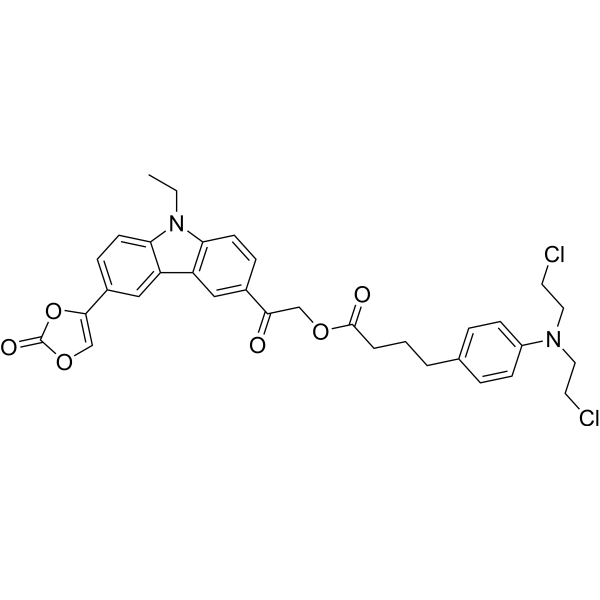
[Ru(dpp)(bpy)(mtmp)](PF6)2 (Compound 5) is a trisheteroleptic ruthenium complex. [Ru(dpp)(bpy)(mtmp)](PF6)2 has a light-activated anticancer activity. [Ru(dpp)(bpy)(mtmp)](PF6)2 can selectively cleave off upon green light irradiation, thereby releasing a phototoxic ruthenium-based photoproduct that binds to nuclear DNA, induces DNA damage and apoptosis in cancer cells. [Ru(dpp)(bpy)(mtmp)](PF6)2 can be used for phototherapy of cancers like conjunctival melanoma research .
loading...
    loading...
Cat. No.: HY-D3109
CAS No.: 148043-22-5
Target:  

Fluorescent Dye

Research Areas:  

Others

pH-Ap-1 is a fluorescent probe used for ratiometric monitoring of pH fluctuations during autophagy in living cells, and it can detect intracellular pH changes in the autophagy process. For fluorescence detection of pH-Ap-1, its excitation wavelength is 475 nm, with an emission wavelength of 538 nm under alkaline conditions and 645 nm under acidic conditions. For intracellular imaging, excitation is performed at 488 nm: the emission light ranging from 500-550 nm is collected via the green channel corresponding to 538 nm, while the emission light ranging from 625-750 nm is collected via the red channel corresponding to 645 nm. pH-Ap-1 exhibits excellent photostability and chemical stability .
loading...
    loading...
Cat. No.: HY-D3275
PE-Cy5.5 is a far-red emitting tandem dye designed based on the principle of fluorescence resonance energy transfer (FRET), and is widely used in multicolor flow cytometry. PE-Cy5.5 consists of phycoerythrin (PE) as the energy donor and the cyanine dye Cy5.5 as the energy acceptor. Upon excitation by blue or green laser light, PE absorbs energy and transfers it to Cy5.5 via FRET, ultimately resulting in Cy5.5 emitting characteristic far-red fluorescence (Ex/Em = 450-500 nm/698 nm) .
loading...
    loading...
Cat. No.: HY-K0612

MCE Weigert Elastin Staining Kit combines Weigert Resorcinol Fuchsin Staining Solution with Van Gieson (VG,Elastin Fiber Staining Reagent B,mixed) Staining Solution. Weigert Resorcinol Fuchsin Solution is mainly used for staining elastic fibers, Van Gieson (VG) Solution is used for collagen fiber staining. The principle of VG staining is based on differences in the size of anionic dye molecules and the permeability of tissues. Picric acid (PA) has the smallest molecular weight and preferentially enters dense structures. Ponceau Red or acid fuchsin has a relatively larger molecular weight and primarily binds to collagen fibers, while light green has the largest molecular weight and stains other tissue components. After VG staining, collagen fibers appear red, while muscle fibers and cytoplasm appear yellow, enabling a clear distinction between tissue components.

loading...
    loading...
  • 1

