

15 Results for "

helical structure

" in MedChemExpress (MCE) Product Catalog:
Products (15)

15 Results for "helical structure" in MCE Product Catalog:

2
2 Cited Publications
Cat. No.: HY-N6708
CAS No.: 27061-78-5
Alamethicin is a linear 20-amino acid antibiotic, which can induce voltage-gated conductance in model and cell membranes. Alamethicin exhibits antimicrobial activity against Gram-positive bacteria, but not Gram-negative bacteria. Alamethicin can form an amphipathic α-helical structure in biological membranes .
loading...
    loading...
1
1 Cited Publications
Cat. No.: HY-13747
CAS No.: 13909-09-6
Purity:  ≥98.0%
Research Areas:  

Cancer

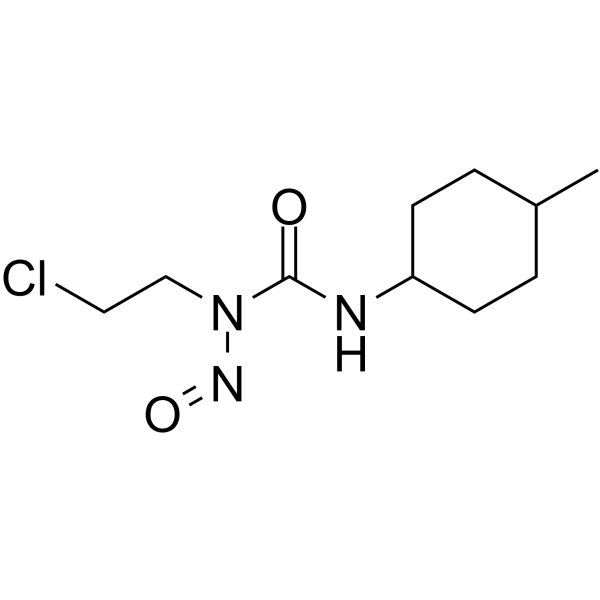
Semustine is an orally active, blood-brain barrier permeable antitumor alkylating agent with a binding affinity of 1.53 × 10 3 M -1 for guanine and thymine residues in bovine DNA. Semustine undergoes major groove-directed alkylation at guanine residues to form O6-chloroethylguanine and N1-O6-ethanoguanine adducts, and generates dG-dC interstrand crosslinks. Semustine induces partial B- to C-type transition of DNA, base stacking and helical structure distortion, mild dehydration, as well as partial DNA double-strand unwinding. Semustine can be used in research related to Lewis lung cancer, leukemia, Hodgkin's lymphoma, malignant melanoma, glioma, and diffuse large B-cell lymphoma .
loading...
    loading...
Cat. No.: HY-118773
CAS No.: 22816-60-0
Purity:  99.3%
Synonyms: A22 hydrochloride
Target:  

Bacterial

Research Areas:  

Infection

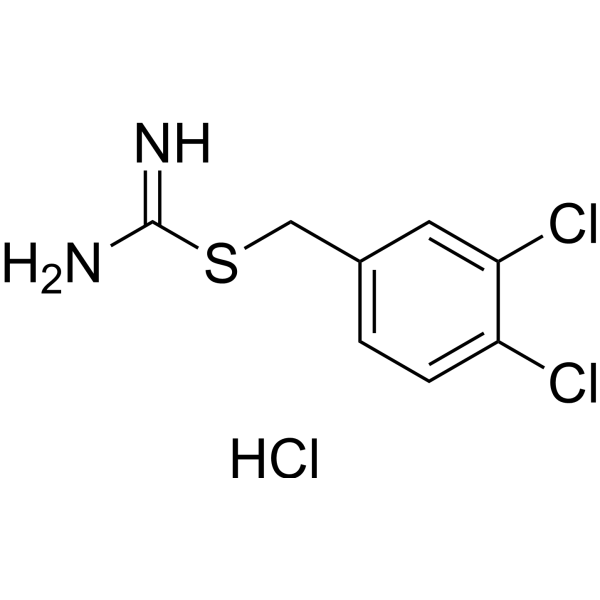
MreB Perturbing Compound A22 hydrochloride (A22 hydrochloride) is a reversible MreB inhibitor and antimicrobial agent that exhibits bacteriostatic activity against Escherichia coli, with low activity against Gram-positive bacteria. MreB Perturbing Compound A22 hydrochloride rapidly and reversally delocalizes MreB from the helical/circular structures in cells, impairs MreB function, and reduces the binding of MreB to the chromosomal region proximal to the replication origin. MreB Perturbing Compound A22 hydrochloride alters the cell morphology of caulobacters to round/lemon-shaped, slows caulobacter growth, blocks their cell division, and induces the formation of spherical morphology, asymmetric division, and anucleate cells in Escherichia coli. MreB Perturbing Compound A22 hydrochloride is used for studies related to bacterial rod-shaped morphology determination, chromosome segregation, and cell division mechanisms .
loading...
    loading...
Cat. No.: HY-P5557
CAS No.: 1429184-62-2
Target:  

Bacterial Necroptosis

Research Areas:  

Infection Inflammation/Immunology

TP4 (Nile tilapia piscidin) is an orally active amphipathic α-helical cationic antimicrobial peptide. TP4 (Nile tilapia piscidin) exerts broad-spectrum bactericidal activity against Gram-positive and Gram-negative bacteria by disrupting cell membrane structures, and also exhibits certain hemolytic activity. TP4 (Nile tilapia piscidin) regulates the innate immune system and enhances the expression of lysozymes, cytokines and antioxidant enzymes to resist bacterial infection. TP4 (Nile tilapia piscidin) also stimulates the proliferation of keratinocytes and fibroblasts, and significantly promotes the healing of wounds infected with MRSA. TP4 (Nile tilapia piscidin) can be used in research related to bacterial infection, peritonitis, wound healing and other fields .
loading...
    loading...
Cat. No.: HY-P2530
CAS No.: 187987-64-0
Target:  

Inhibitory Antibodies

Research Areas:  

Others

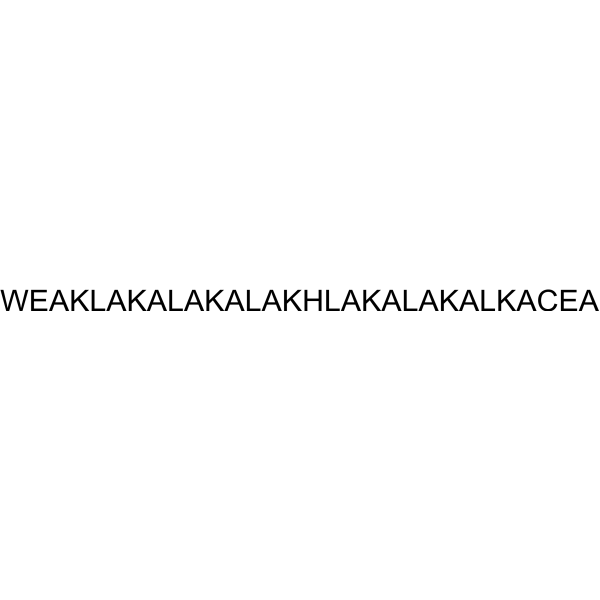
KALA is an amphiphilic peptide that forms an α-helical structure at physiological pH. KALA modifies a plasmid DNA-encapsulating liposomal membrane and is used as a fusogenic peptide in order to achieve effective liver targeting and transfection of DNA via galactose receptors .
loading...
    loading...
Cat. No.: HY-W006886
CAS No.: 945212-26-0
Research Areas:  

Others

Fmoc-(R)-2-(7-octenyl) Ala-OH is an unnatural Fmoc-protected amino acid and modification module. Fmoc-(R)-2-(7-octenyl) Ala-OH serves as a key building block for all-hydrocarbon cross-linking modification of antimicrobial peptides, and facilitates the generation of stapled peptide derivatives. When introduced into specific sites of the parent peptide, Fmoc-(R)-2-(7-octenyl) Ala-OH effectively increases the α-helix content of the peptide chain, thereby significantly enhancing its antimicrobial activity and proteolytic stability. Fmoc-(R)-2-(7-octenyl) Ala-OH is widely used in research on bacterial infections and the development of related antimicrobial agents . Stapled peptide is a specially chemically modified polypeptide. It locks the peptide chain into a stable α-helical structure by introducing a "staple"-like chemical bridge (usually an all-carbon backbone) at specific positions of the peptide chain.
loading...
    loading...
Cat. No.: HY-150536
Target:  

HIV HIV Protease

Research Areas:  

Infection

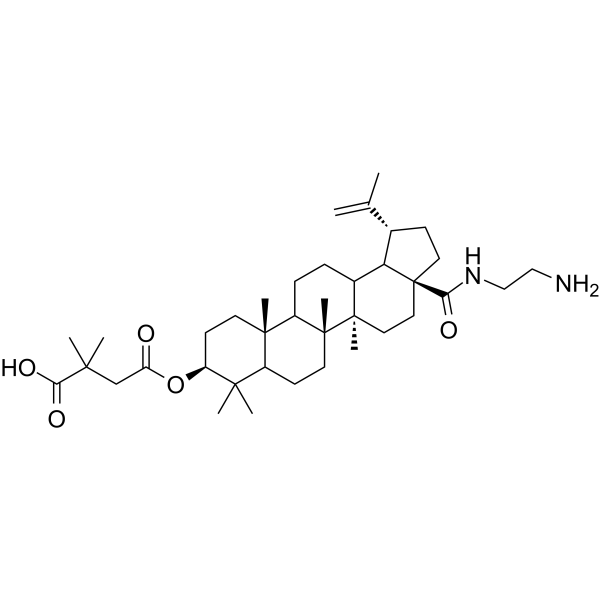
EP39 is a potent HIV-1 maturation inhibitor. EP39 interacts with the SP1 domain of Gag. EP39 decreases the dynamics of CA-SP1 junction, by binding to the QVT motif of the SP1 domain, and perturbs the natural coil-helix equilibrium on both sides of the SP1 domain by stabilizing the transient alpha helical structure. EP39 acts by arresting maturation of HIV-1 thereby blocking its infectivity .
loading...
    loading...
Cat. No.: HY-118773R
CAS No.: 22816-60-0
Synonyms: A22 hydrochloride (Standard)
Research Areas:  

Infection

MreB Perturbing Compound A22 hydrochloride (Standard) is the analytical standard for MreB Perturbing Compound A22 hydrochloride (HY-118773). This product is intended for research and analytical applications. MreB Perturbing Compound A22 hydrochloride (A22 hydrochloride) is a reversible MreB inhibitor and antimicrobial agent that exhibits bacteriostatic activity against Escherichia coli, with low activity against Gram-positive bacteria. MreB Perturbing Compound A22 hydrochloride rapidly and reversally delocalizes MreB from the helical/circular structures in cells, impairs MreB function, and reduces the binding of MreB to the chromosomal region proximal to the replication origin. MreB Perturbing Compound A22 hydrochloride alters the cell morphology of caulobacters to round/lemon-shaped, slows caulobacter growth, blocks their cell division, and induces the formation of spherical morphology, asymmetric division, and anucleate cells in Escherichia coli. MreB Perturbing Compound A22 hydrochloride is used for studies related to bacterial rod-shaped morphology determination, chromosome segregation, and cell division mechanisms .
loading...
    loading...
Cat. No.: HY-P11353
CAS No.: 117138-19-9
Research Areas:  

Infection Cancer

HA2 peptide is a potent pH-responsive fusion peptide derived from hemagglutinin (HA), corresponding to the N-terminal fusion peptide domain consisting of 23 amino acid residues of HIV-1 gp41 envelope glycoprotein. HA2 peptide adopts a random coil structure under physiological pH conditions; in acidic endosomes, protonation of carboxyl groups reduces negative charge, inducing a transition to an α-helical conformation that can fuse with and destabilize the endosomal membrane. After binding to membranes, the N-terminal and middle regions of HA2 peptide mainly adopt a β-strand conformation, while the C-terminal region remains unstructured. HA2 peptide induces lipid mixing and promotes aqueous content leakage from large unilamellar vesicles whose lipid composition matches that of HIV-1 viruses and target T cells. HA2 peptide is anionic and can bind to cationic peptides to achieve siRNA condensation. HA2 peptide can be used in studies related to cancer and human immunodeficiency virus (HIV) infection .
loading...
    loading...
Cat. No.: HY-180334
CAS No.: 120004-07-1
Target:  

Calcium Channel

Research Areas:  

Cardiovascular Disease

S-312 is a calcium antagonist with a bicyclic dihydrothienopyridine structure. S-312 can relax the helical strips of various isolated rabbit arteries procontracted with high potassium depolarizaiton. S-312 competitively imhibits calcium-induced contractions in depolarized basilar and femoral arteries. S-312 increases AV nodal conduction time in Langenedorff-perfused isolated rabbit hearts. S-312 exhibits vasculoselectivity, particularly for cerebral vessel .
loading...
    loading...
Cat. No.: HY-P12210
CAS No.: 1001644-68-3
Research Areas:  

Infection

Antimicrobial peptide BP100 is a linear undecapeptide with an amphipathic α-helical structure that exhibits antibacterial activity. Antimicrobial peptide BP100 shows in vitro antibacterial activity against a variety of plant and human pathogens. Antimicrobial peptide BP100 binds to and inserts into bacterial cell membranes through electrostatic attraction, triggering membrane permeabilization and ultimately leading to membrane disruption. Antimicrobial peptide BP100 can be used for research on bacterial infections .
loading...
    loading...
Cat. No.: HY-P12259
4F-P-4F peptide is an apoA-I mimetic peptide with a class A amphipathic α-helical structure that acts on ABCA1 and SR-B. 4F-P-4F peptide induces cholesterol efflux from cholesterol-loaded mouse macrophages and promotes HDL remodeling in plasma. 4F-P-4F peptide can be used in research on asthma and atherosclerosis .
loading...
    loading...
Cat. No.: HY-P12210A
Research Areas:  

Infection

Antimicrobial peptide BP100 TFA is a linear undecapeptide with an amphipathic α-helical structure that exhibits antibacterial activity. Antimicrobial peptide BP100 TFA shows in vitro antibacterial activity against a variety of plant and human pathogens. Antimicrobial peptide BP100 TFA binds to and inserts into bacterial cell membranes through electrostatic attraction, triggering membrane permeabilization and ultimately leading to membrane disruption. Antimicrobial peptide BP100 TFA can be used for research on bacterial infections .
loading...
    loading...
Cat. No.: HY-167189
CAS No.: 682763-67-3
Target:  

Tau Protein Amyloid-β

Research Areas:  

Neurological Disease

BF-158 is a quinoline-based Tau Protein fluorescent imaging probe that produces specific staining by recognizing the β-sheet structure of paired helical filaments (PHF)/neurofibrillary tangles (NFT) in tau aggregates, with EC50 values of 399 nM and 659 nM for tau fibrils and Aβ1-42 fibrils, respectively. BF-158 preferentially labels NFTs, neuropil threads, and PHF-type neurites. BF-158 is useful for the study and imaging of tau pathology in Alzheimer's disease .
loading...
    loading...
Cat. No.: HY-DY2032
Research Areas:  

Others

Methyl Green Staining Solution (Chloroform-Extracted, 1%) is a basic dye stock solution with differential nucleic acid binding activity that distinguishes double-stranded DNA from RNA, and it can be used for assays related to nucleic acid distribution and DNA localization. Methyl Green Staining Solution (Chloroform-Extracted, 1%) functions by competitively binding to the phosphate groups of nucleic acids and stably binds to intact double-stranded DNA; RNA within the oocyte-specific ribonucleoprotein complex specifically binds to this dye, and RNase completely blocks this binding reaction. The nucleic acid recognition of Methyl Green Staining Solution (Chloroform-Extracted, 1%) depends on the size of the dye cation and the intact double-helical structure of DNA .
loading...
    loading...
  • 1

