22 Results for "

hydrophobic functionalization

" in MedChemExpress (MCE) Product Catalog:
Products (22)

22 Results for "hydrophobic functionalization" in MCE Product Catalog:

1
1 Cited Publications
Cat. No.: HY-W440835
Target:  

Liposome

Research Areas:  

Inflammation/Immunology

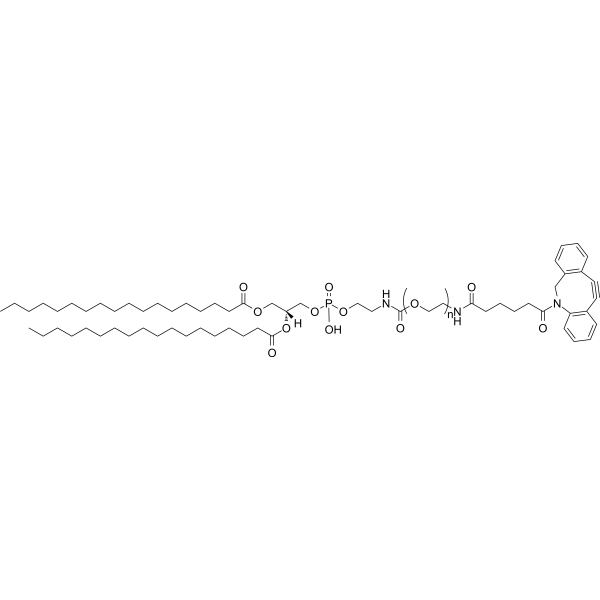
DSPE-PEG2000-DBCO is a phospholipid PEG polymer that combines a hydrophobic phospholipid (DSPE), a hydrophilic polyethylene glycol spacer with a molecular weight of 1000 Da, and a reactive click chemistry terminal group (DBCO). DSPE-PEG2000-DBCO migrates to lymph nodes via the endogenous albumin transport system, implants bioorthogonal DBCO docking sites, and enables the enrichment of azide-functionalized vesicles in lymph nodes mediated by click chemistry. DSPE-PEG2000-DBCO can be used in studies related to atherosclerosis .
loading...
    loading...
1
1 Cited Publications
Cat. No.: HY-142978
CAS No.: 156543-00-9
Synonyms: DSPE-mPEG2000
Target:  

Liposome

Research Areas:  

Others

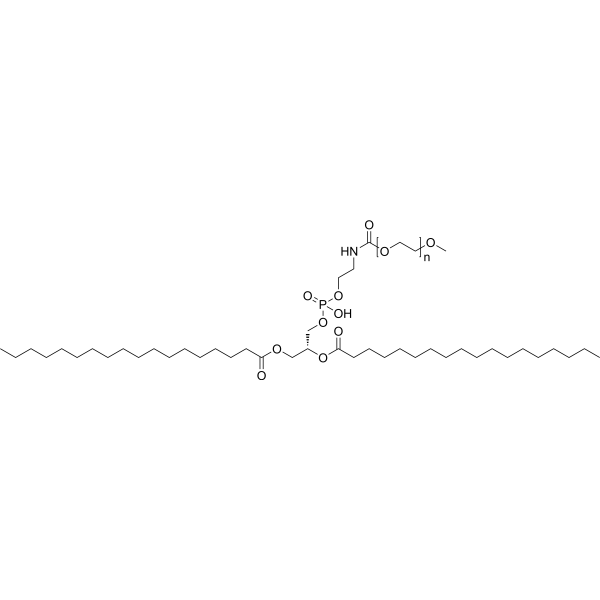
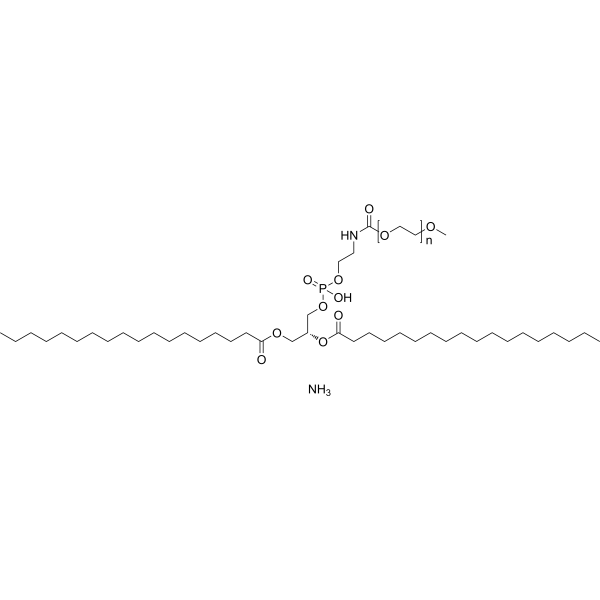
18:0 mPEG2000 PE (DSPE-mPEG2000) ammonium is a kind of amphiphilic polymer material. 18:0 mPEG2000 PE ammonium combines hydrophobic lipids (18:0 stearic acid chain) with hydrophilic polyethylene glycol (2 kDa) chains to form amphiphilic molecules, which are used to construct stable liposomes/nanoparticles, thereby enhancing drug delivery, prolonging circulation time, and achieving targeted effects through its functional terminal groups (usually biotin or carboxyl groups). 18:0 mPEG2000 PE ammonium can be used for the research of nanoprobes and drug delivery .
loading...
    loading...
1
1 Cited Publications
Cat. No.: HY-N0913A
CAS No.: 3371-50-4
Research Areas:  

Metabolic Disease

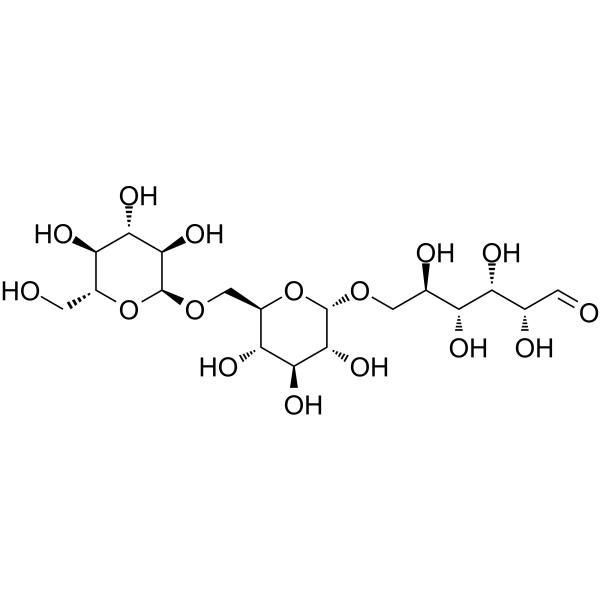
Isomaltotriose is a type of isomaltooligosaccharide belonging to the α-glucan family. Isomaltotriose acts not only as an important prebiotic component that can be differentially metabolized by beneficial intestinal bacteria to regulate the intestinal flora, but also as a valuable chemical synthesis precursor that can be modified enzymatically to introduce hydrophobic groups and converted into high-value functional molecules .
loading...
    loading...
Cat. No.: HY-W440896
Target:  

Liposome

Research Areas:  

Others

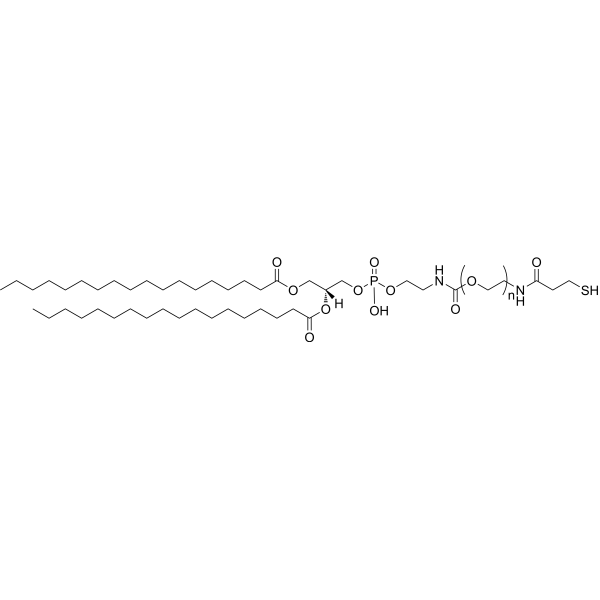
DSPE-PEG2000-SH is an amphiphilic thiol-functionalized DSPE-PEG molecule. DSPE-PEG2000-SH inserts into extracellular vesicle (EV) bilayer membranes via hydrophobic interactions, displaying surface thiol groups to form EV-SH crosslinkers.DSPE-PEG2000-SH enables crosslinking of EV-SH with 8-arm PEG-norbornene via thiol-ene photochemistry to construct hydrogels, with hydrogel mechanical properties tunable via PEG segment molecular weight variation.DSPE-PEG2000-SH can be used to encapsulate agents for drug delivery system, such as mRNA vaccine .
loading...
    loading...
Cat. No.: HY-W440835E
Research Areas:  

Inflammation/Immunology

DSPE-PEG5000-DBCO is a phospholipid PEG polymer that combines a hydrophobic phospholipid (DSPE), a hydrophilic polyethylene glycol spacer with a molecular weight of 5000 Da, and a reactive click chemistry terminal group (DBCO). DSPE-PEG-DBCO migrates to lymph nodes via the endogenous albumin transport system, implants bioorthogonal DBCO docking sites, and enables the enrichment of azide-functionalized vesicles in lymph nodes mediated by click chemistry. DSPE-PEG-DBCO can be used in studies related to atherosclerosis .
loading...
    loading...
Cat. No.: HY-144013H
CAS No.: 474922-77-5
Purity:  99%
Synonyms: DSPE-mPEG5000 ammonium; 1,2-Distearoyl-sn-glycero-3-phosphoethanolamine-N-[methoxy(polyethylene glycol)-5000] ammonium
Target:  

Liposome

Research Areas:  

Cancer

18:0 mPEG5000 PE (DSPE-mPEG5000) ammonium is a kind of amphiphilic polymer material. 18:0 mPEG5000 PE ammonium combines hydrophobic lipids (18:0 stearic acid chain) with hydrophilic polyethylene glycol (5 kDa) chains to form amphiphilic molecules, which are used to construct stable liposomes/nanoparticles, thereby enhancing drug delivery, prolonging circulation time, and achieving targeted effects through its functional terminal groups (usually biotin or carboxyl groups). 18:0 mPEG5000 PE ammonium can be used for the research of nanoprobes and drug delivery .
loading...
    loading...
Cat. No.: HY-W440835D
Research Areas:  

Inflammation/Immunology

DSPE-PEG3400-DBCO is a phospholipid PEG polymer that combines a hydrophobic phospholipid (DSPE), a hydrophilic polyethylene glycol spacer with a molecular weight of 3400 Da, and a reactive click chemistry terminal group (DBCO). DSPE-PEG-DBCO migrates to lymph nodes via the endogenous albumin transport system, implants bioorthogonal DBCO docking sites, and enables the enrichment of azide-functionalized vesicles in lymph nodes mediated by click chemistry. DSPE-PEG-DBCO can be used in studies related to atherosclerosis .
loading...
    loading...
Cat. No.: HY-W142140
CAS No.: 2566-32-7
Synonyms: N-Methylvaline
Research Areas:  

Others

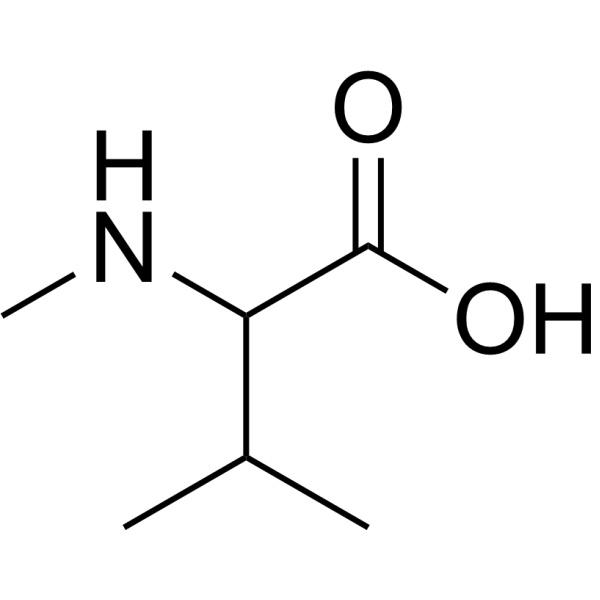
N-Methyl-DL-valine is a valine derivant, is metabolized to cysteine, alanine, tyrosine, tryptophan, citric acid, and succinic acid in the sprout. N-Methyl-DL-valine involves in the modification of monomethyl auristatin F (MMAF), an anti-tubulin agent, makes it hydrophobic functionalization and increases cell permeability .
loading...
    loading...
Cat. No.: HY-W142140A
Synonyms: N-Methylvaline hydrochloride
Research Areas:  

Cancer

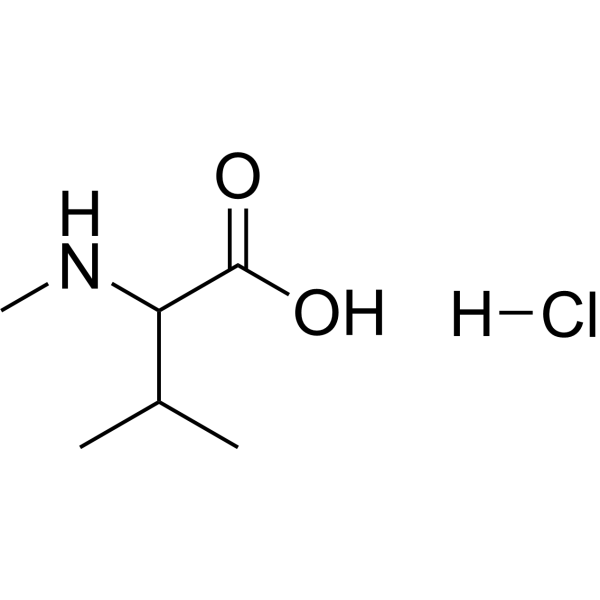
N-Methyl-DL-valine (N-Methylvaline) hydrochloride is a valine derivant, is metabolized to cysteine, alanine, tyrosine, tryptophan, citric acid, and succinic acid in the sprout. N-Methyl-DL-valine hydrochloride involves in the modification of monomethyl auristatin F (MMAF), an anti-tubulin agent, makes it hydrophobic functionalization and increases cell permeability .
loading...
    loading...
Cat. No.: HY-160726
CAS No.: 2315261-99-3
Polymethacrylate Copolymer N−C4−52−6.9 is a polymer that consists of hydrophobic butylmethacrylate and cationic methacroylcholine chloride monomers. Polymethacrylate Copolymer N−C4−52−6.9 is able to solubilise lipid bilayers into nanodiscs. Polymethacrylate Copolymer N−C4−52−6.9 can be utilized in structure and functional studies on membrane proteins .
loading...
    loading...
Cat. No.: HY-N0913AR
CAS No.: 3371-50-4
Isomaltotriose (Standard) is the analytical standard of Isomaltotriose. This product is intended for research and analytical applications. Isomaltotriose is a type of isomaltooligosaccharide belonging to the α-glucan family. Isomaltotriose acts not only as an important prebiotic component that can be differentially metabolized by beneficial intestinal bacteria to regulate the intestinal flora, but also as a valuable chemical synthesis precursor that can be modified enzymatically to introduce hydrophobic groups and converted into high-value functional molecules.
loading...
    loading...
Cat. No.: HY-173606
CAS No.: 1938081-40-3
Research Areas:  

Others

DSPE-PEG2000-Azide ammonium is an azide-functionalized phospholipid and lipid-polyethylene glycol conjugate. DSPE-PEG2000-Azide ammonium serves as a component of azide-functionalized liposome nanoparticles, which enables conjugation with DBCO-modified antibodies and proteins via strain-promoted alkyne-azide cycloaddition, and can also passively insert into exosome membranes through hydrophobic interactions, thereby achieving modular surface engineering via azide-alkyne click chemistry. DSPE-PEG-Azide ammonium binds to bovine milk exosomes with a KD of 347 μM .
loading...
    loading...
Cat. No.: HY-W440835C
Research Areas:  

Inflammation/Immunology

DSPE-PEG1000-DBCO is a phospholipid PEG polymer that combines a hydrophobic phospholipid (DSPE), a hydrophilic polyethylene glycol spacer with a molecular weight of 1000 Da, and a reactive click chemistry terminal group (DBCO). DSPE-PEG-DBCO migrates to lymph nodes via the endogenous albumin transport system, implants bioorthogonal DBCO docking sites, and enables the enrichment of azide-functionalized vesicles in lymph nodes mediated by click chemistry. DSPE-PEG-DBCO can be used in studies related to atherosclerosis .
loading...
    loading...
Cat. No.: HY-W440835A
Research Areas:  

Inflammation/Immunology

DSPE-PEG400-DBCO is a phospholipid PEG polymer that combines a hydrophobic phospholipid (DSPE), a hydrophilic polyethylene glycol spacer with a molecular weight of 400 Da, and a reactive click chemistry terminal group (DBCO). DSPE-PEG-DBCO migrates to lymph nodes via the endogenous albumin transport system, implants bioorthogonal DBCO docking sites, and enables the enrichment of azide-functionalized vesicles in lymph nodes mediated by click chemistry. DSPE-PEG-DBCO can be used in studies related to atherosclerosis .
loading...
    loading...
Cat. No.: HY-W440835B
Research Areas:  

Inflammation/Immunology

DSPE-PEG600-DBCO is a phospholipid PEG polymer that combines a hydrophobic phospholipid (DSPE), a hydrophilic polyethylene glycol spacer with a molecular weight of 600 Da, and a reactive click chemistry terminal group (DBCO). DSPE-PEG-DBCO migrates to lymph nodes via the endogenous albumin transport system, implants bioorthogonal DBCO docking sites, and enables the enrichment of azide-functionalized vesicles in lymph nodes mediated by click chemistry. DSPE-PEG-DBCO can be used in studies related to atherosclerosis .
loading...
    loading...
Cat. No.: HY-W440835H
Research Areas:  

Inflammation/Immunology

DSPE-PEG10000-DBCO is a phospholipid PEG polymer that combines a hydrophobic phospholipid (DSPE), a hydrophilic polyethylene glycol spacer with a molecular weight of 10000 Da, and a reactive click chemistry terminal group (DBCO). DSPE-PEG-DBCO migrates to lymph nodes via the endogenous albumin transport system, implants bioorthogonal DBCO docking sites, and enables the enrichment of azide-functionalized vesicles in lymph nodes mediated by click chemistry. DSPE-PEG-DBCO can be used in studies related to atherosclerosis .
loading...
    loading...
Cat. No.: HY-187415A
Synonyms: DOPE-PEG2000-Mal-Cys-TAASGVRSMH
Research Areas:  

Cancer

DOPE-PEG2000-TAASGVRSMH is an amphiphilic lipid-PEG-peptide conjugate composed of 1,2-dioleoyl-sn-glycero-3-phosphoethanolamine (DOPE) , polyethylene glycol 2000 (PEG2000) , and the TAASGVRSMH peptide.
DOPE provides a hydrophobic phospholipid anchor for membrane insertion, PEG2000 forms a hydrophilic spacer that enhances circulation stability, and the TAASGVRSMH peptide serves as a tumor-vasculature-homing ligand identified by in vivo phage display.
This conjugate can be used to functionalize liposomes and lipid nanoparticles for targeted drug delivery to tumor vasculature.
loading...
    loading...
Cat. No.: HY-L941
4,235 compounds

Orthosteric sites are highly conserved, leading to poor subtype selectivity, off-target toxicity and drug resistance in traditional drugs. By contrast, allosteric sites show low conservation, high hydrophobicity, weak polarity, confined geometry and dynamic cryptic properties, granting modulators high selectivity, functional tunability and safety. Thus, allosteric therapy has become a major focus in drug discovery.

MCE curated nearly 1,000 clinical-stage allosteric modulators, analyzed PDB complex structures to identify key pharmacophores and privileged scaffolds, then designed and filtered compounds using rational “scaffold derivation + physicochemical screening” with strict property criteria. The resulting compounds show high rigidity and shape complementarity to shallow, dynamic, hydrophobic allosteric pockets.

This library comprises 4,315 diverse, lead-like compounds ideal for allosteric drug discovery and target screening, covering kinases, GPCRs and more. All are analogs of clinical-stage molecules with similarity > 0.6, combining high druggability and allosteric binding potential to support efficient early-stage R&D.

Cat. No.: HY-187616
CAS No.: 163435-77-6
R-95845 is a non-nucleoside HIV-1 reverse transcriptase (RT) inhibitor. R-95845 is specific to HIV-1 RT and acts as a functionally non-competitive inhibitor with respect to nucleotide incorporation. R-95845 binds to the non-nucleoside inhibitor binding pocket of HIV-1 RT in a butterfly-like conformation, forms hydrogen bonds with Tyr 188 and Val 189, and engages in hydrophobic interactions with surrounding residues. R-95845 can be used in studies related to HIV-1 infection and acquired immunodeficiency syndrome .
loading...
    loading...
Cat. No.: HY-L251
91 compounds

Ionizable lipids are a class of specialized, functional lipid molecules with pH-sensitive charge characteristics. They are primarily divided into two major categories: ionizable cationic lipids and ionizable anionic lipids, though the term typically specifies ionizable cationic lipids within the biomedical field. Structurally, these lipids consist of an ionizable hydrophilic headgroup, a biodegradable linker, and hydrophobic tails. Their primary application is serving as the key delivery vehicle in lipid nanoparticles (LNPs) to encapsulate negatively charged nucleic acid macromolecules, such as mRNA vaccines, siRNA therapeutics, and CRISPR gene-editing components. In a physiological, neutral environment, they remain electrically neutral to minimize systemic toxicity and prolong circulation time. Upon entering the acidic microenvironment of cellular endosomes, however, they undergo protonation to become positively charged, thereby inducing membrane fusion and enabling the highly efficient intracellular release of the nucleic acid cargo. Consequently, they serve as the technological cornerstone for bringing nucleic acid therapies into clinical application.

To accelerate the translational process of cutting-edge nucleic acid drugs, MCE has meticulously constructed an ionizable lipid compound library containing 91 high-performance molecules, aiming to provide researchers and pharmaceutical professionals with a high-throughput, multi-dimensional lipid screening platform.

