20 Results for "

intranasal

" in MedChemExpress (MCE) Product Catalog:
Products (20)

20 Results for "intranasal" in MCE Product Catalog:

2
2 Cited Publications
Cat. No.: HY-118250
CAS No.: 1207629-49-9
Purity:  99.85%
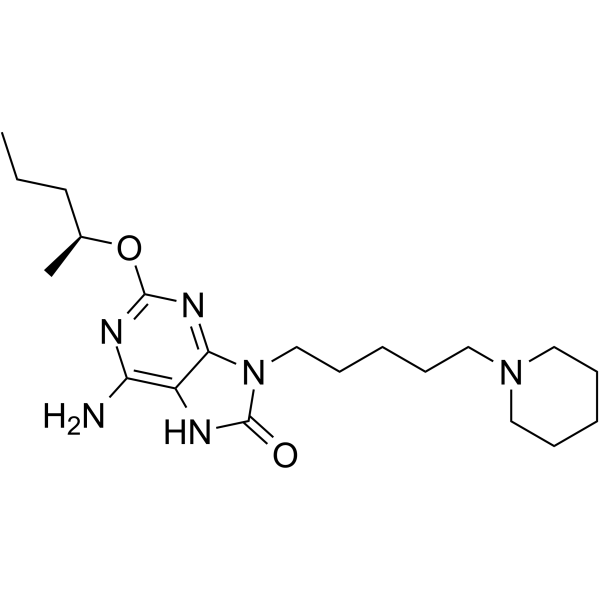
GSK2245035 is a highly potent and selective intranasal Toll-Like receptor 7 (TLR7) agonist with preferential Type-1 interferon (IFN)-stimulating properties. GSK2245035 has pEC50s of 9.3 and 6.5 for IFNα and TFNα. GSK2245035 effectively suppresses allergen-induced Th2 cytokine production in human peripheral blood cell cultures. GSK2245035 is used for asthma .
loading...
    loading...
1
1 Cited Publications
Cat. No.: HY-P1149
CAS No.: 307297-39-8
Synonyms: Epithalon; Epithalamin
Target:  

Telomerase

Research Areas:  

Neurological Disease Cancer

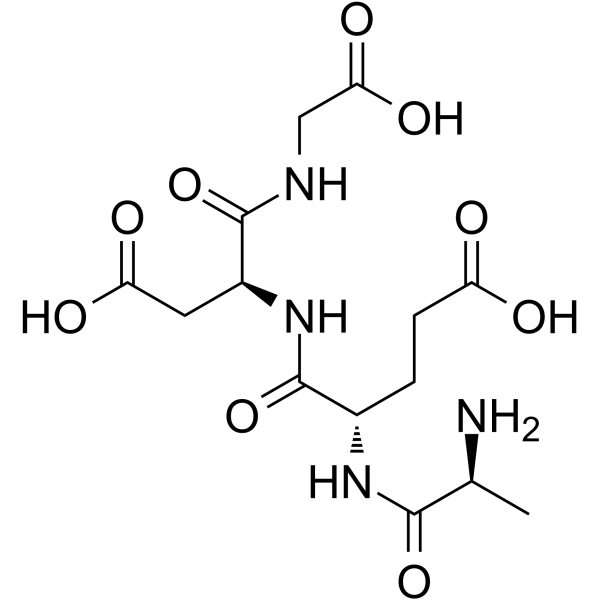
Epitalon is an anti-aging agent and a telomerase activator. Epitalon has an inhibitory effect of the on the development of spontaneous tumors in mice, has geroprotective actions and intranasal administration increases neuronal activity. Epitalon can be used for cancer, old age and Retinitis Pigmentosa .
loading...
    loading...
1
1 Cited Publications
Cat. No.: HY-P1149A
Synonyms: Epithalon TFA; Epithalamin TFA
Target:  

Telomerase

Research Areas:  

Neurological Disease Cancer

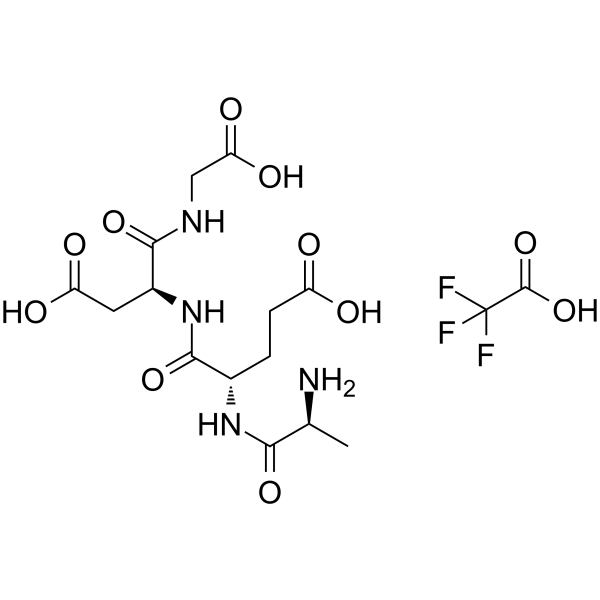
Epitalon TFA is an anti-aging agent and a telomerase activator. Epitalon TFA has an inhibitory effect of the on the development of spontaneous tumors in mice, has geroprotective actions and intranasal administration increases neuronal activity. Epitalon TFA can be used for cancer, old age and Retinitis Pigmentosa .
loading...
    loading...
Cat. No.: HY-15234
CAS No.: 397864-44-7
Purity:  99.84%
Research Areas:  

Inflammation/Immunology

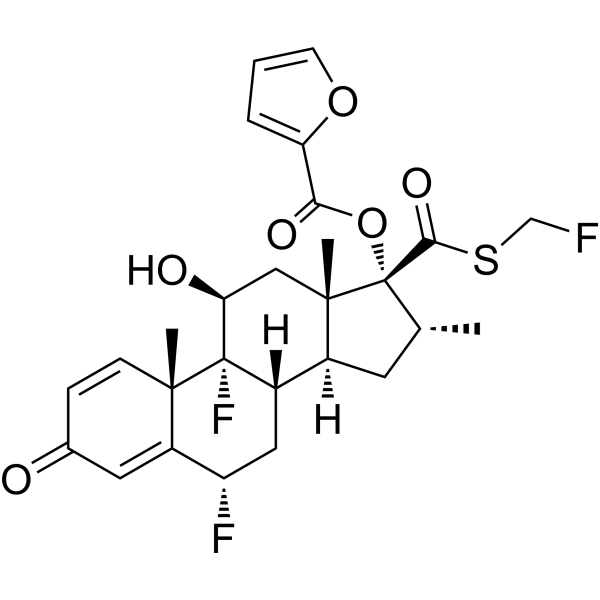
Fluticasone furoate is a topical, intranasal, enhanced-affinity synthetic trifluorinated corticosteroid with a Kd of 0.3 nM. Fluticasone furoate has potent anti-inflamatory and anti-asthmatic activity, and low systemic exposure. Fluticasone furoate has the potential for allergic rhinitis treatment .
loading...
    loading...
Cat. No.: HY-P2159
CAS No.: 75790-53-3
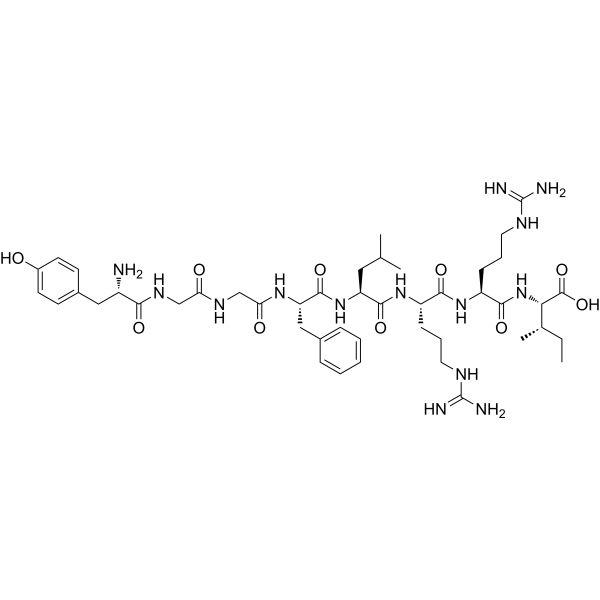
Dynorphin A (1-8) is a ligand with preference for the κ-opioid receptor, and its IC50 value against human placental κ-opioid receptor is 330 nM. Dynorphin A (1-8) mediates neuroprotective effects by inhibiting oxidative stress, suppressing apoptosis, and competitively displacing the binding of κ partial agonists. Dynorphin A (1-8) is the dominant opioid peptide in human placental villi and tissue extracts; it undergoes rapid hydrolysis and can enter the central nervous system via intranasal administration. Dynorphin A (1-8) can be used in studies related to ischemic stroke .
loading...
    loading...
Cat. No.: HY-N11630
CAS No.: 97134-11-7
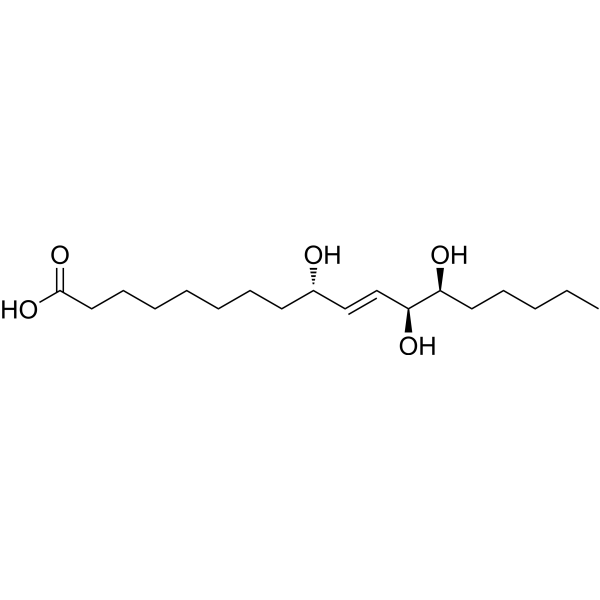
Pinellic acid is an orally active adjuvant for intranasal influenza vaccines. Pinellic acid can be extracted from the tubers of Pinellia ternata Breitenbach. When administered intranasally in combination with influenza HA vaccine, Pinellic acid slightly increases the titers of antiviral IgG antibodies in bronchoalveolar lavage fluid and serum. Pinellic acid shows no hemolytic activity. Pinellic acid can be used in studies related to influenza virus infection .
loading...
    loading...
Cat. No.: HY-W014134
CAS No.: 74938-88-8
Synonyms: p-Amidinophenylmethylsulfonylfluoride hydrochloride
Target:  

Ser/Thr Protease

Research Areas:  

Inflammation/Immunology

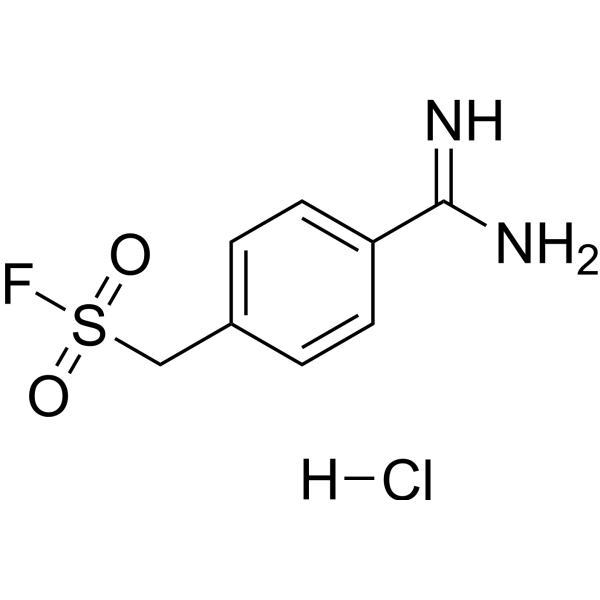
p-APMSF (p-Amidinophenylmethylsulfonylfluoride) hydrochloride is a serine protease and trypsin inhibitor with the characteristic of rapid onset of action. p-APMSF hydrochloride reduces the enzymatic hydrolysis of recombinant human G-CSF in rat pulmonary mucosa. Combined intratracheal treatment with p-APMSF hydrochloride and Laureth-9 significantly enhances its absorption efficiency in rat lungs. Following intranasal administration, p-APMSF hydrochloride does not increase the concentration of recombinant human G-CSF in rat plasma, nor does it alter the effect of G-CSF on inducing an increase in total white blood cell count .
loading...
    loading...
Cat. No.: HY-15234S
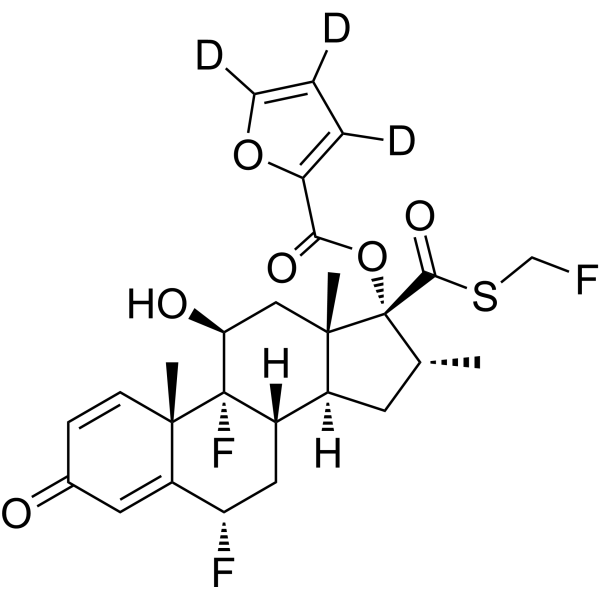
Fluticasone furoate-d3 is deuterium labeled Fluticasone furoate. Fluticasone furoate is a topical, intranasal, enhanced-affinity synthetic trifluorinated corticosteroid with a Kd of 0.3 nM. Fluticasone furoate has potent anti-inflamatory and anti-asthmatic activity, and low systemic exposure. Fluticasone furoate has the potential for allergic rhinitis treatment .
loading...
    loading...
Cat. No.: HY-15234R
CAS No.: 397864-44-7
Fluticasone furoate (Standard) is the analytical standard of Fluticasone furoate. This product is intended for research and analytical applications. Fluticasone furoate is a topical, intranasal, enhanced-affinity synthetic trifluorinated corticosteroid with a Kd of 0.3 nM. Fluticasone furoate has potent anti-inflamatory and anti-asthmatic activity, and low systemic exposure. Fluticasone furoate has the potential for allergic rhinitis treatment .
loading...
    loading...
Cat. No.: HY-W008003
CAS No.: 615-16-7
Research Areas:  

Infection

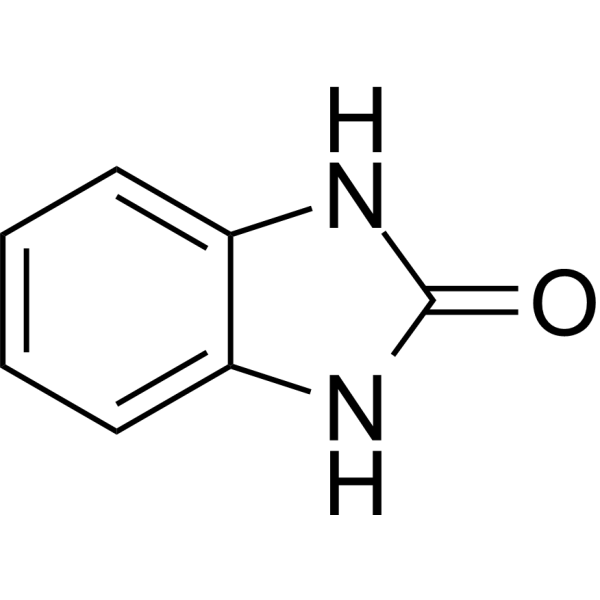
2-Hydroxybenzimidazole is a metabolite of Carbendazim (HY-13582). 2-Hydroxybenzimidazole is produced by the degradation of Carbendazim (HY-13582) by mycobacteria. 2-Hydroxybenzimidazole does not induce CYP1A1 protein expression and does not significantly reduce mortality in mice after influenza virus challenge following intranasal administration. 2-Hydroxybenzimidazole can be used in research on tobacco mosaic virus infection and influenza .
loading...
    loading...
Cat. No.: HY-N2216
CAS No.: 79103-90-5
Synonyms: Onjisaponin F
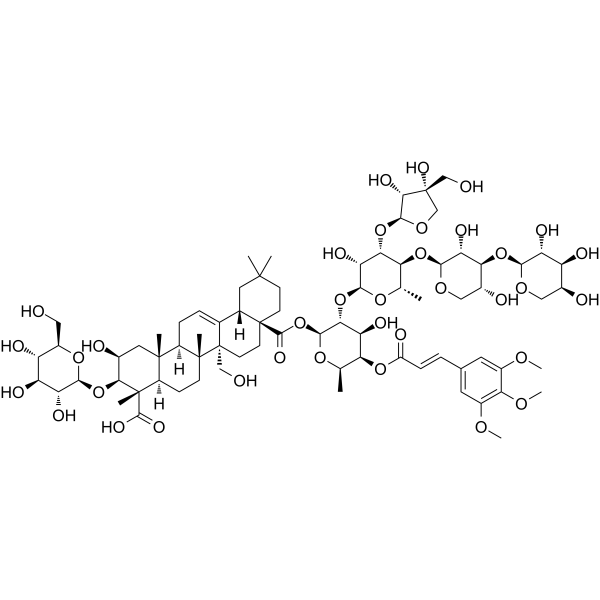
Polygalasaponin XXXI (Onjisaponin F) is an effective adjuvant for intranasal administration of influenza Influenza hemagglutinin (HA) vaccine to protect influenza virus infection .
loading...
    loading...
Cat. No.: HY-167016
Target:  

Liposome

Research Areas:  

Others

Cholesterol-undecanoate-glucose conjugate is a cholesterol conjugate used in the synthesis of intranasal liposomal vaccines. Cholesterol-undecanoate-glucose conjugate can be used in drug delivery studies .
loading...
    loading...
Cat. No.: HY-105955
CAS No.: 154132-95-3
Synonyms: ARL 14294
Research Areas:  

Metabolic Disease

FPL 14294 is a intranasally active anorectic agent and a cholecystokinin octapeptide (CCK) analog with enhanced metabolic stability. FPL 14294 induces satiety in many species and can be utilized in relevant research .
loading...
    loading...
Cat. No.: HY-114574
CAS No.: 1050381-35-5
Target:  

CGRP Receptor

Research Areas:  

Neurological Disease

BMS-694153 is a potent antagonist of the human calcitonin gene-related peptide receptor (CGRP Receptor). BMS-694153 can be used for migraine with rapid and efficient intranasal exposure .
loading...
    loading...
Cat. No.: HY-118250A
CAS No.: 1325212-97-2
GSK2245035 maleate is a highly potent and selective intranasal Toll-Like receptor 7 (TLR7) agonist with preferential Type-1 interferon (IFN)-stimulating properties. GSK2245035 maleate has pEC50s of 9.3 and 6.5 for IFNα and TFNα. GSK2245035 maleate effectively suppresses allergen-induced Th2 cytokine production in human peripheral blood cell cultures. GSK2245035 maleate is used for asthma .
loading...
    loading...
Cat. No.: HY-117637
CAS No.: 1369357-99-2
Target:  

Oxytocin Receptor

Research Areas:  

Neurological Disease

ALS-I-41 is a novel, potent and selective oxytocin receptor antagonist with the potential to modulate biological activities related to social behavior and mental disorders. ALS-I-41 is being evaluated for behavioral pharmacology experiments in non-human primates and can be administered via intranasal or intramuscular injection. The central nervous system penetration and metabolic rate of ALS-I-41 were studied by mass spectrometry analysis in cerebrospinal fluid and plasma of macaque monkeys .
loading...
    loading...
Cat. No.: HY-W008003R
CAS No.: 615-16-7
Research Areas:  

Infection

2-Hydroxybenzimidazole (Standard) is the analytical standard of 2-Hydroxybenzimidazole (HY-W008003). This product is intended for research and analytical applications. 2-Hydroxybenzimidazole is a metabolite of Carbendazim (HY-13582). 2-Hydroxybenzimidazole is produced by the degradation of Carbendazim (HY-13582) by mycobacteria. 2-Hydroxybenzimidazole does not induce CYP1A1 protein expression and does not significantly reduce mortality in mice after influenza virus challenge following intranasal administration. 2-Hydroxybenzimidazole can be used in research on tobacco mosaic virus infection and influenza .
loading...
    loading...
Cat. No.: HY-101633
CAS No.: 955359-72-5
Target:  

Histamine Receptor

Research Areas:  

Others

GSK-1004723 is a novel H1/H3 receptor antagonist with limited activity for the suppression of seasonal allergic rhinitis. GSK-1004723 is available as a suspension or solution for intranasal administration.
loading...
    loading...
Cat. No.: HY-184485
Research Areas:  

Infection

MB-32 is a potent and selective allosteric inhibitor of human angiotensin-converting enzyme 2 (hACE2) with a Kd value of 7.078 μM. MB-32 binds to a non-catalytic surface pocket on the N-terminal helix of ACE2, disrupts the interaction between ACE2 and the receptor-binding domain of SARS-CoV-2 spike protein through allosteric action, and preserves the enzymatic activity of ACE2 across different species. MB-32 achieves high concentrations in the airway via intranasal administration, with no detected cardiovascular toxicity. MB-32 can be used for research on coronavirus disease 2019 .
loading...
    loading...
Cat. No.: HY-P992081

Target:  

Orthopoxvirus

Research Areas:  

Infection

Anti-H3L Antibody (NAL_A185) is a neutralizing antibody targeting the H3L envelope protein of vaccinia virus (CV) belonging to the genus Orthopoxvirus. By binding to the H3L protein of intracellular mature virions, Anti-H3L Antibody (NAL_A185) blocks the binding of the virus to host cells, thereby neutralizing viral infectivity. Anti-H3L Antibody (NAL_A185) not only protects BALB/c mice from intranasal challenge with the lethal vaccinia virus WR strain, reducing weight loss and mortality, but also exhibits complement-dependent neutralizing activity against monkeypox virus. Among these properties, NAL_A185 is an immune target induced by the smallpox vaccine Dryvax; it elicits a robust recall antibody response and induces high-titer neutralizing antibodies in mice. Anti-H3L Antibody (NAL_A185) can be used for studies related to vaccinia virus infection, monkeypox and monkeypox disease .
loading...
    loading...
  • 1

