14 Results for "

ion flux

" in MedChemExpress (MCE) Product Catalog:
Products (14)

14 Results for "ion flux" in MCE Product Catalog:

53
53 Publications Verification
Cat. No.: HY-15084B
CAS No.: 77086-21-6
Purity:  99.90%
Synonyms: MK-801
Target:  

iGluR

Research Areas:  

Neurological Disease

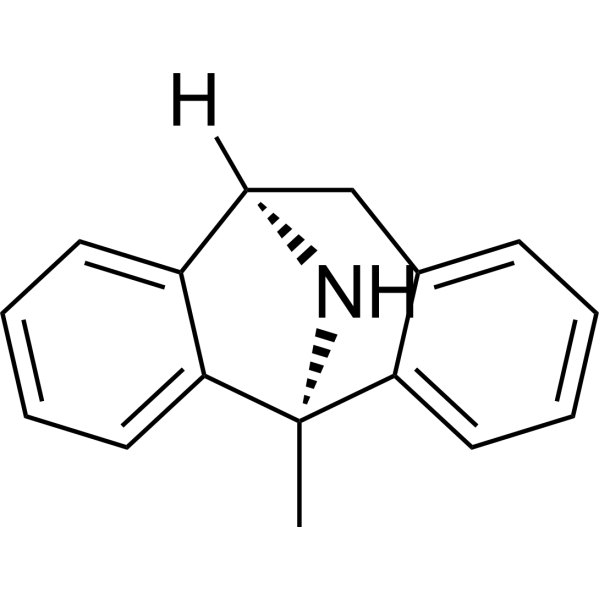
Dizocilpine (MK-801), a potent anticonvulsant, is a selective and non-competitive NMDA receptor antagonist, with a Kd of 37.2 nM in rat brain membranes. Dizocilpine acts by binding to a site located within the NMDA associated ion channel and thus prevents Ca 2+ flux .
loading...
    loading...
5
5 Cited Publications
Cat. No.: HY-15568
CAS No.: 475205-49-3
Purity:  98.64%
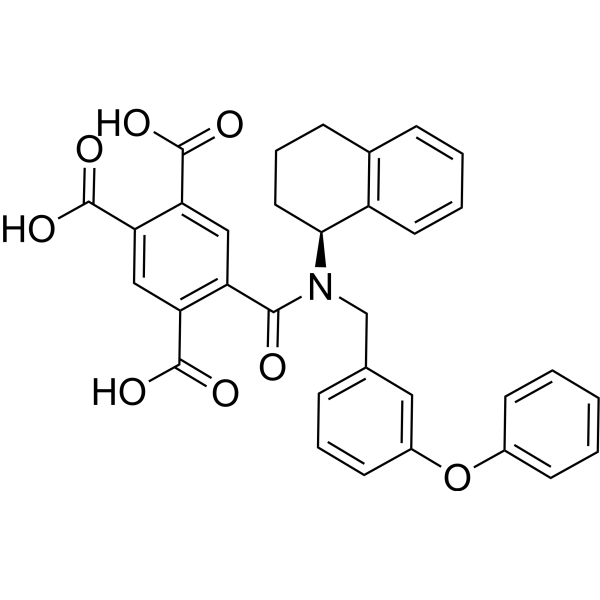
A-317491 is a potent, selective and non-nucleotide antagonist of P2X3 and P2X2/3 receptors, with Kis of 22, 22, 9, and 92 nM for hP2X3, rP2X3, hP2X2/3, and rP2X2/3, respectively. A-317491 is highly selective (IC50>10 μM) over other P2 receptors and other neurotransmitter receptors, ion channels, and enzymes. A-317491 reduces inflammatory and neuropathic pain by blocking P2X3 and P2X2/3 receptor-mediated calcium flux .
loading...
    loading...
5
5 Cited Publications
Cat. No.: HY-15568A
Purity:  99.88%
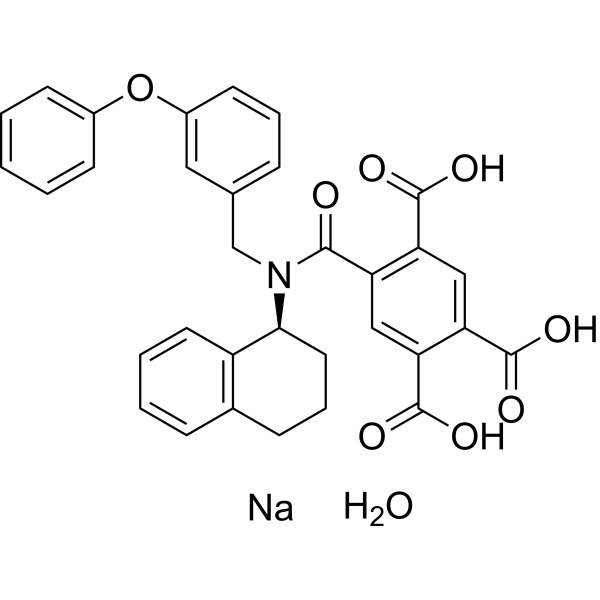
A-317491 sodium salt hydrate is a potent, selective and non-nucleotide antagonist of P2X3 and P2X2/3 receptors, with Kis of 22, 22, 9, and 92 nM for hP2X3, rP2X3, hP2X2/3, and rP2X2/3, respectively. A-317491 sodium salt hydrate is highly selective (IC50>10 μM) over other P2 receptors and other neurotransmitter receptors, ion channels, and enzymes. A-317491 sodium salt hydrate reduces inflammatory and neuropathic pain by blocking P2X3 and P2X2/3 receptor-mediated calcium flux .
loading...
    loading...
1
1 Cited Publications
Cat. No.: HY-113232
CAS No.: 33008-07-0
Purity:  99.90%
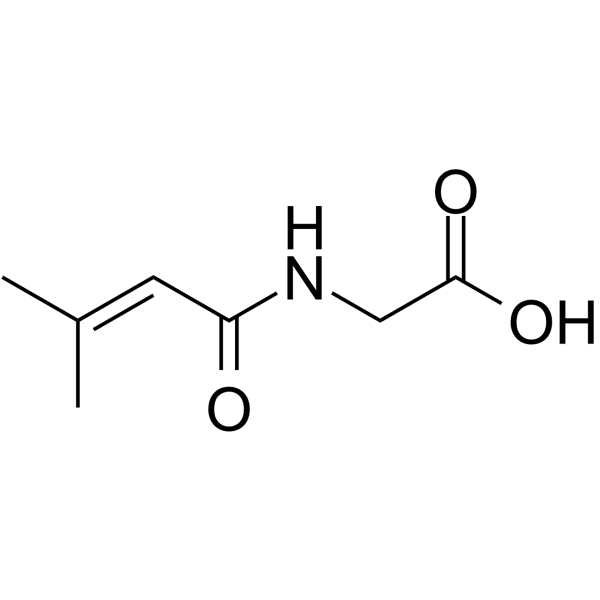
3-Methylcrotonylglycine is an organic acid conjugate associated with leucine catabolism that inhibits respiratory chain complex II-III, mitochondrial creatine kinase, and synaptic membrane Na +, K +-ATPase. 3-Methylcrotonylglycine increases reactive oxygen species levels to mediate oxidative damage, while inhibiting mitochondrial electron transport, reducing tricarboxylic acid cycle flux, and interfering with intracellular energy transport and neuronal ion homeostasis. 3-Methylcrotonylglycine is a neurotoxic metabolite that accumulates in the metabolic pathway of 3-methylcrotonyl-CoA carboxylase deficiency. 3-Methylcrotonylglycine can be used in studies related to 3-methylcrotonyl-CoA carboxylase deficiency .
loading...
    loading...
Cat. No.: HY-148129
CAS No.: 2311863-36-0
Purity:  99.62%
Synonyms: TRPC6-IN-3
Target:  

TRP Channel

Research Areas:  

Cardiovascular Disease

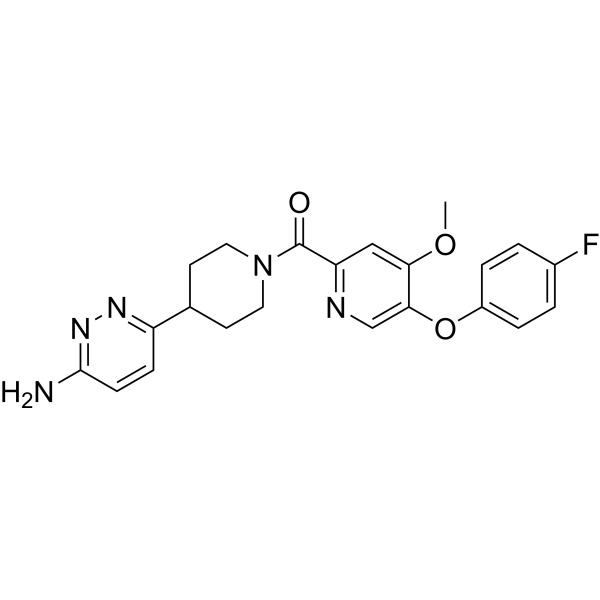
Apecotrep (TRPC6-IN-3) (compound 17) is a potent, orally active transient receptor potential C6 ion channel (TRPC6) inhibitor. Apecotrep modulates not only intracellular calcium concentration, but also membrane potential by modulating the flux of cations including calcium and sodium ions. Apecotrep can be used in research of respiratory system .
loading...
    loading...
Cat. No.: HY-141885
CAS No.: 2446817-72-5
Purity:  99.85%
Target:  

Apolipoprotein

Research Areas:  

Endocrinology

APOL1-IN-1 is an apolipoprotein L1 (APOL1) inhibitor that suppresses the functional activity of the APOL1 G1 risk variant. APOL1-IN-1 inhibits the pore function of APOL1, thereby reducing APOL1-mediated membrane permeability and abnormal ion flux, and thus intervenes in APOL1-related cellular injury processes. APOL1-IN-1 is used in research related to focal segmental glomerulosclerosis and non-diabetic kidney disease .
loading...
    loading...
Cat. No.: HY-158741
CAS No.: 1369302-24-8
Synonyms: APG-2 Acetoxymethyl ester
IPG-2 AM (APG-2 Acetoxymethyl ester) is a membrane-permeant acetoxymethyl ester derivative and selective fluorescent potassium ion indicator. IPG-2 AM exhibits fluorescence increases proportional to extracellular potassium ion concentrations. IPG-2 AM enables real-time monitoring of cytosolic free potassium ion fluxes in human platelets and macrophages. IPG-2 AM can be used for the research of intracellular potassium concentration dynamics .
loading...
    loading...
Cat. No.: HY-117804
CAS No.: 151898-26-9
Synonyms: 8-Bromo-Cyclic ADP-Ribose
Research Areas:  

Neurological Disease Cancer

8-Br-cADPR (8-Bromo-Cyclic ADP-Ribose) is a membrane-permeable competitive antagonist of Cyclic ADP-ribose (cADPR) (HY-N7395) and an antagonist of TRPM2 ion channels. 8-Br-cADPR blocks cADPR-dependent RyR, SR calcium mobilization, and cADPR-mediated signaling; reduces Paclitaxel (HY-B0015)-induced axonal calcium flux, and protects against Paclitaxel-induced axonal degeneration/peripheral neuropathy. 8-Br-cADPR blocks isoproterenol-induced pulmonary artery dilation, angiotensin II-induced arterial calcium signaling/contraction, and hypoxic pulmonary vasoconstriction. 8-Br-cADPR can be used in research related to neurological diseases and cancer .
loading...
    loading...
Cat. No.: HY-175081
Synonyms: 8-Bromo-Cyclic ADP-Ribose sodium salt
Research Areas:  

Neurological Disease Cancer

8-Br-cADPR sodium salt (8-Bromo-Cyclic ADP-Ribose sodium salt) is a membrane-permeable competitive antagonist of Cyclic ADP-ribose (cADPR) (HY-N7395) and an antagonist of TRPM2 ion channels. 8-Br-cADPR sodium salt blocks cADPR-dependent RyR, SR calcium mobilization, and cADPR-mediated signaling; reduces Paclitaxel (HY-B0015)-induced axonal calcium flux, and protects against Paclitaxel-induced axonal degeneration/peripheral neuropathy. 8-Br-cADPR sodium salt blocks isoproterenol-induced pulmonary artery dilation, angiotensin II-induced arterial calcium signaling/contraction, and hypoxic pulmonary vasoconstriction. 8-Br-cADPR sodium salt can be used in research related to neurological diseases and cancer .
loading...
    loading...
Cat. No.: HY-121366
CAS No.: 58769-20-3
Synonyms: RU-15525
Target:  

Calcium Channel

Research Areas:  

Others

Kadethrin is a synthetic pyrethroid that acts as an insecticide. Kadethrin can affect the binding of [3H] full-histamine toxin ([3H]H12-HTX) to the nicotinic acetylcholine (Ach) receptor/channel binding sites, and it inhibits the Ca 2+ flux through the receptor ion channels .
loading...
    loading...
Cat. No.: HY-113232S
CAS No.: 1276197-31-9
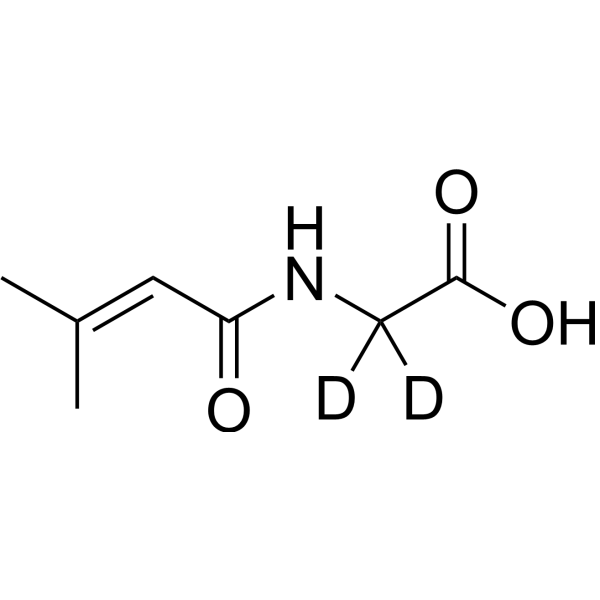
3-Methylcrotonylglycine-d2 is the deuterated-labeled 3-Methylcrotonylglycine (HY-113232). 3-Methylcrotonylglycine is an organic acid conjugate associated with leucine catabolism that inhibits respiratory chain complex II-III, mitochondrial creatine kinase, and synaptic membrane Na +, K +-ATPase. 3-Methylcrotonylglycine increases reactive oxygen species levels to mediate oxidative damage, while inhibiting mitochondrial electron transport, reducing tricarboxylic acid cycle flux, and interfering with intracellular energy transport and neuronal ion homeostasis. 3-Methylcrotonylglycine is a neurotoxic metabolite that accumulates in the metabolic pathway of 3-methylcrotonyl-CoA carboxylase deficiency. 3-Methylcrotonylglycine can be used in studies related to 3-methylcrotonyl-CoA carboxylase deficiency .
loading...
    loading...
Cat. No.: HY-15084BR
CAS No.: 77086-21-6
Synonyms: MK-801 (Standard)
Research Areas:  

Neurological Disease

Dizocilpine (Standard) is the analytical standard of Dizocilpine (HY-15084B). This product is intended for research and analytical applications. Dizocilpine (MK-801), a potent anticonvulsant, is a selective and non-competitive NMDA receptor antagonist, with a Kd of 37.2 nM in rat brain membranes. Dizocilpine acts by binding to a site located within the NMDA associated ion channel and thus prevents Ca 2+ flux .
loading...
    loading...
Cat. No.: HY-181007
Target:  

iGluR Sigma Receptor

Research Areas:  

Neurological Disease

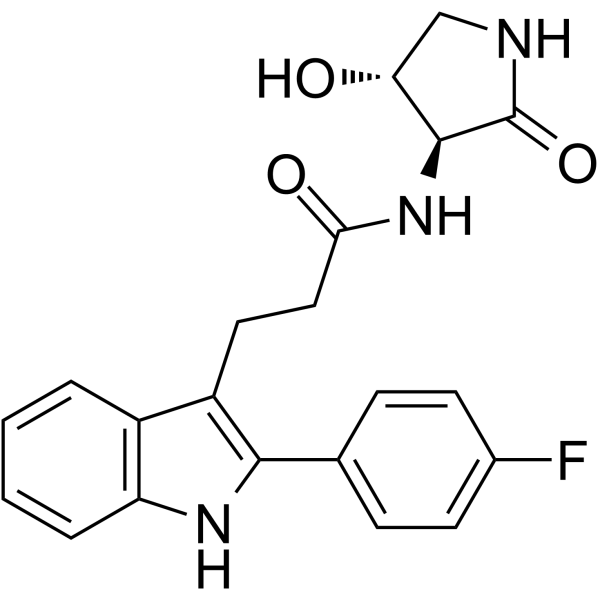
NMDA receptor antagonist 9 is a selective GluN2B subunit-containing NMDA receptor antagonist with a Ki of 5.2 nM. NMDA receptor antagonist 9 exhibits 9-fold selectivity over σ1 receptors, shows poor selectivity towards σ2 receptors. NMDA receptor antagonist 9 inhibits ion flux through GluN2B subunit-containing NMDA receptors. NMDA receptor antagonist 9 can be used for the research of neurological disease, such as alzheimer’s disease and parkinson’s disease .
loading...
    loading...
Cat. No.: HY-N20708
CAS No.: 89353-99-1
Chiisanogenin is an orally active triterpenoid. Chiisanogenin reduces postprandial blood glucose by promoting GLUT4 translocation and glucose uptake via activation of the IRS-1/PI3K/Akt signaling pathway. Chiisanogenin binds to MLKL and inhibits its phosphorylation and oligomerization, maintains lysosomal integrity, restores autophagic flux, and suppresses NLRP3 inflammasome activation and pyroptosis. Chiisanogenin inhibits xanthine oxidase activity and regulates oxidative stress and ion pump activity. Chiisanogenin binds to or inhibits PKA, H +/K +-ATPase and β-glucuronidase. Chiisanogenin possesses multiple pharmacological activities, including broad-spectrum antibacterial activity, anticancer, anti-inflammatory, antirheumatic, renoprotective, cardioprotective and antiarrhythmic effects. Chiisanogenin can be used in research related to type 2 diabetes, rheumatoid arthritis, myocardial injury, hepatocellular carcinoma and ventricular arrhythmia .
loading...
    loading...
  • 1

