9288 Results for "

methoxy groups

" in MedChemExpress (MCE) Product Catalog:
Products (9288)

9288 Results for "methoxy groups" in MCE Product Catalog:

3
3 Cited Publications
Cat. No.: HY-RI04602A
Target:  

MicroRNA

Research Areas:  

Others

MicroRNA Antagomir Negative Control is a chemically-modified oligonucleotide (2 phosphorothioates at the 5' end, 4 phosphorothioates at the 3' end, 1 cholesterol group at the 3' end, and full-length nucleotide 2'-methoxy modification), and can be used as a negative control. The sequence of MicroRNA Antagomir Negative Control is derived from cel-mir-239b. It has minimal sequence identity with miRNAs in human, mouse, and rat.
loading...
    loading...
2
2 Cited Publications
Cat. No.: HY-RI00449A
Target:  

MicroRNA

Research Areas:  

Cancer

hsa-miR-21-5p antagomirs are chemically-modified oligonucleotides that hybridize with mature miRNAs. The miRNA antagomirs have 2 phosphorothioates at the 5' end, 4 phosphorothioates at the 3' end, 1 cholesterol group at the 3' end, and full-length nucleotide 2'-methoxy modification. The miRNA antagomirs strongly compete with mature miRNAs to prevent the complementary pairing of miRNAs and their target genes, thereby inhibiting miRNAs from functioning. Stability of miRNA antagomirs appears to be significantly higher than miRNA inhibitors, they exhibits enhanced cellular uptake, stability and regulatory activity in vivo.
loading...
    loading...
1
1 Cited Publications
Cat. No.: HY-W050162
CAS No.: 20329-98-0
Synonyms: TMCA
Research Areas:  

Neurological Disease

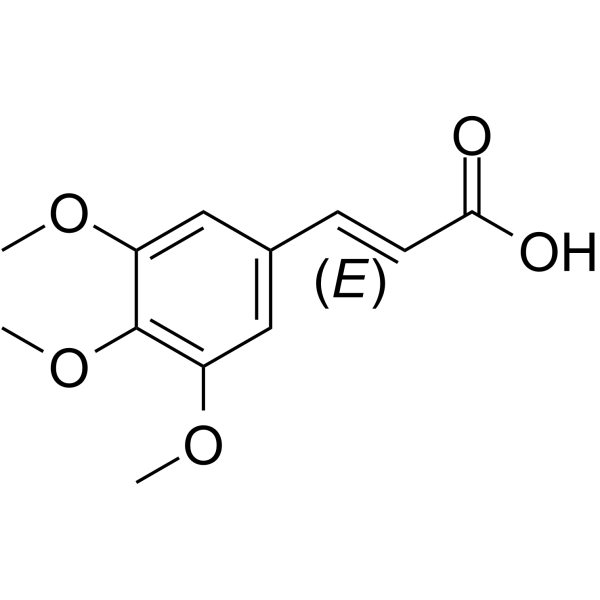
(E)-3,4,5-Trimethoxycinnamic acid (TMCA) is a cinnamic acid substituted by multi-methoxy groups. (E)-3,4,5-Trimethoxycinnamic acid is an orally active and potent GABAA/BZ receptor agonist. (E)-3,4,5-Trimethoxycinnamic exhibits favourable binding affinity to 5-HT2C and 5-HT1A receptor, with IC50 values of 2.5 and 7.6 μM, respectively. (E)-3,4,5-Trimethoxycinnamic acid shows anticonvulsant and sedative activity. (E)-3,4,5-Trimethoxycinnamic acid can be used for the research of insomnia, headache and epilepsy .
loading...
    loading...
Cat. No.: HY-140459
CAS No.: 846549-37-9
Purity:  98.59%
Target:  

PROTAC Linkers

Research Areas:  

Cancer

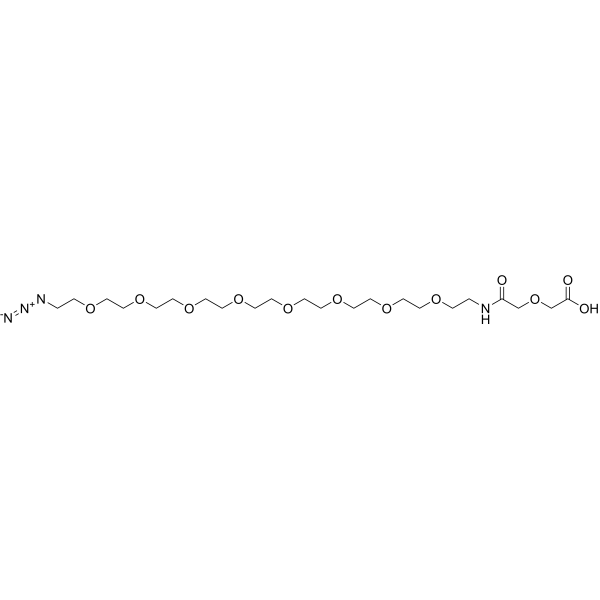
2-((Azido-PEG8-carbamoyl)methoxy)acetic acid is a PEG-based PROTAC linker that can be used in the synthesis of PROTACs . 2-((Azido-PEG8-carbamoyl)methoxy)acetic acid is a click chemistry reagent, it contains an Azide group and can undergo copper-catalyzed azide-alkyne cycloaddition reaction (CuAAc) with molecules containing Alkyne groups. It can also undergo strain-promoted alkyne-azide cycloaddition (SPAAC) reactions with molecules containing DBCO or BCN groups.
loading...
    loading...
Cat. No.: HY-140678
CAS No.: 80506-64-5
Purity:  ≥98.0%
Synonyms: mPEG10000-NH2
Research Areas:  

Cancer

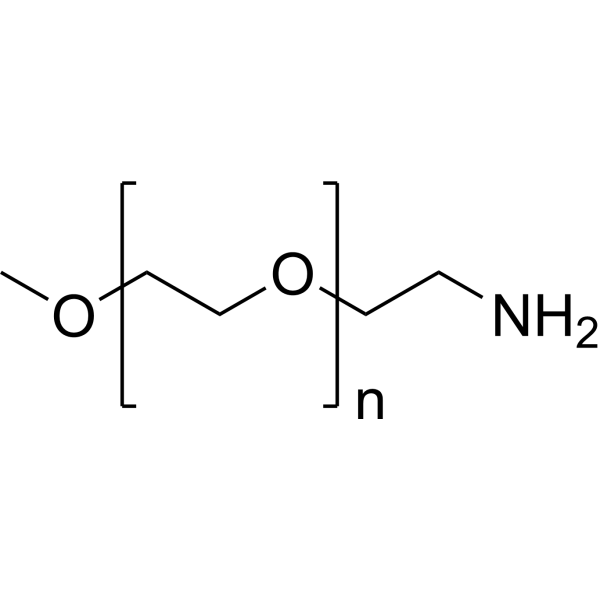
mPEG10000-amine (mPEG10000-NH2) is a monofunctional polyethylene glycol derivative-a linear PEG capped with a methoxy group at one end and a primary amino group at the other-commonly used as a hydrophilic linker in bioconjugation.
loading...
    loading...
Cat. No.: HY-140663
Purity:  ≥95.0%
Research Areas:  

Cancer

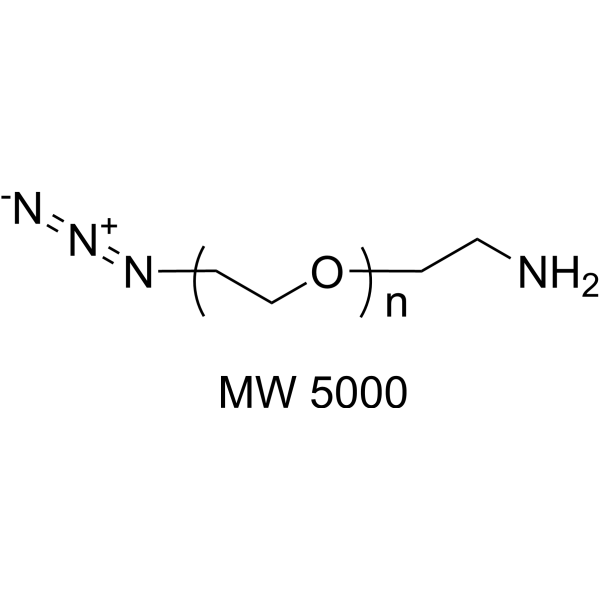
Azide-PEG5000-amine is a class of functionalized polymers composed of a methoxy-terminated polyethylene glycol backbone and a terminal primary amine group. Azide-PEG5000-amine serves as an important intermediate for constructing functionalized nanocarriers, modifying proteins or polypeptides, and developing novel drug delivery systems. Azide-PEG5000-amine is a click chemistry reagent, it contains an Azide group and can undergo copper-catalyzed azide-alkyne cycloaddition reaction (CuAAc) with molecules containing Alkyne groups. It can also undergo strain-promoted alkyne-azide cycloaddition (SPAAC) reactions with molecules containing DBCO or BCN groups.
loading...
    loading...
Cat. No.: HY-140661
Purity:  ≥95.0%
Research Areas:  

Cancer

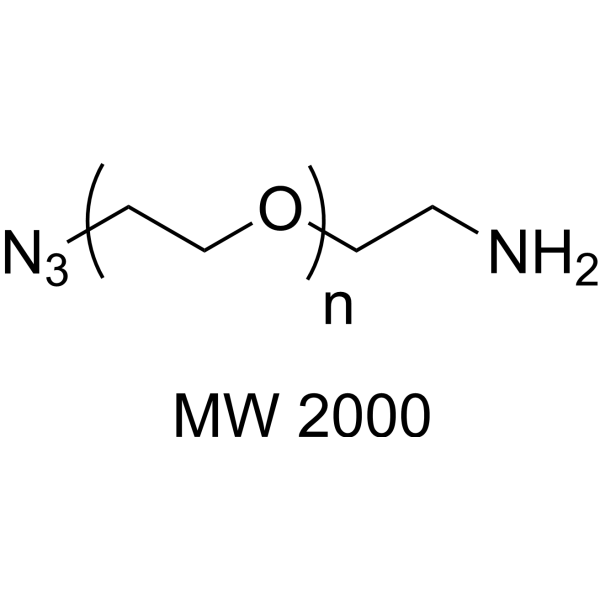
Azide-PEG2000-amine is a class of functionalized polymers composed of a methoxy-terminated polyethylene glycol backbone and a terminal primary amine group. Azide-PEG2000-amine serves as an important intermediate for constructing functionalized nanocarriers, modifying proteins or polypeptides, and developing novel drug delivery systems. Azide-PEG2000-amine is a click chemistry reagent, it contains an Azide group and can undergo copper-catalyzed azide-alkyne cycloaddition reaction (CuAAc) with molecules containing Alkyne groups. It can also undergo strain-promoted alkyne-azide cycloaddition (SPAAC) reactions with molecules containing DBCO or BCN groups.
loading...
    loading...
Cat. No.: HY-N15067
CAS No.: 122290-50-0
7-O-methylluteone is a hydroxyisoflavone that is luteone in which the hydroxy group at position 7 is replaced by a methoxy group. 7-O-Methylluteone has a role as an EC (aldehyde reductase) inhibitor and a metabolite .
loading...
    loading...
Cat. No.: HY-R00057A
Target:  

MicroRNA

Research Areas:  

Cancer

hsa-miR-107 agomirs are chemically-modified double-strand miRNA mimics with modified mature miRNA strand: 2 phosphorothioates at the 5' end, 4 phosphorothioates at the 3' end, 3' end cholesterol group, and full-length nucleotide 2'-methoxy modification. They are designed to mimic endogenous miRNAs and recommended for miRNA functional studies. Compared with miRNA mimics, they exhibits enhanced cellular uptake, stability and regulatory activity in vivo.
loading...
    loading...
Cat. No.: HY-174955B
mPEG5000-Silane is a PEG derivative containing silane that can be used to modify glass, silicon or other surfaces by reacting the hydroxyl groups with ethoxy (methoxy) silane .
loading...
    loading...
Cat. No.: HY-174970D
Synonyms: Silane-PEG3400-azide
Silane-PEG3400-N3 (Silane-PEG3400-azide) is a PEG derivative composed of silane, PEG units, and azide groups, which can be used to modify glass, silicon, or other surfaces by reacting hydroxyl groups with ethoxy (methoxy) silanes. Silane-PEG3400-N3 contains an azide group and can undergo copper-catalyzed azide-alkyne cycloaddition (CuAAc) with molecules containing alkyne groups. It can also undergo ring strain-driven alkyne-azide cycloaddition (SPAAC) with molecules containing DBCO or BCN groups .
loading...
    loading...
Cat. No.: HY-140662
Research Areas:  

Cancer

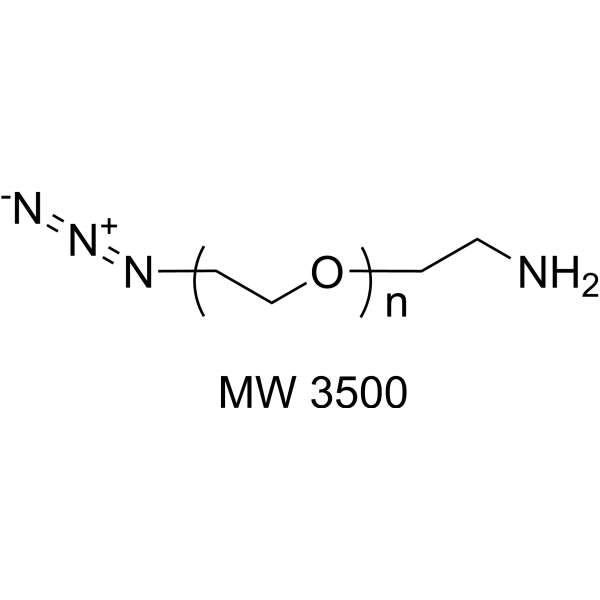
Azide-PEG3500-amine is a class of functionalized polymers composed of a methoxy-terminated polyethylene glycol backbone and a terminal primary amine group. Azide-PEG3500-amine serves as an important intermediate for constructing functionalized nanocarriers, modifying proteins or polypeptides, and developing novel drug delivery systems. Azide-PEG3500-amine is a click chemistry reagent, it contains an Azide group and can undergo copper-catalyzed azide-alkyne cycloaddition reaction (CuAAc) with molecules containing Alkyne groups. It can also undergo strain-promoted alkyne-azide cycloaddition (SPAAC) reactions with molecules containing DBCO or BCN groups.
loading...
    loading...
Cat. No.: HY-124332
CAS No.: 1539266-55-1
Target:  

5-HT Receptor

Research Areas:  

Neurological Disease

25T7-NBOMe hydrochloride is a derivative of 2C-T-7, characterized by the addition of a benzyl-methoxy (BOMe) group to the amine .
loading...
    loading...
Cat. No.: HY-174955
mPEG1000-Silane is a PEG derivative containing silane that can be used to modify glass, silicon or other surfaces by reacting the hydroxyl groups with ethoxy (methoxy) silane .
loading...
    loading...
Cat. No.: HY-152438
Research Areas:  

Others

6-Amino-3-ethynyl-4-methoxy-1-(β-D-ribofuranosyl)-1H-pyrazolo[3,4-d]pyrimidine is a purine nucleoside analogue. Purine nucleoside analogs have broad antitumor activity targeting indolent lymphoid malignancies. Anticancer mechanisms in this process rely on inhibition of DNA synthesis, induction of apoptosis, etc . 6-Amino-3-ethynyl-4-methoxy-1-(β-D-ribofuranosyl)-1H-pyrazolo[3,4-d]pyrimidine is a click chemistry reagent, it contains an Alkyne group and can undergo copper-catalyzed azide-alkyne cycloaddition (CuAAc) with molecules containing Azide groups.
loading...
    loading...
Cat. No.: HY-174970B
Synonyms: Silane-PEG1000-azide
Silane-PEG1000-N3 (Silane-PEG1000-azide) is a PEG derivative composed of silane, PEG units, and azide groups, which can be used to modify glass, silicon, or other surfaces by reacting hydroxyl groups with ethoxy (methoxy) silanes. Silane-PEG1000-N3 contains an azide group and can undergo copper-catalyzed azide-alkyne cycloaddition (CuAAc) with molecules containing alkyne groups. It can also undergo ring strain-driven alkyne-azide cycloaddition (SPAAC) with molecules containing DBCO or BCN groups .
loading...
    loading...
Cat. No.: HY-174970C
Synonyms: Silane-PEG2000-azide
Silane-PEG2000-N3 (Silane-PEG2000-azide) is a PEG derivative composed of silane, PEG units, and azide groups, which can be used to modify glass, silicon, or other surfaces by reacting hydroxyl groups with ethoxy (methoxy) silanes. Silane-PEG2000-N3 contains an azide group and can undergo copper-catalyzed azide-alkyne cycloaddition (CuAAc) with molecules containing alkyne groups. It can also undergo ring strain-driven alkyne-azide cycloaddition (SPAAC) with molecules containing DBCO or BCN groups .
loading...
    loading...
Cat. No.: HY-174970H
Synonyms: Silane-PEG10000-azide
Silane-PEG10000-N3 (Silane-PEG10000-azide) is a PEG derivative composed of silane, PEG units, and azide groups, which can be used to modify glass, silicon, or other surfaces by reacting hydroxyl groups with ethoxy (methoxy) silanes. Silane-PEG10000-N3 contains an azide group and can undergo copper-catalyzed azide-alkyne cycloaddition (CuAAc) with molecules containing alkyne groups. It can also undergo ring strain-driven alkyne-azide cycloaddition (SPAAC) with molecules containing DBCO or BCN groups .
loading...
    loading...
Cat. No.: HY-W800687
CAS No.: 2639395-47-2
Research Areas:  

Others

Tetra(3-methoxy-n-(prop-2-ynyl)propanamide) methane is a 4-branched molecule with propargyl groups that can be linked to azide-containing biomolecules via Click Chemistry.
loading...
    loading...
Cat. No.: HY-117440
CAS No.: 1338701-15-7
Target:  

Kinesin

Research Areas:  

Cancer

4'-Methoxy-S-trityl-L-cysteinol is an allosteric inhibitor of vertebrate Kinesin Spindle Protein (KSP). 4'-Methoxy-S-trityl-L-cysteinol significantly enhances its inhibitory activity against NCI60 tumor cells by modifying the trityl and cysteine groups. Its EC50 for bipolar spindle formation is 28 μM, showing stronger inhibitory potency than the parent molecule and monastrol.
loading...
    loading...

