
27 Results for "

nanoparticle uptake

" in MedChemExpress (MCE) Product Catalog:
Products (27)

27 Results for "nanoparticle uptake" in MCE Product Catalog:

2
2 Cited Publications
Cat. No.: HY-P1848
CAS No.: 395069-86-0
Target:  

Interleukin Related

Research Areas:  

Cancer

Pep-1 (uncapped) is a specific ligand of IL-13Ra2. Pep-1 (uncapped) exerts cell penetrating activity through receptor-mediated endocytosis, can cross the blood-tumor barrier (BTB) and target glioma cells. Pep-1 (uncapped) can enhance the uptake of nanoparticles by tumor cells and enhance the cell penetration ability of nanoparticles, and can be used to develop targeted drug delivery systems for glioma .
loading...
    loading...
1
1 Cited Publications
Cat. No.: HY-W127512
CAS No.: 546-18-9
Target:  

Drug Intermediate

Research Areas:  

Others

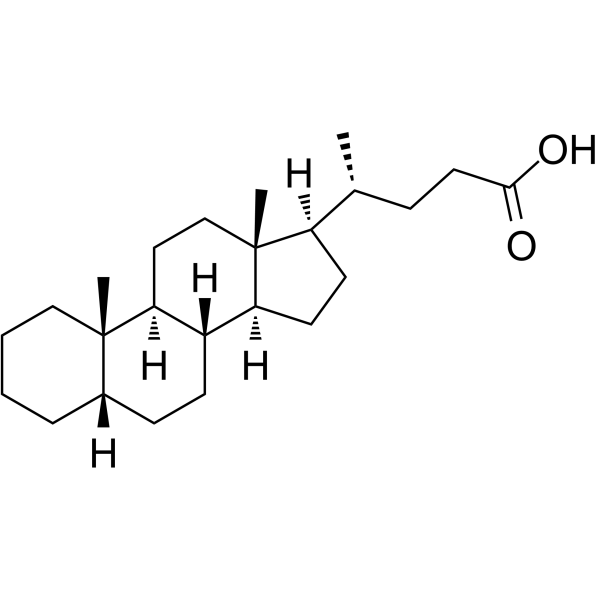
5β-Cholanic acid is a hydrophobic modifier used to modify polymer carriers. 5β-Cholanic acid can improve the acid stability, cell penetration efficiency and drug sustained release ability of nanocarriers, and optimize the oral effectiveness of delivered molecules. 5β-Cholanic acid can covalently bind to Glycol chitosan (GC) to form a GC-CA conjugate, which optimizes the hydrophobic anchoring ability of nanoparticles and enables them to be stably adsorbed on the surface of PLGA nanoparticles. Such nanoparticles can resist dissociation in the gastric acid environment and maintain positive charge to enhance endocytic uptake by intestinal epithelial cells (such as Caco-2 cells). 5β-Cholanic acid can be used in the development of drug delivery systems .
loading...
    loading...
Cat. No.: HY-W008034
CAS No.: 143824-78-6
Synonyms: Fmoc-L-Trp(Boc)-OH
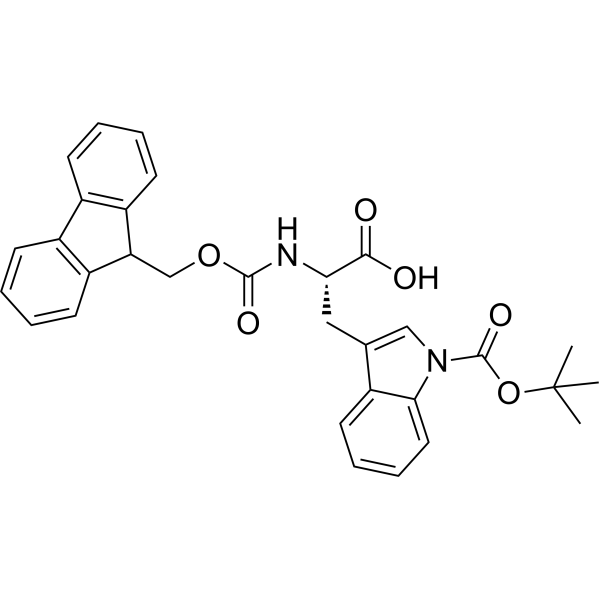
Fmoc-Trp(Boc)-OH (Fmoc-L-Trp(Boc)-OH) is an amino acid derivative with protective groups. Fmoc-Trp(Boc)-OH can self-assemble into stable and pH-responsive spherical nanoparticles, which can load and release bioactive molecules, with good biocompatibility and high cell uptake rate. Fmoc-Trp(Boc)-OH can be used in research on drug delivery .
loading...
    loading...
Cat. No.: HY-P4121
CAS No.: 1898254-09-5
Target:  

Potassium Channel

Research Areas:  

Inflammation/Immunology Cancer

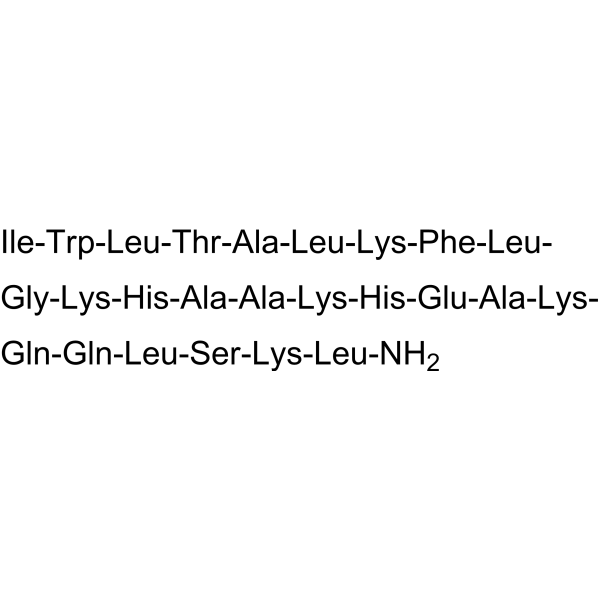
L17E is an attenuated cationic amphiphilic lytic (ACAL) peptide that can be used to deliver a variety of macromolecules, including proteins, antibodies, and DNA nanostructures. L17E inserts and cleaves the membrane structure through electrostatic interaction, enabling intracellular escape. The efficiency of L17E-mediated delivery is strongly correlated with the expression level of KCNN4 (the gene encoding the calcium-activated potassium channel KCa3.1). L17E also promotes the cellular uptake of macromolecules by inducing micropinocytosis. L17E can be further optimized and improved through dimerization strategies and in combination with other delivery systems, such as nuclear localization signal peptides and cell membrane-coated nanoparticles .
loading...
    loading...
Cat. No.: HY-P5287
CAS No.: 393781-65-2
Research Areas:  

Cancer

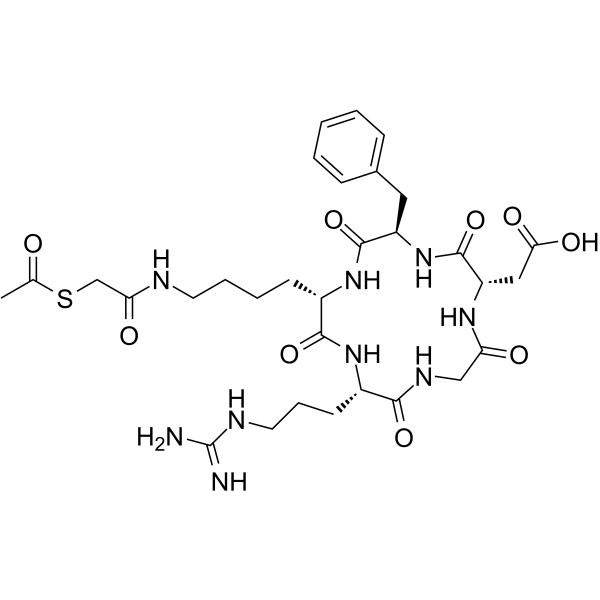
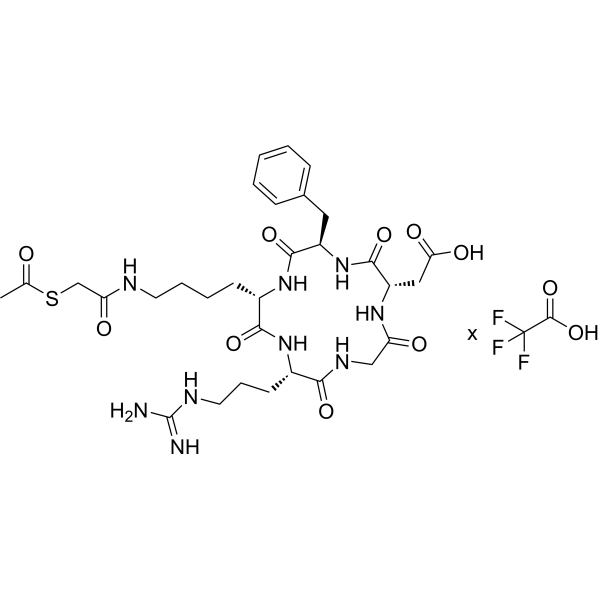
cRGDfK-thioacetyl ester is a selective αvβ3 integrin-binding peptide that mediates cellular uptake through integrins overexpressed on tumor cells. cRGDfK-thioacetyl ester is conjugated to maleimide-functionalized PLGA nanoparticles, which enhances nanoparticle uptake and improves accumulation and retention. cRGDfK-thioacetyl ester can be used in research related to tumor-targeted nanodelivery and cancer-targeted imaging .
loading...
    loading...
Cat. No.: HY-W440986
CAS No.: 321595-13-5
Synonyms: DSPS sodium
Target:  

Liposome

Research Areas:  

Inflammation/Immunology Cancer

Distearoylphosphatidylserine (DSPS) sodium is an anionic phospholipid. Distearoylphosphatidylserine sodium possesses both a hydrophilic head group and a hydrophobic tail, enabling it to self-assemble in aqueous phases to form stable lipid bilayer structures. Distearoylphosphatidylserine sodium promotes uptake by phagocytes and participates in the endosomal escape of lipid nanoparticles (LNPs) within cells. Distearoylphosphatidylserine sodium can be used in research on the construction of lipid nanoparticles for targeted delivery of siRNA (for immune or anti-inflammatory therapy), as well as the preparation of ultrasound contrast microbubbles for molecular imaging .
loading...
    loading...
Cat. No.: HY-170704
CAS No.: 1480940-53-1
Target:  

Liposome

Research Areas:  

Metabolic Disease Cancer

DSPE-PEG2000-TCO is a click chemistry coupling partner. DSPE-PEG2000-TCO undergoes a reverse electron-demand Diels-Alder click reaction to form a covalent linkage with tetrazine-modified Cetuximab (HY-P9905). DSPE-PEG2000-TCO maintains the stability of lipid nanoparticles (LNPs) and has high mRNA encapsulation efficiency, which supports cellular uptake and mRNA transfection. DSPE-PEG2000-TCO is used to prepare EGFR-targeted and APN-targeted mRNA-loaded LNPs, mediating receptor-dependent endocytosis, mRNA delivery, and intestinal epithelial transcytosis .
loading...
    loading...
Cat. No.: HY-168943
PLGA nanoparticles, 100nm, are biodegradable tumor-targeting nanocarriers that can serve as drug delivery enhancers and multidrug resistance inhibitors. PLGA nanoparticles, 100nm, passively enriched through the EPR effect and actively targeted via ligand-mediated endocytosis, can encapsulate various antitumor active molecules. PLGA nanoparticles, 100nm can specifically recognize multiple types of tumor cells and improve cellular uptake, cytotoxicity and antiproliferative effects after modification with ligands such as transferrin, folic acid, and RGD. PLGA nanoparticles, 100nm can encapsulate various therapeutic drugs and can be surface modified to achieve targeting, imaging, and prolonged circulation time, making them suitable for cancer-related research .
loading...
    loading...
Cat. No.: HY-D2794A
Target:  

Fluorescent Dye

Research Areas:  

Cancer

FITC-PEG1000-NH2 is a non-membrane-permeable fluorescent dye, which is a fluorescently labeled polyethylene glycol derivative with an amine terminal group. FITC-PEG1000-NH2 cannot enter cancer cells, and can be used to prepare FITC-loaded solid lipid nanoparticles for macrophage uptake studies. FITC-PEG1000-NH2 can also be used to label polymers for cell uptake studies .
loading...
    loading...
Cat. No.: HY-P10997
CAS No.: 536971-53-6
Target:  

DNA/RNA Synthesis

F3 peptide is a nucleolin-binding tumor-homing peptide that mediates selective uptake and internalization by tumor cells. F3 peptide is a 31-amino acid fragment of human high mobility group nucleosomal protein 2 (HMGN2). F3 peptide inhibits protein synthesis through ribosome inactivation. F3 peptide targets the tumor vasculature. F3 peptide can serve as an effective ligand to improve the druggability of macromolecular drugs or nanoparticles. F3 peptide is used in research on cancers such as glioblastoma and breast cancer .
loading...
    loading...
Cat. No.: HY-W1113135
CAS No.: 2828447-14-7
Research Areas:  

Others

Carboxymethyl-β-cyclodextrin sodium salt is a negatively charged β-cyclodextrin derivative, as well as a metal ion chelator and solubilizing reagent. Carboxymethyl-β-cyclodextrin sodium salt forms stable aqueous complexes with Ba 2+, Ca 2+, Cd 2+, Ni 2+, Pb 2+, Sr 2+, and Zn 2+ ions. Carboxymethyl-β-cyclodextrin sodium salt derived hydrogel carriers support oral insulin delivery via paracellular permeation across Caco-2 monolayers and produce sustained hypoglycemic effects in diabetic mice. Carboxymethyl-β-cyclodextrin sodium salt can be conjugated onto folate-modified BSA nanoparticles to boost folate receptor-mediated endocytosis, elevate intracellular anticancer drug uptake and trigger cell apoptosis. Carboxymethyl-β-cyclodextrin sodium salt can be utilized for chiral separation in capillary electrophoresis, development of nanoscale drug carriers and nucleic acid transfection research .
loading...
    loading...
Cat. No.: HY-P5287A
Research Areas:  

Cancer

cRGDfK-thioacetyl ester TFA is a selective αvβ3 integrin-binding peptide that mediates cellular uptake through integrins overexpressed on tumor cells. cRGDfK-thioacetyl ester TFA is conjugated to maleimide-functionalized PLGA nanoparticles, which enhances nanoparticle uptake and improves accumulation and retention. cRGDfK-thioacetyl ester TFA can be used in research related to tumor-targeted nanodelivery and cancer-targeted imaging .
loading...
    loading...
Cat. No.: HY-168943A
PLGA nanoparticles, 200nm, are biodegradable tumor-targeting nanocarriers that can serve as drug delivery enhancers and multidrug resistance inhibitors. PLGA nanoparticles, 200nm, passively enriched through the EPR effect and actively targeted via ligand-mediated endocytosis, can encapsulate various antitumor active molecules. PLGA nanoparticles, 200nm can specifically recognize multiple types of tumor cells and improve cellular uptake, cytotoxicity and antiproliferative effects after modification with ligands such as transferrin, folic acid, and RGD. PLGA nanoparticles, 200nm can encapsulate various therapeutic drugs and can be surface modified to achieve targeting, imaging, and prolonged circulation time, making them suitable for cancer-related research .
loading...
    loading...
Cat. No.: HY-168943B
PLGA nanoparticles, 500nm, are biodegradable tumor-targeting nanocarriers that can serve as drug delivery enhancers and multidrug resistance inhibitors. PLGA nanoparticles, 500nm, passively enriched through the EPR effect and actively targeted via ligand-mediated endocytosis, can encapsulate various antitumor active molecules. PLGA nanoparticles, 500nm can specifically recognize multiple types of tumor cells and improve cellular uptake, cytotoxicity and antiproliferative effects after modification with ligands such as transferrin, folic acid, and RGD. PLGA nanoparticles, 500nm can encapsulate various therapeutic drugs and can be surface modified to achieve targeting, imaging, and prolonged circulation time, making them suitable for cancer-related research .
loading...
    loading...
Cat. No.: HY-168943C
PLGA nanoparticles, 1μm, are biodegradable tumor-targeting nanocarriers that can serve as drug delivery enhancers and multidrug resistance inhibitors. PLGA nanoparticles, 1μm, passively enriched through the EPR effect and actively targeted via ligand-mediated endocytosis, can encapsulate various antitumor active molecules. PLGA nanoparticles, 1μm can specifically recognize multiple types of tumor cells and improve cellular uptake, cytotoxicity and antiproliferative effects after modification with ligands such as transferrin, folic acid, and RGD. PLGA nanoparticles, 1μm can encapsulate various therapeutic drugs and can be surface modified to achieve targeting, imaging, and prolonged circulation time, making them suitable for cancer-related research .
loading...
    loading...
Cat. No.: HY-W010713
CAS No.: 2669-65-0
Synonyms: Fimaporfin free base
Target:  

Photosensitizer

Research Areas:  

Cancer

Meso-tetraphenylchlorin (TPCS2a) is a photosensitizer with poor water solubility, which limits its use in the blood circulation. However, TPCS2a@NPs nanoparticles can be prepared based on polylactic-co-polyethylene glycol acid (PLGA) polymer core loaded with TPCS2. Such nanoparticles can be coated with mesenchymal stem cell-derived plasma membranes (mMSCs) to form mMSC-TPCS2a@NPs, which prolongs blood circulation time and improves tumor targeting ability. Compared with uncoated TPCS2a@NPs, mMSC-TPCS2a@NPs can reduce macrophage uptake by 54% to 70% under different conditions. Both nanoparticle forms are effectively accumulated in MCF7 and MDA-MB-231 breast cancer cells, while uptake in normal breast epithelial cells MCF10A is significantly lower .
loading...
    loading...
Cat. No.: HY-162828
Target:  

STAT HDAC

Research Areas:  

Cancer

STAT3/HDAC-IN-2 (compound 18) is a dual inhibitor of STAT3 and HDAC, inducing autophagy and apoptosis. STAT3/HDAC-IN-2 is an amphiphilic hydroxamic acid hybrid based on the natural product isopropanol lactone (IAL) and is a nanoscale anticancer agent. STAT3/HDAC-IN-2 can self-assemble in water to form nanoparticles, which have higher tumor tissue accumulation, cellular uptake and anticancer properties compared to the free state .
loading...
    loading...
Cat. No.: HY-W008034S
CAS No.: 1325307-52-5
Synonyms: Fmoc-L-Trp(Boc)-OH-13C11,15N2
Fmoc-Trp(Boc)-OH- 13C11, 15N2 (Fmoc-L-Trp(Boc)-OH- 13C11, 15N2) is the 13C-labeled and 15N-labeled Fmoc-Trp(Boc)-OH (HY-W008034). Fmoc-Trp(Boc)-OH (Fmoc-L-Trp(Boc)-OH) is an amino acid derivative with protective groups. Fmoc-Trp(Boc)-OH can self-assemble into stable and pH-responsive spherical nanoparticles, which can load and release bioactive molecules, with good biocompatibility and high cell uptake rate. Fmoc-Trp(Boc)-OH can be used in research on drug delivery .
loading...
    loading...
Cat. No.: HY-P11918
CAS No.: 2350190-98-4
Target:  

Transferrin Receptor

Research Areas:  

Neurological Disease

D-T7 is a transferrin receptor (TfR) binding peptide that mediates brain-targeted delivery. D-T7 acts as a penetration enhancer and uptake promoter for nanoparticles in glioma tissues and target cells. D-T7 can be used in glioma research .
loading...
    loading...

