38 Results for "

non-invasive

" in MedChemExpress (MCE) Product Catalog:
Products (38)

38 Results for "non-invasive" in MCE Product Catalog:

Cat. No.: HY-P991577
Synonyms: DS-8895A

Target:  

Ephrin Receptor

Research Areas:  

Cancer

DS-8895(DS-8895A) is an anti-EphA2 monoclonal antibody with specific binding to EphA2 receptors and EphA2-expressing cells. DS-8895, when conjugated with 89Zr, 111In, or 125I, supports molecular imaging of EphA2 expression in xenograft models. DS-8895 allows noninvasive measurement of EphA2 expresssion in tumors in vivo. .
loading...
    loading...
Cat. No.: HY-D1707
CAS No.: 209540-67-0
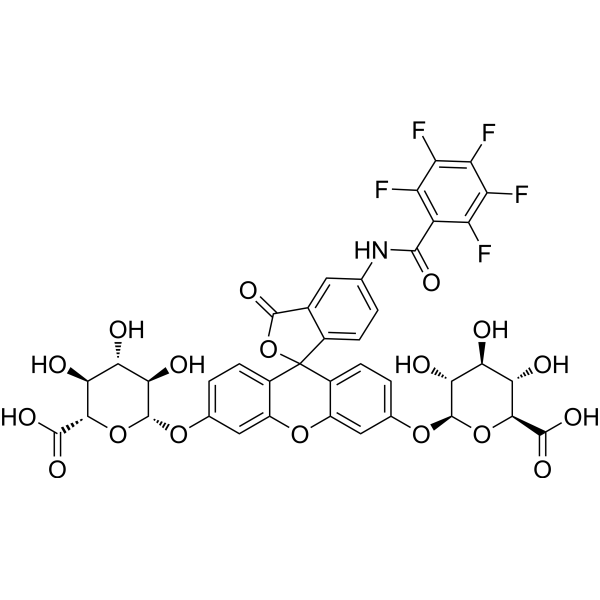
FDGlcU can be used as a fluorescent probe for non-invasively image with a high level of fluorescent activity. FDGlcU is non-fluorescent when the fluorescein is conjugated with two mono-glucuronides (Ex/Em=480/514 nm) .
loading...
    loading...
Cat. No.: HY-W015464
CAS No.: 16284-60-9
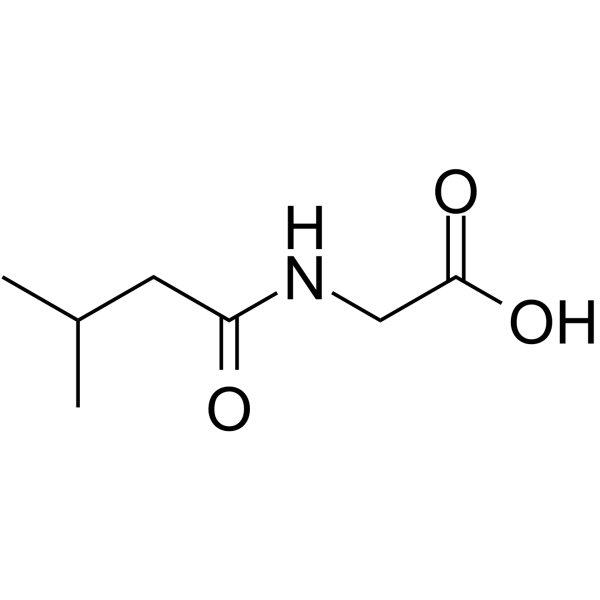
N-Isovaleroylglycine is a peptidylglycine α-amidating monooxygenase (PAM) inhibitor with a Ki value of 2.0 mM against human hsPAM. N-Isovaleroylglycine undergoes oxidative cleavage by purified rat PAM to produce fatty acid amide and glyoxylic acid. N-Isovaleroylglycine exerts competitive inhibition by binding to hsPAM, blocking the amidation of dansyl-Tyr-Val-Gly. N-Isovaleroylglycine exhibits lowered urinary abundance in MRSA-infected mice, which qualifies it as a non-invasive biomarker. N-Isovaleroylglycine can be used in studies related to Staphylococcus aureus pneumonia and diabetic foot .
loading...
    loading...
Cat. No.: HY-D2482
CAS No.: 1369302-18-0
Synonyms: APG-1 AM
Asante potassium green-1 AM (APG-1 AM) is a cell-permeable K +-sensitive fluorescent indicator and potassium ion indicator that exhibits minimal interference from Na + and pH at physiologically relevant intracellular levels. Asante potassium green-1 AM enables non-invasive monitoring and quantitative analysis of intracellular potassium ion concentrations (Ex/Em = 522/547 nm) .
loading...
    loading...
Cat. No.: HY-W416250
CAS No.: 17680-99-8
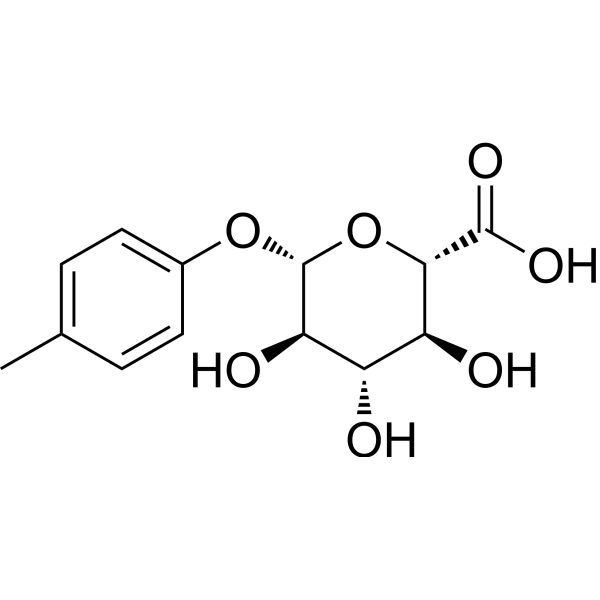
p-Cresol glucuronide is a metabolite of p-Cresol (HY-Y0506). p-Cresol glucuronide acts as a TLR4-antagonizing blood-brain barrier protective agent in brain microvascular endothelial cells, and serves as a non-invasive urinary biomarker metabolite in renal cell carcinoma. p-Cresol glucuronide inhibits LPS (HY-D1056)-induced increase in blood-brain barrier permeability and signal response, impairs mitochondrial function, induces oxidative stress and enhances inflammatory responses, depletes intracellular glutathione, and increases cell necrosis. p-Cresol glucuronide can be used in studies related to renal cell carcinoma, chronic kidney disease and heart disease .
loading...
    loading...
Cat. No.: HY-D1460
CAS No.: 134869-04-8
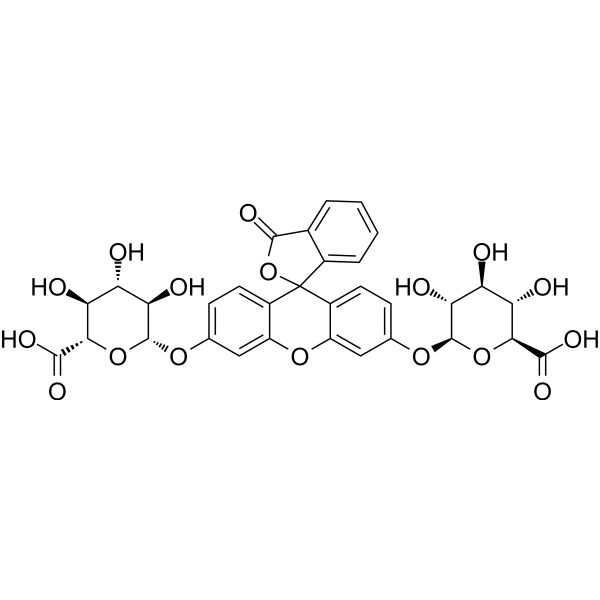
Fluorescein Di-β-D-Glucuronide is an orally active fluorescent probe substrate and an indicator of β-glucuronidase (βG) activity in intestinal bacteria. Fluorescein Di-β-D-Glucuronide can be used for non-invasive time-lapse optical imaging of βG activity in intestinal bacteria in nude mice. Fluorescein Di-β-D-Glucuronide supports the quantitative analysis of bacterial βG enzyme activity and inhibition .
loading...
    loading...
Cat. No.: HY-158220C
Synonyms: HAMA (MW 50000)
Hyaluronic acid methacryloyl (HAMA) (MW 50000) is a methacrylate-modified hyaluronic acid that serves as a hydrogel former, hydrolysis-resistant material, photocrosslinkable hydrogel scaffold, and drug delivery carrier for tissue engineering. Hyaluronic acid methacryloyl (MW 50000) forms hydrogels via photocrosslinking; when combined with AuMA NPs through a one-step photocrosslinking method, its effective swelling ratio increases, and the mechanical reinforcement effect of Au NPs compensates for the impact caused by reduced crosslinking density. Hyaluronic acid methacryloyl (MW 50000) can be combined with AuMA NPs via a one-step photocrosslinking method, enabling non-invasive monitoring of hydrogel degradation with contrast-enhanced micro-CT .
loading...
    loading...
Cat. No.: HY-177634
CAS No.: 2409783-34-0
Synonyms: GSK4532990; ARO-HSD
Research Areas:  

Metabolic Disease

Gatuzosiran (GSK4532990; ARO-HSD) is a GalNAc-conjugated siRNA that inhibits HSD17B13. Gatuzosiran downregulates HSD17B13 mRNA and protein levels. Gatuzosiran improves noninvasive biomarkers of liver function enzymes, liver fibrosis, and steatosis associated with metabolic dysfunction-associated steatohepatitis. Gatuzosiran can be used for research on metabolic dysfunction-associated steatohepatitis .
loading...
    loading...
Cat. No.: HY-D2999
CAS No.: 2996066-33-0
NIR-RED ATP Probe is a NIR-II fluorescent probe. NIR-RED ATP Probe exhibits high affinity and selectivity for ATP and can non-invasively and with high contrast detect changes in ATP concentration at the cellular level, with minimal interference to the abundant biomolecules within the cells. NIR-RED ATP Probe can be used as a biomarker detection tool for drug-induced liver injury (DILI) .
loading...
    loading...
Cat. No.: HY-165424
CAS No.: 3036456-18-2
NIR-BG2 is a fluorescent indicator targeting senescence-associated β-galactosidase (SA-β-Gal). NIR-BG2 contains a hemicyanine fluorophore caged by SA-β-Gal; cleavage of its β-galactosyl group by SA-β-Gal generates an electrophilic quinone methide, which can form covalent bonds with adjacent proteins to achieve long-term signal retention. NIR-BG2 activates a near-infrared fluorescent signal upon recognition of SA-β-Gal. NIR-BG2 can be used for non-invasive in vivo imaging of cellular senescence in mouse xenograft models. The excitation/emission wavelengths are 675/708 nm .
loading...
    loading...
Cat. No.: HY-177634A
Synonyms: GSK4532990 sodium; ARO-HSD sodium
Research Areas:  

Metabolic Disease

Gatuzosiran sodium (GSK4532990 sodium; ARO-HSD sodium) is a GalNAc-conjugated siRNA that inhibits HSD17B13. Gatuzosiran sodium downregulates HSD17B13 mRNA and protein levels. Gatuzosiran sodium improves noninvasive biomarkers of liver function enzymes, liver fibrosis, and steatosis associated with metabolic dysfunction-associated steatohepatitis. Gatuzosiran sodium can be used for research on metabolic dysfunction-associated steatohepatitis .
loading...
    loading...
Cat. No.: HY-109153
CAS No.: 748120-01-6
Research Areas:  

Others

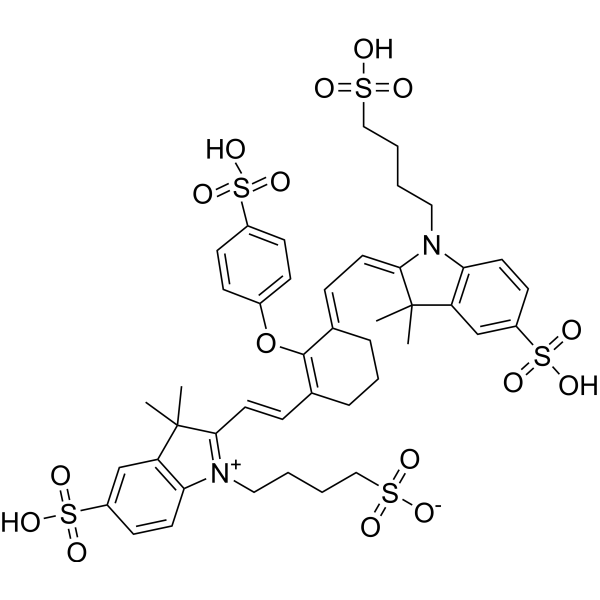
Nerindocianine is a fluorescent diagnostic contrast agent. Nerindocianine is highly hydrophilic and is primarily metabolized by the kidneys, allowing for a non-invasive intraoperative ureteral imaging .
loading...
    loading...
Cat. No.: HY-W015464S1
CAS No.: 1219795-09-1
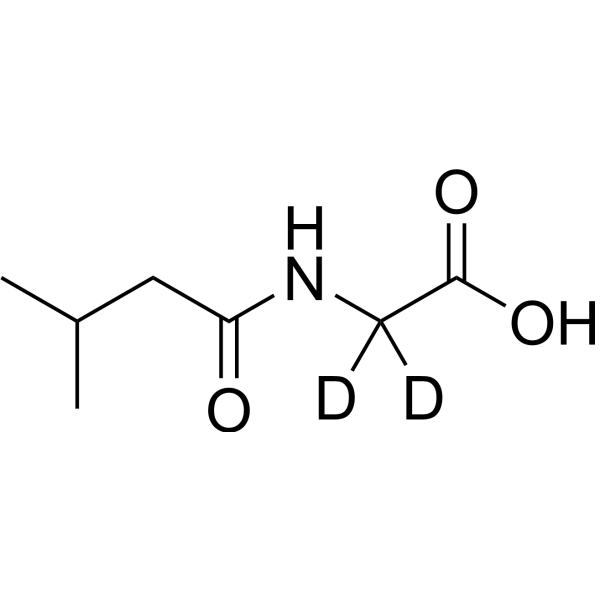
N-Isovaleroylglycine-d2 is the deuterium labeled N-Isovaleroylglycine (HY-W015464). N-Isovaleroylglycine is a peptidylglycine α-amidating monooxygenase (PAM) inhibitor with a Ki value of 2.0 mM against human hsPAM. N-Isovaleroylglycine undergoes oxidative cleavage by purified rat PAM to produce fatty acid amide and glyoxylic acid. N-Isovaleroylglycine exerts competitive inhibition by binding to hsPAM, blocking the amidation of dansyl-Tyr-Val-Gly. N-Isovaleroylglycine exhibits lowered urinary abundance in MRSA-infected mice, which qualifies it as a non-invasive biomarker. N-Isovaleroylglycine can be used in studies related to Staphylococcus aureus pneumonia and diabetic foot .
loading...
    loading...
Cat. No.: HY-W015464R
CAS No.: 16284-60-9
N-Isovaleroylglycine (Standard) is the analytical standard of N-Isovaleroylglycine (HY-W015464). This product is intended for research and analytical applications. N-Isovaleroylglycine is a peptidylglycine α-amidating monooxygenase (PAM) inhibitor with a Ki value of 2.0 mM against human hsPAM. N-Isovaleroylglycine undergoes oxidative cleavage by purified rat PAM to produce fatty acid amide and glyoxylic acid. N-Isovaleroylglycine exerts competitive inhibition by binding to hsPAM, blocking the amidation of dansyl-Tyr-Val-Gly. N-Isovaleroylglycine exhibits lowered urinary abundance in MRSA-infected mice, which qualifies it as a non-invasive biomarker. N-Isovaleroylglycine can be used in studies related to Staphylococcus aureus pneumonia and diabetic foot .
loading...
    loading...
Cat. No.: HY-124392
CAS No.: 1227067-71-1
Research Areas:  

Cancer

AMG580 is a selective PDE10A antagonist with subnanomolar affinity for rat, primate, and human PDE10A. AMG580 can be used for the research of noninvasive radiotracer .
loading...
    loading...
Cat. No.: HY-149865
Research Areas:  

Cancer

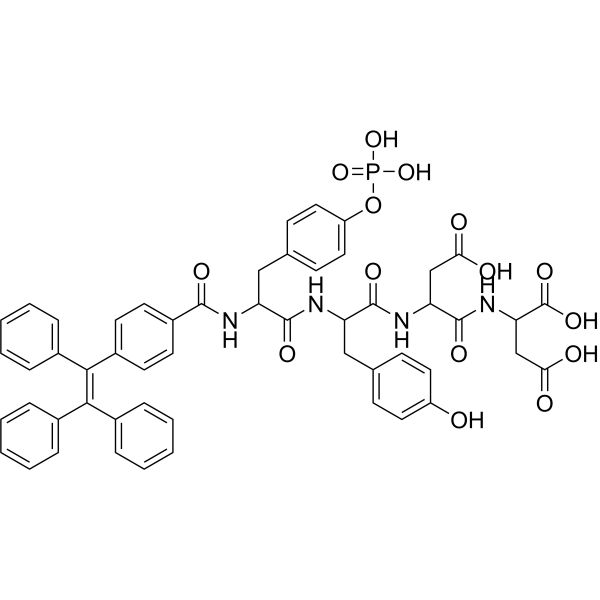
TPE-1p is a cascade-activated AIEgen-peptide probe. TPE-1p self-assembles in aqueous solution to exhibit bright fluorescence in response to alkaline phosphatase (ALP) and ChT-L. TPE-1p can be utilized to noninvasively assess the inhibition efficiency of a ChT-L inhibitor in cells .
loading...
    loading...
Cat. No.: HY-D3005
NpCy-4 is a reliable reporter for monitoring lysosomal pH and viscosity changes in real time during Autophagy (λex = 650 nm; λem = 660-740 nm). NpCy-4 demonstrates a superior signal-to-background ratio (SBR) for cellular imaging. NpCy-4 facilitates real-time, noninvasive diagnostic imaging of acute gastritis model with high contrast .
loading...
    loading...
Cat. No.: HY-108010
CAS No.: 1208971-05-4
Target:  

Amyloid-β

Research Areas:  

Neurological Disease

Aftobetin is a non-invasive molecular probe used for the early diagnosis of Alzheimer's disease (AD). Aftobetin can specifically bind to the aggregated β-amyloid peptide (Aβ) in the lens of the eye, enabling the early diagnosis of AD through a rapid and painless detection method .
loading...
    loading...
Cat. No.: HY-D3159
CAS No.: 2304942-78-5
Research Areas:  

Others

BTC1070 is an anti-quenching pentamethine cyanine NIR-II fluorescent probe. BTC1070 exhibits high brightness and excellent photostability in aqueous solution (Ex/Em = 1015/1065 nm). BTC1070 can clearly visualize lymphatic structures after intradermal injection, and produces a ratiometric fluorescence response in the acidic range to non-invasively quantify gastric pH. BTC1070 is applicable to studies related to in vivo deep tissue imaging and gastric pH sensing .
loading...
    loading...
Cat. No.: HY-P11859
Research Areas:  

Cancer

NP1 is a NOTA-chelated linear precursor based on the ROR1-targeting peptide. After labeling with [ 18F]AlF, NP1 yields [ 18F]AlF-NP1, a PET imaging probe with excellent ROR1 specificity (KD = 141.7 nM), rapid tumor uptake and high target-to-background ratio, which is suitable for non-invasive visualization of various ROR1-overexpressing tumors .
loading...
    loading...

