11 Results for "

osteoblast function

" in MedChemExpress (MCE) Product Catalog:
Products (11)

11 Results for "osteoblast function" in MCE Product Catalog:

Cat. No.: HY-122808
CAS No.: 560-09-8
Purity:  ≥98.0%
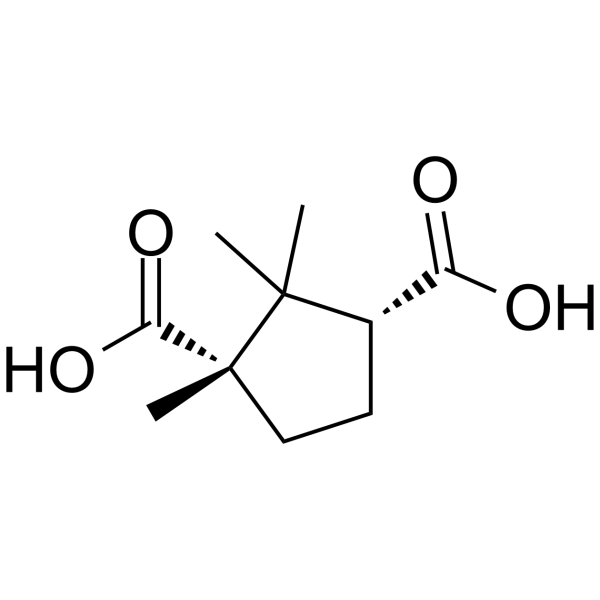
(-)-Camphoric acid is the less active enantiomer of Camphoric acid. Camphoric acid induces glutamate receptor expression. Camphoric acid also significantly induces the activation of NF-κB and AP-1. Camphoric acid significantly stimulates the differentiation of mouse osteoblastic MC3T3-E1 subclone 4 cells. Camphoric acid has weak regulatory function towards glutamate receptors. Camphoric acid can induce mRNA expression of glutamate signaling molecules and activate transcription factors, thereby stimulating osteoblast differentiation .
loading...
    loading...
Cat. No.: HY-165126
CAS No.: 9050-67-3
Synonyms: SPG
Schizophyllan (SPG) is an orally active extracellular β-glucan produced by the fungus Schizophyllum commune. Schizophyllan improves mitochondrial function and protects against metabolic liver injury by activating the SIRT3 pathway. Schizophyllan inhibits osteoclastogenesis and promotes osteoblast differentiation by suppressing the phosphorylation of JNK/p38, as well as downregulating PGC1β/PPARγ, c-Fos and NFATc1. Recognized via Dectin-1, schizophyllan enables precise delivery of oligonucleotide drugs and antigens to antigen-presenting cells, thus holding great potential in the treatment of inflammatory diseases and vaccine development .
loading...
    loading...
Cat. No.: HY-N15723
CAS No.: 99624-66-5
Dipsacus saponin A is an orally active triterpenoid saponin found in the roots of Dipsacus asper. Dipsacus saponin A promotes bone repair by regulating osteoblast activity and inhibiting osteoclast function. Dipsacus saponin A is promising for research of bone diseases such as fracture healing and osteoporosis .
loading...
    loading...
Cat. No.: HY-W067056
CAS No.: 1754-62-7
Synonyms: Methyl (E)-3-phenylpropenoate
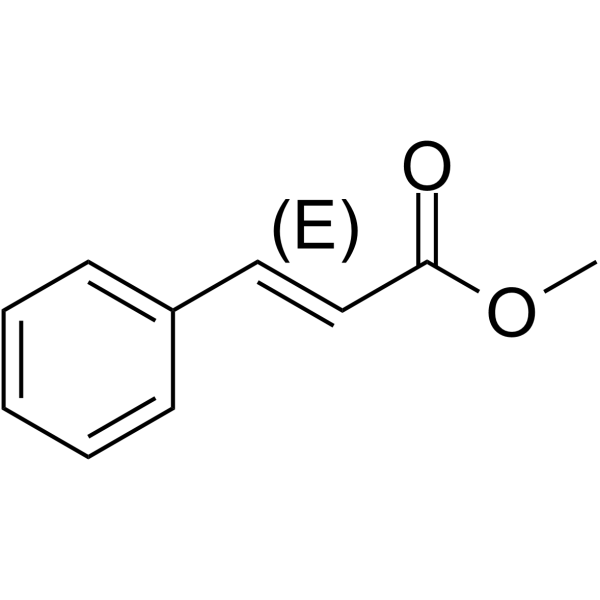
Methyl (E)-cinnamate (Methyl (E)-3-phenylpropenoate) is a natural flavor compound with anti-inflammatory properties found in Alpinia katsumadai Hayata. Methyl (E)-cinnamate induces apoptosis via reduced anti-apoptotic protein expression, increased TUNEL-positive cells, and apoptotic morphological changes. Methyl (E)-cinnamate can be used for the research of abnormalities of osteoblast function in bone diseases .
loading...
    loading...
Cat. No.: HY-135702
CAS No.: 1258513-40-4
Purity:  99.20%
Target:  

NF-κB

Research Areas:  

Others

UBS109, as a curcumin analogue, can promote the differentiation and mineralization of osteoblasts. UBS109 shows to regulate bone cell function by activating Smad and inhibiting NF-kB. UBS109 can be used in bone tissue engineering and osteoporosis research .
loading...
    loading...
Cat. No.: HY-W067056S1
CAS No.: 2022152-96-9
Synonyms: Methyl(E)-3-phenylpropenoate-d7
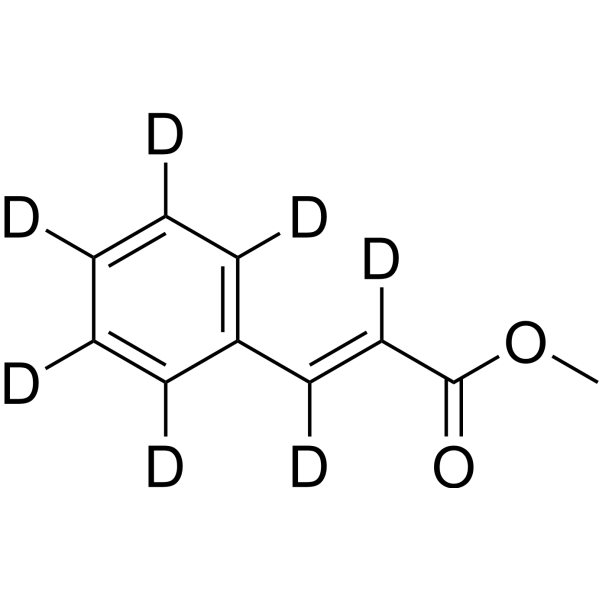
Methyl(E)-cinnamate-d7 is the deuterium labeled Methyl (E)-cinnamate. Methyl (E)-cinnamate (Methyl (E)-3-phenylpropenoate) is a natural flavor compound with anti-inflammatory properties found in Alpinia katsumadai Hayata. Methyl (E)-cinnamate induces apoptosis via reduced anti-apoptotic protein expression, increased TUNEL-positive cells, and apoptotic morphological changes. Methyl (E)-cinnamate can be used for the research of abnormalities of osteoblast function in bone diseases .
loading...
    loading...
Cat. No.: HY-N15719
CAS No.: 931426-37-8
Dipsacus saponin R (Compound 1) is an orally active triterpenoid saponin found in Radix Dipsaci. Dipsacus saponin R promotes bone formation and repair by regulating osteoblast activity or inhibiting osteoclast function. Dipsacus saponin R is promising for research of bone diseases such as osteoporosis and fracture healing .
loading...
    loading...
Cat. No.: HY-118668
CAS No.: 1117772-52-7
Target:  

NF-κB

Research Areas:  

Others

ABD-350 is an antiresorptive agent that inhibits osteoclast activity without affecting osteoblast activity and preventing ovariectomy-induced bone loss. ABD-350 inhibits NF-κB ligand-induced inhibitor of NF-κB phosphorylation, leading to osteoclast apoptosis, but has no inhibitory effect on osteoblast function, effectively preventing bone loss in ovariectomized mice, and does not inhibit parathyroid hormone-induced bone formation.
loading...
    loading...
Cat. No.: HY-103455
CAS No.: 177583-70-9
Target:  

Estrogen Receptor/ERR

Research Areas:  

Others

ZK164015 is an estrogen-glucocorticoid receptor chimera that can be used as a compound screening tool to evaluate tissue-selective estrogen activity. ZK164015 was used to evaluate its effects on ER function in osteoblasts in studies based on green fluorescent protein (GFP)-receptor chimeras. In osteoblast-like (ROS and U2OS) and breast cancer (MCF7) cells, ZK164015 showed different effects in response to ER agonists, including modulation of ERE-luc activity and effects on nuclear mobility.
loading...
    loading...
Cat. No.: HY-W067056R
CAS No.: 1754-62-7
Synonyms: Methyl (E)-3-phenylpropenoate (Standard)
Methyl (E)-cinnamate (Standard) is the analytical standard of Methyl (E)-cinnamate. This product is intended for research and analytical applications. Methyl (E)-cinnamate (Methyl (E)-3-phenylpropenoate) is a natural flavor compound with anti-inflammatory properties found in Alpinia katsumadai Hayata. Methyl (E)-cinnamate induces apoptosis via reduced anti-apoptotic protein expression, increased TUNEL-positive cells, and apoptotic morphological changes. Methyl (E)-cinnamate can be used for the research of abnormalities of osteoblast function in bone diseases .
loading...
    loading...
Cat. No.: HY-W067056S
CAS No.: 61764-82-7
Synonyms: Methyl(E)-3-phenylpropenoate-d5
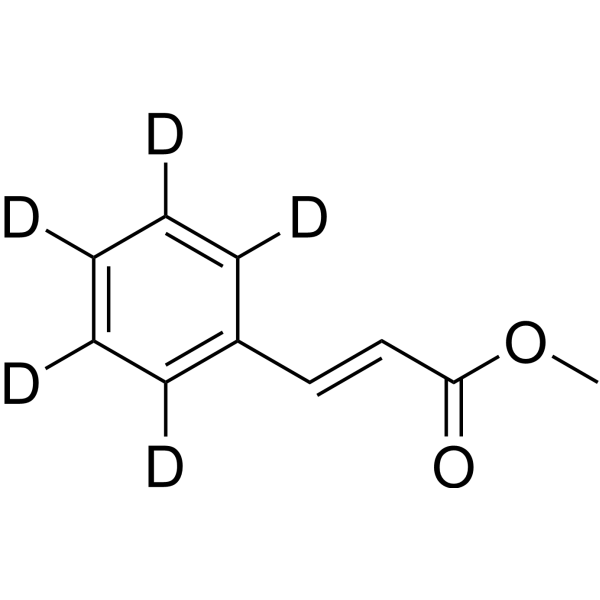
Methyl (E)-cinnamate-d5 is the deuterium labeled Methyl (E)-cinnamate . Methyl (E)-cinnamate (Methyl (E)-3-phenylpropenoate) is a natural flavor compound with anti-inflammatory properties found in Alpinia katsumadai Hayata. Methyl (E)-cinnamate induces apoptosis via reduced anti-apoptotic protein expression, increased TUNEL-positive cells, and apoptotic morphological changes. Methyl (E)-cinnamate can be used for the research of abnormalities of osteoblast function in bone diseases .
loading...
    loading...
  • 1

