21 Results for "

passive anaphylaxis

" in MedChemExpress (MCE) Product Catalog:
Products (21)

21 Results for "passive anaphylaxis" in MCE Product Catalog:

1
1 Cited Publications
Cat. No.: HY-124344
CAS No.: 116764-15-9
Purity:  98.90%
Avenanthramide C is an orally active polyphenolic compound that penetrates the blood-brain barrier. Avenanthramide C is derived from oats. Avenanthramide C inhibits NF-κB nuclear translocation and inhibits the phosphorylation of PI3K, PLCγ1, Lyn, Syk, and Akt. Avenanthramide C inhibits the expression and activity of MMP-9 and inhibits MAPK phosphorylation. Avenanthramide C scavenges DPPH radicals, reduces intracellular ROS, and inhibits pro-inflammatory cytokine release and adhesion molecule expression. Avenanthramide C inhibits cell degranulation. Avenanthramide C attenuates active systemic anaphylaxis and inhibits passive cutaneous anaphylaxis. Avenanthramide C ameliorates PHZ-induced blood stasis. Avenanthramide C inhibits neuroinflammation, restores long-term potentiation, and improves recognition and spatial memory in Alzheimer's disease models. Avenanthramide C can be used for research on allergic inflammation, thrombosis, atherosclerosis, and Alzheimer's disease .
loading...
    loading...
Cat. No.: HY-101810
CAS No.: 82989-25-1
Purity:  99.50%
Synonyms: TO 188; Tazalest; Tazanol
Target:  

Calcium Channel PKC

Research Areas:  

Inflammation/Immunology

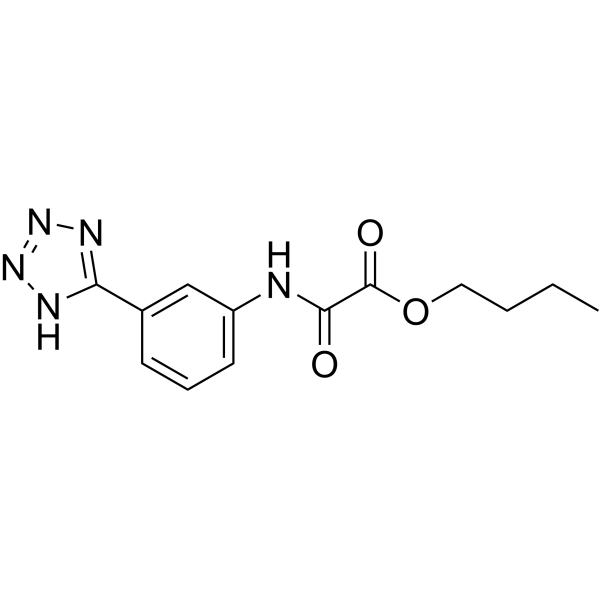
Tazanolast (TO 188) is an orally active selective mast cell stabilizer. Tazanolast prevents the elevation of intracellular calcium concentration, inhibits calcium uptake and Protein kinase C translocation, without directly inhibiting phospholipase C. Tazanolast inhibits ozone-induced airway hyperresponsiveness to Methacholine in guinea pigs, as well as passive cutaneous anaphylaxis, Schultz-Dale reaction, experimental asthma, passive cutaneous anaphylaxis in rats, and increased cutaneous vascular permeability in rats. Tazanolast does not alter airway responsiveness in sham-exposed guinea pigs, cell distribution in bronchoalveolar lavage fluid after ozone exposure, type II-IV allergic reactions, or histamine release from atopic leukocytes. Tazanolast can be used in research related to allergic diseases .
loading...
    loading...
Cat. No.: HY-121007
CAS No.: 114776-28-2
Synonyms: Web2170
Research Areas:  

Others

Bepafant (Web2170) is a platelet-activating factor (PAF) antagonist that protects against anaphylactic lethality in active and passive anaphylaxis models in mice and guinea pigs in a dose-dependent manner and attenuates bronchoconstriction and blood pressure changes in anaphylaxis.
loading...
    loading...
Cat. No.: HY-N5067
CAS No.: 168433-86-1
Synonyms: Multifidin
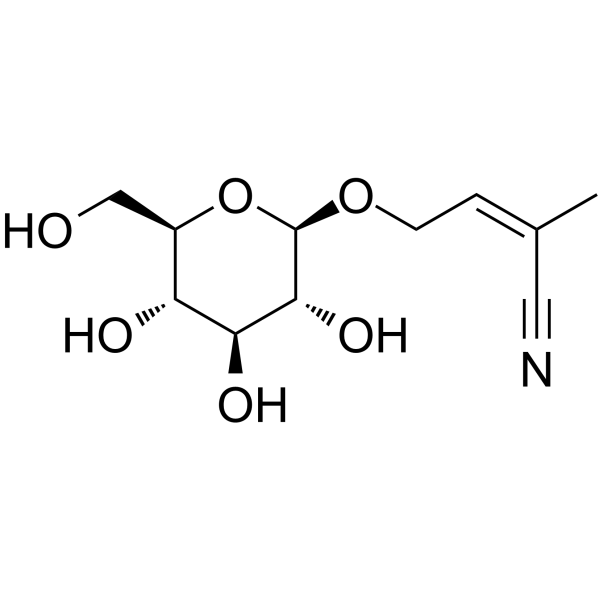
Rhodiocyanoside A is found to show antiallergic activity in a passive cutaneous anaphylaxis test in rat .
loading...
    loading...
Cat. No.: HY-N10279
CAS No.: 844493-85-2
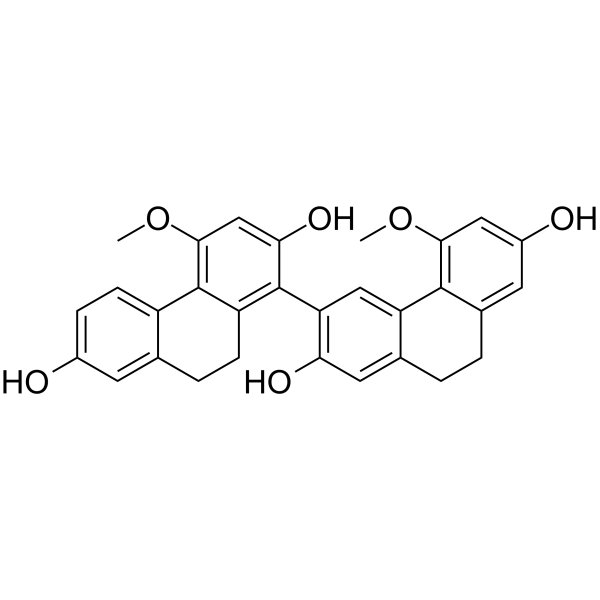
Gymconopin C shows an antiallergic effect on ear passive cutaneous anaphylaxis reactions in mice.
loading...
    loading...
Cat. No.: HY-159926
CAS No.: 40691-57-4
Synonyms: RS-7540
Target:  

Histamine Receptor

Research Areas:  

Inflammation/Immunology

Tixanox sodium (RS-7540), an anti-allergic compound, is a potent inhibitor of mediator release in the IgE-mediated passive cutaneous anaphylaxis (PCA) reaction .
loading...
    loading...
Cat. No.: HY-106645
CAS No.: 65569-29-1
Target:  

Calmodulin

Cloxacepride is an orally active and potent antiallergic agent. Cloxacepride is a CaM (calmodulin) antagonist. Cloxacepride has anti-PCA (passive cutaneous anaphylaxis) activity .
loading...
    loading...
Cat. No.: HY-W754020
CAS No.: 110629-41-9
Target:  

Histamine Receptor

Research Areas:  

Others

Elbanizine inhibits histamine, bradykinin, histamin-release from rat mast cells (IC50 of 0.26 μM) and the IgE-mediated passive cutaneous anaphylaxis (PCA) reaction. Elbanizine exhibits antiallergic and antiasthmatic in guinea pig model .
loading...
    loading...
Cat. No.: HY-126127
CAS No.: 72364-91-1
Target:  

Histamine Receptor

Research Areas:  

Inflammation/Immunology

BRL 22321 free base is a stabilizer with similar mast cell stabilizing activity to Cromolyn sodium (HY-B0320A) and also has some smooth muscle relaxant activity. BRL 22321 free base is more potent than Cromolyn sodium (HY-B0320A) in inhibiting rat passive cutaneous and peritoneal anaphylaxis and antigen-induced histamine release from passively sensitized rat peritoneal cells .
loading...
    loading...
Cat. No.: HY-N4027
CAS No.: 67600-94-6
Synonyms: Hydrangenol 8-O-β-D-glucopyranoside
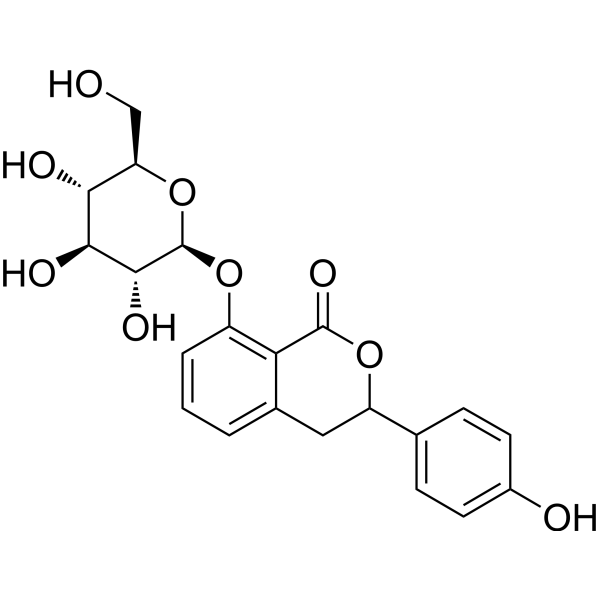
Hydrangenol 8-O-glucoside (Hydrangenol 8-O-β-D-glucopyranoside) can be isolated from Hydrangea macrophyllu. Hydrangenol 8-O-glucoside is an AChE inhibitor (IC50: 22.66 μM). Hydrangenol 8-O-glucoside inhibits passive cutaneous anaphylaxis (PCA) reaction .
loading...
    loading...
Cat. No.: HY-139247
CAS No.: 2454246-25-2
Target:  

Drug Derivative

Research Areas:  

Inflammation/Immunology

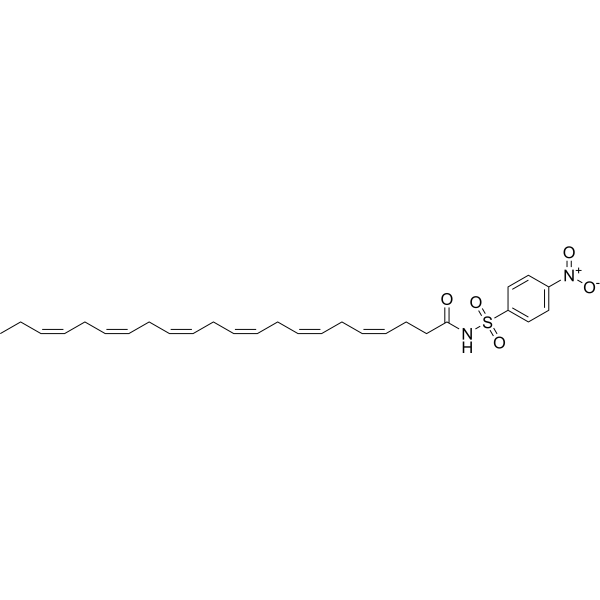
pNPS-DHA (Compound 19) is an orally active DHA-ethanolamide (DHEA) derivative that has antiallergic activity. pNPS-DHA inhibits IgE-dependent passive cutaneous anaphylaxis (PCA) reaction in mice. pNPS-DHA has anti-degranulating activity in RBL-2H3 mast cells with an IC50 of 15 μM .
loading...
    loading...
Cat. No.: HY-123013
CAS No.: 53944-40-4
Research Areas:  

Inflammation/Immunology

Y 9000 is an orally active antiallergic and anti-inflammatory compound. Y 9000 targets mast cells, inhibits the release of allergic mediators, stimulates the adrenal glands, exhibits glucocorticoid-like activity, and reduces adrenal ascorbic acid content. Y 9000 inhibits IgE-mediated and IgG-mediated allergic reactions as well as active systemic anaphylaxis in mice. Y 9000 inhibits allergic wheezing in passively sensitized guinea pigs and protects against active systemic anaphylactic shock in mice. Y 9000 inhibits non-immune responses in rats, including dextran-induced histamine release, anaphylactoid reactions and paw swelling. Y 9000 can be used in the research of allergic diseases (asthma, allergic rhinitis, urticaria, etc.) .
loading...
    loading...
Cat. No.: HY-107062
CAS No.: 50743-49-2
Target:  

Histamine Receptor

Research Areas:  

Inflammation/Immunology

AA 344 is an orally active antiallergic agent. AA 344 inhibits the IgE, IgGa, Concanavalin A (HY-P2149), Dextran -mediated release of histamine. AA 344 shows inhibitory effects on the homologous passive cutaneous anaphylaxis and the passive systemic anaphylaxis in guinea pigs. AA 344 selectively suppresses the type I allergic reaction .
loading...
    loading...
Cat. No.: HY-N18182
CAS No.: 172705-25-8
Mudanpioside E is an orally effective paeoniflorin-type monoterpene glycoside antiallergic agent, with an IC50 of 40.34 μM against IgE-mediated β-hexosaminidase release. Mudanpioside E reverses the inhibitory effect of the modified Xiaoqinglong Decoction extract (paeonia root component removed) on passive cutaneous anaphylaxis in mice. Mudanpioside E itself shows no activity against passive cutaneous anaphylaxis. Mudanpioside E can be used in research related to allergic diseases .
loading...
    loading...
Cat. No.: HY-165395
CAS No.: 65425-48-1
Research Areas:  

Inflammation/Immunology

AY 25674 is an orally active antiallergic agent and a PDE inhibitor. AY 25674 inhibits the release of allergic histamine from mast cells. AY 25674 suppresses passive anaphylaxis induced by reaginic (IgE) antibodies. AY 25674 does not inhibit the increased vascular permeability caused by non-reaginic antibodies, serotonin or histamine. AY 25674 reaches its peak activity shortly after administration; rapid tolerance occurs at high doses. AY 25674 can be used in research related to passive anaphylaxis .
loading...
    loading...
Cat. No.: HY-105594
CAS No.: 49561-92-4
Synonyms: BRL 10833 free base
Target:  

Histamine Receptor

Research Areas:  

Inflammation/Immunology

Nivimedone (BRL 10833 free base) is an orally active antiallergic agent. Nivimedone inhibits IgE-mediated passive cutaneous anaphylaxis in rats. Nivimedone suppresses antigen-induced histamine release from lung tissues passively sensitized with atopic serum. Nivimedone can be used in research related to bronchial asthma .
loading...
    loading...
Cat. No.: HY-N21645
CAS No.: 903588-41-0
Colocynthoside B is a cucurbitane-type triterpenoid glycoside that inhibits passive cutaneous anaphylaxis in type I allergy models and inhibits aflatoxin biosynthesis. Colocynthoside B can be used for research on type I allergy .
loading...
    loading...
Cat. No.: HY-N19243
CAS No.: 90042-11-8
6-O-Senesioyl plenolin is a sesquiterpene lactone found in Centipeda minima with antiallergic activity. 6-O-Senesioyl plenolin inhibits histamine release from mast cells (IC50 = 18 μM) and suppresses pigment exudation in passive cutaneous anaphylaxis tests. 6-O-Senesioyl plenolin can be used in research related to allergy .
loading...
    loading...
Cat. No.: HY-101810R
CAS No.: 82989-25-1
Synonyms: TO 188 (Standard); Tazalest (Standard); Tazanol (Standard)
Tazanolast (Standard) (TO 188 (Standard)) is the analytical standard of Tazanolast (HY-101810). This product is intended for research and analytical applications. Tazanolast (TO 188) is an orally active selective mast cell stabilizer. Tazanolast prevents the elevation of intracellular calcium concentration, inhibits calcium uptake and Protein kinase C translocation, without directly inhibiting phospholipase C. Tazanolast inhibits ozone-induced airway hyperresponsiveness to Methacholine in guinea pigs, as well as passive cutaneous anaphylaxis, Schultz-Dale reaction, experimental asthma, passive cutaneous anaphylaxis in rats, and increased cutaneous vascular permeability in rats. Tazanolast does not alter airway responsiveness in sham-exposed guinea pigs, cell distribution in bronchoalveolar lavage fluid after ozone exposure, type II-IV allergic reactions, or histamine release from atopic leukocytes. Tazanolast can be used in research related to allergic diseases .
loading...
    loading...
Cat. No.: HY-180165
Antiallergic agent-5 (Compound 4f) is an antiallergic agent. Antiallergic agent-5 suppresses Ca 2+ influx. Antiallergic agent-5 suppresses IgE/Ag-induced release of both IL-6 and TNF-α. Antiallergic agent-5 inhibits mast cell degranulation. Antiallergic agent-5 attenuates passive cutaneous anaphylaxis in mice and reduces vascular leakage .
loading...
    loading...

