
13 Results for "

thiol substrate

" in MedChemExpress (MCE) Product Catalog:
Products (13)

13 Results for "thiol substrate" in MCE Product Catalog:

  • Categories Recommended:
    More
Cat. No.: HY-118380
CAS No.: 39628-94-9
Purity:  98.78%
Synonyms: 4-Nitrobenzyl mesylate; para-Nitrobenzyl mesylate; PNBM
p-Nitrobenzyl mesylate (4-Nitrobenzyl mesylate) is an alkylating reagent. p-Nitrobenzyl mesylate alkylates thiophosphorylated serine, threonine, tyrosine residues and cysteine thiols, without modifying hydroxyl, amino or carboxylic acid functional groups. p-Nitrobenzyl mesylate generates thiophosphate epitopes on thiophosphorylated substrate proteins for recognition by thiophosphate-specific antibodies. p-Nitrobenzyl mesylate facilitates the identification and purification of kinase substrates. p-Nitrobenzyl mesylate is applicable to studies related to cerebral ischemia-reperfusion injury .
loading...
    loading...
Cat. No.: HY-P2895
CAS No.: 9028-00-6
Synonyms: Clostridiopeptidase B
Target:  

Endogenous Metabolite

Research Areas:  

Others

Clostripain (Clostridiopeptidase B) is a thiol protease isolated from Clostridium histolyticum. Clostripain exhibits proteolytic activity as well as amidase-esterase activity. The specificity of Clostripain is primarily restricted to arginine residues, but it also shows minor hydrolytic activity toward most lysine-containing substrates. Clostripain catalyzes the ammonolysis of Carbobenzoxyarginyl methyl ester to generate various dipeptides .
loading...
    loading...
Cat. No.: HY-W002465
CAS No.: 5570-19-4
Research Areas:  

Others

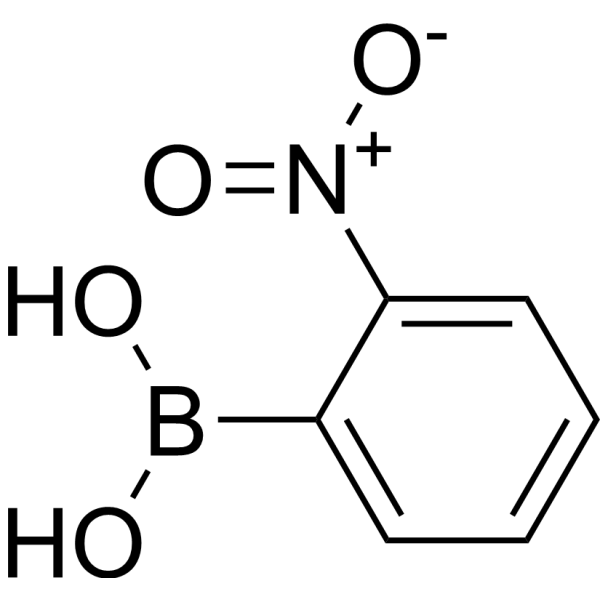
2-Nitrophenylboronic acid is a small-molecule arylboronic acid reagent selective for cysteine residues that mediates nickel (II)-promoted arylation of cysteine thiols. 2-Nitrophenylboronic acid is used in research related to peptide modification and also serves as a substrate for Suzuki-Miyaura coupling reactions in research related to organic synthesis .
loading...
    loading...
Cat. No.: HY-P10143
CAS No.: 99828-55-4
Synonyms: Ac-Pro-Leu-Gly-[(S)-2-mercapto-4-methyl-pentanoyl]-Leu-Gly-OEt
Target:  

MMP

Research Areas:  

Others

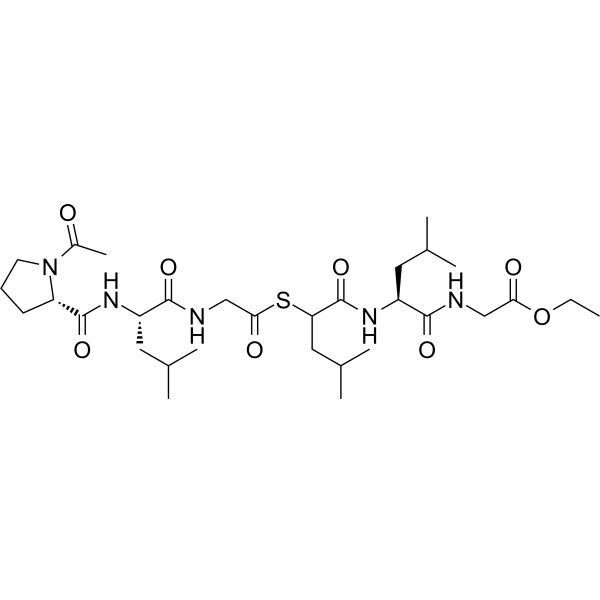
MMP-2/MMP-9 Substrate (Ac-Pro-Leu-Gly-[(S)-2-mercapto-4-methyl-pentanoyl]-Leu-Gly-OEt) is a synthetic chromogenic polypeptide substrate whose core structure mimics the cleavage sites of MMP-2 and MMP-9 (gelatinase A and B) in collagen. After being hydrolyzed by collagenase, MMP-2/MMP-9 Substrate reacts with 4,4'-dithiodipyridine or Ellman's Reagent via its thiol fragment to produce a product with ultraviolet absorption properties .
loading...
    loading...
Cat. No.: HY-131030
CAS No.: 2127150-20-1
Synonyms: JF669, SE; JF669, NHS
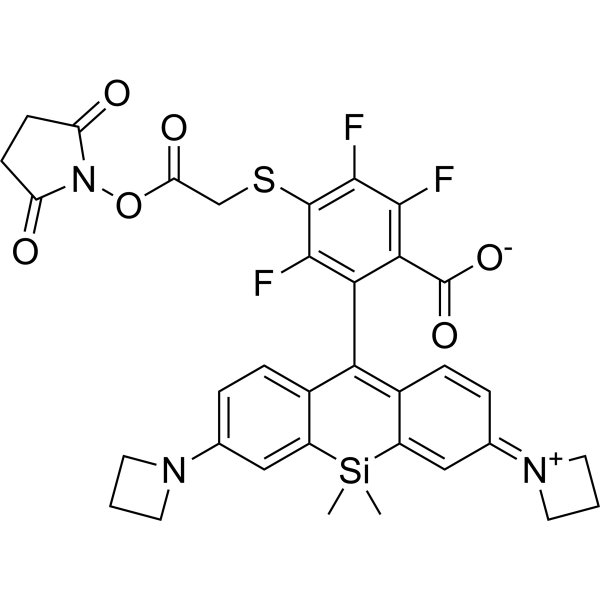
Janelia Fluor 669, SE (JF669, SE), a red fluorescent dye, can be directly reacted with the available thiol-containing HaloTag ligand under mild conditions (DIEA, DMF) to afford a JF669HaloTag ligand in a single step (Ex = 669 nm; Em = 682 nm) . Janelia Fluor fluorescent dyes can be chemically conjugated to the specific HaloTag substrate (a chloroalkane ligand) to form a fluorescent ligand, rather than binding directly to the HaloTag protein itself. Janelia Fluor products are licensed under U.S. Pat. Nos. 9,933,417, 10,018,624 and 10,161,932 and other patents from Howard Hughes Medical Institute.
loading...
    loading...
Cat. No.: HY-W127380
CAS No.: 146797-82-2
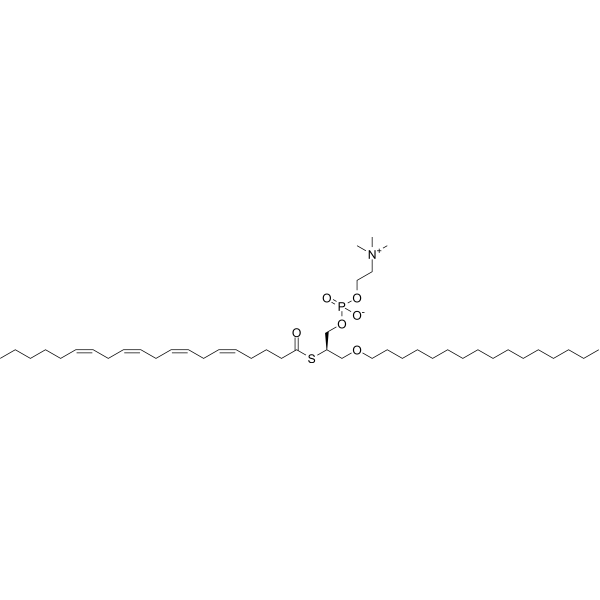
Arachidonoyl Thio-PC is a substrate of many phospholipase A2 (PLA2), including sPLA2, cPLA2 and iPLA2. Cleavage of sn-2 fatty acids by PLA2 results in the production of free thiols, which react with chromogenic reagents such as DTNB (Ellman's reagent) and DTP, allowing quantification of PLA2 activity. Isozyme-specific cPLA2 activity can be measured by depleting or inhibiting sPLA2 and iPLA2 activity in the assay.
loading...
    loading...
Cat. No.: HY-E70264
CAS No.: 799812-86-5
Target:  

Endogenous Metabolite

Research Areas:  

Metabolic Disease

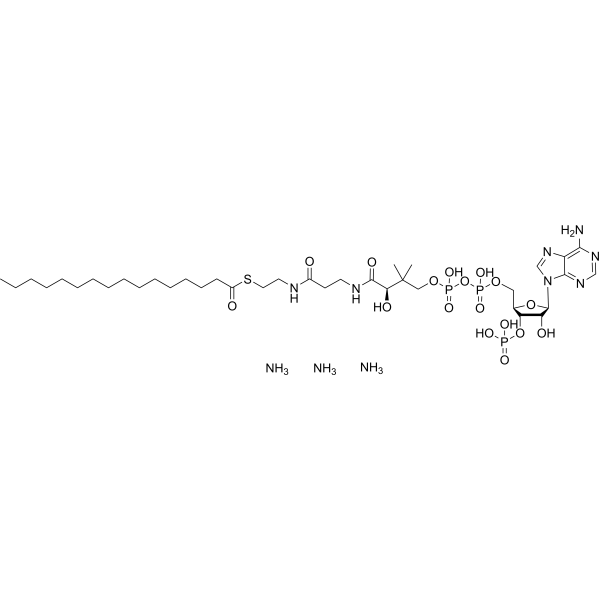
16:0 Coenzyme A triammonium is palmitoyl-CoA, which can serve as a reaction substrate to transfer the palmitoyl group to the free thiol group of the target protein through palmitoylation catalyzed by protein acyl transferases (PATs) .
loading...
    loading...
Cat. No.: HY-W713925
CAS No.: 89019-63-6
Target:  

Endogenous Metabolite

Research Areas:  

Metabolic Disease

Diheptanoyl Thio-PC is a substrate for all phospholipase A2s (PLA2s) with the exception of cPLA2 and PAF-acetyl hydrolase (PAF-AH).1 Interaction of this compound with a PLA2 results in cleavage of the sn-2 fatty acid generating a free thiol on the lysophospholipid. This free thiol can be detected using chromogenic substrates such as DTNB (Ellman’s reagent) and DTP.
loading...
    loading...
Cat. No.: HY-176085
Target:  

Phospholipase

Research Areas:  

Others

Heptanoyl thio-PC is a sn-2 thiol-labeled Phospholipase A2 (HY-P3029) (PLA2) substrate that can be used to detect the activity of Phospholipase A2 .
loading...
    loading...
Cat. No.: HY-D2047
CAS No.: 1632109-97-7
Target:  

Fluorescent Dye

Research Areas:  

Others

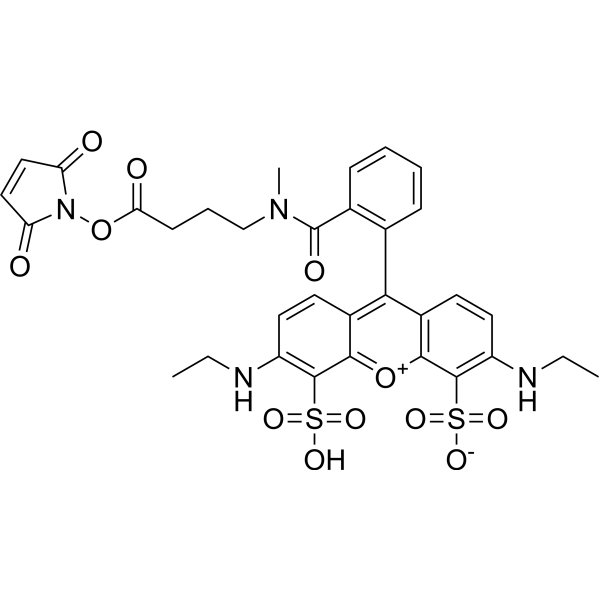
ATTO 532 maleimide is a thiol-reactive Fluorescent dye. ATTO 532 maleimide enables site-specific labeling of proteins via maleimide-cysteine chemistry and can be used for single-molecule detection of GroEL EL315C binding/complex formation and single-molecule FRET, and can label surface cysteine substrates, Prothymosin α, Frataxin, and GB1. ATTO 532 maleimide covalently labels Tau, serves as a fluorescence lifetime sensor of amyloid aggregate structural density, and exhibits self-quenching .
loading...
    loading...
Cat. No.: HY-123189
CAS No.: 89139-28-6
Target:  

Dopamine Receptor

Research Areas:  

Neurological Disease

LY 171859 is a D2 receptor agonist with significant reductase activity. LY 171859 exhibits enzymatic activity in the cytoplasm of liver, lung, and kidney, and also contains significant reductase activity in rat and human blood. LY 171859 has higher hepatic reductase activity in guinea pigs, followed by hamsters, rabbits, rats, and mice. The substrate of LY 171859 shows an apparent Km of 5.6 μM. The reduction reaction of LY 171859 is NADPH-dependent with an apparent Km of 14.8 μM. Only the A-side hydrogen of NADPH is incorporated in the reduction product of LY 171859. The reaction of LY 171859 is inhibited by cyanide and thiol reagents, and phenobarbital does not induce its activity in rats .
loading...
    loading...
Cat. No.: HY-184840
CAS No.: 43064-23-9
Target:  

Phosphatase

Research Areas:  

Others

(2-Sulfanylethyl)phosphonic acid (compound 2) is a thiol-containing alkylphosphonic acid inhibitor of purple acid phosphatase (PAP), which inhibits PAP derived from red kidney beans with an IC50 of 3000 μM. The phosphonic acid group of (2-Sulfanylethyl)phosphonic acid acts as a non-hydrolyzable phosphate substrate mimic, and the terminal thiol is designed to enhance interactions with the dinuclear metal active center of PAP. (2-Sulfanylethyl)phosphonic acid can be used in studies related to PAP inhibitors and the structure-activity relationships of dinuclear metal phosphatase inhibition .
loading...
    loading...
Cat. No.: HY-D2763
CAS No.: 890928-51-5
BP Fluor 532 maleimide is a photostable, bright yellow-fluorescent dye with pH insensitive emission from pH 4 to pH 10. The excitation of BP Fluor 532 is ideally suited for the frequency-doubled Nd:YAG laser line. BP Fluor 532 dye can be conjugated to a variety of antibodies, peptides, proteins, tracers, and amplification substrates, and is often used for the generation of stable signals in imaging and flow cytometry. Maleimide is the most popular sulfhydryl-reactive group for conjugating the dye to a thiol group on a protein, oligonucleotide thiophosphate, or low molecular weight ligand. The maleimide group specifically and efficiently reacts with reduced thiols (sulfhydryl groups, –SH) at pH 6.5 to 7.5 to form a stable thioether bond. The resulting conjugates exhibit brighter fluorescence and greater photostability than the conjugates of many other spectrally similar fluorophores.
loading...
    loading...
  • 1

