13 Results for "

ClpC1

" in MedChemExpress (MCE) Product Catalog:
Products (13)

13 Results for "ClpC1" in MCE Product Catalog:

  • Categories Recommended:
    More
Cat. No.: HY-153575
Target:  

PROTACs Bacterial

Research Areas:  

Infection

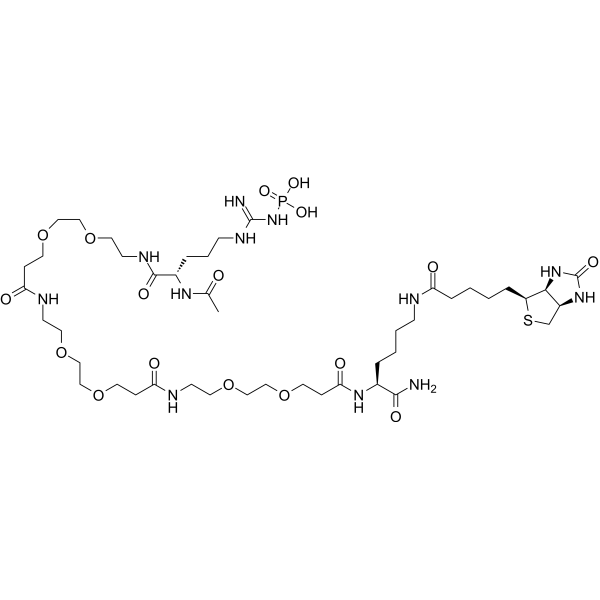
BacPROTAC-1 is a BacPROTAC degrader that induces the degradation of the target protein mSA by recruiting ClpC/ClpC1. BacPROTAC-1 binds to mSA, Bacillus subtilis ClpCNTD and Mycobacterium smegmatis ClpC1NTD with Kd values of 3.9, 2.8 and 0.69 μM, respectively. BacPROTAC-1 forms a ternary complex between the substrate and ClpC, promotes ClpC reassembly and activation, and induces ATP-dependent degradation of mSA and mSA fusion model substrates via the ClpCP or ClpC1P1P2 protease system. BacPROTAC-1 can be used in studies on bacterial targeted protein degradation, bacterial protein homeostasis and antibacterial target discovery [1].
loading...
    loading...
Cat. No.: HY-P11498
Research Areas:  

Infection

Cyclomarin monomer-2 (Compound 10), a cyclomarin monomer, is a pre-dimerization precursor that can form Homo-BacPROTACs targeting the degradation of ClpC1. Cyclomarin monomer-2 binds to the Mtb ClpC1 protein with a KD of 4.0 nM. The MIC of Cyclomarin monomer-2 against the Mtb H37Rv standard strain is 3.1 μM. Cyclomarin monomer-2 can be used as a key intermediate in the development of Homo-BacPROTACs [1].
loading...
    loading...
Cat. No.: HY-P11497
Research Areas:  

Infection

Cyclomarin monomer-1 (Compound 5), a cyclomarin monomer, is a pre-dimerization precursor that can form Homo-BacPROTACs targeting the degradation of ClpC1. Cyclomarin monomer-1 binds to the Mtb ClpC1 protein with a KD of 3.5 nM. The MIC of Cyclomarin monomer-1 against the Mtb H37Rv standard strain is 1.6 μM. Cyclomarin monomer-1 can be used as a key intermediate in the development of Homo-BacPROTACs [1].
loading...
    loading...
Cat. No.: HY-153571
Target:  

PROTACs Bacterial

Research Areas:  

Infection

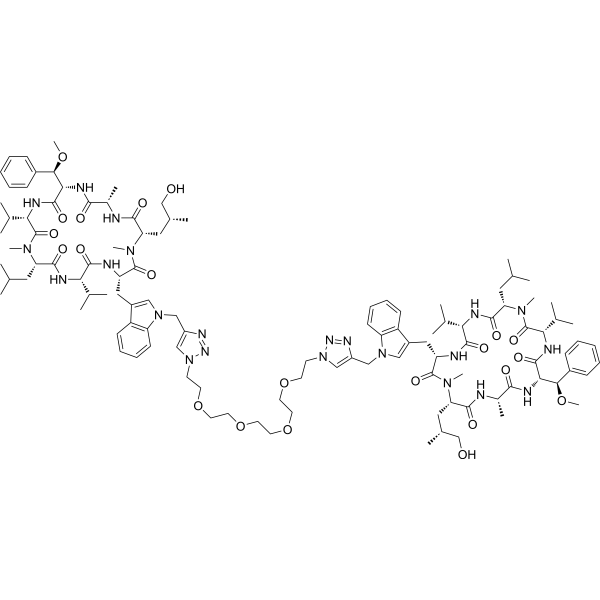
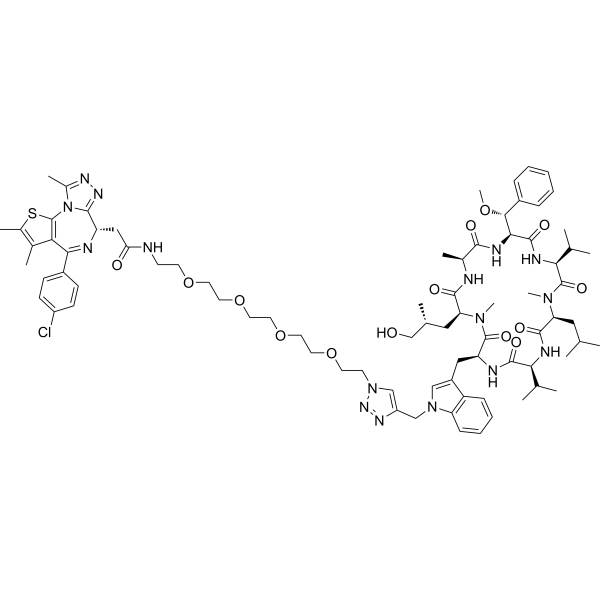
Homo-BacPROTAC6 is a ClpC1NTD BacPROTAC degrader and can targets ClpC2. Homo-BacPROTAC7 efficiently kill M. tuberculosis [1].
loading...
    loading...
Cat. No.: HY-153574
Synonyms: pArg-JQ1
Research Areas:  

Infection

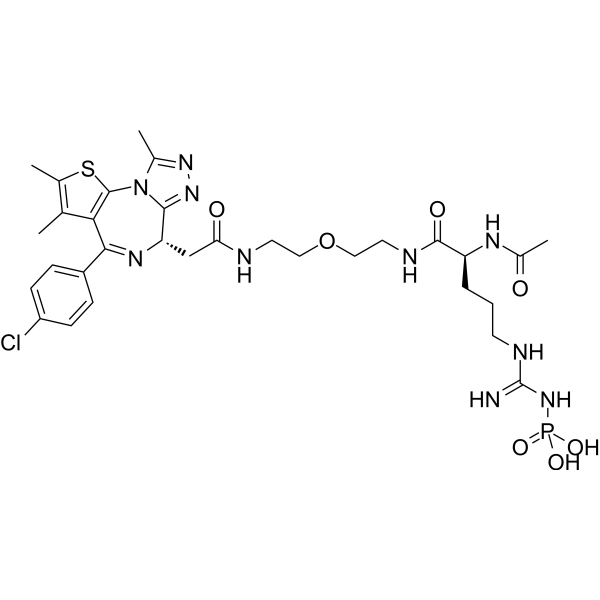
BI01826025 (pArg-JQ1) is a BacPROTAC-type bifunctional degrader that induces the degradation of BRDTBD1-containing substrates by recruiting the ClpC1P1P2 protease system. BI01826025 binds to the BRDTBD1 substrate via its JQ1 moiety and to ClpC1 via its pArg moiety; it delivers the substrate to ClpC1, where the substrate undergoes ClpC1-mediated unfolding followed by proteolysis by ClpP1P2. BI01826025 can be used to study ClpC1P1P2-mediated targeted protein degradation and ClpC2-regulated bacterial protein homeostasis [1].
loading...
    loading...
Cat. No.: HY-P701867
Purity:  ≥ 90%, as determined by reducing SDS-PAGE.
Synonyms: Rv3596c; MTCY07H7B.26; ClpC1; ATP-dependent Clp protease ATP-binding subunit ClpC1
Species:  
Others
Source:  
E. coli
loading...
    loading...
Cat. No.: HY-P701868
Purity:  ≥ 90%, as determined by reducing SDS-PAGE.
Synonyms: Rv3596c; MTCY07H7B.26; ClpC1; ATP-dependent Clp protease ATP-binding subunit ClpC1
Species:  
Others
Source:  
E. coli
loading...
    loading...
Cat. No.: HY-130369
CAS No.: 6286-09-5
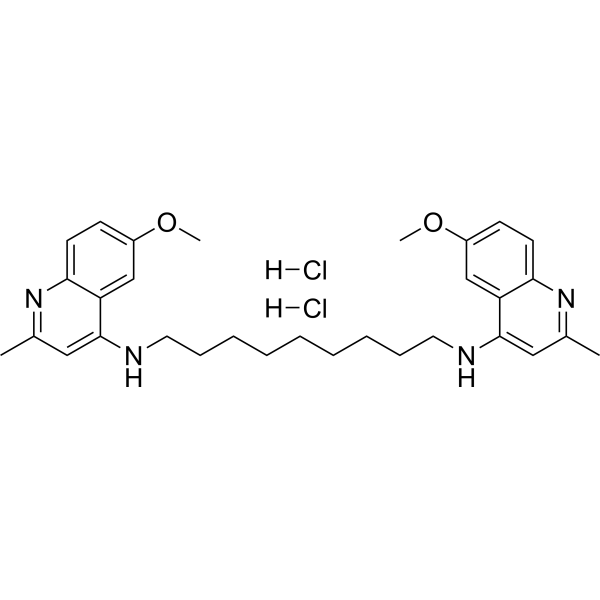
NSC10010 hydrochloride is a Mycobacterium tuberculosis ClpC1 inhibitor and differentiation inducer (IC50 = 4 µM; Kd = 2.8 µM). NSC10010 hydrochloride inhibits the ATPase and proteolytic activities of ClpC1 by binding to it, and downregulates E2F1, induces DNA damage, apoptosis, and lipid droplet accumulation, thereby inhibiting breast cancer cell proliferation and Mycobacterium tuberculosis H37Rv growth. NSC10010 hydrochloride can be used for research on breast cancer and tuberculosis [1] .
loading...
    loading...
Cat. No.: HY-153573
Synonyms: dCym-JQ1
Research Areas:  

Infection

SRG-II-19F (dCym-JQ1) is a BRDTBD1 PROTAC degrader. Its dCym moiety at one end binds to the N-terminal domain of ClpC1 (ClpC1NTD), while its JQ1 moiety at the other end binds to bromodomain 1 of BRDT (BRDTBD1). This molecule induces the degradation of BRDTBD1 by recruiting the BRDTBD1 substrate to the ClpC1P1P2 protease complex. SRG-II-19F serves as a research tool for studies related to mycobacterial protein degradation [1].
loading...
    loading...
Cat. No.: HY-175571
Target:  

Collagen

Research Areas:  

Infection

Ac-Phospho-L-arginine is a ClpC ligand. Ac-Phospho-L-arginine can be used to synthesize BacPROTAC-1 (HY-153575). BacPROTAC-1 is a BacPROTAC degrader that induces the degradation of the target protein mSA by recruiting ClpC/ClpC1 [1] .
loading...
    loading...
Cat. No.: HY-P6300
CAS No.: 169062-92-4
Target:  

Bacterial Parasite

Research Areas:  

Infection

Cyclomarin A is an antibacterial agent with a Kd of 2.3 nM against Mycobacterium tuberculosis ClpC1, a Kd of 2.2 nM against ClpC2, and an IC50 of 0.004 μM against Plasmodium falciparum PfAp3Aase. Cyclomarin A binds to the N-terminal domain of ClpC1, stimulates ATPase and proteolytic activities, dysregulates proteolysis, and induces proteome imbalance; it also binds to ClpC2 and upregulates its transcription level. Cyclomarin A binds to PfAp3Aase in dimeric form, blocks the substrate-binding pathway, inhibits the growth of Plasmodium falciparum in the erythrocytic stage, and shows no activity against human cells. Cyclomarin A exhibits moderate cytotoxicity against a variety of cancer cell lines. Cyclomarin A can serve as a lead compound for the development of Homo-BacPROTAC. Cyclomarin A is applicable to research related to tuberculosis and malaria [1] .
loading...
    loading...
Cat. No.: HY-153572A
Target:  

PROTACs Bacterial

Research Areas:  

Infection

Homo-BacPROTAC7 TFA is a PROTAC protein degrader targeting ClpC1/ClpC2 with a Kd of 0.5-2.5 nM for both targets. Homo-BacPROTAC7 (TFA) acts as a bactericidal agent, induces killing of pathogenic mycobacteria, retains activity against dormant-like mycobacterial cells with reduced intracellular ATP levels, and shows elevated antibiotic potency relative to its parent monomer. Homo-BacPROTAC7 (TFA) can be used for the research of tuberculosis [1].
loading...
    loading...
Cat. No.: HY-189712
Target:  

ClpP Bacterial

Research Areas:  

Infection

ADEP 19 is a ClpP1P2 dysregulator with antibacterial activity against Mycobacterium tuberculosis and various Gram-positive bacteria. ADEP 19 binds to the ClpP2 subunit of Mycobacterium tuberculosis, disrupting ClpP1P2-ClpX/ClpC1 chaperone interactions. ADEP 19 inhibits ClpC1P1P2-mediated proteolytic activity (IC50 = 1.2 μM) while upregulating the ATP hydrolysis activity of ClpXP1P2. ADEP 19 exhibits synergistic effects with Bedaquiline (HY-14881) against Mycobacterium tuberculosis. ADEP 19 can be used in research related to bacterial infections, such as tuberculosis [1].
loading...
    loading...
  • 1

